
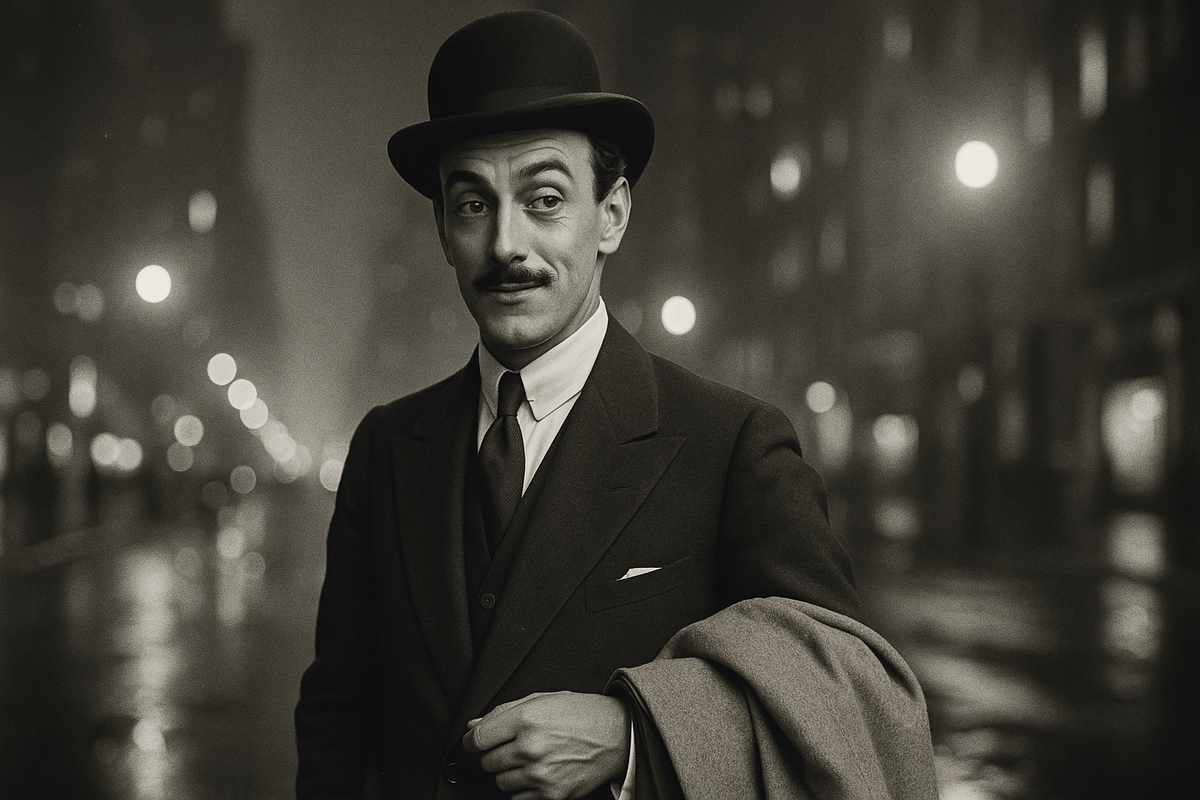
The Prince Who Never Was
How The New Yorker Profiled America's Greatest Impostor in 1932
October 29, 1932. Rain slicks the streets of Manhattan. Inside ten thousand apartments, readers crack open their latest issue of The New Yorker and discover they've been living among royalty—Russian royalty, no less. Prince Michael Alexandrovitch Dmitry Obolensky Romanoff has been charming their dinner parties, signing their checks, and stealing their trust.
There's just one problem: he's a fraud named Harry F. Gerguson.
The article that exposed him, "The Education of a Prince," wasn't written like a crime report. It read like anthropology. And in doing so, it captured something far more valuable than one man's deceptions—it captured an entire nation's willingness to believe beautiful lies during its ugliest economic collapse.
Archive Details
Historical Figure: Prince Michael Romanoff (Harry F. Gerguson)
Issue Date: October 29, 1932
Archive Source: The New Yorker Magazine
Feature Profile: "The Education of a Prince"
Cover Artist: Harry Brown
When America Needed Princes More Than Truth
By autumn 1932, the Great Depression had gutted the country for three brutal years. Banks had failed. Unemployment had soared. Trust in institutions lay shattered. Franklin D. Roosevelt's election loomed just weeks away, promising a New Deal to a nation that had been dealt nothing but losses.
Into this wreckage walked a man who claimed to be everything Americans had lost: pedigree, sophistication, legitimacy. Harry F. Gerguson—orphan, drifter, petty criminal—had reinvented himself as Russian nobility. He possessed no fortune, no title, no lineage. What he did possess was more dangerous: perfect posture, flawless manners, and an understanding that Depression-era society craved symbols of stability, even counterfeit ones.
He passed bad checks from New York to Los Angeles. He charmed socialites who should have known better. He was exposed, arrested, and released—only to do it again. The cycle repeated because his victims wanted it to repeat. They needed their prince to be real.
How The New Yorker Weaponized Irony
The brilliance of "The Education of a Prince" lay in its refusal to treat Romanoff as merely a criminal. The profile—part of the magazine's defining Profiles series—approached him with irony, wit, and unsettling empathy. Readers weren't handed a morality tale. They were handed a mirror.
The piece chronicled Romanoff's fabricated aristocratic background with forensic detail: his childhood bouncing between orphanages and reformatories, his theatrical arrivals in Hollywood trailing confetti showers of worthless checks, his repeated ability to convince new audiences of his nobility despite public unmasking. Each con was presented not as villainy but as performance art—a collaboration between deceiver and deceived.
While other publications covered political scandals and bread lines, The New Yorker dissected something subtler: the gap between who we are and who we pretend to be. Romanoff was everyone's secret. He was the immigrant who lied about his origins, the businessman who inflated his success, the society wife who hid her farm-town roots. He was America, stripped of its costume.
The Visual Language of Pretense
Harry Brown's cover for the October 29, 1932 issue set the stage before readers encountered a single word. His illustration depicted Manhattan at night—streetlights glowing along rain-slick avenues, cars moving through shimmering reflections, skyscrapers looming against darkness. The city appeared both romantic and ominous, beautiful and fake.
Inside, the magazine's cartoons extended the theme of performed identity. One bathroom scene carried the caption: "You're a great example of an informal decorator!" Another showed three men at a café, deadpanning: "It's a regular rolling stone. First N.Y.U., and now Columbia." The humor was never broad. It was dry, coded, aimed at readers sophisticated enough to recognize that Manhattan itself was a stage where everyone played parts.
The juxtaposition was deliberate. As the Profiles feature exposed one man's elaborate fiction, the magazine's aesthetic reminded readers that all urban life required costumes, scripts, and willing suspension of disbelief.
The Coda: When the Impostor Wins
Here's what makes the Romanoff story perfect: he won.
After years of arrests and exposures, Harry F. Gerguson stopped running. He moved to Hollywood, dropped the pretense of being actual royalty, and opened Romanoff's—a restaurant where movie stars paid premium prices to dine with a "prince" they knew was fake. He had evolved past deception into something more American: branding.
The October 29, 1932 New Yorker captured him at the inflection point—still criminal, not yet celebrity. That's why the issue matters to collectors beyond its rarity. It's the before picture. It documents the moment when a con man was still dangerous rather than charming, when his story was scandal rather than folklore.
Why This Issue Endures
Vintage New Yorker magazines endure because they operated as something more than periodicals. They were cultural intelligence—covers that functioned as art, essays that doubled as literature, cartoons that archived the unspoken rules of urban sophistication.
The October 29, 1932 issue proves that the best journalism doesn't report events; it reports what events reveal about us. Romanoff's imposture mattered less than the reasons it succeeded. His fake aristocracy mattered less than America's hunger for aristocracy, real or imagined.
Collectors who acquire these issues aren't buying nostalgia. They're buying evidence. Evidence that charisma can triumph over credentials, that performance can replace substance, that a nation in crisis will embrace beautiful lies told with sufficient confidence.
Sound familiar?
Why Collectors Covet This Issue
Cultural Crystallization
Captures Depression-era America at its most vulnerable and its most satirical—a nation willing to believe in princes when reality offered only breadlines.
Profiles at Peak
"The Education of a Prince" represents The New Yorker's signature series at its most incisive—journalism as anthropology, scandal as mirror.
Iconic Cover Art
Harry Brown's moody Manhattan nightscape ranks among the magazine's most evocative early 1930s covers—atmospheric, cinematic, timeless.
Historical Rarity
Early 1930s issues are scarce in good condition. Poor paper quality, modest circulation, and the passage of nine decades make survival itself remarkable.
Before He Was Famous
Documents Romanoff before his Hollywood reinvention—the inflection point between criminal and celebrity, scandal and folklore.
Timeless Relevance
A study in how societies embrace charismatic deception during crisis. The themes resonate across generations, making this more than a period piece.
Explore the Archive
The October 29, 1932 issue of The New Yorker is one entry in nearly a century of American cultural history preserved in magazine form. From Depression-era impostors to Cold War satire, from jazz-age cartoons to postwar profiles, each issue opens a window onto a different version of America worth remembering.
Browse The New Yorker Magazine Collection