
The Bed-In That Shook the Establishment
Inside Rolling Stone's Most Radical Cover Story of 1969
When John Lennon and Yoko Ono turned a Montreal hotel room into a theater of protest, they didn't just challenge the Vietnam War—they weaponized celebrity itself. The June 28, 1969 issue of Rolling Stone captured this transformation in real time, publishing a feature so raw and politically charged that it remains one of the most significant artifacts of countercultural journalism ever printed.
This wasn't entertainment reporting. It was war correspondence from the front lines of a cultural revolution.
Archive Details
Historical Figures: John Lennon, Yoko Ono
Issue Date: June 28, 1969
Archive Source: Rolling Stone Magazine
Feature Title: Boosting Peace: John and Yoko in Canada
The Bed as Battleground
The summer of 1969 belonged to the radicals. College campuses burned with anti-war fury. The streets ran with protesters. And while politicians debated policy in Washington, John Lennon and Yoko Ono staged their "Bed-Ins for Peace" in Amsterdam, Montreal, and Toronto—transforming the marriage bed into a weapon against war.
Rolling Stone's feature, Boosting Peace: John and Yoko in Canada, refused to treat this as celebrity spectacle. Instead, the magazine positioned Lennon and Ono as what they truly were: cultural insurgents using mass media as a Trojan horse for anti-establishment ideas. While mainstream outlets mocked them as naive celebrities playing at politics, Rolling Stone understood something deeper—the power dynamics of fame were being rewritten in real time.
Rock stars were no longer entertainers. They were becoming ideological leaders.
A Cover That Chose Sides
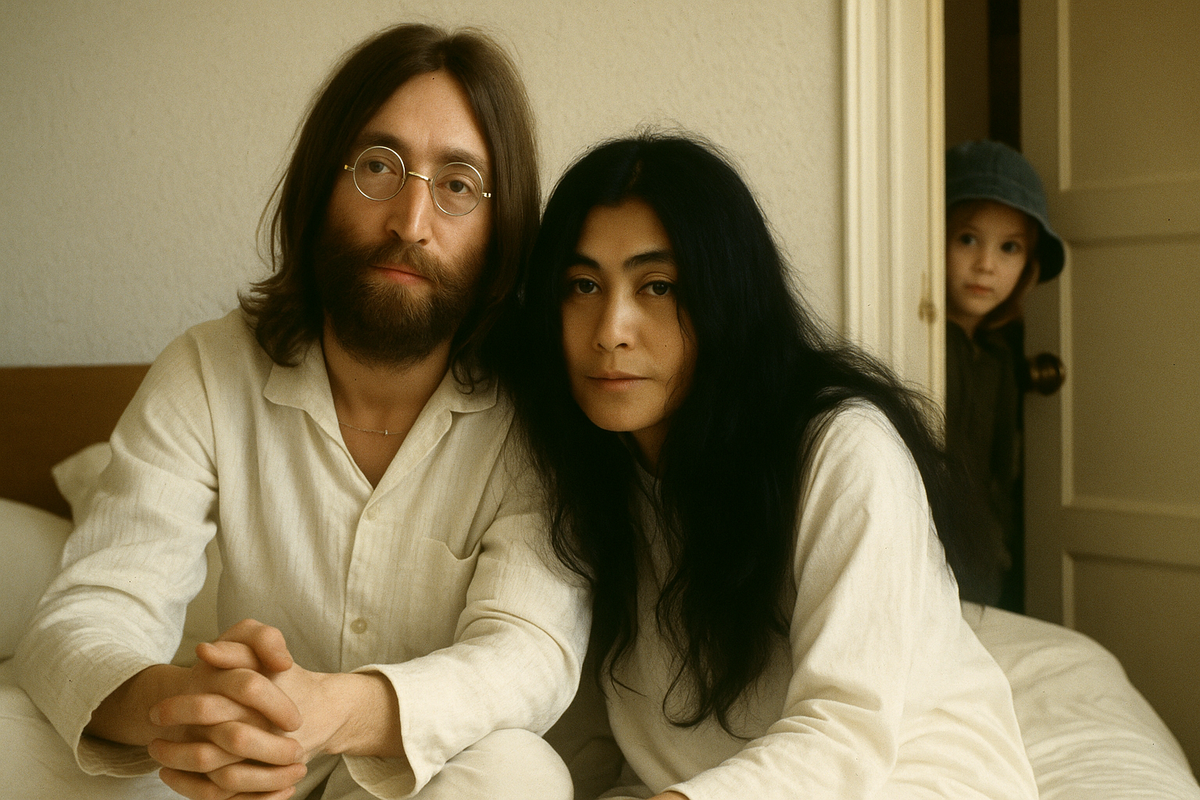
The cover image made Rolling Stone's allegiance clear. John and Yoko sat together—unpolished, unglamorous, defiant. The captions "Yes, I am" and "Yes, I do" reframed wedding vows as declarations of political commitment. No airbrushing. No Hollywood gloss. Just two people who had chosen to burn their celebrity capital for something they believed in.
This aesthetic choice mattered. While Life magazine and network television sanitized protest into digestible segments, Rolling Stone embraced the mess—the uncertainty, the contradictions, the half-formed philosophies that characterized genuine activism. The publication's documentary-style photography captured Lennon bearded and wide-eyed, Ono as intellectual provocateur rather than silent muse, even Yoko's daughter Kyoko appearing in doorways like a ghost of the future they were fighting for.
Every frame rejected the polished fakery of establishment media.
What the Article Revealed
Rolling Stone gave Lennon and Ono space to build their argument without editorial interference—a luxury unthinkable in mainstream outlets. The result was a feature that exposed the machinery of their activism:
The Berkeley Connection
The piece drew explicit lines between the Bed-Ins and violent clashes at People's Park, demonstrating that "peace" wasn't abstract philosophy but a response to real battles over land, power, and freedom happening in American streets.
Media as Weapon
Lennon openly discussed orchestrating the Bed-Ins to manipulate press coverage, turning tabloid cameras and gossip columnists into unwitting amplifiers of anti-war messaging. The medium had become the revolution.
Existential Doubt
Far from presenting Lennon as confident messiah, the article captured his private struggles—the financial collapse of Apple Corps, his identity crisis outside The Beatles, his questioning of whether any of this actually mattered.
Yoko Ono, Unfiltered
The feature positioned Ono not as Lennon's accessory but as an intellectual force, blending Eastern peace philosophy with avant-garde disruption tactics. Her influence on the campaign was strategic and deliberate.
Absurdism as Strategy
The interviews revealed how humor functioned as protest. "Grow your hair for peace" operated simultaneously as satirical provocation and genuine rejection of military-industrial conformity.
This wasn't hagiography. It was journalism that took seriously the idea that celebrity could be repurposed as activism.
The Archive as Evidence
Rolling Stone's coverage of Lennon and Ono matters because it rejected the false objectivity of establishment media. By embedding their activism within the broader counterculture narrative—from Berkeley's battles to Woodstock's utopian promises—the magazine created a historical record that mainstream outlets simply couldn't match.
These weren't just magazines. They were battlefield dispatches from a cultural war, written by journalists who understood they were documenting a revolution in progress.
This is why serious collectors and cultural historians pursue original Rolling Stone issues from the late 1960s with such intensity. Each one functions as primary source material, unfiltered by later mythmaking or revisionist narratives.
Why This Issue Endures
Cultural Crossroads
Published weeks before Woodstock, during peak Vietnam protests, this issue captured 1969's revolutionary spirit without the hindsight that would later romanticize or sanitize it. The uncertainty is palpable on every page.
Convergent Collecting
Beatles archivists, political ephemera specialists, and vintage Rolling Stone completists all pursue this issue, creating sustained demand across multiple collector markets.
Journalistic Turning Point
The feature exemplified Rolling Stone's refusal to separate art from politics, cementing its role as the defining voice of countercultural journalism. Mainstream outlets reported on the counterculture; Rolling Stone reported from within it.
Visual Documentation
The stripped-down cover design and candid interior photography established an aesthetic that defined late-1960s rock journalism—authenticity over production value, access over distance.
For Collectors and Historians
The June 28, 1969 issue stands as an essential entry point for anyone building a collection of 1960s cultural documentation. Each issue preserves the cultural temperature of its moment—from musical milestones to social upheavals—making them invaluable resources for understanding how art and politics collided in the 20th century's most transformative decade.
Browse Rolling Stone Magazine CollectionThe Legacy in Print
More than fifty years later, Rolling Stone's coverage of the Lennon-Ono peace campaign remains definitive. Through candid interviews, uncompromising photography, and a refusal to treat activism as separate from art, the magazine gave voice to a movement that believed culture could reshape politics.
The June 28, 1969 issue doesn't just document history. It participated in making it—one provocative cover story at a time.