
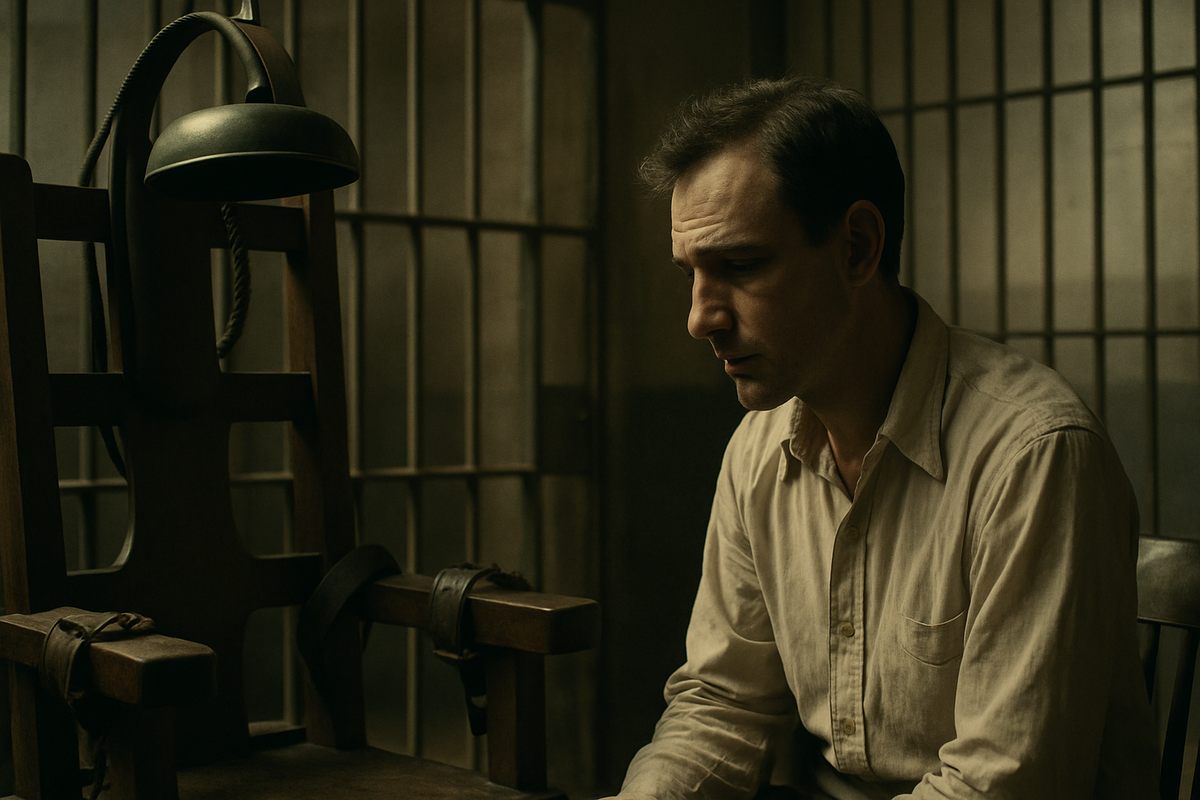
The Day The New Yorker Asked If America Kills the Innocent
How a 1935 essay on wrongful execution exposed the fragility of American justice—and never stopped haunting us
June 22, 1935. A magazine known for cartoons and cocktail wit published a question that would haunt American justice for the next century.
Tucked between advertisements for summer resorts and illustrations of Manhattan high society, readers found an essay that didn't belong. No clever wordplay. No urbane deflection. Just one scalding inquiry: Do we execute innocent people?
The author was Edmund Pearson, true crime scholar and master of the macabre fact. His timing was surgical. Eight years after Sacco and Vanzetti's execution still poisoned the national conscience. The Scottsboro Boys were being railroaded through Alabama courtrooms while the world watched. And Leo Frank's lynching—a Jewish factory manager dragged from his cell and hanged by a Georgia mob in 1915—remained an open wound in American memory.
Pearson wasn't interested in outrage. He wanted evidence.
Archive Details
Issue Date: June 22, 1935
Historical Figure: Edmund Pearson
Archive Source: The New Yorker
Historical Context: Mid-Depression America, post-Sacco and Vanzetti, during Scottsboro Boys trials
The Folklore Problem
What Pearson discovered was unsettling in a different way. The "classic cases" of wrongful execution—the deathbed confessions, the innocent man returned from the grave—collapsed under examination. The Old Woman of the Place St. Michel. The Case of John Jennings. These weren't documented tragedies. They were ghost stories, repeated until they calcified into fact.
But here's what made the essay brilliant: Pearson understood that the belief mattered as much as the truth. If Americans suspected their justice system could kill the innocent—whether provable or not—then the law itself was on trial.
He wasn't writing about the past. He was diagnosing a crisis of legitimacy.
The Magazine That Held Two Americas
The cover of that issue shows a wide-eyed graduate in cap and gown, surrounded by sketches of possible futures—business meetings, laboratory benches, leisure in the sun. It's pure New Yorker whimsy, gently mocking the terror of adulthood.
Turn the page, and Pearson is cataloging the ways democracy can murder its own citizens.
This wasn't an editorial accident. This was The New Yorker at its most dangerous—the moment it proved a magazine could be witty and merciless in the same breath. While other publications segregated entertainment from hard commentary, Harold Ross's magazine threaded them together, insisting that readers capable of appreciating a cartoon were also capable of confronting state-sanctioned death.
The juxtaposition was the point. Life is absurd and tragic. Justice is fragile. And the people drinking martinis in Manhattan needed to know both.
What Pearson Actually Proved
His essay didn't call for abolition. It did something more corrosive—it seeded permanent doubt.
The Question That Won't Age
Pearson's essay endures because the question hasn't been answered. Can the state execute the innocent? We have more evidence now—DNA, exonerations, documented cases of wrongful conviction. But we still don't have certainty.
That's what makes early New Yorker issues extraordinary. They aren't historical curiosities. They're live ammunition in debates that never ended.
Why Collectors Want This Issue
Editorial Turning Point
The moment a humor magazine became a journal of national conscience—proving The New Yorker could interrogate American democracy as sharply as it satirized it.
Primary Source Material
For collectors of legal history, this captures America mid-debate—asking in 1935 the same questions we argue about today: DNA exonerations, systemic bias, the irreversibility of death.
Historical Scarcity
Well-preserved copies are rare. The paper stock wasn't archival. Issues were read, discarded, or pulped for the war effort. What survives carries weight beyond its page count.
Cultural Time Capsule
This issue isn't a historical curiosity—it's evidence that some questions never stop mattering, and that great magazines become living documents of unresolved national conscience.
Explore The Archive
Thousands of original issues from the 1920s through the 1970s—decades of wit, outrage, and cultural memory preserved on paper.
Browse The New Yorker Magazine Collection