
The Day America's Icons Leapt Into the Void
Philippe Halsman's radical portrait experiment that stripped away the masks of power in the November 9, 1959 issue of Life Magazine
November 9, 1959. Marilyn Monroe suspended above a seaside cliff, knees tucked, laughing. Richard Nixon airborne in a business suit, one arm thrust skyward as if addressing an invisible crowd. Grace Kelly—now Princess Grace of Monaco—removing her shoes before a cautious, impish jump. J. Robert Oppenheimer, father of the atomic bomb, reaching upward mid-flight, grasping at something beyond the frame.
This was not a dream. This was Life Magazine.
When Americans opened that week's issue, they encountered something unprecedented in the history of photojournalism: the most powerful, glamorous, and untouchable figures of the era caught in gravity-defying leaps, their composure shattered, their masks stripped away. The architect of this radical portrait experiment was Philippe Halsman, who believed that a jump revealed more truth than a thousand rehearsed poses ever could.
The feature was called "Jumpers." It remains one of the most audacious acts of visual storytelling in twentieth-century media.
Archive Details
Featured Photographer: Philippe Halsman
Publication: Life Magazine, November 9, 1959
Featured Subjects: Marilyn Monroe, Richard Nixon, Grace Kelly, Audrey Hepburn, J. Robert Oppenheimer, and dozens more
Historical Context: Published on the threshold of the 1960s, between Eisenhower and Kennedy eras
The World Suspended Between Decades
The late 1950s existed in a state of peculiar tension. Sputnik had launched two years earlier, igniting the space race and America's Cold War paranoia. Television was remaking politics and celebrity in real time. The civil rights movement was gathering unstoppable force. A younger generation was preparing to dismantle the conformity their parents had built.
Life Magazine stood at the center of this transformation. With millions of weekly readers, it functioned as the visual record of the age—the place where wars, elections, scientific breakthroughs, and Hollywood glamour converged in glossy, full-page spreads. To appear in Life was to enter history.
But the November 9, 1959 issue did something different. Rather than documenting power, it unmasked it. Rather than reinforcing the distance between ordinary Americans and their icons, it collapsed it entirely. By asking these figures to jump, Halsman invited readers to witness something no formal portrait could capture: spontaneity, vulnerability, absurdity.
He called it Jumpology—the theory that a person's leap reveals their hidden character. Unlike a posed photograph that allowed subjects to retreat behind dignity and control, a jump forced revelation. For a split second, the rehearsed self disappeared.
The Cover: Marilyn, Suspended
The issue opened with Marilyn Monroe on the cover, caught mid-leap on a California cliff in a swimsuit. Her bent knees and radiant smile suggested something more than sex appeal—a childlike innocence, a fleeting return to girlhood. Halsman observed that when Monroe jumped, "she became a girl again."
It was glamorous, yes. But it was also intimate in a way her studio portraits never were. Here was the world's most famous woman, stripped of pose and pretense, frozen in a moment of pure, unguarded joy.
Inside, the feature expanded into a gallery of the era's defining figures—each one caught in their own revealing leap.
The Jumpers: A Gallery of Exposure
Marilyn Monroe and Brigitte Bardot — Monroe's tucked knees conveyed innocence; Bardot's carefree leap embodied the uninhibited spirit of France's reigning sex symbol. Halsman remarked that movie queens were "child-women, raised to the level of goddesses by insecure men."
Grace Kelly — The former actress, now Princess of Monaco, approached the jump with caution, removing her shoes first. Her leap was impish, almost mischievous. Halsman admitted he was mystified as to how she had become royalty.
Sophia Loren and Audrey Hepburn — Photographed near Rome, Loren's leap was bold and forceful, Hepburn's joyous and uninhibited. Neither led with their heads, Halsman noted. They led with their hearts.
Richard Nixon and Adlai Stevenson — Rivals in two bruising presidential campaigns, they jumped with unmistakable political instinct. Nixon appeared to be addressing a crowd even mid-air. Stevenson looked as though he were leading its cheers.
J. Robert Oppenheimer — The physicist who had unleashed the atomic age leapt with one arm reaching skyward. Halsman suggested it looked like a man grasping for a new direction. Oppenheimer's response was dryer: "I was just reaching."
Father Martin C. D'Arcy and Paul Tillich — Religious and philosophical leaders leapt with arms outstretched—spiritual exaltation for the Catholic priest, grounded Protestant strength for the theologian.
Judge Learned Hand and Thomas E. Dewey — At 87, Judge Hand leapt with surprising vigor, which Halsman read as fighting spirit. Dewey, the former New York governor and two-time presidential candidate, stretched a hand skyward in a gesture of undiminished ambition.
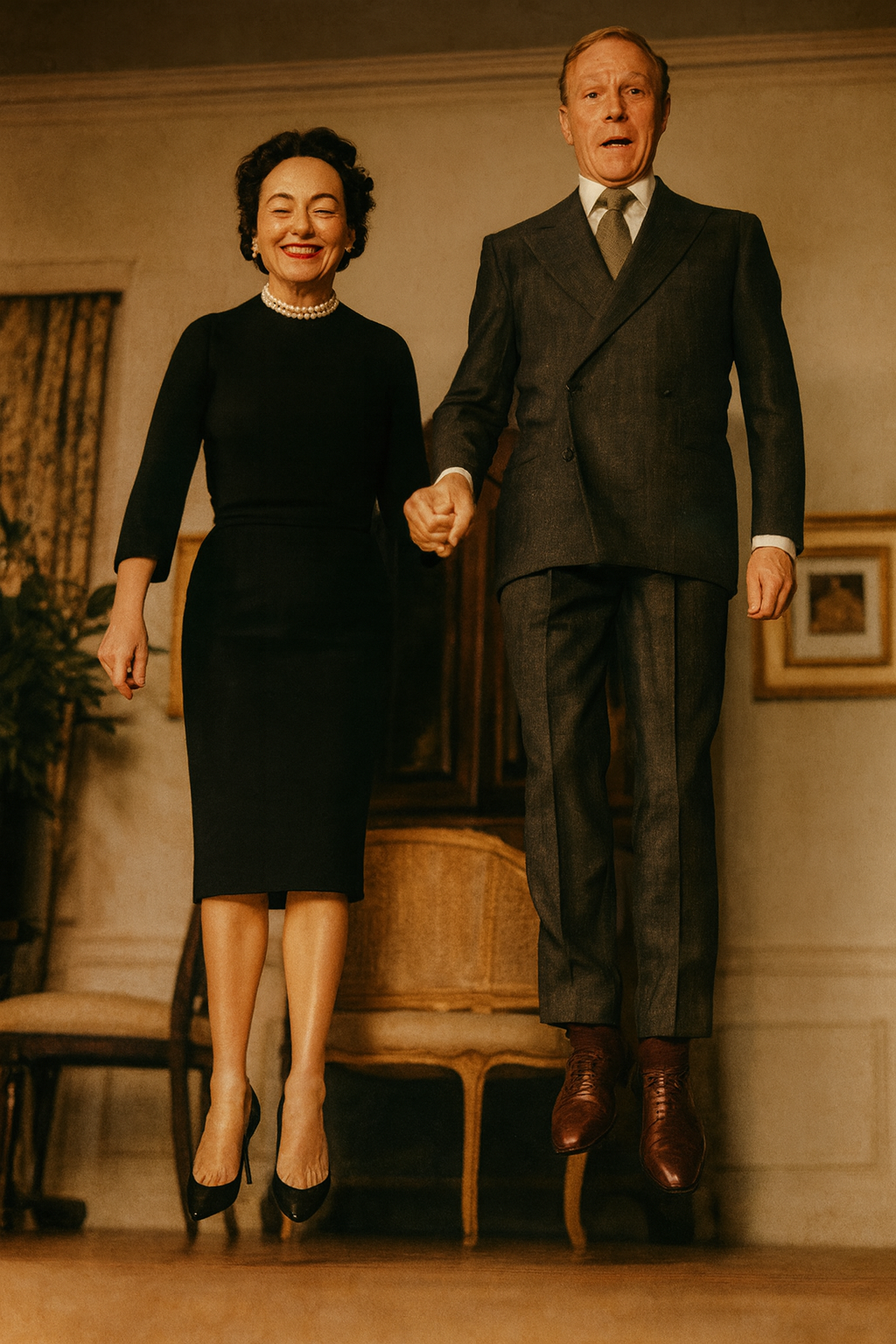
The Duke and Duchess of Windsor — The former King Edward VIII and his wife, for whom he had abdicated the British throne, held hands and jumped together in stocking feet. It was whimsical, humanizing, almost absurd—a portrait of exiled royalty at play.
David and Robert Sarnoff — The RCA chairman and his son, head of NBC, were photographed in separate jumps, revealing confidence and inherited corporate strength.
Philip D. Reed — The former chairman of General Electric declared, "I always put myself entirely into whatever I do," explaining his wholehearted leap.
Every page combined Halsman's sharp eye with witty, incisive captions—turning the feature into something more than entertainment. It was visual psychology, cultural critique, and humanist journalism fused into one.
What the Jumps Revealed
The Enduring Power of Vulnerability
This issue resonates because it revealed a simple, radical truth: leaders, celebrities, and thinkers—no matter how untouchable—were still human. The leaps were awkward, joyous, ambitious, hesitant. But they were real.
It was an act of photojournalism that inverted the usual relationship between subject and viewer. Rather than reinforcing distance and mystique, Halsman collapsed them. Rather than presenting icons on pedestals, he suspended them mid-air—caught off guard, vulnerable, absurd.
That is why the November 9, 1959 issue remains so powerful. And why it remains so collectible.
Why This Issue Endures
Published on the threshold of the 1960s, it captured a world suspended between Eisenhower's conservatism and Kennedy's coming revolution.
Few single issues feature such an enduring roster—Marilyn Monroe, Audrey Hepburn, Grace Kelly, Richard Nixon, J. Robert Oppenheimer—each now a permanent fixture in cultural memory.
Regarded as one of the twentieth century's greatest portrait photographers, Halsman used this issue to bring his radical approach to millions. His theory of Jumpology would later be compiled into his book Jump Book, but it was Life that gave it mass cultural impact.
Images from this spread appear regularly in museum exhibitions, photography retrospectives, and cultural histories. Owning the original Life issue preserves them in their first, most powerful context—as mass media, not fine art.
Celebrity covers—particularly Monroe—drive consistent interest in vintage Life magazines. This issue stands as a centerpiece for serious collectors.
For enthusiasts of twentieth-century visual culture, it is not merely paper and ink. It is an artifact of a moment when the most powerful people in the world agreed to let go—if only for a split second.
Explore More of Life's Visual Archive
If Halsman's "Jumpers" speaks to you, thousands of original Life issues await. From the 1930s through the 1970s, Life Magazine documented war and peace, celebrity and science, social upheaval and cultural transformation—as they happened, in real time.
Browse Life Magazine CollectionEach issue is a time capsule. Each one offers a window into history not through hindsight, but exactly as it was first seen.
The November 9, 1959 issue of Life Magazine is more than a collectible—it is a cultural landmark. Through Philippe Halsman's playful yet psychologically astute "Jumpers," readers encountered Marilyn Monroe, Richard Nixon, Grace Kelly, J. Robert Oppenheimer, and dozens of other icons as they had never been seen before.
To hold this issue today is to hold a piece of twentieth-century history: a reminder that even the most powerful figures can be caught in a moment of joyful, human vulnerability. And thanks to Life's unmatched photojournalism, those moments endure—suspended in time, waiting to be rediscovered more than sixty years later.