
When Jackie Kennedy's Sister Opened the Family Album
Lee Radziwill's intimate 1973 memoir revealed unpublished photographs and private memories from the Bouvier sisters' childhood—long before Camelot, before Dallas, before the world knew their names.
January 1973. America was already a different country than the one that had mourned a president nine years earlier. The women's movement was dismantling old certainties about marriage and motherhood. Watergate was beginning to metastasize. And into this moment of national reckoning, Lee Radziwill did something unexpected.
She opened the Bouvier family photo album.
Not for a museum retrospective or an authorized biography. For Ladies' Home Journal—the magazine read by millions of American women over morning coffee. The feature, titled "Opening Chapters," contained photographs no one outside the family had ever seen: baby pictures of Jackie and Lee, Central Park snow days, matching musical dresses, a silver cup from a costume contest. Private moments from the 1930s, before Camelot, before Dallas, before the whole world knew their names.
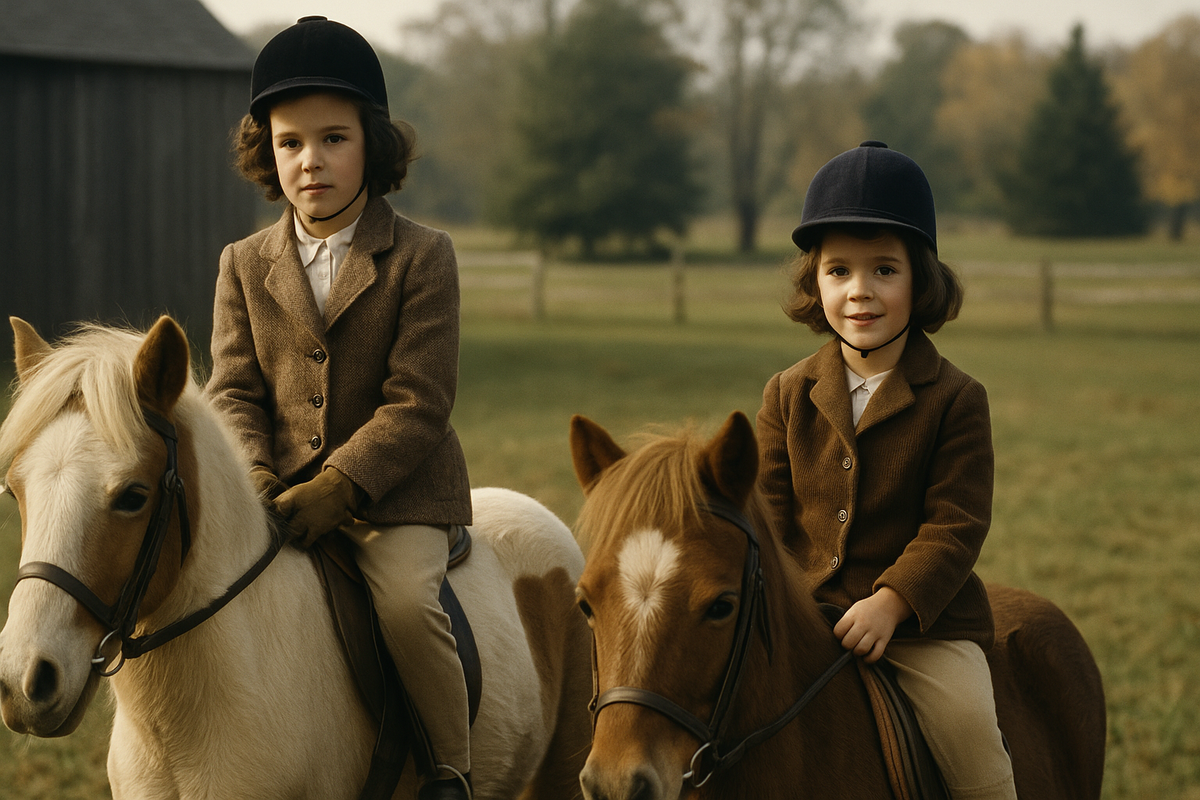
For readers in 1973, these images carried a strange power. They showed that America's most scrutinized sisters had once been ordinary girls who hated wearing leggings and struggled with ponies.
For collectors today, this issue remains something rarer: a primary historical document, published when memory was still fresh and the archive still belonged to the family.
Archive Details
Historical Figures: Lee Radziwill, Jacqueline Kennedy Onassis
Issue Date: January 1973
Archive Source: Ladies' Home Journal
Feature Title: "Opening Chapters"
Historical Context: Published during the height of second-wave feminism, less than a decade after JFK's assassination
The Cultural Moment
By 1973, Ladies' Home Journal was no longer simply a manual for homemakers. Under editor Lenore Hershey, the magazine had become a platform for women's voices—publishing Betty Friedan, Shana Alexander, and confessional memoir alongside traditional recipes and decorating advice. The Kennedy piece fit this evolution perfectly: personal storytelling that honored domesticity while asserting a woman's right to control her own narrative.
The timing mattered. Less than a decade after JFK's assassination, the Kennedy family still occupied mythic space in American consciousness. Yet the country was also questioning its myths. Radziwill's memoir threaded this needle—offering intimacy without hagiography, nostalgia without denial.
Her tone was conversational, almost conspiratorial. She admitted hating the "sloppy leggings" she wore sledding in Central Park, though the photographs showed her grinning. She joked about being "front-toothless longer than any child in history" while Jackie held a costume contest trophy. She confessed that Danseuse, the pony she rode in East Hampton, nearly "did her in"—a subtle admission that even privileged childhoods contained fear and failure.
These weren't the polished anecdotes of official biography. They were the unguarded memories a sister might share over lunch.
What the Photographs Revealed
The visual archive Radziwill shared was unprecedented:
Baby portraits showing Lee and Jackie as toddlers, before their parents' bitter divorce reshaped their world.
Central Park winters where the sisters sledded and ice-skated, their nanny likely just outside the frame.
The matching musical dresses, worn while walking their dog Hans—an image that captured both the coordination their mother demanded and the genuine bond between the girls.
The costume contest, with Jackie clutching the silver cup and Lee admitting she "remained front-toothless longer than any child in history."
East Hampton summers, where their father wore gabardine suits and a Society of the Cincinnati boutonniere—a genealogical detail linking the Bouviers to Revolutionary War heritage.
The pony misadventures, where Radziwill confessed that horseback riding was never her calling, despite the family's expectations.
Each photograph worked against the Kennedy mythology. These were not images of destiny or greatness. They were evidence of childhood—messy, funny, ordinary.
Themes and Narrative Elements
Childhood Innocence
Radziwill emphasized the carefree rhythm of summers in East Hampton, where the sea and sand framed her earliest memories.
Sisterly Bond
Through every photo, her connection to Jackie was clear—whether sledding, walking pets, or sharing costumes.
Everyday Struggles
She openly shared dislikes—leggings, gloves, ponies—in a way that made her seem relatable and authentic.
Family Heritage
Mentions of her father's Society of the Cincinnati boutonniere tied their family story to American history.
The Magazine as Time Capsule
Magazine issues like this one function differently than books. They preserve not just information but atmosphere—the advertisements for Virginia Slims and Clairol, the recipes for fondue and casseroles, the articles on post-Pill sexuality and suburban loneliness. Together, these elements create a portrait of a moment: what American women were reading, thinking, buying, and questioning in early 1973.
Radziwill's memoir sits inside this context. It wasn't published in isolation but alongside features on beauty, health, and changing gender roles. The juxtaposition matters. It shows how Kennedy nostalgia and feminist consciousness coexisted—how women could honor family memory while also challenging the institutions that had confined them.
Why This Issue Matters to Collectors
Unpublished Family Photographs
Before this feature, these images existed only in private albums. Radziwill's decision to publish them made this issue a primary source.
First-Person Perspective
Unlike the flood of Kennedy biographies written by journalists and historians, this was the family's own voice—unmediated, unfiltered.
Cultural Intersection
The piece sits at the crossroads of multiple American narratives: Kennedy nostalgia, women's liberation, celebrity memoir, and the evolution of magazine journalism.
Historical Scarcity
While Ladies' Home Journal had enormous circulation, issues featuring authentic Kennedy family content command collector interest. Most copies were read, discarded, or damaged. Intact copies are increasingly difficult to find.
For archivists and Kennedy scholars, this issue documents how the family shaped its own story during a pivotal moment—when Jacqueline Kennedy Onassis was still alive, when memory could still be contested, when the archive was still being assembled.
The Lasting Value
The January 1973 Ladies' Home Journal endures because it captured something unrepeatable: a moment when one of America's most famous women chose to share her childhood, on her own terms, with millions of readers who had watched her family's public tragedy unfold.
It gave those readers what biography could not—the texture of memory, the intimacy of sisterhood, and proof that even mythic figures begin as children who hate their leggings and fear their ponies.
For collectors, it remains what it was in 1973: a rare invitation into a private world, preserved between the pages of a magazine that understood the power of women's stories.
For Collectors and Historians
If you're building a collection focused on Kennedy history, women's journalism, or 20th-century celebrity culture, this issue offers something unique: Lee Radziwill's voice, paired with images of Jacqueline Kennedy's childhood, published at a moment when both sisters were still actively shaping how their story would be told.
It's a document, an artifact, and a window into private life made public.
Browse Ladies' Home Journal Magazine CollectionFrom the 1930s through the 1970s, each issue chronicles fashion, family life, literature, and cultural transformation as it unfolded—month by month, year by year.