
When Life Magazine Revealed America's Hidden Shame—And One Woman Who Refused to Look Away
The December 3, 1951 issue that changed photojournalism forever
On December 3, 1951, Americans opened their mailboxes to find something they weren't expecting.
The cover of Life Magazine promised the usual comforts: a model draped in holiday lingerie, perfect for the Christmas shopping season. Inside, advertisements beckoned with televisions, automobiles, and all the trappings of postwar prosperity.
Then, sixteen pages in, the world stopped.
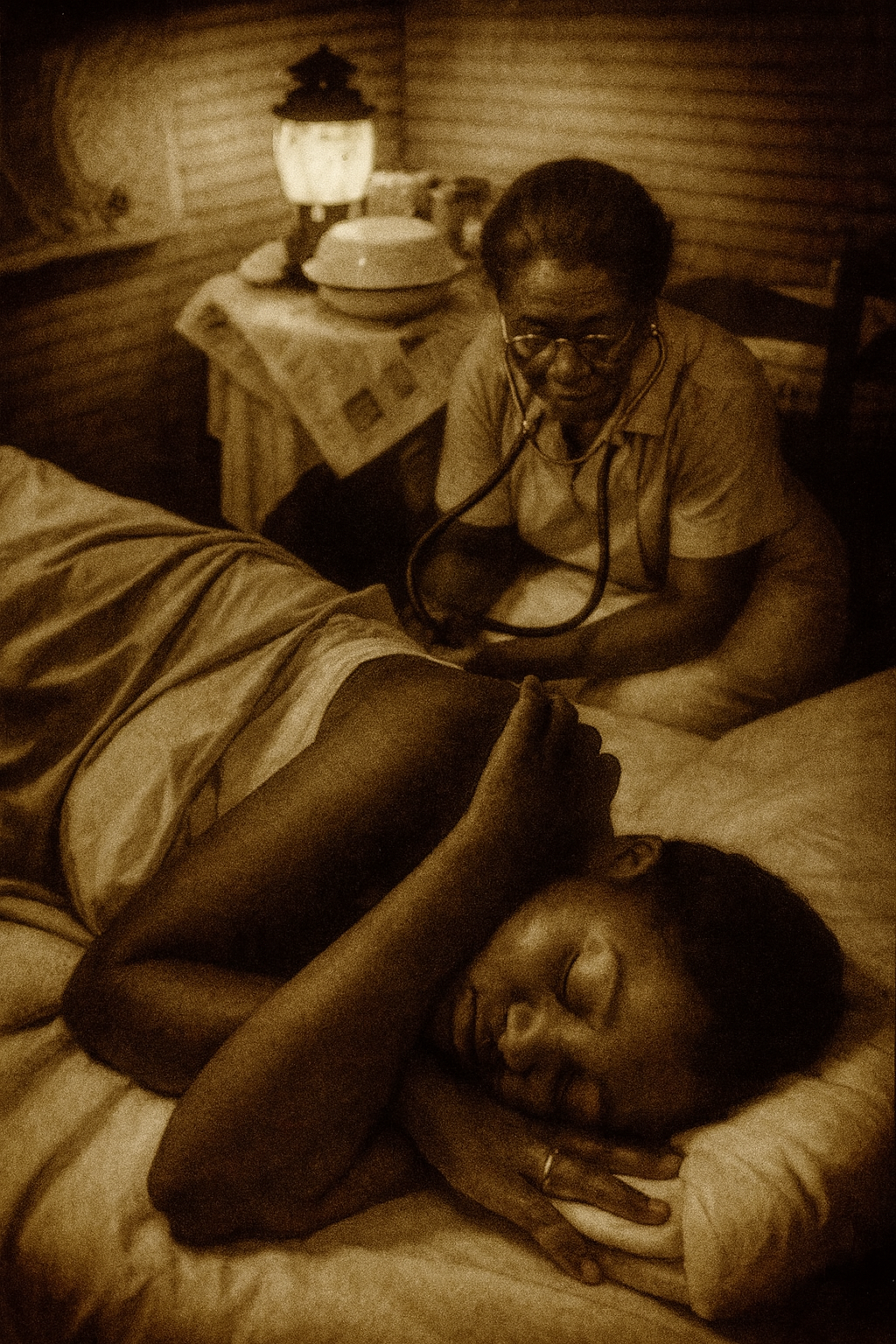
W. Eugene Smith's photographs didn't ask for permission. They demanded witness. A mother's face contorted in labor. A newborn gasping his first breath by lamplight. A paralyzed man weeping because someone—anyone—had come to see him. And at the center of it all: Maude Callen, a Black nurse-midwife in rural South Carolina, working herself to exhaustion for $225 a month while America looked the other way.
The photo essay was titled "Nurse Midwife: Maude Callen Eases Pain of Birth, Life and Death." It became one of the most celebrated pieces of photojournalism ever published. Not because it was comfortable to look at—but because it made looking away impossible.
Archive Documentation
Historical Figure: Maude Callen, Nurse-Midwife
Photographer: W. Eugene Smith
Issue Date: December 3, 1951
Archive Source: Life Magazine Photo Essay
Location: Berkeley County, South Carolina
The Invisible America
While postwar prosperity filled suburban driveways with Chevrolets and living rooms with television sets, Berkeley County, South Carolina might as well have been another country. Doctors were scarce. Hospitals turned away poor Black patients as policy. Traditional "granny midwives" delivered babies with little more than folk wisdom and prayer. Tuberculosis, malnutrition, and preventable disease moved through communities like weather.
Maude Callen was one of only three nurse-midwives serving the entire state of South Carolina. She drove 36,000 miles annually across dirt roads and swampland. She worked 16-hour days as routine, sometimes going 27 hours without food. She delivered babies, diagnosed tuberculosis, distributed relief checks, taught midwifery classes, bought groceries for families with nothing, and sat with the dying.
She was detective, doctor, teacher, counselor, and—for thousands who had been abandoned by every institution that should have protected them—the only lifeline they had.
Life didn't just profile Callen. It indicted a nation.
Smith's Lens: Photojournalism as Moral Witness
W. Eugene Smith understood something most photographers didn't: great photojournalism doesn't illustrate a story. It becomes the story.
His images from Berkeley County were intimate, unflinching, and devastating in their clarity. He captured Alice Cooper in the throes of labor, her agony unmediated by sentimentality. He documented a newborn boy raised into lamplight, lungs filling with air for the first time, Callen's steady hands cradling new life in a room with newspaper for sterile pads and a fruit crate for a crib.
He showed Callen eating her first meal after more than a full day without rest—and then returning to work. He photographed children subsisting on cornmeal alone. A blind man who couldn't read his own bills. The homemade incubators Callen fashioned from whisky bottles filled with warm water because there was nothing else.
And he captured something rarer still: dignity in the face of systemic abandonment. The paralyzed man who wept when Callen visited, not from pain but from the simple fact that someone cared. The crowds gathering at makeshift clinics in churches and schools, trusting her when they had no reason left to trust institutions. The midwives she trained, learning to carry forward what she had given them.
Smith's photographs weren't staged. They weren't sanitized. They showed reality as it existed in 1951 America—not the version advertised on Life's own cover, but the one most readers had never been asked to see.
Birth and New Life
Smith captured mothers in labor, deliveries by lamplight, and newborns taking their first breath—documenting the raw struggle of bringing life into poverty.
Improvised Medicine
Whisky bottles as incubators, fruit crates as cribs, newspapers as sterile pads—ingenious solutions born from necessity in a place abandoned by systems.
The Human Toll
Tuberculosis patients, accident victims, children on cornmeal alone, and a paralyzed man weeping when someone finally came to help.
Tireless Service
Callen working 27 hours without food, driving 36,000 miles yearly, teaching the next generation—one woman carrying an entire community.
The Contrast That Defined an Era
The December 3, 1951 issue remains one of the most significant publications in Life's history precisely because of its contradictions. The cover sold aspiration: holiday gifts, feminine beauty, consumer ease. Inside, Smith's essay delivered reckoning.
This wasn't an accident. Life had mastered the art of the long-form photo essay—cinematic sequences that built narrative momentum across spreads, making readers feel rather than simply observe. While newspapers offered facts and illustrated magazines offered drawings, Life offered immersion. Smith's Callen essay represented that form at its apex: each frame a story, each sequence a chapter, the whole a moral document that journalism rarely achieves.
The essay unfolded as witness testimony:
The struggle of childbirth in poverty. The improvised brilliance of whisky-bottle incubators. The exhaustion of a woman who wouldn't stop. The students learning her methods. The community that depended on her. The system that had failed them all.
And then—something almost unprecedented happened.
When Journalism Became Action
Readers didn't just absorb the story. They responded.
Donations poured in from across the country. Enough money arrived to fund the construction of a health clinic in Callen's community—a tangible structure born from photographic witness. This remains one of the rarest moments in journalism history: when documentation didn't just inform or inspire, but directly transformed the lives it had illuminated.
The essay succeeded because Smith and Life understood that great storytelling requires both artistry and moral clarity. The photographs were technically masterful and emotionally devastating. They didn't exploit Callen's patients—they honored them. They didn't sensationalize poverty—they demanded accountability for it.
Maude Callen carried a community that institutions had abandoned. Smith's photographs carried her story to a nation that needed to see it.
Why This Issue Matters to Collectors
Historical Documentation
This issue captured the realities of healthcare inequality in the Jim Crow South just as the civil rights movement began its long march toward justice. It is primary source material for understanding mid-century American apartheid.
Photographic Mastery
W. Eugene Smith is considered one of the greatest photojournalists who ever lived. The Callen essay ranks among his finest achievements—and Life gave him the canvas to create it.
Cultural Artifact
Few publications so perfectly encapsulate America's divided reality in 1951: prosperity and poverty, progress and neglect, existing simultaneously and deliberately kept separate.
Enduring Influence
This wasn't just reportage. It was photojournalism that built a clinic, changed policy discussions, and redefined what the medium could accomplish.
For collectors of 20th-century media, owning this issue means possessing a document that mattered—then and now.
The Legacy in Your Hands
The December 3, 1951 Life Magazine endures because Maude Callen's story was never just about one woman in one county. It was about what happens when institutions fail, when systems abandon their purpose, and when survival depends on the conscience and endurance of those society has chosen to forget.
Smith's photographs refuse to let us forget. They insist, more than seven decades later, that history is written not only by generals and politicians but by nurses working through the night, by teachers sharing what they know, by people who choose compassion when it would be easier to look away.
Holding this issue today means holding evidence of what journalism can be when it commits fully to truth: uncomfortable, necessary, and powerful enough to move a nation.
Explore Original Life Magazines
From the 1930s through the 1970s, Life documented war, civil rights, cultural revolution, and the everyday moments that defined generations. These aren't just magazines. They're American memory, preserved in ink and photography, waiting to be rediscovered.
Browse Life Magazine Collection