
Mazie Gordon, Bowery's Guardian Angel, and the Soul of 1940s New York
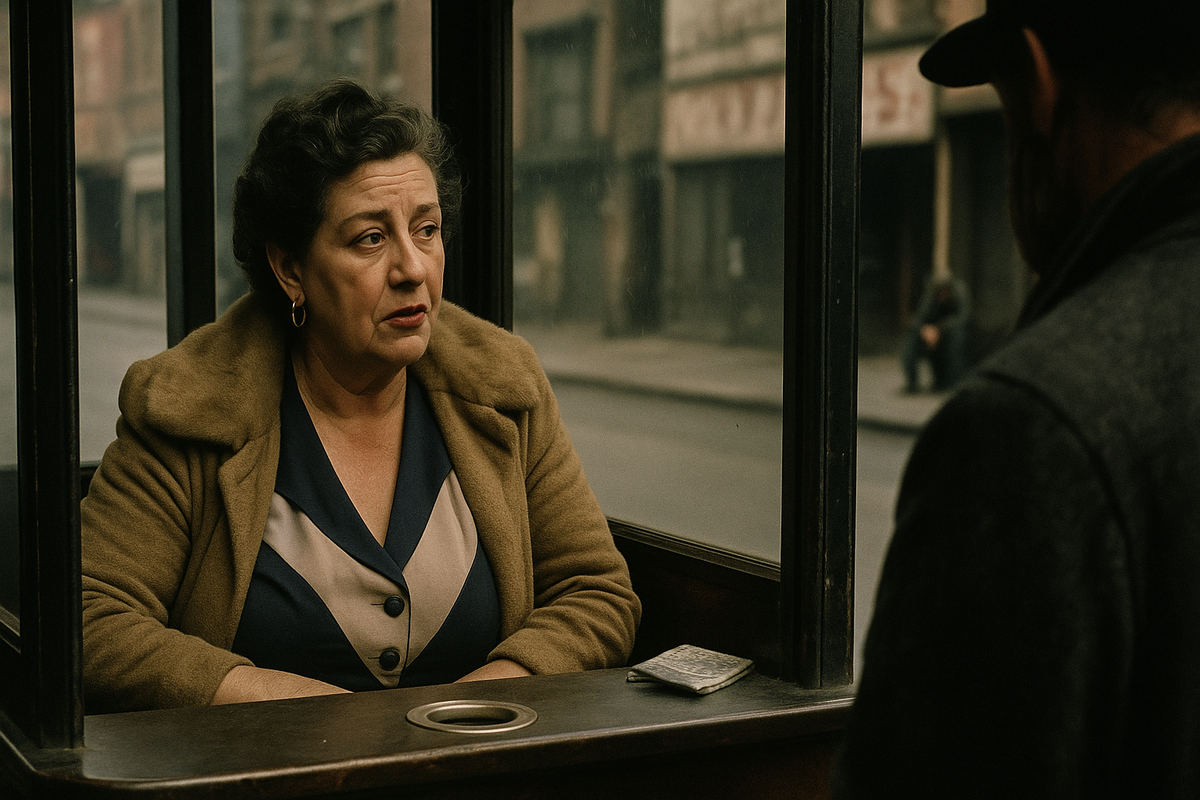
The ticket booth at the Venice Theater held a throne.
Behind its scratched glass sat Mazie Gordon—foul-mouthed, chain-smoking, impossible to ignore—dispensing movie tickets, nickels for flophouse beds, and brutal truths to the Bowery's army of drifters. When Joseph Mitchell profiled her in the December 21, 1940 issue of The New Yorker, he wasn't writing about a saint. He was documenting New York's most unlikely guardian: a woman who cursed at homeless men while slipping them subway tokens, who mocked their stupidity while making sure they didn't freeze to death in doorways.
At a moment when Europe was burning and America debated whether to enter the war, Mitchell gave readers something unexpected—a portrait of compassion that operated without sentiment, charity that came wrapped in insults, and heroism that never asked for recognition.
Archive Details
Historical Figure: Mazie Gordon, Venice Theater ticket-taker
Issue Date: December 21, 1940
Archive Source: The New Yorker Magazine
Writer: Joseph Mitchell
Cover Artist: Rea Irvin
The Bowery in 1940: America's Forgotten War Zone
While Nazi Germany occupied France and the Battle of Britain raged overhead, New York's Bowery fought its own war against poverty. The Great Depression had transformed what was once a thriving entertainment district into a corridor of desperation: flophouses charging fifteen cents a night, breadlines stretching around corners, men who'd lost everything sleeping on steam grates.
Franklin Roosevelt had just secured an unprecedented third term in November 1940, promising to keep America out of Europe's conflict while supporting the Allies. But his New Deal hadn't reached everyone. The Bowery remained crowded with casualties—men discarded by an economy that had collapsed a decade earlier and still hadn't fully recovered.
Mazie Gordon worked the overnight shift at the Venice, a second-run movie house where admission cost a quarter and the clientele included more drunks than film enthusiasts. She'd been stationed in that booth since 1923, seventeen years of watching the same broken men shuffle past her window, night after night, year after year.
Most people would have grown cynical or indifferent. Mazie grew strategic.
Mitchell's Portrait: The Literature of the Streets
Joseph Mitchell understood something other journalists missed: the most revealing stories about a city don't come from City Hall or Park Avenue penthouses. They come from ticket booths at midnight.
His profile captured Mazie in action—not as she wanted to be seen, but as she actually operated. She handed out nickels for sandwiches while calling men "bums." She slipped subway tokens to drifters who needed to reach a warmer borough, then berated them for their drinking. She knew which men were genuinely homeless and which were working angles. She could spot trouble three blocks away and defuse it with a joke or a threat, depending on what the situation required.
Mitchell recorded her voice with documentary precision: "I'm not running a charity. I'm running a movie house. But I can't let a man freeze, can I?"
That contradiction—the razor-sharp tongue protecting the soft heart—made her real. Mitchell gave readers a character who belonged in a Damon Runyon story but actually existed, every night, at 47 Park Row.
The New Yorker's "Profiles" section had been elevating ordinary New Yorkers into cultural icons since the 1920s, but Mitchell's Mazie piece represented the form at its peak. He captured not just what she did, but how the Bowery itself functioned—its unwritten rules, its harsh economics, its surprising moments of grace.
The Magazine: December 21, 1940
Rea Irvin's cover illustration that week showed a butler delivering a flaming Christmas pudding to an igloo—The New Yorker's signature absurdist humor applied to holiday tradition. Inside, the magazine's range demonstrated why it had become indispensable to serious readers: sophisticated cartoons, E.B. White's essays, theater criticism, fiction, and Mitchell's street-level reportage.
While other magazines covered the war or celebrity culture, The New Yorker focused on texture and character. It operated on the principle that understanding how Mazie Gordon treated homeless men revealed more about American values than any political speech could.
The magazine's editorial judgment proved correct. Mitchell's profile outlasted countless front-page headlines from 1940. Readers forgot the week's political debates but remembered Mazie—remembered her telling a drunk to "go sleep it off before I crack your skull," then watching to make sure he made it safely to the flophouse.
Mazie's Method: Practical Compassion
Mitchell's reporting revealed a woman who'd developed sophisticated systems for managing urban poverty:
Strategic Resource Allocation
Mazie tracked which men were reliable and which would spend money on alcohol. She adjusted her charity accordingly, sometimes giving cash, sometimes only food, sometimes just advice delivered with enough profanity to ensure it stuck.
Reputation Management
In a neighborhood where violence was common, Mazie maintained authority through personality. She didn't tolerate disrespect, but the men protected her because she'd earned their loyalty through seventeen years of small kindnesses.
Economic Survival
She wasn't wealthy. Mitchell noted she made $35 a week—decent for the era but not generous. Her charity came from narrow margins, quarters and nickels she could barely afford to spare.
Emotional Distance
She never romanticized poverty or pretended the men were anything other than what they were: drunks, drifters, men whose bad decisions had consequences. But she kept them alive anyway.
The Long Game
Mitchell observed that Mazie had watched men cycle through the Bowery for nearly two decades. She'd seen some recover, most deteriorate. She helped regardless, knowing most wouldn't change but unable to stop trying.
This wasn't charity as moral performance. It was charity as daily practice, stripped of sentimentality and sustained by sheer stubbornness.
Collector Significance: Why This Issue Matters
Literary Landmark
Mitchell's Mazie profile appears in virtually every anthology of American journalism and literary nonfiction. He later included it in McSorley's Wonderful Saloon (1943) and his collected works. This is the first publication, making it the primary source.
Pre-War Time Capsule
Published exactly one year before Pearl Harbor, this issue captures America's last moment of ambiguity—still officially neutral, still debating involvement, still focused on domestic concerns. Within twelve months, everything would change.
Irvin Cover Art
Rea Irvin co-founded The New Yorker's visual identity and created the magazine's mascot, Eustace Tilley. His covers are collected independently of editorial content.
Historical Documentation
Mitchell's piece remains the definitive source on the Bowery during the Depression's final years. Historians researching New York poverty, urban homelessness, or the social landscape of 1940 cite this profile as primary evidence.
Institutional Prestige
By 1940, The New Yorker had established itself as the gold standard for American magazine journalism. An issue featuring one of its most celebrated writers at the height of his powers carries inherent value.
Scarcity & Condition
Original copies in good condition are increasingly scarce. The paper stock from 1940 is now 85 years old; issues that survived without significant damage, dampness, or tearing command premium prices, particularly when the cover remains intact.
Legacy: Why Mazie Still Matters
Mitchell's profile ensured Mazie Gordon outlived herself. She died in 1964, largely forgotten by everyone except Bowery regulars. But the New Yorker piece gave her permanence.
Her story continues to surface in discussions about homelessness, urban poverty, and the ethics of charity. She represents an alternative to both callous indifference and professional social work—something messier, more personal, and possibly more effective for the men she actually helped.
For readers in 1940, Mazie offered reassurance that humanity persisted even in the Bowery's darkness. For readers today, she poses uncomfortable questions: Why did one woman do more than the city's entire welfare apparatus? What failures of policy require individual heroes? And how many other Mazies existed—still exist—doing invisible work society depends on but refuses to properly recognize?
Mitchell understood he was documenting something that would vanish. The Bowery was already changing by 1940, its flophouses slowly being replaced by urban renewal projects. Mazie's world—the world where a ticket-taker at a second-run movie house functioned as a neighborhood's social safety net—was ending.
He preserved it in 3,000 words.
Owning a Piece of Literary History
For collectors who value American journalism, New York social history, or the evolution of literary nonfiction, the December 21, 1940 New Yorker is essential.
This isn't nostalgia. It's preservation of a specific moment when magazine journalism functioned as literature, when writers like Mitchell documented vanishing worlds with the care usually reserved for fiction, when a ticket-taker at a Bowery movie house could become as important to American cultural history as any politician or celebrity.
Browse Original New Yorker MagazinesInside these archives you'll find not just Mazie's story, but decades of American life captured by writers and artists who understood that cultural history happens everywhere—in ticket booths, on street corners, behind lunch counters—if you know how to look.
Conclusion
Joseph Mitchell's profile of Mazie Gordon remains one of The New Yorker's defining achievements—a piece of reporting that transcended journalism to become literature. It captured a woman, a neighborhood, a city, and an era in transition, all while demonstrating that compassion doesn't require kindness, and heroism doesn't require recognition.
For modern collectors, the December 21, 1940 issue is more than a magazine. It's evidence that words on paper can preserve lives that would otherwise vanish, that great writing makes ordinary people unforgettable, and that the best cultural history comes from watching closely, recording honestly, and trusting that readers will recognize truth when they encounter it.
Mazie Gordon died sixty years ago. But every night in that New Yorker profile, she's still behind the ticket booth window, still cursing at drifters, still making sure they don't freeze—still showing us what practical compassion looks like when it refuses to perform for an audience.