
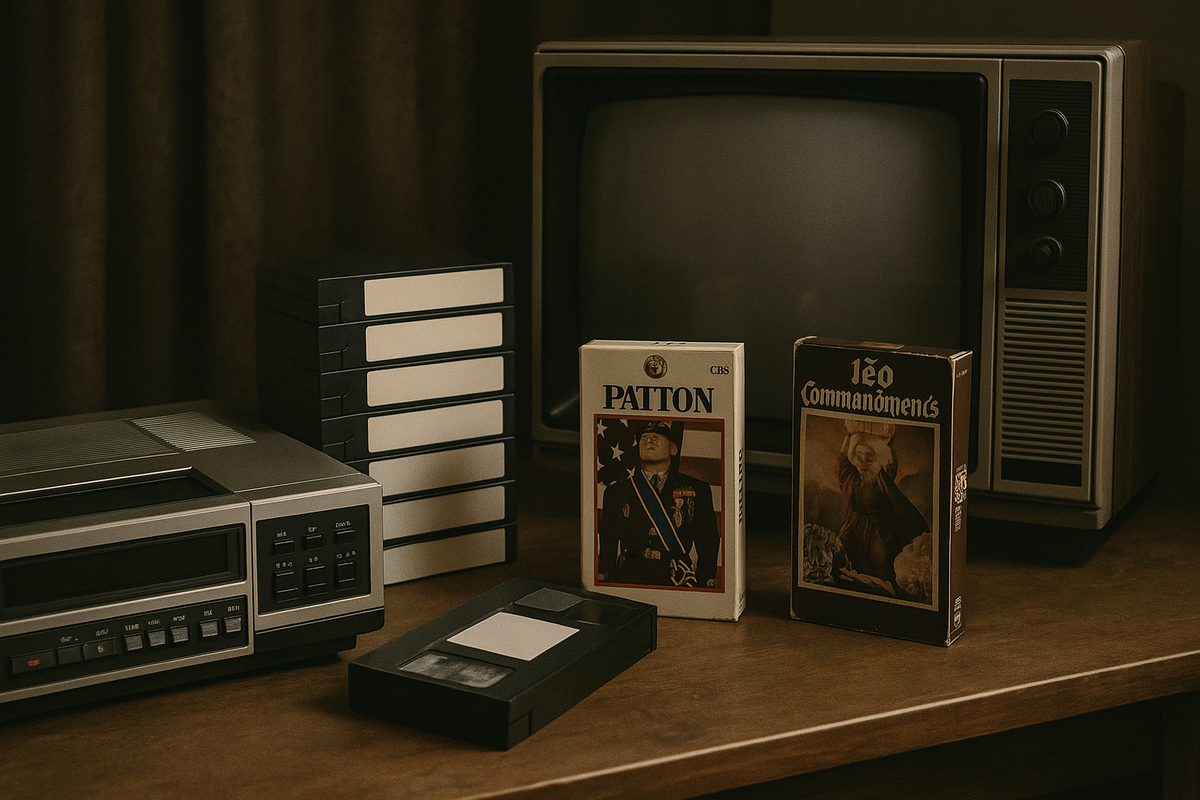
Video Fever in 1980: When Hollywood Bet 77 Million Households Would Pay $75 for Patton
Inside the September 1, 1980 Forbes that documented the beginning of the home video revolution—and questioned whether anyone would actually buy it
Alan Alda stood outside 20th Century-Fox with a picket sign. So did Ed Asner. So did Telly Savalas. The year was 1980, and Hollywood's biggest stars weren't promoting films—they were fighting for a cut of something that barely existed yet: home video revenue.
Inside the September 1, 1980 issue of Forbes Magazine, the article "Video Fever" documented this collision between labor, technology, and Wall Street with surgical precision. While actors walked picket lines and studio executives launched video divisions, one question hung over the entire industry: Would Americans really spend $75 to own a single movie—ten times the cost of an LP record—when they could still see it in theaters for $3?
The answer would reshape entertainment forever. But in 1980, nobody knew if home video would become the next television or the next 8-track tape.
Archive Details
Publication: Forbes Magazine
Issue Date: September 1, 1980
Feature Article: "Video Fever"
Historical Context: Published during the 1980 SAG strike, amid stagflation, energy crises, and the dawn of home entertainment technology
Archive Source: Original Magazines Collection
The Economics of Delusion
The math looked seductive on paper. Seventy-seven million television households. Prerecorded videotapes priced between $44 and $75. If even a fraction of those homes bought movies, the revenue would dwarf theatrical releases.
But Forbes wasn't buying the hype. The magazine noted that blank videotapes sold for $9 to $14—meaning consumers could record movies off television for a fraction of the studio price. Retailers hesitated to stock expensive titles with unproven demand. And the format wars—VHS versus Betamax, with multiple competing videodisc systems entering the market—threatened to paralyze consumer adoption entirely.
Forbes drew a pointed historical parallel: in the 1950s, color television stalled for years because incompatible broadcast standards confused buyers. Would home video repeat that mistake?
The magazine's skepticism cut through executive optimism with a single line: "How many people are really going to walk out and spend $75 for their own copy of Patton?"
The Strike That Defined Digital Rights
The 1980 Screen Actors Guild strike wasn't just about money. It was about precedent. SAG demanded residual payments from videotape sales—a concept studios resisted because video was still experimental. If actors won, every Hollywood union would demand the same terms. If they lost, studios would control the new medium entirely.
Forbes framed this as more than labor theater. It was the first battle in what would become a 40-year war over new media rights—a fight that continues today in streaming residual disputes and AI training debates.
The images of Alda, Asner, and Savalas on picket lines weren't just documentary photography. They were evidence of an industry trying to rewrite its economic rules in real time.
The Corporate Land Grab
While unions fought, studios moved fast.
Twentieth Century-Fox launched Fox Video Enterprises, pricing tapes at $44 and aggressively pursuing distribution deals. The company bet that families would build home libraries the way they collected vinyl records.
MGM/UA partnered with CBS to form MGM/CBS Home Video, leveraging MGM's massive film catalog. The joint venture flooded the market with titles from Hollywood's golden age, hoping nostalgia would drive sales.
Both strategies assumed demand existed. Neither company had proof.
Forbes documented these moves with the detachment of a financial autopsy. The magazine profiled executives who compared home video to the revolutions of radio, television, and cable. But it also quoted retailers who refused to stock $75 movies and distributors who licensed titles to third parties rather than risk their own capital.
The Format Nightmare
In September 1980, American consumers faced a bewildering choice:
- VHS (backed by JVC and most studios)
- Betamax (Sony's superior but doomed format)
- CED VideoDisc (RCA's needle-based system)
- LaserDisc (Philips' optical technology)
Each format promised convenience. None were compatible. And all required expensive players—$500 to $1,000 at a time when median household income was $21,000.
Forbes didn't predict which format would win. Instead, it warned that the confusion itself could kill the market before it matured. The magazine's analysis proved prescient: CED and Betamax would fail, LaserDisc would remain niche, and VHS would dominate for two decades—but only after years of consumer paralysis.
The Context: 1980 America
The home video gamble unfolded against a backdrop of economic turbulence. Inflation hit 13.5%. Unemployment approached 8%. Interest rates soared above 20%. President Jimmy Carter warned of a national "crisis of confidence."
Energy crises disrupted industries. Iranian hostages dominated headlines. The Cold War intensified. And yet, even in this climate of anxiety, Americans bought personal computers, subscribed to cable television, and—slowly, tentatively—began renting videotapes.
Forbes captured this contradiction: a nation uncertain about its future but willing to invest in new forms of entertainment. The "Video Fever" feature wasn't just business journalism. It was cultural anthropology—a study of how Americans respond to change when everything else feels unstable.
Key Themes from the Forbes Analysis
Why This Issue Endures
For collectors, the September 1, 1980 Forbes represents a singular moment in media history.
Labor history: The SAG strike photos document the first major union fight over digital rights. Every streaming residual battle since 2020 echoes this dispute.
Economic foresight: Forbes questioned the $75 price point when studios insisted it would work. The magazine was right—rental stores, not ownership, would drive adoption.
Technological prophecy: The article anticipated format wars, retail resistance, and consumer confusion—all of which came true.
Cultural snapshot: The issue preserves 1980 America in amber: stagflation, energy crises, Cold War tensions, and the first stirrings of the digital age.
Unlike entertainment magazines that celebrated home video uncritically, Forbes asked hard questions. The magazine's skepticism aged better than Hollywood's optimism.
The Collector Significance
Original Forbes issues from this era are scarce. The magazine's business audience didn't preserve copies the way Life readers saved photo-essays. Corporate subscribers discarded old issues. Libraries weeded their collections.
The September 1, 1980 issue survives because it documented a turning point—not just in entertainment, but in how technology reshapes labor, economics, and culture.
The article doesn't just report on "Video Fever." It diagnoses whether the fever would break or burn out. Forty years later, we know the answer—but reading the piece in 2025, with streaming wars raging and AI upending Hollywood again, the uncertainty feels immediate.
Where to Find It
If you want to hold the beginning of the home video revolution in your hands, this Forbes issue delivers.
Browse Original Forbes MagazinesFrom the energy crises of the 1970s to the tech booms of the 1990s, Forbes documented every twist in the global economy. Each issue is more than newsprint—it's a living record of business strategy and cultural change.
The September 1, 1980 issue of Forbes Magazine remains essential reading for anyone studying entertainment, labor, or technology history. For readers in 1980, it was a cautious report on an uncertain bet. For readers today, it's proof that every revolution—from VHS to streaming—begins with strikes, skepticism, and stubbornly expensive experiments that nobody's sure will work.