
Miles Davis, Rock 'n' Roll Dreams, and the Reinvention of American Music
Inside the December 13, 1969 Rolling Stone that captured jazz's most dangerous artist on the edge of fusion
The declaration appeared in print on December 13, 1969, and it read like a challenge: "I could put together the greatest rock and roll band you ever heard…"
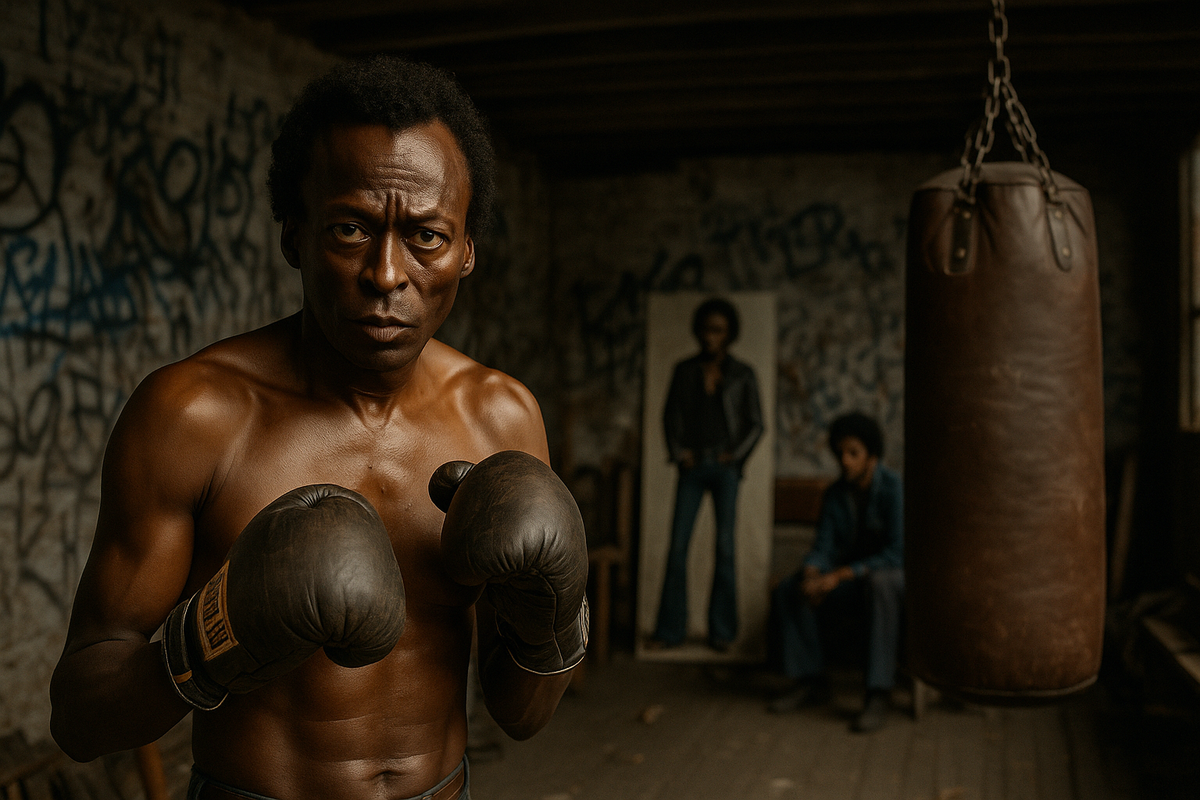
Miles Davis—trumpeter, bandleader, architect of bebop and cool jazz—wasn't asking permission. He was announcing that the boundaries between jazz and rock were about to collapse, and that he would be the one to bring the walls down. For readers of Rolling Stone that winter, the statement landed like a manifesto. This was Davis on the edge of Bitches Brew, poised to electrify jazz and alienate purists in equal measure. The magazine captured him mid-transformation, shirtless and uncompromising, staring down the camera as if daring anyone to call him a jazz musician.
This issue wasn't just journalism. It was documentation of a cultural detonation.
Archive Details
Historical Figure: Miles Davis
Issue Date: December 13, 1969
Archive Source: Rolling Stone Magazine
Writers: Ralph Gleason and Don DeMicheal
The World Miles Davis Was Breaking Open
By late 1969, American culture was fragmenting along generational and racial lines. The Vietnam War had turned campuses into battlegrounds. Woodstock had crowned rock as the voice of half a million mud-soaked idealists. The civil rights movement had evolved into Black Power, and artists like Davis were claiming space not as integrationists but as revolutionaries.
Jazz, meanwhile, was losing ground. The music that had defined American modernism in the 1940s and '50s now risked irrelevance. Rock bands commanded arenas. Jazz played to smaller, older, whiter audiences. But Davis refused the script. In August, he'd released In a Silent Way, an album that replaced swing with electric drift. Bitches Brew was waiting in the wings—a double LP that would splice Hendrix's feedback with Coltrane's spiritualism and rewrite the rules entirely.
Rolling Stone caught him at the pivot point. The article, penned by Ralph Gleason and Don DeMicheal, treated Davis not as a relic but as a present-tense force. The magazine wasn't covering jazz. It was covering the future.
The Visual Assault
The photography hit harder than the text.
Davis appeared shirtless, lean, eyes locked on the lens with the intensity of a boxer before the bell. Other shots placed him in a gym, gloves on, working the heavy bag—music as combat, improvisation as endurance sport. The message was clear: this wasn't parlor music. This was survival.
For a magazine barely two years old, the choice to frame Davis this way was radical. Rolling Stone gave him the treatment reserved for Jagger or Hendrix—raw, physical, dangerous. The imagery rejected the polite distance that jazz criticism had long maintained. Davis wasn't being analyzed. He was being felt.
What the Article Said (And What It Meant)
Gleason and DeMicheal built the profile around Davis's own defiance. He dismissed labels. He mocked the idea that jazz had fixed boundaries. He praised Jimi Hendrix and Sly Stone alongside John Coltrane. And he connected his music to physicality—the training, the discipline, the refusal to soften.
The subtext was impossible to miss: Davis was claiming rock's energy without surrendering jazz's intellectual rigor. He was asserting that Black innovation didn't need white approval, that reinvention wasn't betrayal, and that the greatest threat to an artist was stagnation.
The article appeared at a moment when rock had become the sound of rebellion and jazz risked becoming the sound of respectability. Davis was saying: Watch me blow both of those up.
Why Rolling Stone Mattered Here
Founded in 1967 by Jann Wenner and Ralph Gleason, Rolling Stone had no interest in being a trade publication. It covered music as cultural upheaval, treating rock stars as symbols and albums as manifestos. By December 1969, the magazine had already profiled Dylan, the Stones, and the Beatles. Devoting multiple pages to a jazz musician—especially one dismissing genre entirely—signaled that Rolling Stone understood something others didn't: the revolution wasn't just in rock. It was everywhere music and identity intersected.
The magazine's willingness to treat Davis as central, not peripheral, gave the piece its power. This wasn't jazz appreciation. This was recognition that Davis was doing what rock claimed to do—tearing down the old world and improvising a new one.
Deep Dive: Key Themes
"The Greatest Rock Band" Statement
Davis's bold claim reflected his ambition to merge jazz improvisation with rock's power and reach—a promise he would fulfill with Bitches Brew.
The Boxing Gym Imagery
Photographs of Davis training paralleled the physical toughness and discipline behind his music, reframing jazz as athletic and confrontational.
Reinvention as Survival
The article emphasized Davis's refusal to stagnate, capturing the moment before he launched into his fusion era and redefined his legacy.
Cultural Resonance
By 1969, Davis represented not just music but the wider struggle for Black self-definition and artistic freedom in America.
Rolling Stone's Voice
The coverage symbolized the magazine's mission: to treat music as cultural history in real time, breaking down genre barriers in its own pages.
The End of the '60s
This issue captured the twilight moment when idealism was giving way to uncertainty, and artists like Davis were charting new paths forward.
The Artifact as History
Vintage magazines endure because they capture thought in real time. The December 13, 1969 issue of Rolling Stone doesn't just describe Miles Davis—it preserves the moment when jazz, rock, and Black cultural assertion converged. Every page carries the urgency of its era: the debates, the defiance, the sense that the old rules no longer applied.
Digital archives flatten history into searchable text. Original issues preserve it as material culture—ink, paper, the physicality of reading what someone held in December 1969 when the decade was ending and nothing felt certain.
What Makes This Issue Irreplaceable
Timing
The issue appeared weeks before Bitches Brew reached stores. It documented the moment before the explosion, when Davis's fusion was still a rumor, not a fact.
Photography
The shirtless portrait and boxing gym shots remain among the most iconic images of Davis ever published—raw, unguarded, and completely unlike the suited-up trumpeter of earlier eras.
Cultural Weight
The article exists at the intersection of Vietnam, Woodstock, Black Power, and the collapse of musical categories. It's a primary source for understanding how identity and sound collided at the end of the 1960s.
Scarcity
Original late-'60s Rolling Stone issues are increasingly rare, particularly ones featuring jazz artists treated with rock-star gravity.
Explore the Archive
Original Rolling Stone magazines remain among the most vital documents of 20th-century music and culture. From the psychedelic experimentalism of the late '60s to punk's arrival in the '70s, each issue is a time capsule.
Browse Rolling Stone Magazine CollectionWhether you're a collector, historian, or fan of Miles Davis, these magazines aren't just reading material. They're primary sources for understanding how music became the language of generational conflict, identity, and reinvention.
The December 13, 1969 issue of Rolling Stone remains one of the most vital artifacts of its moment. Its profile of Miles Davis—complete with striking photography and his own unapologetic words—captured an artist refusing to be contained, a magazine willing to document the collision, and a culture being rewritten in real time.
To hold this issue today is to hold more than newsprint. It's to hold Miles Davis before Bitches Brew changed everything, America at the end of the '60s, and a generation that believed music could break the world open and build it back differently.