
The Week America Discovered Its Astronauts Had Wives—And Those Wives Had Voices
Inside the September 21, 1959 Life Magazine that gave the Mercury Seven wives their own words—and changed how America saw the Space Race
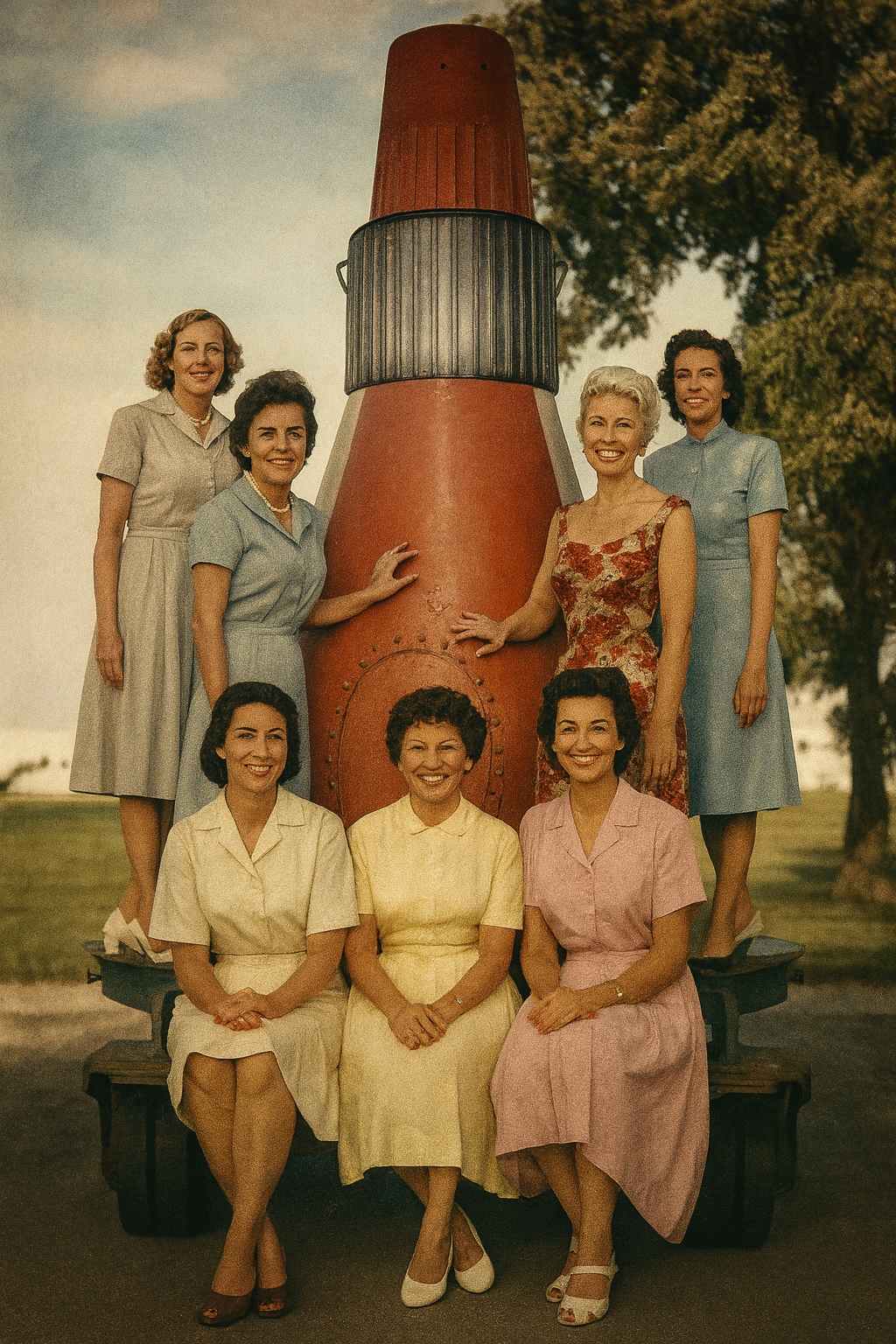
September 21, 1959. Americans opened their mailboxes to find something that would redefine the Space Race. Not rocket schematics. Not Cold War posturing. But seven women, dressed in summer cotton, standing together in Virginia—and for the first time, speaking for themselves.
Life Magazine had done something unprecedented: it handed the microphone to the wives of the Mercury Seven astronauts. Anna Glenn, Louise Shepard, Rene Carpenter, Jo Schirra, Trudy Cooper, Betty Grissom, and Marjorie Slayton were no longer stage props at press conferences. They were authors of their own stories, published in first-person essays that laid bare what it meant to raise children while the nation's hopes were strapped to experimental rockets.
The feature, titled "Seven Brave Women Behind the Astronauts," arrived just one week after Life profiled the astronauts themselves. Together, the two issues formed a diptych—a complete portrait of America's space pioneers as husbands, fathers, and the families who carried the weight of national ambition in the quiet corners of their homes.
This wasn't soft human-interest filler. It was cultural infrastructure. And more than six decades later, this issue remains one of the most sought-after artifacts of the early Space Age.
Archive Details
Publication: Life Magazine
Issue Date: September 21, 1959
Feature Title: "Seven Brave Women Behind the Astronauts"
Historical Context: Mercury Seven Program, Cold War Space Race
Featured Subjects: Anna Glenn, Louise Shepard, Rene Carpenter, Jo Schirra, Trudy Cooper, Betty Grissom, Marjorie Slayton
The Cold War Had Just Learned to Fly
Two years before this magazine hit newsstands, the Soviet Union launched Sputnik and humiliated the West. By 1959, the technological arms race had moved beyond missiles—it had become a contest for the stars themselves. NASA's announcement of the Mercury Seven astronauts that April turned test pilots into instant celebrities: John Glenn, Alan Shepard, Scott Carpenter, Walter Schirra, Gordon Cooper, Gus Grissom, and Donald Slayton.
The men appeared in official portraits, crisp uniforms, steely gazes. America saw heroes. But what about the people who lived with them? What did their wives think about untested capsules and survival odds that engineers wouldn't say out loud?
Life Magazine had the answer. And it was more complex than anyone expected.
What Life's Editors Understood That Others Didn't
By the late 1950s, Life had perfected the art of making history intimate. Its editors knew that photographs could collapse distance, that personal voices could give geopolitical struggles a human pulse. The astronaut wives' stories weren't just reported—they were composed, through images that captured the ordinary machinery of daily life under extraordinary pressure:
Anna Glenn at home, faith anchoring her family through uncertainty.
Louise Shepard playing golf with her daughters, mirroring Alan's competitive drive.
Rene Carpenter consoling her young daughter—tenderness framed against stress.
Jo Schirra gathered with Wally and their children in the living room, projecting warmth and humor.
Trudy Cooper reading quietly while Gordon studied late into the night.
Betty Grissom on the porch with her boys, admitting what she feared for Gus.
Marjorie Slayton laughing as her toddler played with the family dog—ordinary joy in the shadow of the extraordinary.
These weren't candid snapshots. They were deliberate compositions that communicated a message: the Space Race wasn't just about rockets. It was about marriages navigating uncertainty, children growing up with absent fathers, women bearing the burden of national mythology without a script.
The Radical Act of Letting Them Speak
The cover showed all seven wives together—suburban mothers in sleeveless dresses who looked like they belonged at a church picnic. The headline clarified otherwise: "The Astronauts' Wives."
Inside, Life broke format. Instead of journalists speaking about these women, the magazine published first-person essays from them. In 1959, this was not standard practice. Women's voices rarely led national features. But here they were:
Anna Glenn wrote about prayer and spiritual resilience.
Louise Shepard recalled encouraging Alan with simple directness: "Just go right ahead."
Rene Carpenter confessed her "dark feelings" and the burden of being identified only as an astronaut's wife.
Jo Schirra shared how Wally's humor kept their family grounded.
Trudy Cooper revealed her determination: "I want to watch it go."
Betty Grissom admitted her anxieties about Gus's test pilot past, but also her pride in his courage.
Marjorie Slayton declared, "I have never been nervous," projecting calm confidence.
These weren't sanitized PR statements. They were admissions of fear, expressions of faith, and assertions of autonomy. Together, they created a counter-narrative to the spotless heroism NASA was selling. The astronauts' wives weren't silent supporters. They were women with their own emotional lives, their own stakes in history.
What the Essays Revealed—And Why It Mattered
The honesty in these pages would later become folklore in space history:
Years later, these voices would inspire books, documentaries, and the television series The Astronaut Wives Club. But in 1959, they were raw testimony—primary sources documenting what space exploration cost the people who didn't fly.
Why Printed Pages Still Matter
The lasting power of this issue comes from how it combined journalism with humanity. These weren't dispatches about capsules and countdowns. They were stories about children, marriages, anxieties, and faith—all unfolding under history's weight.
In an era when news flashes across screens and evaporates within hours, Life's printed pages offer something different: permanence. Families kept these magazines on coffee tables, clipped pages for scrapbooks, handed them down through generations. That durability is what makes them meaningful to collectors now. They're artifacts with physical presence—tactile, authentic, enduring.
Why This Issue Commands Collector Attention
Published at the dawn of the Mercury program, it captures the Space Age before the mythology hardened.
One of the first national features centering the astronaut wives, who would become icons of Cold War domesticity and resilience.
The color and black-and-white images of family life are among Life's most memorable space coverage.
Women's voices leading a national feature was uncommon in 1959 media.
Space exploration issues—especially Mercury, Gemini, and Apollo—rank among the most valuable Life magazines in circulation.
Owning this issue isn't nostalgia. It's holding a document from the moment America looked toward the stars and acknowledged, for the first time, that families made that journey possible.
Where to Find the Story That Started It All
If you want to step into September 1959 and experience history as Americans lived it, vintage Life magazines offer an unmediated route.
Browse Life Magazine CollectionFrom Project Mercury's first capsules to the Apollo 11 moon landing, Life documented every milestone of America's journey into space. Each issue is a time capsule—authentic, tactile, and built to last.
The September 21, 1959 issue of Life Magazine remains essential reading for anyone serious about Space Age history. By centering the wives of the Mercury Seven astronauts, it revealed that exploration wasn't just a story of test pilots and engineering. It was also about women who balanced daily life with extraordinary pressure, who found ways to be strong while the world looked to their husbands as legends.
Their words and photographs still resonate. They offer historical insight, yes—but also something rarer: honesty about what it costs to live adjacent to greatness.
For collectors, historians, or anyone who values America's journey to the stars, this isn't just a magazine. It's a living artifact—and it still speaks.