
The Magazine That Forced America to Look
Jet's blood-soaked Mississippi report and the photojournalism that testified against terror
On July 23, 1964, African Americans across the country opened their mailboxes to find something that would not let them look away. The latest issue of Jet Magazine arrived with a blood-red stain splashed across Mississippi's outline and three words that promised no comfort: "Special Report" and "Shocking Pictures." Inside those pocket-sized pages was not journalism as usual. It was evidence—raw, graphic, and unforgiving—of a war being waged on American soil against Black citizens demanding the right to vote.
This was not the Mississippi of travel brochures or Chamber of Commerce fantasies. This was Mississippi as a killing field.
For white-owned media outlets still deciding whether to cover civil rights "disturbances" or whether such photographs were "appropriate" for their readership, Jet had already made a different calculation. Its editors understood that some truths could only be told in pictures—and that the cost of silence was higher than the cost of seeing.
Historical Context
Publication: Jet Magazine
Issue Date: July 23, 1964
Historical Period: Freedom Summer
Archive Significance: Special Report on Mississippi racial violence
Cultural Impact: Visual documentation of civil rights-era terrorism
Freedom Summer's Bloody Equation
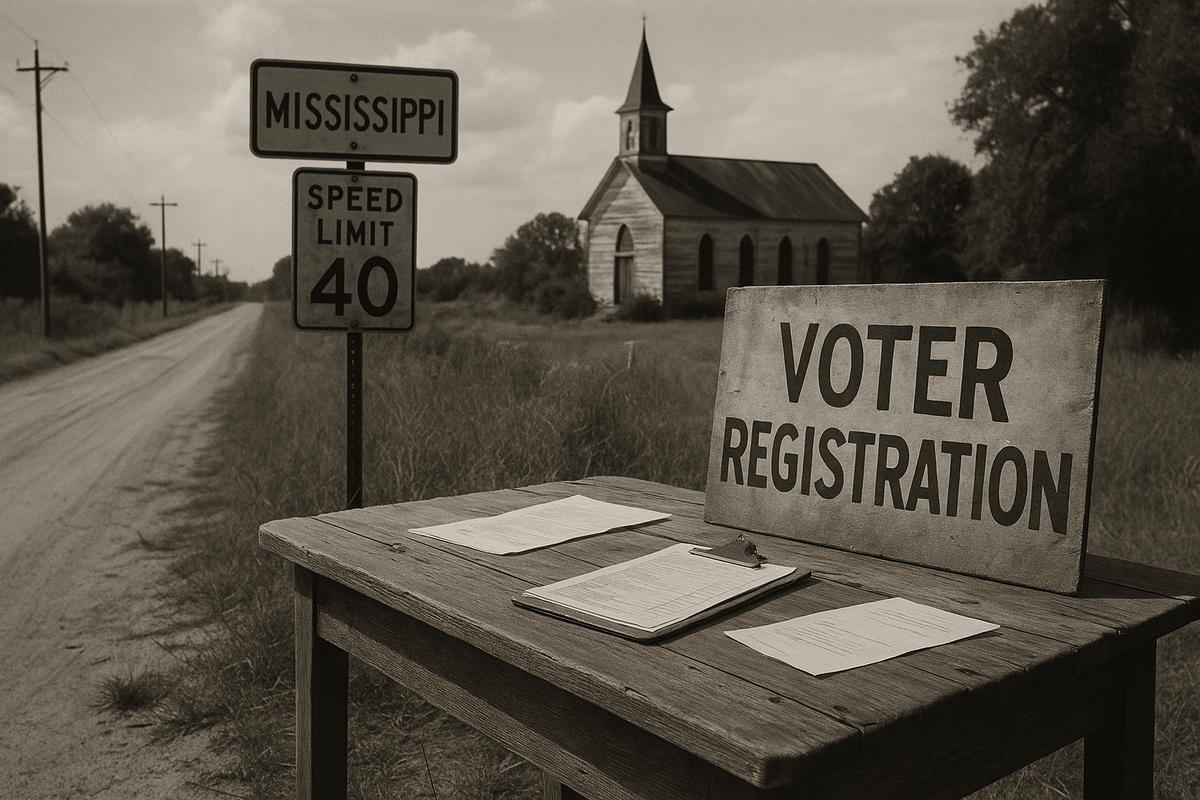
The timing of Jet's Special Report was surgical. Freedom Summer—the 1964 campaign that brought hundreds of college students into Mississippi to register Black voters—had just collided with the state's entrenched culture of white supremacist violence. The resistance was not political debate. It was murder.
Weeks before Jet went to press, three civil rights workers—James Chaney, Michael Schwerner, and Andrew Goodman—had vanished in Philadelphia, Mississippi. Their bodies would later be found buried in an earthen dam, victims of a coordinated killing involving local law enforcement and Ku Klux Klan members. The disappearance shocked even those who thought they understood Mississippi's brutality.
Jet gave its readers what the evening news would not: the pattern behind the murders. This was not an isolated tragedy. This was Mississippi's operating system, a state where lynching had functioned as what the magazine called a "community sport"—public torture treated as entertainment, bodies mutilated while crowds gathered, souvenirs taken from corpses.
The soil of Mississippi, Jet reported, had been "enriched by the flesh, blood, and bones" of African Americans killed by mobs. This was not metaphor. This was geology.
The Magazine That Refused to Flinch
By 1964, Jet Magazine had earned something mainstream publications never could: the absolute trust of Black America. Founded in 1951 by John H. Johnson, Jet was compact enough to fit in a purse or back pocket, but its editorial ambitions were anything but small. Where Life Magazine offered glossy Americana and Look Magazine delivered feel-good features, Jet documented what was actually happening to Black citizens in a country that claimed to be a democracy.
The magazine's approach to photography was its revolution. Jet's editors grasped what words alone could not accomplish—that a single image of Emmett Till's mutilated face in his mother's open casket could do more to galvanize a movement than a thousand editorials. Mamie Till had insisted the world see what racism had done to her fourteen-year-old son. Jet made sure the world did.
Nine years later, the July 23, 1964 issue deployed that same unflinching visual strategy. Full-page spreads showed lynched bodies, grieving widows, mourning children. Captions did not merely identify subjects—they prosecuted. They explained how entire communities lived under terrorism designed to enforce silence.
This was not journalism that asked for permission. It was journalism that demanded a reckoning.
What the Special Report Revealed
The Mississippi report assembled several interlocking stories, each one a count in an indictment:
The issue documented how white mobs had turned torture into spectacle, with victims hanged, burned, and dismembered while crowds posed for photographs. Some killers kept body parts as trophies.
Jet revisited Emmett Till's 1955 murder, connecting his death to the ongoing violence of Freedom Summer. By 1964, Till's name had become shorthand for the price of Black childhood in Mississippi.
The murders of Chaney, Goodman, and Schwerner were placed in their proper context: not as aberrations, but as the latest entries in a ledger of racial killings stretching back generations.
Jet noted that no sitting U.S. President had ever visited Mississippi, a detail that exposed how national leaders avoided the state even as it became the central battlefield of American democracy.
The magazine printed direct accounts from widows, mothers, and children who had witnessed terror. Their grief was not private mourning—it was entered into the historical record.
Together, these elements formed an argument: Mississippi in 1964 was not simply a troubled state. It was a referendum on whether America meant what it said about freedom.
The Permanence of Print
Jet's Mississippi coverage endures because it accomplished something digital journalism cannot replicate: permanence married to intimacy. These were not stories consumed and forgotten. They were printed on paper, folded into purses, carried on buses, debated in barbershops, saved in attics.
That physicality created memory. The same issue that reported a murder in Mississippi one week might be referenced at a church meeting the next, or shown to a teenager being taught family history years later. The magazine did not disappear when the next news cycle arrived. It remained—evidence that could be held, reread, passed down.
This is what makes original Jet magazines irreplaceable. They are not reproductions or digital scans. They are the actual objects that moved through history, absorbing the fingerprints and urgency of the moment they documented.
Why This Issue Matters to Collectors
Published during Freedom Summer's most dangerous weeks, this issue captured the civil rights movement at its breaking point, when national attention and Southern violence reached simultaneous peaks.
Jet printed photographs that other publications suppressed. These pages contain documentation that mainstream media deemed too disturbing, too political, or too accusatory for white audiences.
This issue sat on Black coffee tables across America during one of the movement's most perilous summers. To hold it is to hold the same object that families passed between hands while debating whether to send their children South, whether to march, whether the cost was worth it.
Civil rights-era Jet magazines—particularly those covering lynchings, assassinations, or watershed moments—command premium prices among historians, educators, and families preserving heritage. Condition matters, but provenance matters more.
Owning this issue means possessing a physical artifact from the moment when American apartheid was being documented in real time by the people experiencing it. These are not just magazines. They are inheritance.
A Magazine That Testified
The July 23, 1964 issue of Jet Magazine remains essential because it refused the luxuries of distance, diplomacy, or gradualism. Its Special Report on Mississippi forced readers—then and now—to confront American violence without the comfort of abstraction.
The photographs it published were not merely illustrations. They were sworn testimony. The stories it told were not human interest features. They were prosecutorial evidence. And the magazine itself was not a passive recorder of events. It was an active participant in the struggle, weaponizing photojournalism against a system that depended on invisibility.
More than six decades later, these pages still carry their original charge. They remind us that some truths can only be preserved when someone is brave enough to photograph them, print them, and mail them to every corner of the country that claims to believe in justice.
For collectors, historians, and anyone who understands that artifacts shape memory, original Jet magazines are not reading material. They are evidence of what happened, proof of who testified, and monuments to the refusal to look away.
Explore the Archive
Hundreds of original Jet magazines from the 1950s through the 1970s are available—documenting not just the civil rights struggle, but decades of Black culture, politics, entertainment, and resilience that mainstream media ignored.
Browse Jet Magazine CollectionWhether you collect for historical research, personal heritage, or the preservation of suppressed narratives, these magazines offer something increasingly rare: the chance to see history as it was first reported to the Black community itself, unfiltered by later interpretation or institutional memory.