
The President Who Commanded 1972: Inside Time's Portrait of Nixon at His Peak
When Time Magazine captured Richard Nixon at the height of his power—just before everything collapsed
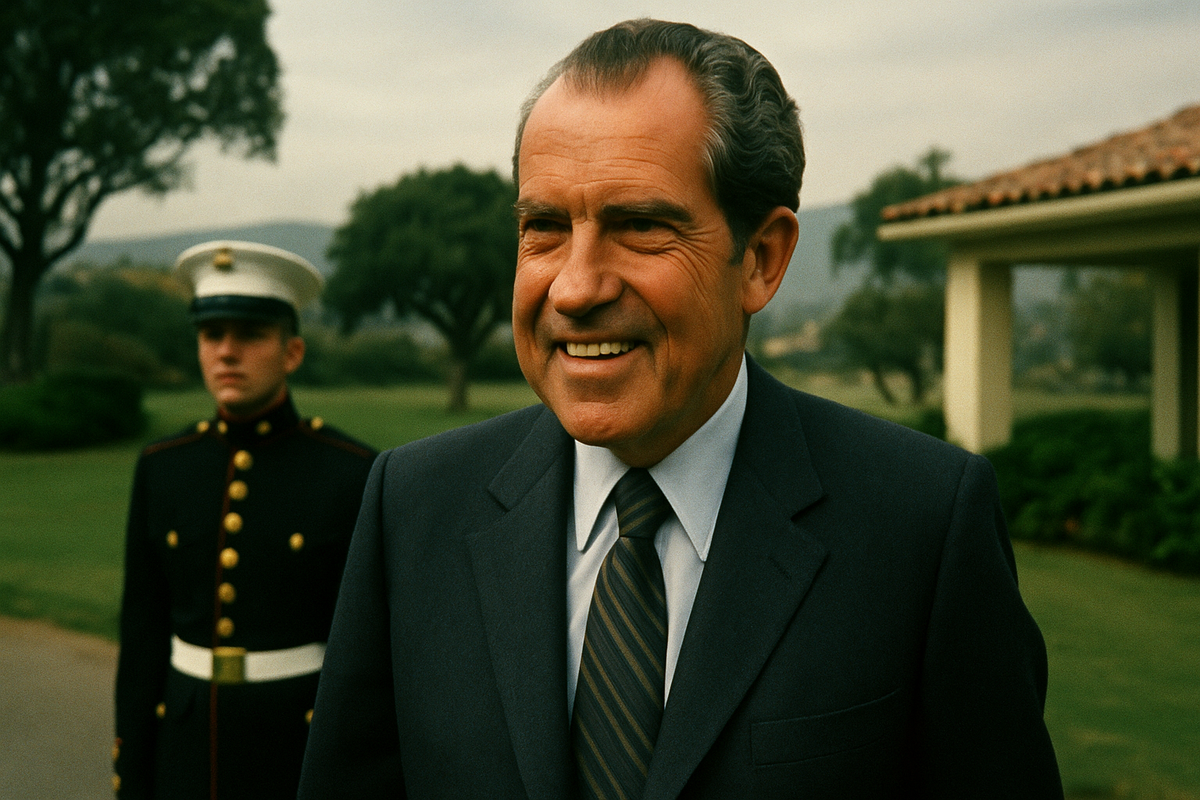
On January 3, 1972, Richard Nixon appeared on the cover of Time Magazine—not embattled, not defensive, but smiling. Photographed at his San Clemente retreat, he looked like a man who had bent history to his will.
Inside that issue, Time's editors made their verdict clear: Nixon was the Man of the Year. Not for being loved, but for being inescapable. While 140,000 American troops remained in Vietnam, while inflation gnawed at the dollar, while protests still echoed in American streets, Nixon had done something no president had managed in a generation—he had changed the rules of the Cold War itself.
This wasn't hagiography. It was recognition. In 1972, whether you trusted him or despised him, Richard Nixon was reshaping the world.
And Time captured him at the exact moment before everything collapsed.
Archive Snapshot
Historical Figure: President Richard Nixon
Issue Date: January 3, 1972
Archive Source: Time Magazine - Man of the Year
Recognition: "Nixon: Determined to Make a Difference"
The World Nixon Inherited—and Rewrote
By January 1972, the Cold War had calcified into predictable hostility. The United States and the Soviet Union glared at each other across nuclear arsenals. China remained isolated, a communist giant locked behind ideological walls since 1949. Vietnam bled American credibility and lives.
Nixon inherited this gridlock and decided to crack it open.
Vietnam and the Promise of "Peace with Honor" – His Vietnamization policy had drawn down troop levels, but the war dragged on with no clear end. Nixon promised withdrawal without surrender, a formula that kept him politically viable while exhausting both sides.
The China Shock – In 1971, Nixon stunned the world by announcing he would visit Beijing. For the first time since Mao's revolution, an American president would sit across from Chinese Communist leaders. The move shattered Cold War orthodoxy and opened diplomatic possibilities no one had dared imagine.
Détente with Moscow – Simultaneously, Nixon and Henry Kissinger pursued arms control negotiations with the Soviet Union, seeking agreements to cap the nuclear arms race. The Strategic Arms Limitation Talks (SALT) promised to replace brinkmanship with calculation.
Economic Upheaval – At home, Nixon had made an even bolder gamble. In August 1971, he severed the dollar's convertibility to gold, effectively ending the Bretton Woods system that had stabilized global finance since World War II. He froze wages and prices to combat inflation. Markets reeled. Allies protested. Nixon pressed forward.
Against this backdrop, Time's decision to name him Man of the Year wasn't an endorsement—it was a statement of fact. No one else in 1972 commanded comparable power over the trajectory of events.
How Time Told the Story
Time Magazine in 1972 operated at the height of its cultural authority. Its Man of the Year issue wasn't simply journalism—it was a cultural verdict, delivered annually to millions of readers who trusted Time to explain who mattered and why.
The January 3, 1972 cover showed Nixon composed and confident, a departure from the combative image his critics preferred. The headline—"Nixon: Determined to Make a Difference"—captured his governing philosophy: legacy over popularity, transformation over caution.
Inside, Time's photographers constructed a remarkably intimate portrait:
Planning with Henry Kissinger
The two architects of détente, heads together, rewriting Cold War strategy in real time.
Conferring with John Connally
Economic policy under strain, Nixon surrounded by advisors navigating currency crises.
Meeting with John Mitchell
The inner circle of political loyalists who would later become central to Watergate.
Bowling in the EOB Basement
A rare glimpse of Nixon at leisure, surprisingly human.
Talking with White House Staff
The daily rituals of power, photographed without pretense.
Encouraging the Redskins
Politics and sports blurring together in classic American fashion.
These images accomplished something difficult: they showed Nixon as both strategist and human being, neither demonized nor sanctified. For readers in 1972, this was the most complete portrait of their president they would see all year.
What Made This Issue Different
Time's January 3, 1972 issue exemplified what separated great newsmagazine journalism from mere reporting.
Authority Without Stiffness – The article praised Nixon's diplomatic boldness while acknowledging the risks. It didn't cheerlead; it analyzed.
Architectural Clarity – Sections like "The Nation," "The World," "The Dollar," and "The U.S." gave readers a framework for understanding Nixon's presidency as a totality, not a collection of isolated crises.
Photography as Argument – Every image reinforced the central thesis: Nixon was the dominant political actor of 1972, shaping events rather than reacting to them.
At a time when television delivered images quickly but shallowly, Time offered something different—depth, context, synthesis. The Man of the Year issue wasn't designed to be read once and discarded. It was designed to be kept, returned to, argued over.
The Substance Behind the Recognition
Time's profile of Nixon centered on four transformative initiatives:
The China Gambit – Nixon's planned February 1972 trip to Beijing represented the most dramatic diplomatic realignment since World War II. By engaging with Mao's China, Nixon aimed to isolate the Soviet Union and open economic possibilities that had been closed for a generation. Time treated this not as political theater but as genuine statecraft.
SALT and Soviet Strategy – The arms control talks with Moscow offered a chance to reduce nuclear confrontation while maintaining American strength. Détente wasn't surrender—it was calculated risk management.
The Dollar's New Reality – Nixon's decision to abandon gold convertibility and impose wage-price controls shocked global markets, but it also demonstrated his willingness to break with economic orthodoxy when circumstances demanded it. Time framed this as economic revolution, for better or worse.
Domestic Ambitions – Nixon's "New American Revolution" promised reforms in welfare, revenue sharing, and federal power. Whether these initiatives would succeed remained unclear, but their ambition was undeniable.
Time also included something unexpected: moments of warmth. Photos of Nixon bowling, meeting children, chatting with White House staff—these images softened the calculating politician, revealing glimpses of the private man behind the public office.
Together, these elements captured Nixon as a president obsessed with legacy, determined to be remembered not as a manager but as a transformer.
Why Collectors Seek This Issue
Historical Timing
This issue appeared just months before Nixon's landslide reelection victory and two years before his resignation in disgrace. It captures him at his absolute zenith, making it both a document of power and an artifact of hubris.
Man of the Year Tradition
Time's annual recognition has marked the individuals who defined their eras for nearly a century. These issues are among the most sought-after in the magazine collecting world.
Iconic Photography
The cover portrait and interior images—Nixon with Kissinger, bowling in the White House, conferring with advisors—remain some of the most memorable visual records of his presidency.
Cold War Significance
For collectors focused on Cold War history, this issue captures the precise moment when Nixon's diplomacy with China and the USSR began reshaping global politics. It's a snapshot of the international order in transformation.
Owning this issue isn't merely about possessing a piece of journalism. It's about holding a historical artifact from a presidency that was simultaneously commanding and catastrophic—a moment of triumph photographed just before the fall.
A Time Capsule of Power and Irony
The January 3, 1972 issue of Time Magazine remains one of the most significant Man of the Year issues ever published. It captured Richard Nixon at the peak of his influence—a president navigating war, diplomacy, and domestic upheaval with determination and strategic vision.
Looking back now, the issue feels almost unbearably poignant. Nixon, smiling and self-assured, seemed to have mastered the forces around him. Yet within two years, the Watergate scandal would shatter his presidency and force his resignation. The same strategic mind that opened China and pursued détente also orchestrated a cover-up that destroyed him.
This duality makes the 1972 Man of the Year issue both historically significant and emotionally complex. It's a reminder that power is never permanent, that legacy is fragile, and that Time Magazine's most important issues often capture leaders at the precise moment before their worlds change forever.
For historians, collectors, and anyone drawn to America's political past, this issue is more than a magazine—it's a time capsule of ambition, consequence, and the brief moment when Richard Nixon believed he had won.
Explore Our Archive
From Nixon to Kennedy, from World War II to the Cold War, each issue is a preserved window into history.
Browse Time Magazine Collection