
When Rolling Stone Put Roller Derby on the Cultural Map
How the March 15, 1969 issue validated an outsider sport as counterculture rebellion
The March 15, 1969 issue of Rolling Stone opened with a gamble.
Between features on Janis Joplin and coverage of the Chicago conspiracy trials, the magazine's editors inserted something no one expected: a full-throated defense of Roller Derby. Not a think-piece laced with irony. Not a novelty sidebar. A serious, photo-heavy examination of a sport most critics wrote off as working-class theater.
The feature—titled "Nobody Loves Us but the Fans"—did more than profile athletes on skates. It argued that Roller Derby belonged in the same conversation as rock festivals and street protests, that the screaming crowds at Bay Bombers bouts were chasing the same catharsis as kids at Monterey Pop. It was a radical editorial choice, and it worked. For readers in 1969, the message was clear: the counterculture didn't stop at the concert hall.
Archive Details
Publication: Rolling Stone
Issue Date: March 15, 1969
Feature Title: "Nobody Loves Us but the Fans"
Cultural Context: Pre-Woodstock, height of Vietnam protests
Archive Source: Original Magazines Collection
The America That Made Roller Derby Matter
By the time this issue hit newsstands, the Summer of Love was a fading memory. Vietnam dominated the nightly news. Protests had turned violent. The optimism of 1967 had curdled into something harder, angrier, more desperate.
Roller Derby thrived in that climate.
The San Francisco Bay Bombers and rival teams packed arenas across the country, drawing thousands of fans—many of them working-class families and disillusioned youth who found in the sport what they couldn't find elsewhere: unfiltered aggression, physical release, and a community that didn't judge. Crowds roared for hip checks and dramatic falls. Television cameras turned bouts into prime-time spectacle, framing the athletes as both gladiators and performers.
Rolling Stone understood what others missed. This wasn't just entertainment. It was another outlet for the same restless energy reshaping music, fashion, and politics. The magazine's decision to spotlight Roller Derby wasn't a detour—it was proof that youth culture was spilling into every corner of American life, even the ones critics ignored.
How Rolling Stone Framed the Sport
The headline itself—"Nobody Loves Us but the Fans"—captured the outsider ethos immediately. It mirrored the way underground musicians felt about mainstream America, the same defiant pride that fueled protest movements.
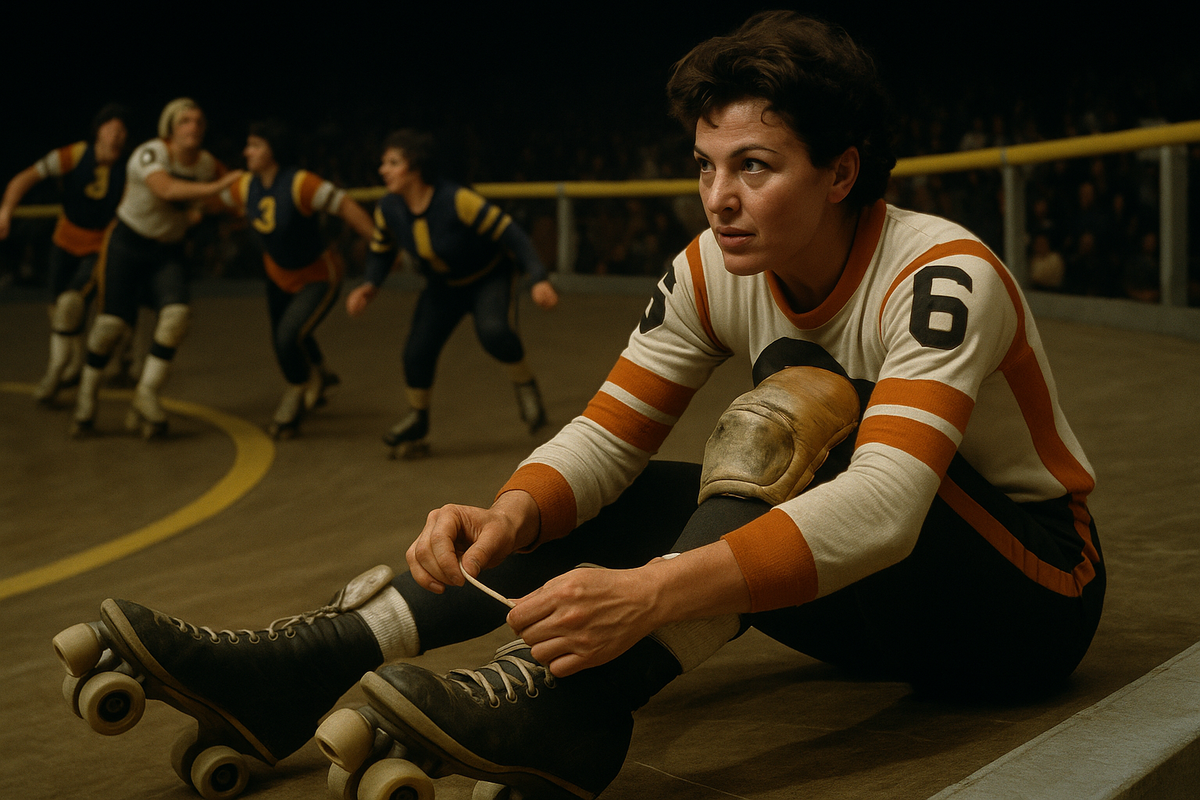
The photography was visceral. Skaters lacing heavy boots, pads strapped over striped uniforms. Action shots of hip blocks and collisions, bodies crashing on the banked track. Close-ups of faces mid-bout—grimacing, triumphant, bloodied—that pulled readers into the rink's chaos.
Rolling Stone didn't treat Roller Derby like Sports Illustrated would have. There were no box scores, no technical breakdowns of strategy. Instead, the coverage was cultural. The athletes appeared not as competitors but as figures of raw energy and defiance, kindred spirits to the rock stars and activists filling the magazine's other pages.
This was the magazine's genius. It validated Roller Derby by placing it inside the counterculture's expanding universe. A derby star earned the same narrative weight as a guitarist. The sport became part of the cultural conversation, not because critics approved, but because Rolling Stone said it mattered.
What the Feature Revealed
The article explored multiple dimensions of Roller Derby's appeal, each one resonating with the era's broader tensions.
Legitimacy from Below
The title acknowledged that the sport's credibility came from fans, not institutions. Roller Derby survived in blue-collar neighborhoods, thriving on loyalty rather than elite endorsement. It was populist entertainment, unapologetic and unpolished.
Violence as Catharsis
The sport was openly brutal—blood, bruises, staged brawls. For an America confronting televised war footage and riot police, this spectacle offered a controlled outlet. The violence was real enough to satisfy, theatrical enough to feel safe.
Women in Command
Unlike most mainstream sports in 1969, Roller Derby featured prominent female athletes whose toughness made them stars. Women weren't sidelined or sexualized—they commanded the spotlight, throwing elbows and drawing the loudest cheers.
The Blurred Line
The article acknowledged what everyone suspected: bouts mixed legitimate athleticism with theatrical showmanship. This tension between sport and spectacle gave Roller Derby its character, prefiguring professional wrestling's later rise.
Why It Still Resonates
This issue reminds us what made Rolling Stone essential: the willingness to take risks, to argue that culture was bigger than any single genre or medium.
In 1969, Roller Derby looked like spectacle to some. In Rolling Stone's pages, it became a lens for understanding youth energy, rebellion, and the hunger for community in a fractured America. The magazine treated it seriously because it understood that counterculture wasn't confined to guitars and protest signs—it lived in the rink, under bright lights, where athletes slammed into each other and crowds roared back.
Why This Issue Commands Collector Attention
Historical Timing
Published months before Woodstock and during the peak of Vietnam protests, it captures Rolling Stone at its most adventurous—willing to spotlight subjects other publications ignored.
Visual Legacy
Baron Wolman and Rolling Stone's other photographers elevated every subject they touched, turning athletes on skates into iconic images. The issue's photography alone makes it valuable to collectors of 20th-century photojournalism.
Dual Appeal
The issue attracts both vintage magazine collectors and Roller Derby historians, a crossover audience that drives demand. It's not just a music magazine—it's a sports document, a cultural artifact, a snapshot of working-class entertainment at a pivotal moment.
Add This Issue to Your Collection
If you're a collector, historian, or someone fascinated by the cultural landscape of the 1960s, this issue belongs in your archive. It proves that Rolling Stone was never just about music—it was about the spirit of the times.
Browse Rolling Stone CollectionFrom the 1960s counterculture to the 1970s rock giants and beyond, each issue is a time capsule, preserving voices and images that shaped American history.
Final Word
The March 15, 1969 issue—with its bold feature "Nobody Loves Us but the Fans"—captured more than a sport. It caught a cultural current: the tension between authenticity and spectacle, the rise of overlooked entertainment, and the power of fans to define what mattered.
For readers then, it was a reminder that rebellion took many forms.
For readers now, it's proof of Rolling Stone's unmatched role as chronicler of its age.