
One Defense in Four Months: The Magazine That Dared to Strip Hulk Hogan
When Inside Wrestling committed an act of journalistic heresy in November 1995
The cover line didn't ask. It didn't hedge. It demanded.
"One Defense in Four Months?! Strip Hogan of the Title—Now!"
When Inside Wrestling published those words in November 1995, they committed an act of journalistic heresy. Hulk Hogan wasn't just WCW's World Heavyweight Champion—he was the gravitational center of professional wrestling itself, the man who had carried an entire industry on his 24-inch pythons for over a decade. Criticizing Hogan in print was like questioning the Pope in Vatican City.
But Inside Wrestling had the receipts. And they weren't backing down.
The Immortal Becomes Invisible
By 1995, Hogan's migration from WWF to WCW had already rewritten wrestling's balance of power. When he signed with Ted Turner's upstart federation in 1994, it was supposed to signal WCW's arrival as a legitimate threat to Vince McMahon's empire. Hogan brought star power, mainstream credibility, and the promise of packed arenas.
What he didn't bring, according to Inside Wrestling, was a functional understanding of what it meant to be a champion.
The numbers were damning. In the four months leading up to publication, Hogan had defended the WCW World Heavyweight Championship exactly once. Not twice. Not three times with one controversial finish. Once. This wasn't a technicality or a scheduling quirk—it was a systematic violation of the sport's most fundamental rule: champions must defend their titles at least once every 30 days.
WCW had a world champion who was treating the belt like a part-time accessory.
Archive Details
Featured Champion: Hulk Hogan (WCW World Heavyweight Champion)
Issue Date: November 1995
Publication: Inside Wrestling Magazine
Feature: "Hotseat" Editorial Series
Primary Challenger: Big Van Vader
Vader: The Monster WCW Wouldn't Unleash
The magazine's photo spreads told their own story. There was Hogan, locked in battle with Big Van Vader, the 450-pound mastodon who represented everything Hogan's Hollywood sheen couldn't overcome. Caption after caption drove home the mismatch: Hogan's punches bouncing off Vader's massive frame, his signature eye gouges proving ineffective against a man who wrestled like a force of nature.
These weren't promotional shots designed to build drama. They were evidence in a larger indictment.
Yes, Hogan was wrestling. He faced Vader multiple times. He battled Ric Flair. He showed up to arenas and collected paychecks. But here was the trap: most of these matches were non-title bouts. WCW was booking their champion to wrestle while carefully ensuring the championship itself never appeared to be in jeopardy. It was theater without stakes, combat without consequence.
For a federation trying to position itself as WWF's equal, this was catastrophic. While Bret Hart and Diesel were defending WWF championships on a regular rotation, WCW's marquee belt was gathering dust. Inside Wrestling captured the absurdity with a single, devastating line: fans were "more likely to see Hogan on a milk carton" than defending his title.
When the Manager Can't Manage the Narrative
Jimmy Hart, Hogan's ever-loyal manager, attempted damage control. His defense was technically accurate: Hogan was fighting plenty of matches. But Inside Wrestling wasn't interested in technicalities. They drove a stake through Hart's argument with surgical precision—title defenses are what matter, not appearances. A champion who wrestles twenty matches without putting his belt on the line isn't defending anything. He's performing.
Even Sting, WCW's homegrown hero and the company's moral compass, couldn't fully defend the situation. When pressed, Sting called Hogan a "good champion" but admitted the idea of stripping him was "bold." It was the kind of diplomatic non-answer that revealed everything: even WCW's own locker room recognized the problem, even if political reality prevented them from saying it outright.
The Independent Voice in a Promotional Echo Chamber
What made Inside Wrestling's critique so radical wasn't just its content—it was its willingness to exist outside wrestling's promotional machinery.
In 1995, most wrestling coverage came from federation-controlled publications. WWF Magazine existed to sell WWF storylines. WCW Magazine existed to promote WCW angles. They were marketing tools disguised as journalism, house organs with glossy covers. Fans understood this implicitly. You read them for photos, for kayfabe interviews, for the curated version of wrestling that promoters wanted you to believe.
Inside Wrestling operated in a different space. They adopted the posture of outsiders, positioned themselves as fan advocates, and treated wrestling with the critical eye of sports journalism. When they put Hogan on their "Hotseat" feature, they weren't building toward a pay-per-view angle. They were calling out what they saw as institutional failure.
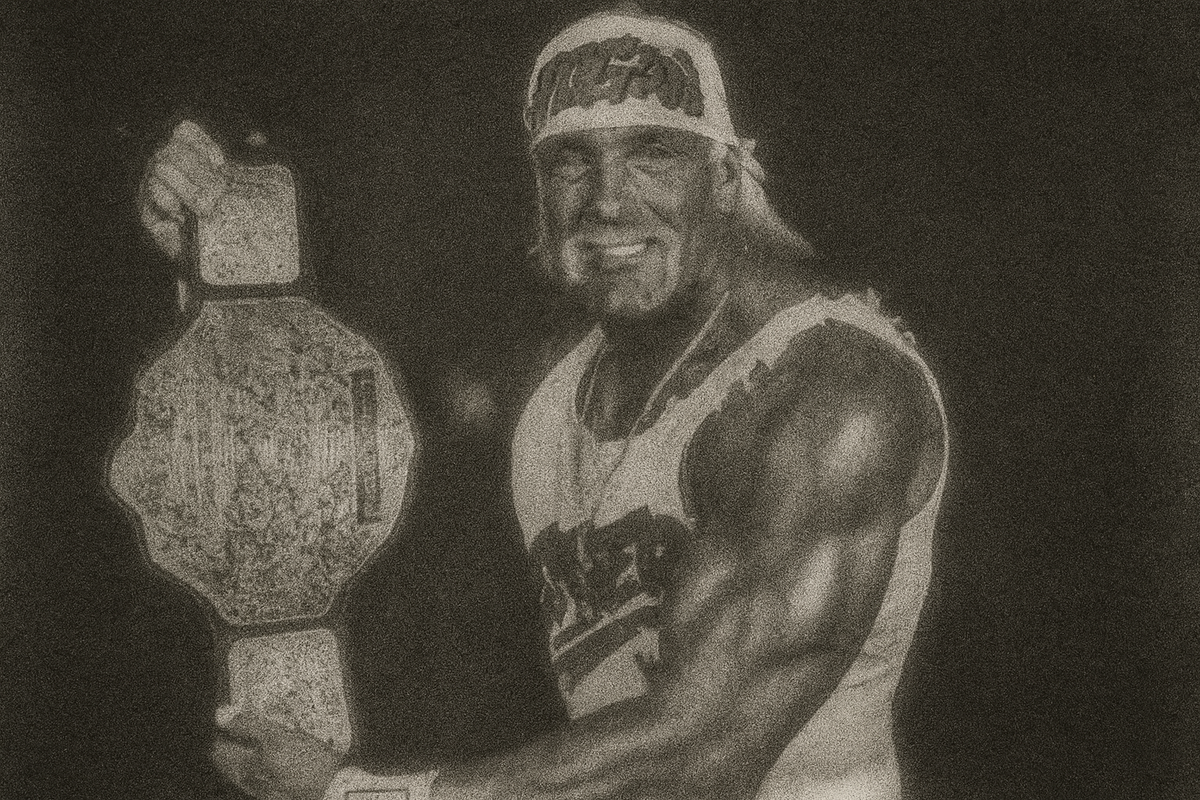
The full-page photo of Hogan clutching the WCW belt, paired with that accusatory headline, was designed to provoke. The article's tone carried the weight of genuine frustration. WCW wasn't just failing its champion—it was failing its fans, its own rulebook, and the basic credibility of the sport. By refusing to enforce its 30-day defense rule, the federation risked becoming, in Inside Wrestling's words, a laughingstock.
This was wrestling journalism with teeth. No promotional spin. No corporate hedging. Just the unvarnished argument that Hulk Hogan, the biggest star in the business, was making WCW look second-rate.
Key Editorial Themes
One title defense in four months violated the mandatory 30-day defense rule, undermining championship legitimacy.
Hogan wrestled frequently but rarely put his belt on the line, creating combat without consequences.
Photo captions documented Hogan's ineffective tactics against the 450-pound challenger, raising doubts about frequent defenses.
WCW refused to enforce its own rules, risking credibility while WWF champions defended regularly.
The sharpest critique: fans were "more likely to see Hogan on a milk carton" than defending his title.
Even Sting's carefully worded support revealed cracks in WCW's unified front about Hogan's reign.
The Artifact and Its Echo
Three decades later, the November 1995 issue of Inside Wrestling endures as something more than vintage memorabilia. It's a primary source document from a pivotal moment in wrestling history—the uncomfortable transition period when WCW had star power but hadn't yet figured out how to wield it effectively.
The magazine captured tensions that would define the next two years: Hogan's complicated relationship with WCW's hardcore fanbase, the federation's struggle to balance mainstream appeal with in-ring credibility, and the growing sense that something fundamental needed to change. Within a year, that change would arrive in the form of the New World Order, a heel turn that revitalized Hogan's career precisely because it acknowledged the frustrations Inside Wrestling had articulated.
For collectors, this issue represents independent wrestling journalism at its apex—unfiltered, opinionated, and fearless enough to challenge the industry's untouchable figure. The photographs of Hogan and Vader, the blistering editorial copy, and the sheer audacity of the "Strip Hogan" demand combine to create a snapshot of an industry at war with itself.
These weren't just reports on wrestling. They were arguments about what wrestling should be.
Why Vintage Wrestling Magazines Still Matter
Before the internet fragmented coverage into ten thousand voices, magazines like Inside Wrestling served as the collective consciousness of wrestling fandom. They gave readers permission to be critical, to question booking decisions, to demand more from the sport they loved. When a magazine could publish "Strip Hogan of the Title—Now!" and build a case across multiple pages, it validated what fans suspected but couldn't always articulate.
These publications were the original wrestling media—part journalism, part cultural commentary, part fan rebellion. They survive today because they captured not just what happened in the ring, but how fans felt about it in real time. They're arguments frozen in amber, evidence of debates that shaped an industry.
The November 1995 issue of Inside Wrestling didn't just cover Hulk Hogan's controversial reign. It challenged it, questioned it, and demanded better. That's why it belongs in any serious collection of wrestling history.
Collector Significance
For collectors seeking original wrestling publications from the sport's most transformative era, Inside Wrestling represents essential documentation of the industry's evolution. The November 1995 issue stands as a testament to independent wrestling journalism—fearless, opinionated, and unafraid to challenge even the biggest stars.
This issue's value extends beyond nostalgia. It captures a rare moment when wrestling media operated outside promotional control, offering criticism that reflected genuine fan frustration. The photographs of Hogan and Vader, combined with the magazine's blistering editorial stance, create an irreplaceable historical record of WCW during its most turbulent period.
These magazines are time capsules that preserve not just events, but the debates, tensions, and evolving perspectives that shaped professional wrestling. They document how fans experienced and questioned the sport in real time—making them invaluable resources for historians, collectors, and enthusiasts of 20th-century popular culture.
Explore the Complete Archive
Whether you're preserving wrestling history, building a comprehensive collection, or honoring the memories of fans who lived through these eras, these magazines offer something irreplaceable—the unfiltered voice of wrestling's golden age, captured exactly as it happened.
Browse Inside Wrestling Magazine Collection