
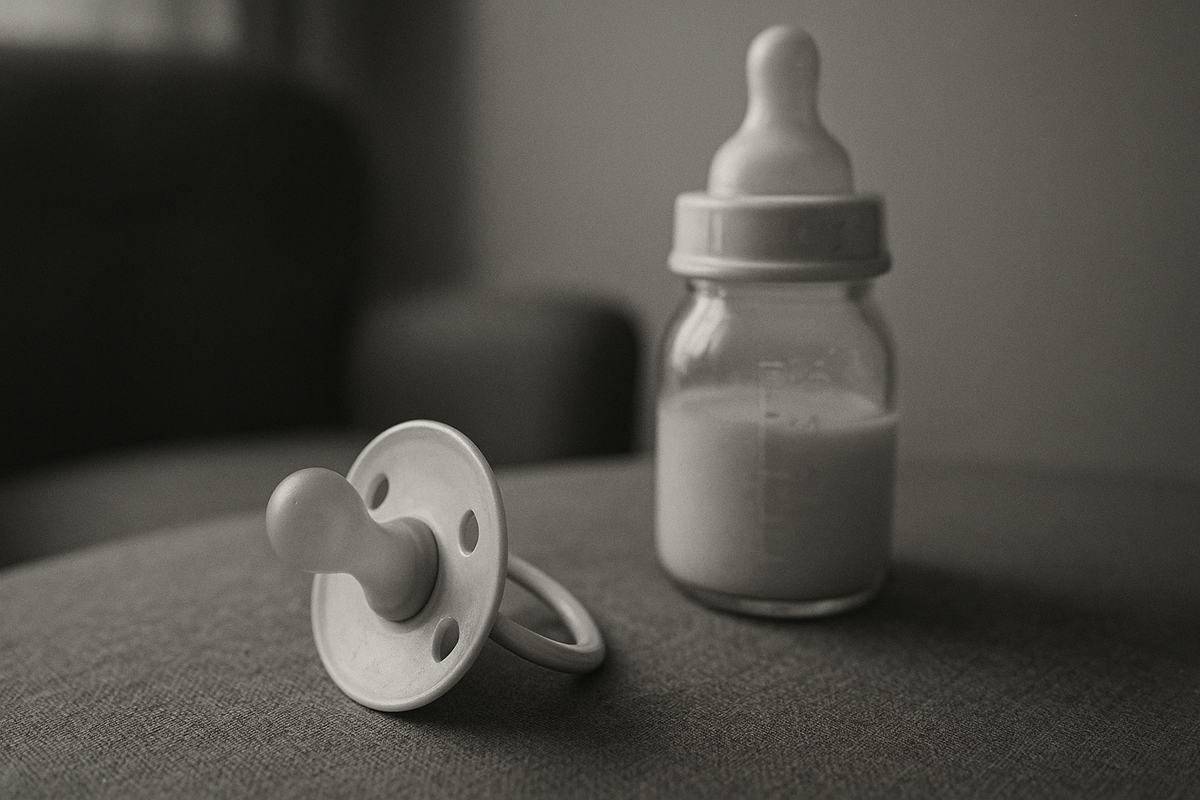
When America's Mothers Fought Over Pacifiers
The 1954 showdown that defined modern parenting
The letter arrived at Dr. Benjamin Spock's desk with a confession that would have scandalized the writer's own mother: "I gave my baby a pacifier, and now my mother-in-law won't speak to me."
It was 1954. Millions of new mothers were navigating the largest generational baby boom in American history, caught between the rigid childrearing gospels their own parents had followed and a radical new voice telling them to trust their instincts. That voice belonged to Spock, and in the November 1954 issue of Ladies' Home Journal, he waded into one of the era's most heated domestic battlegrounds: whether a simple rubber nipple represented comfort or corruption.
What unfolded in those pages wasn't just parenting advice. It was a cultural turning point, captured in real time.
The Baby Boom's Urgent Question
Postwar America was drowning in diapers. Between 1946 and 1964, 76 million babies would be born, and their mothers had questions that couldn't wait. The difference between 1954 and 1924 wasn't just technology—it was philosophy. A generation raised on rigid feeding schedules and "don't spoil the child" warnings now faced a pediatrician who dared to say: You know your baby better than any book does.
Dr. Spock's 1946 Common Sense Book of Baby and Child Care had already sold millions of copies by rejecting the authoritarian methods of earlier decades. But knowing the theory and living it were different things—especially when your own mother stood in your kitchen, arms crossed, watching you plug your crying infant's mouth with a piece of rubber she considered tantamount to moral failure.
The pacifier debate wasn't about pacifiers. It was about who held authority in American homes, and whether mothers could challenge the previous generation's certainties without guilt.
Archive Details
Featured Authority: Dr. Benjamin Spock, Pediatrician & Author
Publication: Ladies' Home Journal, November 1954
Column Title: "Dr. Spock Talks with Mothers"
Historical Context: Peak of the American baby boom (76 million births, 1946-1964)
The Magazine That Raised a Nation
By November 1954, Ladies' Home Journal commanded a reach that today's media executives can only fantasize about. It landed in millions of homes monthly, a curated blend of fiction by major literary voices, fashion reports from Paris and New York, holiday recipes tested to perfection, and expert columns that shaped how American women thought about health, beauty, and family.
Dr. Spock's "Dr. Spock Talks with Mothers" occupied prime real estate in this ecosystem. The November issue featured his portrait alongside a caption that cut straight to the generational wound: "The most constructive thing I can tell grandparents is that I sympathize with their irritation when their grown children give their new babies pacifiers. That's not what the baby book says."
He wasn't dismissing grandparents. He was acknowledging the earthquake underfoot—the old certainties were crumbling, and everyone felt it.
What the Mothers Told Him
Spock didn't theorize in a vacuum. His November 1954 column drew from dozens of letters mothers had sent him, each a small window into the intimate chaos of family life:
The Success Stories: Women reported that pacifiers calmed colicky babies, prevented thumb-sucking, and bought exhausted parents precious hours of sleep. Some children abandoned them naturally around age two, no drama, no trauma.
The Resistance: Other mothers described pitched battles—toddlers who screamed for hours, relatives who delivered lectures on spoiling children, husbands who sided with the grandparents. The social pressure was real, and it was relentless.
The Guilt: A few worried about dental problems or emotional stunting, though evidence of lasting harm was thin when pacifiers were used reasonably.
Spock's response refused easy answers. He gave parents a framework instead:
- Occasional use is harmless. Comfort isn't weakness. Soothing a baby isn't spoiling them.
- Overuse masks deeper problems. If a pacifier becomes a reflex to silence every cry, parents might miss signals about hunger, pain, or other needs.
- Consistency breaks habits. Wavering or caving to tantrums teaches children that persistence pays. Firm, calm boundaries work better than guilt-driven surrender.
- Trust your judgment. Cookie-cutter rules don't raise children. Parents do.
This was Spock's genius: he treated mothers as intelligent collaborators, not passive rule-followers. He gave them permission to think.
The Conversation Never Ended
Scroll through any parenting forum today and you'll find the same arguments: pacifiers versus thumb-sucking, self-soothing versus attachment, expert advice versus grandmother's wisdom. The tools change—now there are orthodontic pacifiers and sleep consultants—but the underlying tension persists.
Should parents follow their instincts or defer to authority? When does comfort become dependence? How do families negotiate across generations without fracturing?
The November 1954 Ladies' Home Journal proves these aren't millennial anxieties or Gen Z neuroses. They're human questions, and they've echoed through living rooms for at least seventy years.
That's what makes vintage women's magazines irreplaceable. They show us that our private struggles are part of a much longer story—and that mothers have always been tougher, smarter, and more conflicted than any single generation wants to admit.
Why This Issue Matters to Collectors
Original copies of the November 1954 Ladies' Home Journal aren't just paper and ink. They're material evidence of a cultural revolution happening in real time.
For Historians
This issue captures the baby boom's anxieties without the filter of hindsight. The debates feel immediate because they were—women were writing these letters from their living rooms, not their memoirs.
For Collectors
Spock's columns represent the moment American parenting pivoted from authoritarianism to empathy. Owning the original is like holding a first edition of a social manifesto.
For Design Enthusiasts
The mid-1950s Journal showcased the polished, optimistic aesthetic of the era—Wilhela Cushman's fashion spreads, Dorothy Thompson's essays, covers that radiated postwar confidence.
For Women's History
This magazine is a primary source. These weren't articles about women—they were written for and often by them, documenting their actual concerns in their own words.
Explore the Archive
The November 1954 issue is one chapter in over a century of American women's voices, documented month by month in Ladies' Home Journal. From fashion revolutions to wartime resilience, from health breakthroughs to cultural upheavals, these magazines captured it all.
These aren't reproductions or digital scans. They're the actual artifacts that sat on kitchen tables, traveled in handbags, and shaped how generations of Americans understood family, identity, and possibility.
Browse Ladies' Home Journal Magazines Collection