
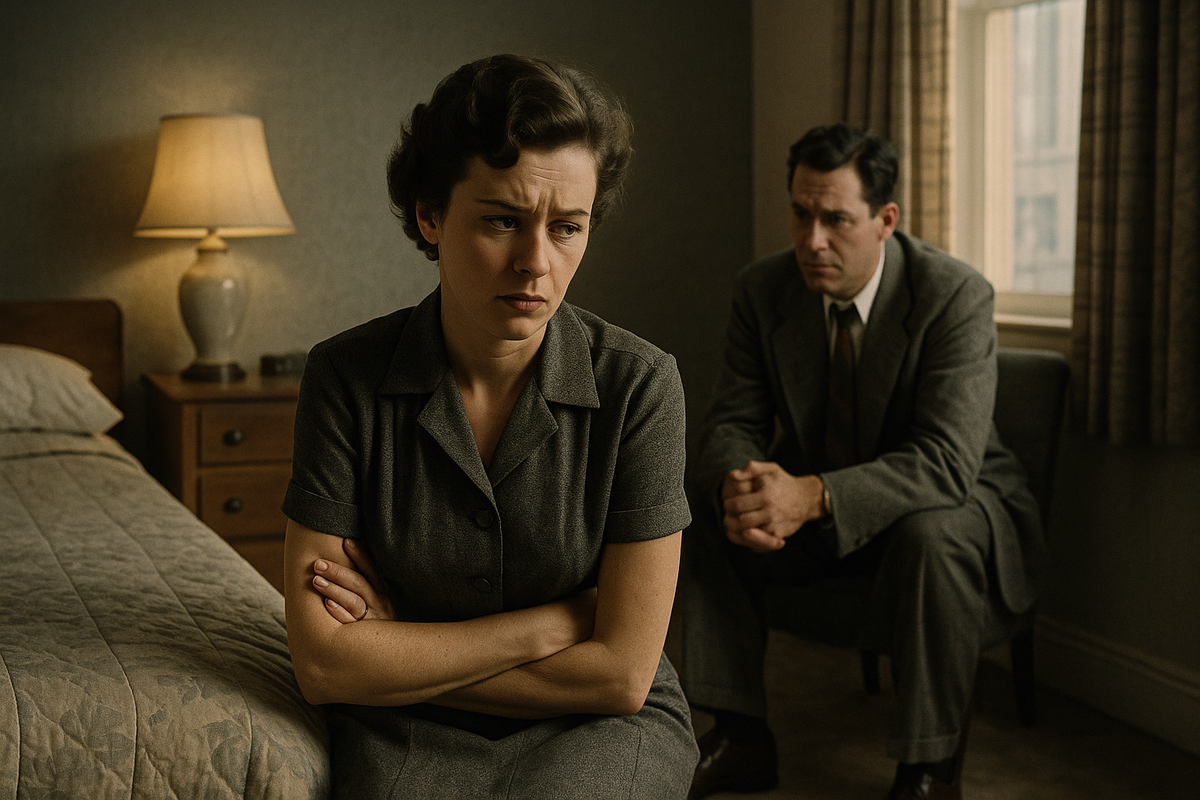
The Magazine That Asked America: Is Infidelity Forgivable?
How The Saturday Evening Post's 1950 exposé on divorce turned private pain into national conversation
On February 4, 1950, millions of Americans opened their mailboxes to find a question waiting for them—one that had been whispered in kitchens and courtrooms but rarely spoken aloud in print. David G. Wittels' feature in The Saturday Evening Post didn't just ask whether infidelity could be forgiven. It cracked open the fault lines running through postwar American marriage itself.
This wasn't gossip. It was national reckoning.
When Private Pain Became Public Conversation
The soldiers had come home. Families had reunited. But the war's end hadn't restored the marriages it had disrupted. By 1950, divorce was climbing from shameful secret to uncomfortable reality, and Americans were hungry for answers that churches and etiquette books couldn't provide.
Dr. William J. Goode of Wayne University gave them data instead of platitudes. His study of 425 Detroit families who divorced between 1945 and 1948 revealed something unexpected: infidelity appeared in fewer than 8% of divorces nationwide, yet in Detroit—shaped by wartime separation and industrial stress—it spiked to 20% of cases in 1945 before declining to 10% by 1948. The numbers told a story of upheaval slowly settling, though not disappearing.
Wittels built his article on Goode's research, but he understood something crucial: statistics couldn't capture the weight of a wedding ring taken off, or the silence between spouses who'd once promised everything. His piece became a mirror held up to a generation caught between the vows they'd made and the lives they were actually living.
Archive Details
Publication: The Saturday Evening Post
Issue Date: February 4, 1950
Featured Article: "Is Infidelity Forgivable?" by David G. Wittels
Cover Artist: Thornton Utz
Primary Research Source: Dr. William J. Goode, Wayne University
The Post at the Height of Its Power
The Saturday Evening Post was America's living room in print. By 1950, it reached millions of households with a formula that worked: Norman Rockwell covers, short fiction, humor columns, and serious reporting that treated readers as thoughtful adults capable of handling complexity.
The February 4 issue captured this range perfectly. Alongside Wittels' examination of marital breakdown ran "The Reds Are Rapping at Our Arctic Door" (Cold War paranoia), "Madness on Skates" (the roller derby craze), and "The Cities of America: El Paso" (regional identity). The magazine understood that American families worried about Soviet expansion and argued about money and fidelity at the dinner table. Both mattered. Both were real.
This editorial confidence—the willingness to place a frank discussion of adultery between advertisements for Firestone tires and Hammermill Bond paper—made the Post essential reading. It didn't sensationalize or moralize. It simply asked the questions Americans were already asking themselves.
A Ferry, a Barroom, and the Distance Between Them
Thornton Utz's cover illustration showed the Hudson River ferry between New York and Edgewater, New Jersey—cars packed tight, commuters pressed together in the everyday chaos of postwar mobility. The image pulsed with ordinary American energy: commerce, motion, people going somewhere.
Inside, Wittels' article offered its own visual contrasts. One photograph presented the formal authority of Judge Paul W. Alexander and Dr. Harriet Goldberg, representatives of law and psychology brought to bear on broken marriages. The other showed a man and woman in a bar, drinks in hand, laughter on their faces—the casual settings where infidelity often began.
Law and desire. Judgment and temptation. The photographs reminded readers that divorce lived in both worlds: the cold courtroom where evidence was weighed, and the hot moment when someone reached across a table for a hand that wasn't their spouse's.
What the Article Revealed
Wittels didn't offer easy answers, but he gave readers something more valuable: clarity about what was actually happening in American marriages.
Emotional Weight Over Frequency
Infidelity carried more emotional weight than its frequency suggested. It appeared in a minority of divorces, but when it did, it detonated marriages with particular force.
Wartime Scars
Many cases traced directly to years when husbands served overseas and wives managed alone—when loneliness, fear, and distance rewrote the rules both had assumed were permanent.
Elusive Courtroom Proof
Judges noted that evidence was hard to establish. Cases turned on suspicion, wounded pride, humiliation—emotions that couldn't be photographed or sworn to on a witness stand.
Cultural Double Standards
Wives faced pressure to overlook their husbands' affairs for the sake of children and family stability. Women's infidelity, by contrast, drew harsher condemnation and faster judgment.
Symptoms, Not Causes
Psychologists and sociologists argued that adultery rarely destroyed healthy marriages—it was the visible crack in foundations already failing.
Pragmatic Forgiveness
When wives forgave, it was often a pragmatic choice to hold the family together rather than genuine restoration of trust. The marriage continued, but something remained broken.
The article documented these patterns through case studies: men who kept other women while their wives endured public humiliation in silence, couples whose marriages collapsed under accumulated strain rather than single betrayals, and families where children became the only reason parents stayed in the same house.
What Wittels captured—what made the article more than sociology—was the tension between what Americans believed marriage should be and what it actually was under pressure. Tradition said marriage was an unbreakable vow. Reality said it was a partnership that could crack.
Why This Issue Endures
For collectors, the February 4, 1950 Saturday Evening Post represents multiple threads of cultural history woven together.
Thornton Utz's Vision
The cover stands as a vivid snapshot of everyday postwar America—less iconic than Rockwell's small-town scenes, but equally precise in capturing the moment's texture and motion.
Cultural Milestone
Wittels' article marks an early mainstream attempt to discuss infidelity and divorce frankly in a national publication, without religious moralizing or medical pathologizing.
Cold War Context
Published during the Cold War's early freeze, the issue captures Americans simultaneously worried about Soviet threats and their own private struggles—the global and intimate intersecting.
Material Culture
Even the advertisements function as historical artifacts. The Firestone tire ads and paper company promotions are windows into 1950 consumer culture and aspirational life.
To own this issue is to hold a moment when American culture was asking itself hard questions about marriage, morality, and the distance between the lives people wanted and the lives they had.
The Conversation Continues
Magazines like the Post endure as historical documents because they did more than report events—they captured the texture of daily life, the questions people asked, the values they held and questioned simultaneously.
Today, when relationships and marriage remain subjects of public debate, this 1950 issue reminds us that Americans have always wrestled with love, loyalty, and forgiveness. The circumstances change. The questions persist.
Explore the Collection
We invite you to browse our archive of original Saturday Evening Post magazines. From the early 20th century through the 1960s, the Post documented American culture, literature, and social transformation with intelligence and craft.
Browse The Saturday Evening Post Magazine CollectionWhether you collect for investment, research, or the simple pleasure of holding a piece of your grandparents' world in your hands, these magazines offer something rare: American history as it was lived, not as it was later remembered.
The February 4, 1950 Saturday Evening Post remains one of the era's most culturally revealing publications. David G. Wittels' "Is Infidelity Forgivable?" gave voice to the private struggles of postwar families, blending Dr. William J. Goode's research with human stories into a portrait of American marriage under genuine stress. For readers in 1950, it was both mirror and conversation—a chance to see their private lives reflected in national discourse. For us, it's a collectible artifact that captures how a single magazine issue could document both the public anxieties and intimate dilemmas of an entire generation.