
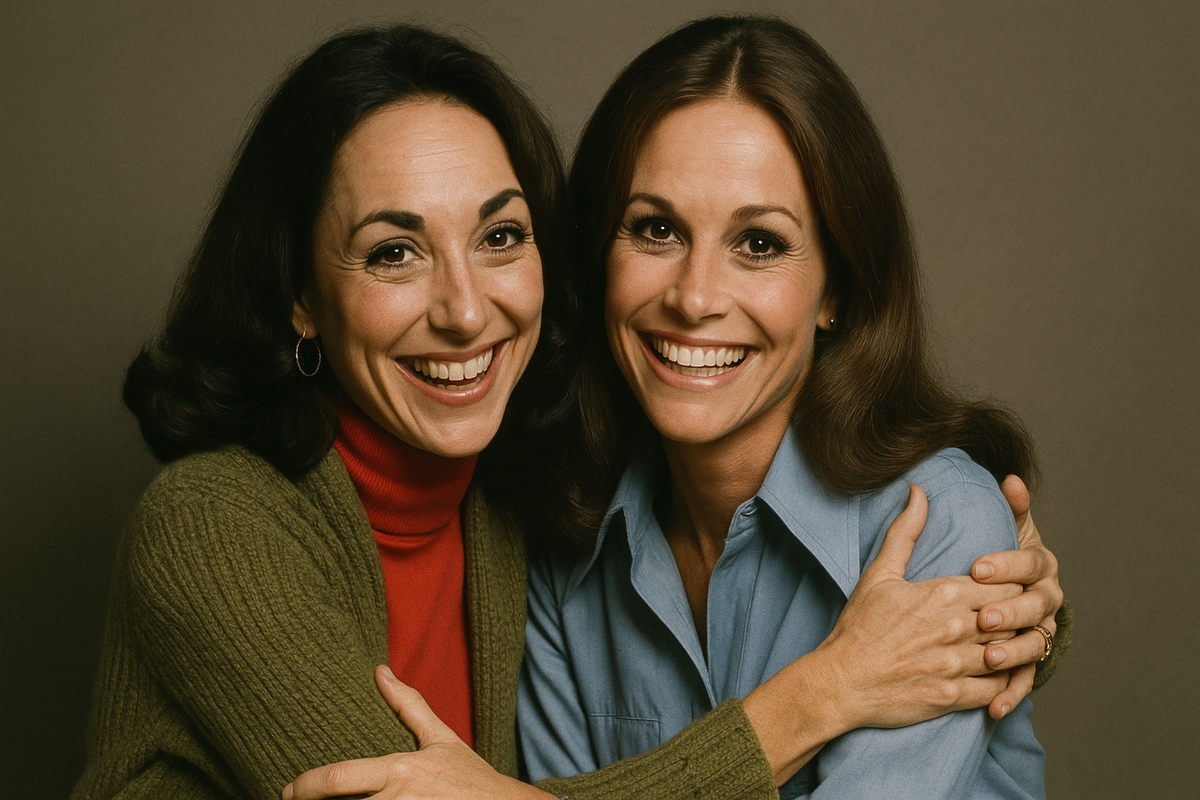
Rhoda and Mary, Television Icons, and the Changing Face of 1970s America
How Time Magazine captured the moment when sitcoms stopped being trivial and started being vital
October 28, 1974. Two months after Nixon's resignation, Americans opened their mailboxes to find Mary Tyler Moore and Valerie Harper staring back from the cover of Time Magazine. Not the President. Not Kissinger. Two sitcom stars.
The cover line read simply: "Rhoda and Mary – Love and Laughs."
It was a watershed moment—the instant when Time, arbiter of what mattered in American life, declared that television comedy had become as essential to the national conversation as Watergate itself.
1974: The Year America Needed to Laugh
By autumn 1974, the United States wasn't just tired—it was disillusioned.
Nixon had resigned in August, leaving behind a crisis of faith in American institutions. The Equal Rights Amendment was tearing dinner tables apart. Inflation was climbing. And in living rooms across the country, Americans were turning to their television sets not for escape, but for recognition.
The Mary Tyler Moore Show and its spin-off Rhoda weren't offering fantasies. They were offering mirrors—sharp, funny, unsentimental reflections of what it actually felt like to be a woman navigating work, friendship, and independence in the 1970s. No husband waiting at home. No canned laughter covering up the truth. Just two women, single and unapologetic, living lives that looked startlingly like the ones unfolding in cities across America.
Time recognized this shift. By giving Mary Richards and Rhoda Morgenstern the cover, the magazine wasn't covering entertainment—it was documenting social change.
Archive Details
Featured Icons: Mary Tyler Moore & Valerie Harper
Issue Date: October 28, 1974
Cover Story: "Rhoda and Mary – Love and Laughs"
Archive Source: Time Magazine
Time's Visual Authority: Photography as Cultural Archive
Time Magazine in 1974 had perfected the art of visual storytelling. The October 28 issue didn't just write about Moore and Harper—it immortalized them.
The cover photograph captured warmth without sentimentality, humor without camp. Moore and Harper radiated charisma, professionalism, and the kind of easy rapport that made millions of viewers feel like they knew them personally.
Inside, the photography deepened. Behind-the-scenes shots from MTM Enterprises revealed the machinery of the new television—writer-producers huddled over scripts, production meetings where women's voices carried weight, the controlled chaos of a hit show at its creative peak. Valerie Harper mid-laugh, caught in a candid moment that embodied Rhoda's wry, self-deprecating charm.
This wasn't celebrity puffery. Time's editors understood they were documenting a cultural inflection point, and the photography treated these moments with the gravity of political summits.
Sharp Writing, Sharper Commentary
Time's editorial voice in this era was unmatched—wry, incisive, and unafraid to declare what mattered. The October 28, 1974 issue deployed that authority to full effect.
The article profiled Valerie Harper's meteoric rise as Rhoda while simultaneously dissecting why The Mary Tyler Moore Show worked when so much television didn't. The writing celebrated sharp dialogue, dimensional characters, and the audacity of depicting unmarried, independent women not as cautionary tales but as protagonists worth rooting for.
Time gave credit where it belonged: to creators James L. Brooks and Allan Burns, the writer-producers who understood that comedy could carry weight. To Grant Tinker and Mary Tyler Moore, whose production company MTM Enterprises was rewriting the rules of quality television. To a generation of performers who brought authenticity to roles that could have been caricatures.
The contrast with earlier sitcoms was deliberate. This wasn't the sanitized domesticity of Leave It to Beaver or the slapstick escapism of I Love Lucy. Mary and Rhoda lived in apartments, not suburban dream homes. They worked for demanding bosses, dated imperfect men, and navigated the complications of modern urban life. Time made clear: this was television growing up.
What the Cover Story Captured
The Rise of the Independent Woman on Prime Time
Mary Richards wasn't waiting for a man to complete her story. Rhoda Morgenstern wasn't apologizing for being single, Jewish, or sharp-tongued. Time chronicled how these characters shattered the mold of what network television thought women could be.
Urban Realism Meets Cultural Identity
Rhoda brought Jewish humor, New York cynicism, and working-class authenticity to a medium that had often homogenized ethnicity out of existence. Time recognized the significance—this wasn't tokenism, it was representation that resonated.
MTM Enterprises: The Powerhouse Behind the Curtain
Time pulled back the curtain on the production company that Mary Tyler Moore and Grant Tinker built—a studio committed to writer-driven comedy and creative integrity. MTM Enterprises would go on to define quality television for a generation.
Valerie Harper's Breakout
The article tracked Harper's journey from supporting character to breakout star. Rhoda became one of the most successful spin-offs in television history, and Time captured the moment when Harper stepped fully into the spotlight.
Comedy With Consequence
The laughs were real, but so was the substance. Time emphasized that The Mary Tyler Moore Show and Rhoda proved audiences could handle comedy that didn't condescend—that treated women's ambitions, frustrations, and choices as worthy of attention.
Why This Issue Still Matters
Fifty years later, The Mary Tyler Moore Show and Rhoda remain touchstones—referenced in retrospectives, studied in media courses, celebrated as the shows that proved women didn't need to be wives or mothers to anchor a hit series.
The October 28, 1974 Time Magazine captured them at their zenith. It documented not just what was happening on screen, but why it mattered off screen. In doing so, Time created something rarer than a magazine—it created a historical record.
To hold this issue now is to hold the exact moment when American television—and American culture—turned a corner.
Why Collectors Prize This Issue
A Feminist Artifact
This issue is a primary source document of the women's movement in popular culture—evidence of the moment when mainstream media recognized television's role in reshaping gender expectations.
Television at Its Creative Apex
The Mary Tyler Moore Show and Rhoda represent the golden age of the American sitcom. Owning this issue means owning a record of that peak.
Iconic Imagery
The photographs—Moore and Harper on the cover, the MTM production team at work—are visual records of 1970s television history. They belong in the same archive as the shows themselves.
Cultural Demand
Pop culture covers from the 1970s command serious interest among collectors, historians, and families who grew up watching Mary and Rhoda navigate life on Thursday nights.
This isn't nostalgia for its own sake. It's the preservation of a moment when television stopped being trivial and started being vital.
Own a Piece of Television History
When you acquire the October 28, 1974 issue of Time Magazine, you're not purchasing ephemera. You're securing an artifact of social change—a document that proves how profoundly television can reflect and reshape the world watching it.
Browse Time Magazine CollectionThe October 28, 1974 issue of Time Magazine stands as one of the most culturally significant publications of its decade. Its cover story, "Rhoda and Mary – Love and Laughs," did more than celebrate two television shows. It certified a revolution.
Half a century later, that revolution is still worth revisiting. And thanks to Time's unmatched reporting, we can.