
When Wrestling's Biggest Stars Disappeared from TV—And Why That Made Them Matter More
How Pro Wrestling Illustrated's August 1995 issue documented the independent circuit revolution that changed wrestling forever
August 1995. Hulk Hogan was cashing WCW checks. The WWF was flailing through its creative nadir, months away from discovering Steve Austin. And if you were a casual fan flipping channels, you might have assumed professional wrestling was just two companies locked in a primetime death match.
You would have been wrong.
That same month, Pro Wrestling Illustrated published something radical: a feature story that ignored the Monday Night Wars entirely. "Riding the Independent Wave" profiled six wrestlers—Tito Santana, Greg "The Hammer" Valentine, Rick Martel, Tony Atlas, Koko B. Ware, and Ivan Putski—who had left the televised spotlight and were thriving in America's independent wrestling circuit. Not struggling. Not fading. Thriving.
This wasn't a human-interest piece about has-beens. It was a declaration: wrestling's soul didn't live in ratings points or pyrotechnics. It lived in VFW halls, community centers, and small-town arenas where these veterans were delivering the same craft they'd honed in sold-out Madison Square Garden—just to different crowds, on different terms.
Twenty-nine years later, this issue reads like prophecy.
Archive Details
Publication: Pro Wrestling Illustrated
Issue Date: August 1995
Featured Article: "Riding the Independent Wave"
Wrestlers Profiled: Tito Santana, Greg Valentine, Rick Martel, Tony Atlas, Koko B. Ware, Ivan Putski
Historical Context: Pre-Attitude Era transition period, early Monday Night Wars
The Context Nobody Was Covering
The mid-1990s wrestling landscape was a study in tunnel vision. WCW had raided the WWF's top tier—Hogan, Savage, Flair—and the industry press obsessed over every contract signing, every ratings tick. Meanwhile, Vince McMahon was desperately cycling through gimmicks (a garbage man, a hockey player, a fake Diesel) trying to find his next Hogan.
The narrative was binary: you were either on television or you were irrelevant.
The independent circuit told a different story. Across the country, regional promotions were thriving on a simple premise: fans wanted to see wrestlers they recognized, performing at a level of intensity that television's overproduced spectacle had abandoned. No fireworks. No elaborate entrances. Just two workers who knew how to tell a story in the ring.
PWI understood what the mainstream missed: these weren't retirement tours. Santana was holding the ICW Heavyweight Championship. Valentine was still delivering his signature brutality in rematches against Santana—the same feud that had defined their WWF careers, now stripped down to pure wrestling. Martel, Atlas, Koko, and Putski weren't clinging to glory days. They were proving that wrestling talent didn't expire when your TV contract did.
Why PWI Could Tell This Story (And Nobody Else Would)
Pro Wrestling Illustrated occupied unique territory in 1995. Unlike WWF Magazine or WCW Magazine—which were glorified promotional tools—PWI maintained editorial independence. It respected kayfabe when necessary but didn't pretend the business side didn't exist. It covered wrestling as sport, art, and commerce simultaneously.
This editorial flexibility let PWI do something revolutionary: treat the independent scene with the same seriousness it gave the big leagues.
The feature dissected each wrestler's post-WWF trajectory with genuine curiosity:
Tito Santana
Articulated the independent ethos in a single quote: "Wrestling is wrestling, no matter where you are." For Santana, the venue size was irrelevant. The craft remained identical.
Greg Valentine
Refused the "washed up" narrative entirely. At 44, he was proving that ring psychology and physical punishment didn't require a television audience to be legitimate.
Rick Martel
Had transitioned from AWA World Champion to WWF upper-midcarder to independent headliner—and at each stop, demonstrated the same technical precision. The demotion existed only on paper.
Tony Atlas
Was still connecting with crowds through raw charisma, proving that star power was about energy and presence, not production budgets.
Koko B. Ware
Brought the same high-flying entertainment that made him a WWF fan favorite, reminding audiences why they loved him in the first place.
Ivan Putski
Showed that nostalgia was a legitimate draw—but only if backed by genuine physicality and fan engagement.
PWI didn't pity these men. It analyzed them as active competitors reshaping what wrestling success could mean.
The Visual Language of Legitimacy
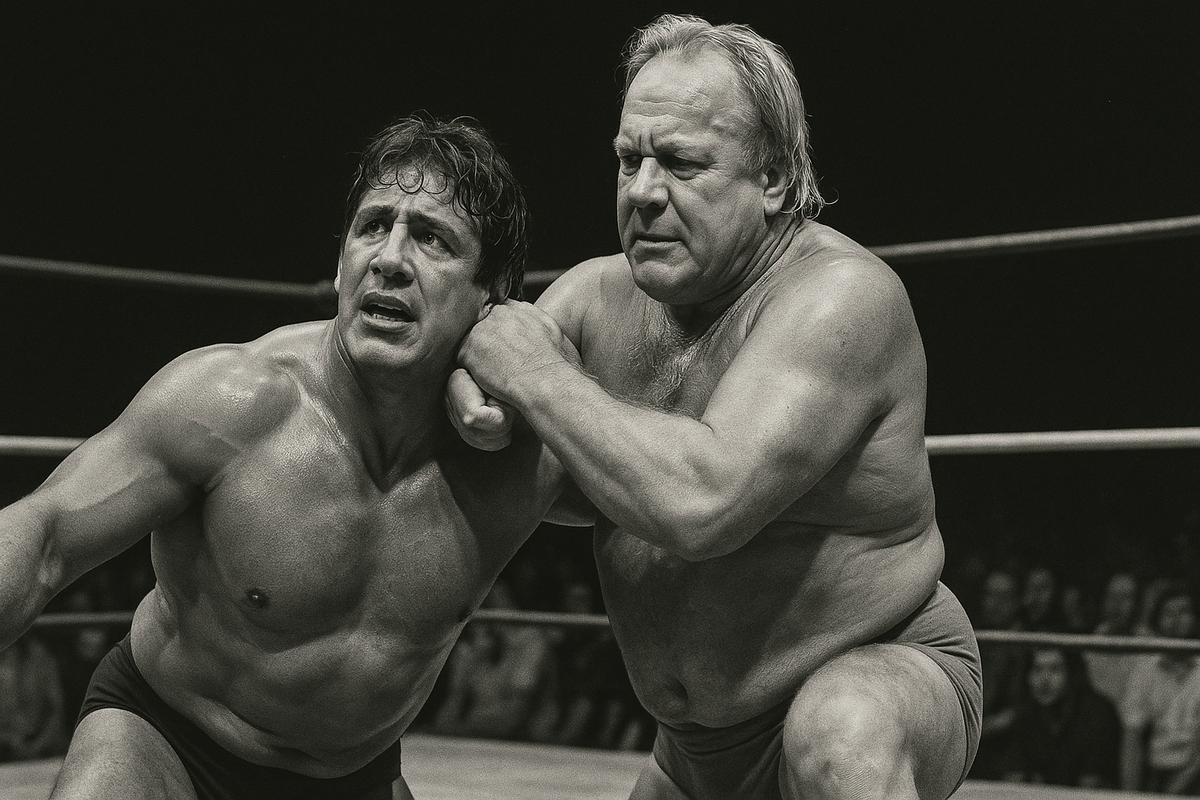
The photography in this issue did something WWF's staged promotional shots never could: it showed the work.
The images were in-the-moment captures—Santana and Valentine locked in actual combat, Martel trapped in a headlock, Atlas displaying genuine strength under arena lights. These weren't posed portraits. They were documentary evidence of sweat, strain, and the physical toll of professional wrestling performed at the highest level.
PWI's photographers understood that independent wrestling's legitimacy came from its rawness. No smoke machines. No carefully lit studio backdrops. Just the thing itself: two professionals executing their craft for audiences who wanted nothing more than excellent wrestling.
This visual honesty reinforced PWI's editorial stance: the independents weren't wrestling's minor leagues. They were wrestling's purest expression.
What the Article Actually Revealed
Beneath the surface profiles, "Riding the Independent Wave" exposed several truths about wrestling's ecosystem in 1995:
Great feuds transcend promotion. Santana vs. Valentine didn't need WWF's marketing apparatus to remain compelling. The rivalry worked because both men understood ring psychology, pacing, and how to make audiences care about simulated combat.
Technical skill has no expiration date. Martel was still executing the same holds and sequences that made him a world champion. Age didn't erode ability—it refined it.
Charisma is portable. Atlas proved that crowd connection wasn't manufactured by television production. It was an innate quality that worked in any size venue.
Fans valued authenticity over spectacle. The independent audiences weren't settling for lesser entertainment. They were choosing a different kind of wrestling experience—one that prioritized in-ring work over storyline theatrics.
The industry was larger than its two flagship companies. While wrestling journalists obsessed over WCW vs. WWF, hundreds of independent promotions were employing wrestlers, training new talent, and keeping regional wrestling traditions alive.
PWI recognized what would become obvious within a decade: the independents weren't wrestling's past. They were its future talent pipeline and cultural preservation system.
PWI's Legacy in a Single Issue
Pro Wrestling Illustrated built its reputation by covering wrestling honestly without breaking kayfabe—a nearly impossible balance that required editorial sophistication and deep industry knowledge. The magazine understood that wrestling fans wanted both the fantasy and the reality, the storyline drama and the business context.
"Riding the Independent Wave" exemplified this approach. It celebrated these wrestlers' accomplishments without condescension, analyzed the independent scene without dismissing it, and treated wrestling as a legitimate profession worthy of serious journalism.
Three decades later, when we talk about independent wrestling's importance—about how it preserved technical wrestling during the Attitude Era's chaos, how it became the training ground for WWE's current roster, how it proved audiences wanted in-ring quality over sports entertainment—we're validating what PWI understood in 1995.
Why This Issue Matters to Collectors
Historical Transition
Documents the pre-Attitude Era—the moment before everything changed, when wrestling's identity was genuinely uncertain.
Independent Wrestling Archive
Preserves history that major promotions deliberately ignored, providing context to a circuit that produced CM Punk, Daniel Bryan, and Seth Rollins.
Generational Bridge
Features six wrestlers who connected wrestling's territorial era with its national television era, capturing knowledge transfer that kept the craft alive.
Editorial Excellence
Demonstrates wrestling journalism at its most valuable—not as publicity, but as cultural documentation and critical analysis.
Visual Documentation
Photography provides evidence of wrestling performed outside television's controlled environment, showing the art form in its rawest state.
Primary Source Material
For historians studying wrestling's evolution, this issue offers rare mainstream coverage of the independent circuit taken seriously.
The Archive Awaits
Wrestling history exists in these pages—the stories television never told, the wrestlers mainstream media overlooked, the moments that shaped the industry outside the spotlight.
Browse PWI Magazine CollectionFrom the territorial era through the Monday Night Wars and beyond, each issue preserves wrestling written about with the seriousness it deserved.
The August 1995 Pro Wrestling Illustrated captured wrestling at a crossroads—when the industry's biggest names were fighting over television supremacy while its most dedicated workers were proving that wrestling's value existed independent of cameras and contracts.
Hold this issue and you're holding evidence that wrestling's greatest strength was never its production budget. It was the wrestlers who understood that the ring was the only stage that mattered, and the fans who filled small venues were just as worthy of their best work as sold-out arenas.
That understanding didn't just define independent wrestling in 1995. It defined what wrestling would become.