
The Night Rocky Johnson Beat Terry Funk—And Lost Anyway
How Inside Wrestling turned a controversial 1976 title match into wrestling mythology
October 1976. Terry Funk held the NWA World Heavyweight Championship, the most legitimate prize in professional wrestling. Rocky Johnson, the Texas champion with the build of a Greek statue and the charisma to fill any arena, got his shot. According to one magazine, Johnson won. The belt never changed hands.
Inside Wrestling didn't just report the controversy. They declared war on it.
When Wrestling Magazines Appointed Themselves Judge and Jury
The National Wrestling Alliance title wasn't decoration. In 1976, it represented trust—promoters across dozens of territories agreed on one man to carry their business. Terry Funk, with his unhinged brawling style and legitimate toughness, was that man. He traveled circuit to circuit, defending the gold and drawing money. The NWA board of directors didn't hand the belt to just anyone.
Rocky Johnson wasn't just anyone. He brought power, speed, and a presence that made promoters take notice. As Texas champion, he was climbing toward the top tier of the sport. A match with Funk represented the ceiling—or the breakthrough.
Inside Wrestling reported that Johnson shattered that ceiling. The magazine's October 1976 issue opened with a claim that stopped readers cold: Johnson had defeated Funk in the ring. Decisively. The referee never raised his hand. The belt never left Funk's waist. And the NWA never acknowledged what happened.
So Inside Wrestling launched what they called an "exclusive investigation."
Archive Details
Historical Figure: Rocky Johnson vs. Terry Funk
Issue Date: October 1976
Archive Source: Inside Wrestling Magazine
Championship: NWA World Heavyweight Championship
The Match That Broke the Script
According to the magazine's account, Funk knew he was in trouble before the opening bell. He insisted on conditions: his own timekeeper, a 90-minute limit, stipulations designed to protect him from Johnson's strength. Those precautions nearly failed.
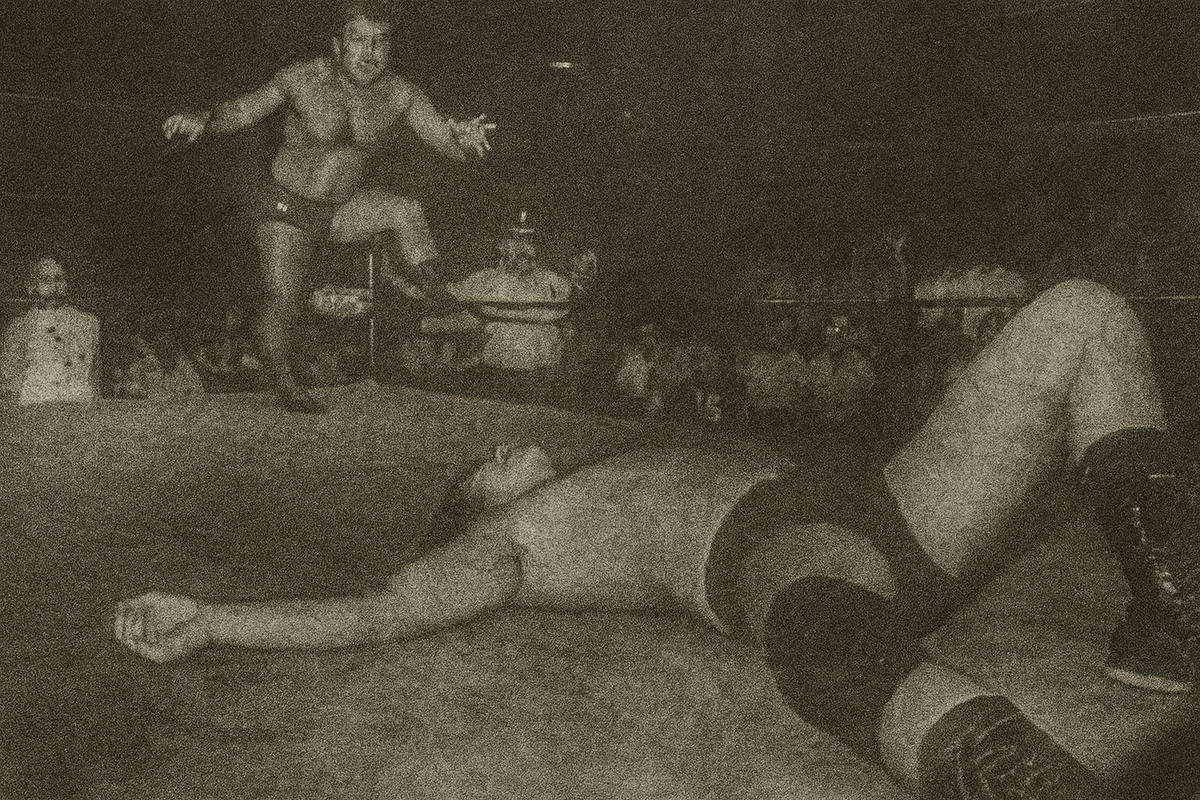
Johnson controlled the bout. His body slams left Funk dazed. His power moves forced near-falls. The magazine's photographs froze the moments that mattered—Funk writhing in a headlock, flat on the mat, clearly overpowered. The captions didn't hedge: Funk was "defeated." Johnson had "proven himself superior."
Yet fans left the arena confused. Some checked their watches. Others sensed the finish didn't match what they'd witnessed. The controversy spread beyond the building, and Inside Wrestling positioned itself as advocate, interrogator, and truth-teller. They analyzed film. They interviewed officials. They phoned NWA insiders. Their conclusion: Rocky Johnson earned the championship and was denied it.
Whether this reflected a legitimate controversy or a storyline amplified by wrestling's carny traditions doesn't diminish what the magazine accomplished. They transformed a match into mythology.
How Wrestling Magazines Created Their Own Reality
Inside Wrestling didn't operate like a newspaper sports section. These magazines were tabloid theater, blending photography, editorializing, and fan outrage into narratives that made readers feel like insiders uncovering hidden corruption. The October 1976 issue exemplifies this craft at its peak.
The photographs tell a story independent of the text. Funk on his back, Johnson standing over him in triumph. Funk trapped, Johnson in control. These weren't neutral match documentation—they were evidence in a case the magazine was building.
The writing adopted the posture of investigative journalism: "Did the NWA protect its champion?" "Was Rocky Johnson robbed of history?" For fans outside major television markets—which meant most fans—these magazines were the sport itself. They turned territorial wrestling into national drama, creating controversies that transcended the matches.
This wasn't accidental. Inside Wrestling understood that wrestling fandom thrived on debate, on the gap between what happened in the ring and what "really" happened. By framing Johnson's match as an exposé rather than a recap, they gave readers permission to question everything.
Inside Wrestling didn't just report—they analyzed film, interviewed officials, and phoned NWA insiders to build their case.
Black-and-white images of Funk dazed and Johnson triumphant weren't documentation—they were proof in a manufactured trial.
The magazine captured confused fans checking their watches, sensing something had gone wrong with the finish.
By positioning themselves as advocates for fans, the magazine transformed readers into believers in a hidden truth.
Why This Issue Matters to Collectors
The October 1976 Inside Wrestling captures something rarer than a title change: a disputed moment frozen in time. Nearly five decades later, it remains significant for reasons beyond nostalgia.
Historical Convergence: 1976 marked a transition point in wrestling. Territorial traditions still dominated, but a national audience was forming. This issue documents that tension—local hero versus traveling champion, regional promotion versus NWA authority.
The Johnson Legacy: Rocky Johnson's son would become Dwayne "The Rock" Johnson, one of wrestling's most transcendent figures. This magazine preserves the moment when Rocky himself reached for wrestling's highest honor, adding depth to a family legacy that reshaped the business.
The Funk Mythology: Terry Funk evolved into a hardcore icon whose career spanned five decades. This issue captures him at the height of his first NWA title reign, before the barbed wire and the death matches, when he represented establishment legitimacy.
Media as Artifact: The magazine itself is the story. This wasn't passive coverage—it was active myth-making, showing how wrestling journalism shaped fan perception and kept controversies alive long after the final bell.
Original copies preserve the texture of 1976 wrestling fandom: the black-and-white photography, the breathless prose, the sensation that you were reading something the powers-that-be didn't want you to know. Holding this issue means holding the exact pages that made thousands of fans question whether Rocky Johnson was robbed.
The Architecture of Wrestling Mythology
Vintage wrestling magazines operated in the space between fact and fiction, never quite committing to either. They reported outcomes while questioning them. They treated predetermined matches as legitimate competitions worth investigating. The October 1976 Inside Wrestling issue demonstrates how this tension created enduring stories.
Rocky Johnson didn't become NWA World Heavyweight Champion in 1976. The record books are clear. But Inside Wrestling ensured that the question—"What if he did?"—would outlive everyone who was there. That's the power of these magazines. They didn't just document wrestling history. They authored it.
For collectors, this issue represents a specific kind of rarity: controversy as collectible. Not just a match report, but a challenge to authority. Not just photographs, but evidence in a case that was never quite closed.
Collector Significance
Historical Rarity
Documents one of the most controversial storylines in NWA history during the territorial era's peak.
Johnson Family Legacy
Preserves Rocky Johnson's brush with wrestling's top prize, adding context to The Rock's eventual dominance.
Funk's First Reign
Captures Terry Funk as NWA champion before his transformation into a hardcore legend.
Magazine Mythology
Exemplifies how wrestling journalism created narratives that transcended the matches themselves.
Add This Piece of Wrestling History to Your Collection
The October 1976 issue of Inside Wrestling stands as one of the boldest editorials in wrestling magazine history—a document that questioned the sport's most powerful organization at the height of its influence.
Browse Inside Wrestling Magazine Collection