
When Life Magazine Stopped America in Its Tracks
How Gordon Parks' 1956 Photo-Essay on the Thornton Family Made Segregation Impossible to Ignore
September 24, 1956. Americans opened their mailboxes to find actress Janet Blair smiling from the cover of Life Magazine—another glossy promise of entertainment and escape. Then they turned the page.
What they found inside would force an entire nation to look in the mirror.
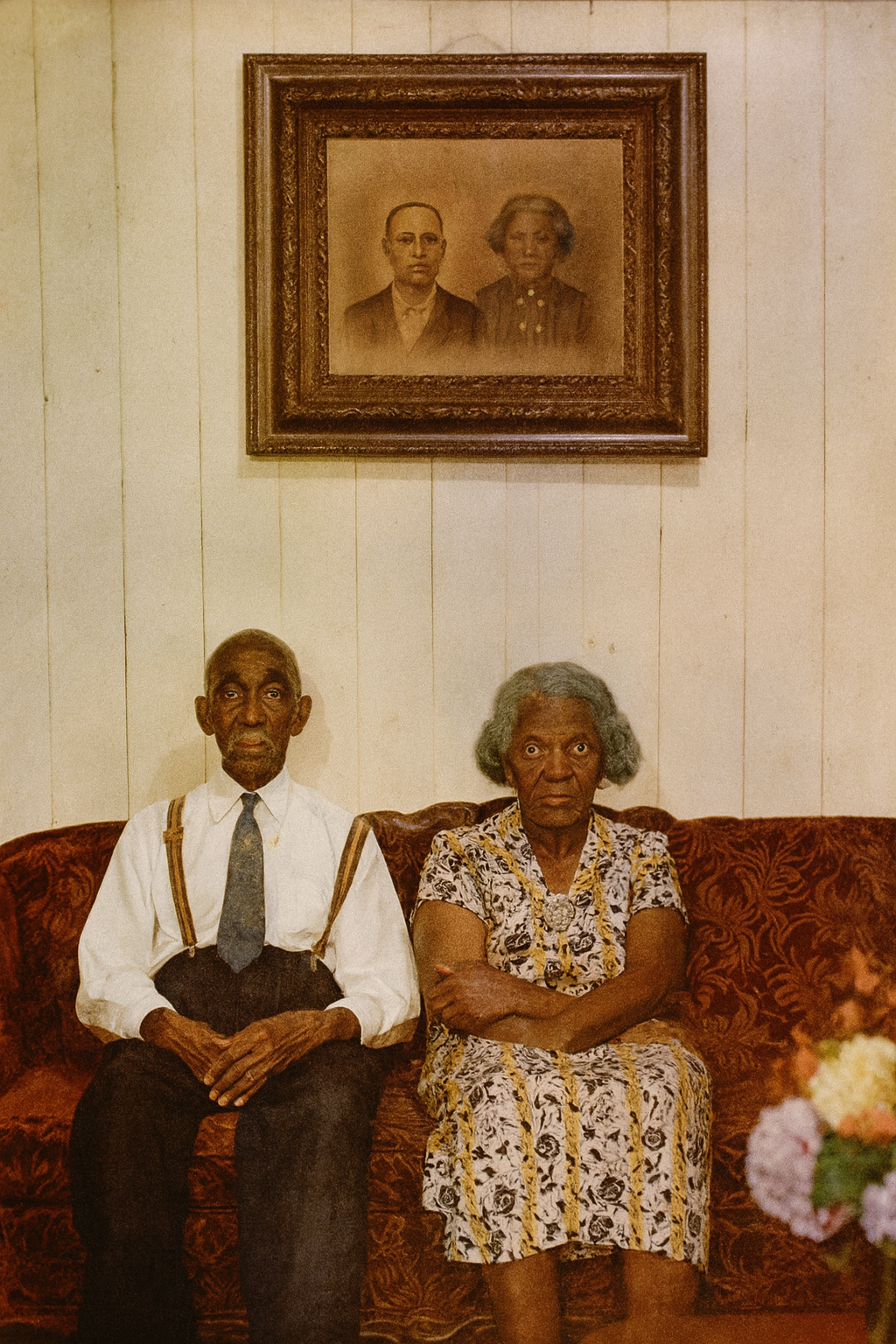
Gordon Parks' camera had done something unprecedented: it had walked into the lives of the Thornton family of Mobile, Alabama, and documented what ten million Black Americans already knew but white America had never been forced to see. Not protests. Not speeches. Not courtroom drama. Just life under Jim Crow—children fishing in muddy creeks because the playgrounds had "Whites Only" signs, families ironing clothes in homes without plumbing, grandchildren pressing their faces against fences that kept them out.
"The Restraints: Open and Hidden" wasn't journalism. It was a reckoning.
Issue Details
Publication: Life Magazine
Issue Date: September 24, 1956
Feature Title: "The Restraints: Open and Hidden"
Photographer: Gordon Parks
Writer: Robert Wallace
Featured Family: The Thornton Family, Mobile, Alabama
Series: Part IV of "Background of Segregation"
The Powder Keg Moment
Life's timing was surgical. Two years after Brown v. Board of Education declared segregated schools unconstitutional, the South was digging in its heels. White citizens' councils were mobilizing. Politicians were pledging "massive resistance." And yet the Montgomery Bus Boycott had just proven that nonviolent resistance could bring an entire city to its knees. Rosa Parks had refused to move. Martin Luther King Jr. had emerged as a voice the nation couldn't ignore.
The country was at a breaking point, and Life knew it. Rather than cover segregation from the safe distance of courtrooms and legislation, the magazine's editors made a choice: send Gordon Parks—one of the few Black photographers working at a major national publication—into the heart of it.
What he brought back would become some of the most important photojournalism of the 20th century.
The Power of What Parks Saw
Parks didn't sensationalize. He didn't need to. His lens captured Albert Thornton Sr., born in 1874 to enslaved parents, sitting beneath a portrait of his own mother and father. It showed his children and grandchildren—teachers, farmers, a professor—proof of resilience across three generations, yet still hemmed in by the same systemic barriers their grandfather had known.
The photographs carried a devastating quiet. Children playing not in parks but in dirt streets. A Nashville professor teaching science with advanced degrees, still barred from restaurants where white men without high school diplomas could eat. Allie Lee Causey, a teacher, working tirelessly with almost no resources. Families gathered on porches, Sunday church clothes pressed with care, dignity intact despite everything designed to strip it away.
Robert Wallace's text grounded the images in cold fact: the economic stranglehold since Reconstruction, the wage gaps, the housing restrictions, the separate and profoundly unequal schools. But the photographs did something words never could—they made segregation intimate. Undeniable. Human.
The Juxtaposition That Defined an Era
That Janet Blair cover wasn't an accident. It was editorial genius.
Life had built its empire on range—glamour and war, science and scandal, celebrity and social upheaval, all bound together in one package. By burying the Thornton story inside an issue that promised entertainment, the magazine guaranteed that readers who bought it for escapism would still have to confront the truth.
The contrast was the point. America wanted to look away. Life refused to let it.
This was photojournalism as moral architecture. Parks' color images weren't decoration—they were the story. Each photograph demanded that readers stop, sit with discomfort, and acknowledge what their country had become. Not as policy. Not as abstraction. As the lived reality of families who looked nothing like the ones on the cover but were just as American.
What Made This Issue Unstoppable
Generational Witness
Albert Thornton Sr.'s life spanned from slavery to Sputnik. His existence alone was a historical document—and Parks captured him surrounded by descendants who'd become educators and professionals, their achievements monumental yet still insufficient to break free.
The Hidden Restraints
Beyond the obvious "Whites Only" signs were the invisible cages—jobs you couldn't apply for, neighborhoods you couldn't enter, wages you'd never earn. Parks and Wallace cataloged them all.
Children as Prophecy
The most heartbreaking images showed kids peering through fences at playgrounds built with their parents' tax dollars. Their futures were already written, and America was holding the pen.
Dignity as Resistance
Parks never framed his subjects as victims. The Thorntons lived with grace, raised families, built community, and held fast to faith. The photographs radiated strength—not despite oppression, but as the ultimate refusal to be broken by it.
The Endurance of Honest Testimony
What keeps this issue vital seventy years later is its refusal to perform. Parks didn't photograph protests or politicians. He photographed Monday. Tuesday. Sunday after church. The ordinary moments that segregation poisoned.
By capturing the mundane alongside the monstrous, Life demonstrated that Jim Crow wasn't just laws—it was ten million daily humiliations. A child who couldn't swim in a public pool. A professor who had to eat lunch in his car. A family that built a beautiful life inside a cage they didn't build and couldn't escape.
That's why historians return to this issue. Why collectors prize it. Why it still has the power to stop you cold when you turn its pages today.
Why Collectors Covet This Issue
Historical Inflection Point
Published at the precise moment when the Civil Rights Movement was transitioning from courtroom victories to mass mobilization, this issue captured America mid-transformation. It's not just about what happened—it's about what was about to happen.
Gordon Parks' Landmark Work
These photographs are now studied in journalism schools and displayed in museums. To own this issue is to own the original prints that changed how America saw itself.
Primary Source Power
This isn't commentary written decades later. These are the actual pages that white families in Des Moines and Black families in Atlanta read in 1956, often for the first time confronting or seeing reflected the reality of segregation. The ink, the paper, the advertisements for Chevrolets and Chesterfield cigarettes—it's all context. It's all evidence.
Peak Collector Demand
Issues covering civil rights, segregation, and cultural turning points consistently rank among the most sought-after Life magazines. Condition matters, but even well-read copies command attention because they were meant to be read, passed around, argued over. This isn't a magazine that sat pristine on coffee tables. It changed minds. That wear is history.
The Magazine That Wouldn't Look Away
The September 24, 1956 issue of Life Magazine remains a landmark not because it was the first to cover segregation, but because of how it covered it. Gordon Parks' empathetic lens and Robert Wallace's unflinching reporting brought the Thornton family—and through them, millions of Black Americans—into living rooms across the country.
For one week in 1956, America couldn't flip past. Couldn't change the channel. Couldn't pretend it didn't know.
For collectors, this issue is a conscience in magazine form. For historians, it's a primary source that shaped public opinion in real time. For all of us, it's proof that great photojournalism doesn't just document history—it makes history impossible to ignore.
Explore the Archive
Thousands of original Life magazines from the 1930s through the 1970s are available in our collection—decades of American culture, politics, war, science, and social transformation documented in real time, before anyone knew how the story would end.
Browse Life Magazine CollectionWhether you're a collector building a civil rights archive, a historian researching primary sources, or someone honoring relatives who lived through these years, vintage Life magazines offer something irreplaceable: the chance to hold history in your hands, exactly as it was first told.