
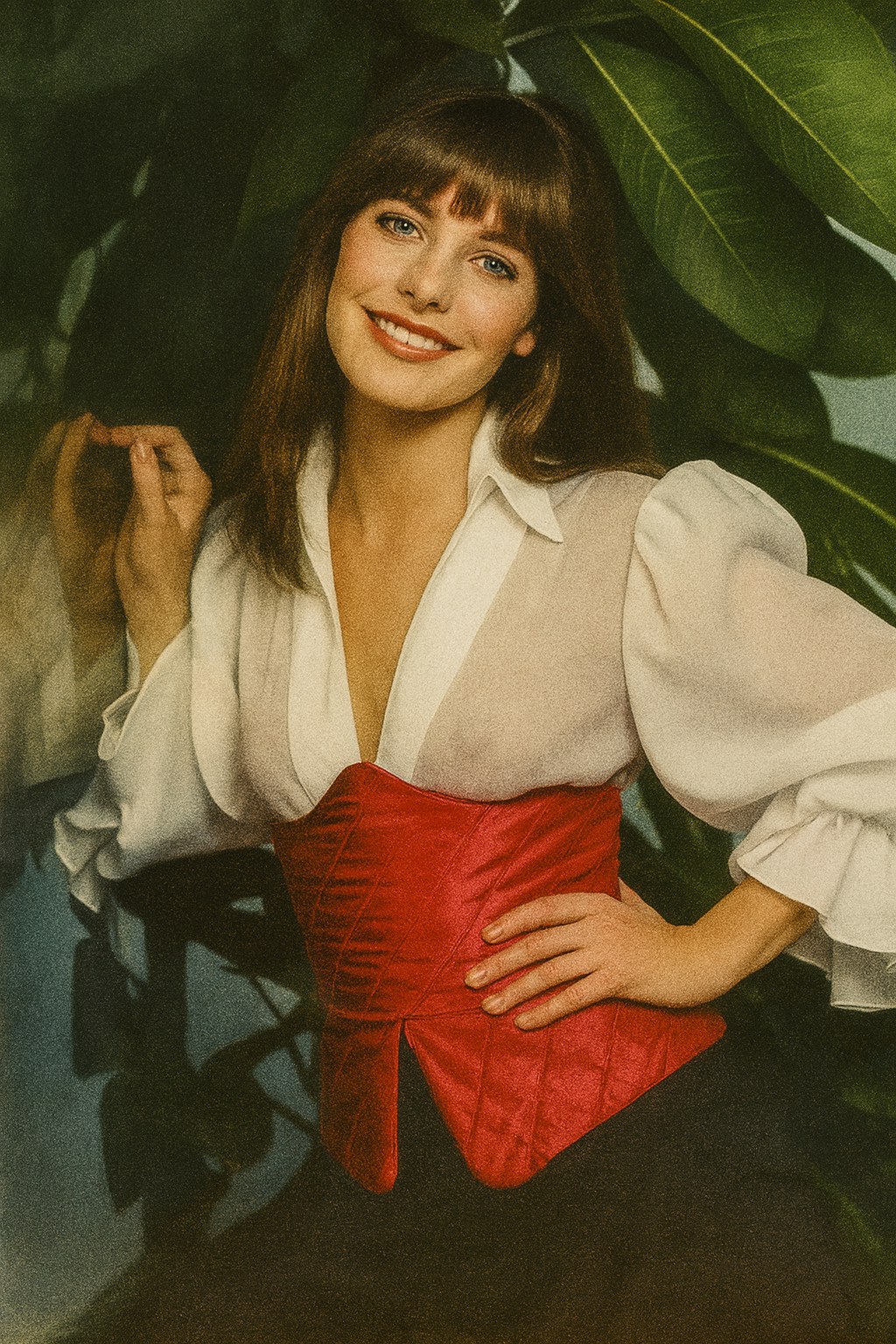
The Day Jane Birkin Turned a Shirt Into a Manifesto
How Vogue's March 15, 1971 editorial transformed a basic garment into proof that liberation could be both practical and beautiful
On March 15, 1971, American women opened their mailboxes to find a Vogue magazine that would quietly redefine what freedom looked like.
The issue's centerpiece—"The Great American Shirt Life"—wasn't selling haute couture. It was selling liberation, one unbuttoned collar at a time. And its unlikely evangelist was Jane Birkin: British actress, French bohemian, and the woman who could make a men's Oxford look like an act of revolution.
This wasn't fashion journalism. It was cultural prophecy.
Spring 1971: When the Rules Came Undone
The moment demanded Jane Birkin.
By early 1971, the countercultural avalanche of the 1960s had leveled the old hierarchies—social, sexual, sartorial. The women's liberation movement wasn't asking for permission anymore. The sexual revolution had rewritten the social contract. And a generation raised on rock music and protests was rejecting anything that felt like a uniform.
In fashion, this revolt took physical form: hemlines rose, waistbands loosened, and women began raiding men's closets. The shirt—once the domain of office drones and boarding school boys—became a symbol of something larger. Androgyny. Autonomy. The refusal to dress for anyone's gaze but your own.
Birkin, with her sleep-tousled hair and that unmistakable Parisian insouciance, wasn't just wearing the moment. She was the moment. Living in Paris with Serge Gainsbourg, embodying a sexuality that was frank but never vulgar, she represented the kind of woman who could transform practicality into poetry. Vogue didn't choose her to model shirts. They chose her to model a worldview.
Editorial Archive Details
Featured Icon: Jane Birkin
Issue Date: March 15, 1971
Photographer: Patrick Lichfield
Editor-in-Chief: Diana Vreeland
Archive Source: Original Vogue Magazine
Diana Vreeland's Last Act of Genius
By 1971, Diana Vreeland had turned Vogue into something closer to a museum exhibition than a magazine. Each issue didn't just report on fashion—it archived a vision of modernity.
"The Great American Shirt Life" was pure Vreeland: ambitious, specific, and deceptively subversive.
The Photography: Patrick Lichfield shot Birkin in moody black-and-white that felt more like cinema stills than catalog pages. She wasn't posing—she was inhabiting. Lounging against weathered wood. Leaning into doorways. The camera caught her mid-movement, mid-thought, suggesting that style wasn't something you performed. It was something you lived.
The Garments: Vogue reimagined the shirt as infinite possibility. Crisp Edwardian blouses with high collars, paired not with long skirts but with shorts—formal on top, playful below. Oversized men's shirts worn as dresses, cinched with wide studded belts that turned borrowed clothing into deliberate silhouettes. Striped work shirts transformed with capes and boots into something that straddled centuries.
The Narrative: This is where Vreeland's editorial instinct shone brightest. The text didn't just describe fabric and cut. It wove in fragments of Birkin's mornings, her film work, her offhand philosophy of dressing. Readers weren't being sold shirts. They were being offered entry into a life where fashion and identity had merged completely.
The genius was in the implication: You could live this way too.
What Made It Revolutionary
The Magazine as Time Machine
The great 20th-century magazines—Life during wartime, The New Yorker in its golden age, Vogue under Vreeland—endure because they weren't just recording their moments. They were interpreting them.
"The Great American Shirt Life" works as both fashion journalism and social history. It shows how a generation translated political awakening into aesthetic choice. How the personal became sartorial. How a shirt could mean independence.
The editorial reminds us that fashion, at its best, is a form of cultural shorthand. When women started wearing shirts in 1971, they weren't just getting dressed. They were getting free.
Why This Issue Still Matters to Collectors
Start Your Archive
If this editorial resonates—if you find yourself wondering what else Diana Vreeland was publishing, what Jane Birkin wore next, or how the 1970s continued to redefine style—you'll find hundreds of original Vogue magazines waiting in our collection.
These aren't reproductions or digital scans. They're the physical artifacts: the paper stock, the fold-out ads, the bound-in perfume samples. They let you trace fashion's evolution decade by decade, editor by editor, as it was first conceived.
Browse Vogue Magazines CollectionFinal Frame
The March 15, 1971 issue of Vogue magazine remains one of the most significant fashion documents of its decade—not because it predicted trends, but because it recognized a revolution already underway.
In Patrick Lichfield's photographs, Jane Birkin didn't just model shirts. She modeled autonomy. And Diana Vreeland's editorial vision transformed a basic garment into proof that liberation could be both practical and beautiful.
For anyone who understands that fashion history is cultural history—that the way we dress reflects the way we think, fight, love, and change—vintage Vogue magazines aren't nostalgia. They're evidence.
And the evidence, fifty years later, still fits perfectly.