
The Last Issue Before the Deluge
Vogue's March 1, 1973 Manifesto on Fashion, Freedom, and the End of an Era
Six months before the oil embargo would shatter American confidence, before hemlines plunged and the global economy contracted, Vogue published what may be its most prescient issue of the decade. The March 1, 1973 edition didn't predict the crisis—but it proposed a philosophy that would define how women dressed through it.
"Fashion is not an ego trip."
Five words. One editorial directive. And with it, Vogue dismantled a century of Parisian dictates and replaced them with something far more radical: permission to think for yourself.
The feature "What to Wear with What … and Why Make an Issue of It" reads today less like styling advice and more like a survival guide for cultural transition. Its thesis—that elegance emerges from restraint, that mood matters more than price tags, that individuality trumps conformity—arrived at precisely the moment American women needed to hear it.
This wasn't accident. This was editorial foresight operating at the highest level.
Archive Details
Publication: Vogue Magazine
Issue Date: March 1, 1973
Featured Designers: Oscar de la Renta, Valentino, Missoni
Editorial Feature: "What to Wear with What … and Why Make an Issue of It"
Historical Context: Six months before the 1973 oil crisis; height of Women's Liberation Movement; final stages of Vietnam War
The Pivot Point
By early 1973, the ground was shifting beneath fashion's feet. The Women's Liberation Movement had moved from marches to offices, demanding not just equal pay but equal freedom in how women presented themselves. The Vietnam War was bleeding into its final, bitter years, and with it went any remaining appetite for establishment rules. The economy, though not yet collapsed, was straining—inflation creeping, savings thinning, excess beginning to feel reckless rather than aspirational.
Into this moment, Vogue offered not extravagance but intelligence. Not more, but better. The magazine's advice—"it's cheaper to use fashion well"—acknowledged what many readers already felt: that the game had changed, and smart dressing meant something different now.
Fashion in March 1973 stood at an inflection point between the structured optimism of the sixties and the pragmatic individualism that would define the rest of the decade. This issue captured that pivot with unusual clarity.
The Philosophy in Practice
Vogue's editors understood something crucial: philosophy without execution is just theory. The March Point of View feature backed its manifesto with three designers whose work embodied the new thinking—Oscar de la Renta, Valentino, and Missoni—each spread functioning as proof of concept.
Oscar de la Renta: White as Power
De la Renta's bisque wool shirtdress, pleated to the waist and belted with pink satin, opened the feature with a calculated provocation. In a decade drowning in color, he proposed white—not as absence, not as blank canvas, but as complete statement.
The styling directives were surgical. Crystal jewelry for delicacy. Minimal accessories if tanned. Green accents—hats, bangles, beads—for punctuation. A white or green patent bag to close the thought. This was reduction elevated to discipline, simplicity weaponized into sophistication.
Valentino Boutique: Controlled Boldness
Valentino's contribution—a bright blue suede-edged knit top paired with striped multicolor gabardine pants—demonstrated that the new restraint didn't mean timidity. Coral accents at the ear softened the impact. Tinted glasses, large and simple, framed the face without overwhelming it. The transition from day to night came through peacock-blue chiffon, tied shirts, midriff cuts, and bare blue sandals.
This was adventurousness with boundaries, color with architecture. The spread proved you could be bold without being loud, striking without shouting.
Missoni: Optimism Made Wearable
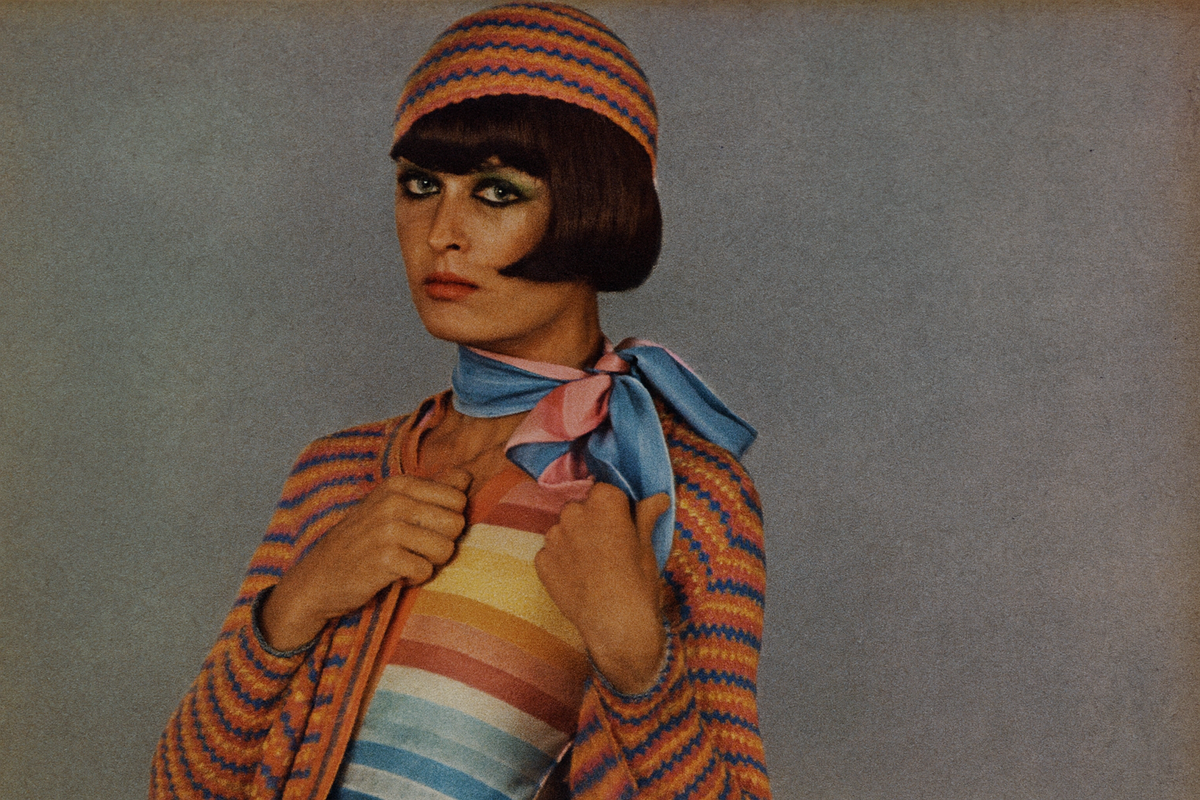
Missoni's zigzag rainbow knits—a layered cardigan over pleated skirt—closed the feature with pure vitality. Here was spring not as concept but as kinetic energy. The styling guidance reflected the confidence of the design: let the outfit lead, keep makeup minimal, add a playful knit cap but avoid heavy scarves. Pale stockings and light shoes maintained the buoyancy.
This wasn't decoration. This was mood engineering through fabric and color, the physical manifestation of hope in uncertain times.
The Magazine as Cultural Record
By 1973, Vogue had completed its transition from fashion bulletin to cultural institution. The shift from illustrated covers to photography underscored this evolution—the magazine was no longer selling fantasy but documenting reality, however elevated.
The March issue's layouts demonstrate this maturity. Text and image don't sit side by side; they interpenetrate, creating a unified argument stronger than either element alone. Where other magazines reported trends, Vogue constructed philosophy. Where competitors showed clothes, Vogue revealed how to think about clothes.
This approach—rigorous, literary, visually sophisticated—separated Vogue from every other fashion publication in circulation. The magazine assumed its readers were intelligent, discerning, and capable of understanding fashion as language rather than costume.
Why This Issue Endures
Fifty-two years later, the March 1, 1973 Vogue commands attention in the collector market for reasons that transcend nostalgia.
Designer Convergence
Capturing de la Renta, Valentino, and Missoni in a single issue creates a snapshot of 1970s design at full power. These weren't emerging talents or fading legends—these were three designers operating at absolute peak, their work defining what international fashion meant in that moment.
Philosophical Turning Point
The issue's editorial stance—fashion as individuality, mood as method, restraint as strength—anticipated attitudes that wouldn't become mainstream for another decade. Reading it now reveals how far ahead of the curve Vogue's editors were operating.
Pre-Digital Craftsmanship
Every photograph, every layout, every typographic choice represents decisions made by human hands and eyes. The visual precision achieved without computers or digital manipulation makes these spreads historical documents of a vanished craft.
Cultural Artifact
Beyond fashion, the issue captures a specific moment in American consciousness—the last breath before economic crisis, the first full expression of post-sixties individualism, the point where liberation movements translated into daily life choices.
For serious collectors, this issue functions as both primary source and cultural barometer. It's not just about the clothes—it's about capturing the exact moment when American style redefined itself.
The Archival Imperative
Fashion magazines survive because they document more than hemlines. Like wartime issues of Life or early editions of Esquire, they preserve the texture of their era—the advertisements, the typography, the paper stock, the editorial assumptions, even the smell of aging newsprint.
March 1973 Vogue exists in that rare category of publications that reward multiple readings. First pass: enjoy the photography. Second: absorb the styling intelligence. Third: recognize the cultural commentary embedded in every choice. Fourth: understand it as historical evidence of a society negotiating profound change through aesthetic decisions.
These magazines were designed to be kept, studied, returned to. Today they serve fashion historians, design students, cultural researchers, and collectors who understand that primary sources beat secondary analysis every time.
Access the Archive
Our collection of original Vogue magazines provides direct access to decades of fashion evolution and cultural history. Each issue is an authentic artifact from its era, documenting the moment when fashion, culture, and identity intersected on the page.
Browse Vogue Magazine CollectionWhether you're building a research library, investing in cultural artifacts, or pursuing a passion for vintage style, these magazines represent fashion history at the source—unfiltered, unrevised, and irreplaceable.
Coda
The March 1, 1973 issue of Vogue matters because it caught lightning. It arrived at the precise instant when fashion needed to rethink itself, when women needed permission to dress with intelligence rather than obedience, when culture required a new vocabulary for self-expression.
Through de la Renta's disciplined whites, Valentino's structured boldness, and Missoni's kinetic optimism, the magazine didn't just report change—it provided the blueprint for navigating it.
Five decades on, that blueprint still reads clearly. The issue reminds us that fashion, at its highest level, has never been about clothes. It's been about identity, autonomy, and the courage to define yourself on your own terms.
That message didn't expire in 1973. It's the reason the magazine still matters today.