
The Night Dr. Spock Told Mothers They Had Rights Too
How a single article in the September 1954 Ladies' Home Journal changed American parenting forever
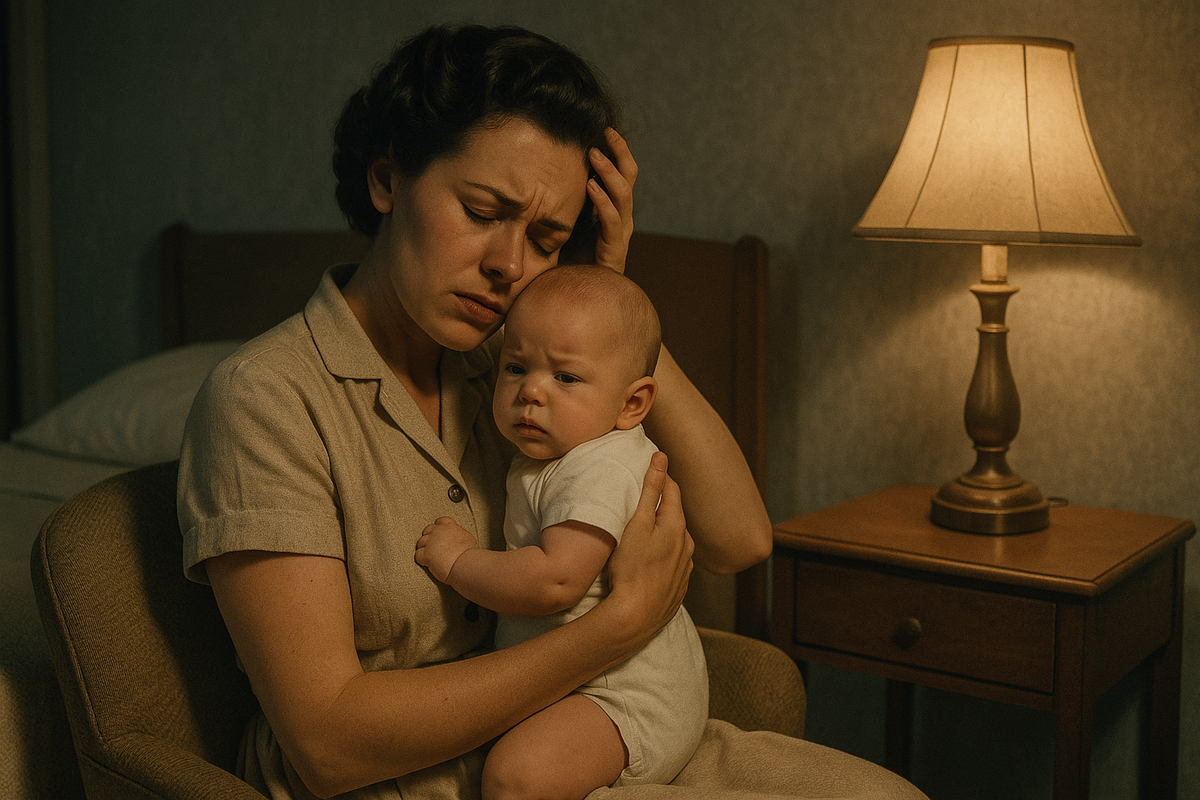
September 1954. A mother sits at her kitchen table, still in her bathrobe at 2 PM. She's been up since 4 AM—again. Her infant son wakes every two hours, screaming until she lifts him from the crib. Her husband left for work at 7. The house is silent except for the ticking clock and her own exhaustion.
She opens Ladies' Home Journal and finds Dr. Benjamin Spock staring back at her.
"Parents have rights, too," he tells her, "and they ought to have a chance to enjoy them."
For millions of postwar American mothers, this wasn't advice. It was permission.
Archive Details
Historical Figure: Dr. Benjamin Spock, Pediatrician & Author
Issue Date: September 1954
Archive Source: Ladies' Home Journal
Column Title: "Dr. Spock Talks with Mothers"
The Pediatrician Who Changed Parenthood
By 1954, Dr. Benjamin Spock was already the most famous pediatrician of the 20th century. His 1946 book Baby and Child Care had revolutionized how Americans raised their children, replacing the rigid, militaristic routines of previous generations with something radical: trust yourself.
But in his September 1954 column for Ladies' Home Journal—"Dr. Spock Talks with Mothers"—he went further. He addressed what he called the two most common sleep problems plaguing American families: the "going-to-bed" problem and the "middle-of-the-night waking" problem. And he did something few parenting experts dared to do in an era that sanctified maternal sacrifice: he told mothers to stop giving in.
"If you let yourself be intimidated by a determined baby, he only becomes more unhappy—and more determined."
This wasn't cruelty. Spock insisted on kindness and understanding. But he argued that consistency, firm routines, and parental confidence weren't just good for babies—they were essential for the survival of the family itself.
A Nation Remaking Itself, One Nursery at a Time
The timing mattered. Less than a decade after World War II, America was deep in the baby boom. Suburban homes were multiplying. Consumer culture was booming. And millions of new parents were raising infants simultaneously, without the extended family networks that had once provided support.
The old rules—feeding schedules timed to the minute, limited affection, harsh discipline—were beginning to crack under the weight of psychological research and parental exhaustion. Spock's message struck a balance between the authoritarian past and the permissive future: children needed boundaries, and parents needed sleep.
The article's layout reinforced this authority. A black-and-white portrait showed Spock seated in a suit, hands mid-gesture, his expression serious but approachable. Pull quotes in large serif fonts highlighted his most provocative claims, drawing the reader's eye to the message that would have seemed almost heretical to earlier generations: you deserve enjoyment of life, too.
Ladies' Home Journal and the Architecture of Women's Lives
By the mid-1950s, Ladies' Home Journal commanded one of the largest circulations in America. It wasn't just a women's magazine—it was a cultural infrastructure.
The Journal combined practical advice with literary fiction, fashion spreads with social commentary. It told women how to dress, what to cook, and how to navigate the emotional landscape of marriage and motherhood. Writers like Dorothy Thompson and Gladys Taber appeared alongside Dr. Spock, creating a forum where women's daily labor—the quiet, relentless work of caregiving—was treated as worthy of intellectual attention.
Spock's column fit seamlessly into this mission. It validated struggles that were rarely spoken aloud. It gave mothers tools to reclaim their nights. And it reminded them that they weren't just vessels of care—they were people with rights and dignity.
The Contradictions of the Era
Here's what makes the September 1954 issue so historically significant: it captures the tension between what America said it wanted and what it was becoming.
On the surface, the magazine reinforced domestic ideals. Women were homemakers, nurturers, keepers of the hearth. But beneath that surface, psychological science was quietly dismantling the old order. Spock's advice—rooted in emerging child development research—suggested that rigid adherence to tradition could harm both children and parents.
The baby boom wasn't just a demographic event. It was a cultural experiment. Millions of families were navigating the same problems at the same time, and media like Ladies' Home Journal became the connective tissue—a way for isolated suburban mothers to realize they weren't alone.
Why Collectors Seek This Issue
Holding History in Your Hands
When you hold the September 1954 Ladies' Home Journal, you're not just holding paper. You're holding a conversation that millions of American women had with themselves in the quiet hours of the night.
Dr. Spock's reminder—that parents have rights too—carried enormous weight in a culture where mothers were expected to give endlessly of themselves. It validated their exhaustion. It offered solutions. And it helped redefine what it meant to be a good parent in postwar America.
Today, this issue stands as a reminder of how ideas about children, families, and women's lives evolved—and how magazines like Ladies' Home Journal didn't just report on those changes. They helped create them.
Explore the Collection
Discover decades of women's lives, fashion, literature, and cultural history—preserved in the pages of one of America's most influential magazines.
Browse Ladies' Home Journal Magazines Collection