
The Last-Minute Rewrite That Changed Japan Forever
Inside the October 6, 1945 Saturday Evening Post—when American officers in Manila tore up the occupation plans and chose reconstruction over revenge
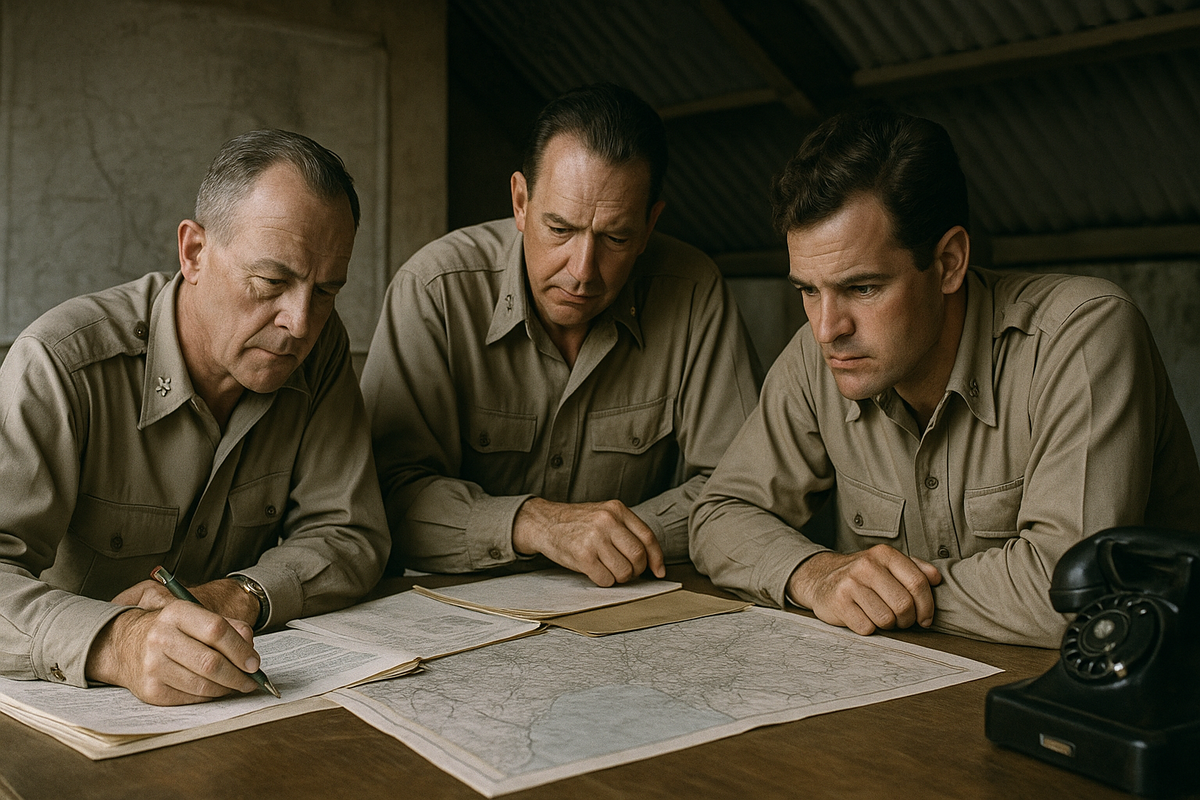
Manila, September 1945. Inside a cramped, sweltering office beneath the corrugated roof of City Hall, American officers were tearing up the occupation plans for Japan—literally. The directives drafted in Washington, rigid and punitive, weren't going to work. Not in the real world. Not with an empire of seventy million people waiting on the other side of the Pacific.
One month later, Americans opening their October 6, 1945 issue of The Saturday Evening Post discovered what had happened in that room. Richard Tregaskis—the war correspondent who had made his name with Guadalcanal Diary—filed a dispatch that pulled back the curtain on one of the most consequential pivots in American foreign policy: the moment the United States chose reconstruction over retribution in postwar Japan.
The article was titled "We Soften the Peace." And it revealed, in real time, how a handful of exhausted officers under General Douglas MacArthur rewrote the rules for occupation—not with grand proclamations, but with pencils, improvisation, and a toolbox metaphor that would guide American policy for years to come.
For anyone who owns this issue today, you're not holding a magazine. You're holding a primary source document from the hinge of history.
September 1945: The World Holds Its Breath
The war was over, but nothing felt settled.
Japan had surrendered aboard the USS Missouri on September 2, 1945—just weeks after Hiroshima and Nagasaki had introduced the atomic age in the most horrifying terms imaginable. Europe was a shattered landscape of displaced millions. The Soviet Union was already maneuvering for advantage. And the United States, thrust into the role of global architect, faced a question no empire had ever confronted quite this way: How do you occupy, govern, and rebuild a nation whose culture, language, and political traditions are so radically different from your own?
Germany would be carved into zones, divided among the Allies. But Japan? Japan was going to be MacArthur's show—almost entirely.
In Manila, where MacArthur's Military Government Headquarters had set up shop before the move to Tokyo, the pressure was extraordinary. Officers worked around the clock, rewriting orders as new intelligence came in. The original directives—drafted by Washington bureaucrats who had never set foot in Asia—called for harsh restrictions, uncompromising oversight, and a legalistic approach to denazification-style purges.
But the men on the ground knew better. As Tregaskis reported, the plans were "torn up, melted, and reformed." Punishment alone wouldn't rebuild Japan. Flexibility would.
Archive Details
Publication: The Saturday Evening Post
Issue Date: October 6, 1945
Feature Article: "We Soften the Peace" by Richard Tregaskis
Cover Artist: Constantin Alajalov
Historical Context: Published one month after Japan's surrender aboard the USS Missouri
Key Figures: General Douglas MacArthur, Brig. Gen. William Crist, Lt. Col. Loomis Patrick, Maj. Marshall D. Abrams
The Saturday Evening Post at the Height of Its Power
By 1945, The Saturday Evening Post wasn't just a magazine—it was the magazine. With a circulation in the millions, it reached more American homes than any other weekly publication. It was where Norman Rockwell's covers defined the national self-image. It was where serious war correspondents like Tregaskis filed dispatches alongside short fiction, political essays, and humor columns.
The Post understood something crucial: Americans didn't want to choose between highbrow analysis and accessible storytelling. They wanted both, in the same issue, delivered with confidence and clarity.
This October 6, 1945 issue exemplified that range. Inside, readers found Tregaskis' hard-hitting report on occupation planning. They also found Phyllis Duganne's short story "Dark Moment" and a political essay titled "Can Congress Save Itself?" The magazine moved seamlessly from Manila war rooms to Washington corridors to small-town fiction—all bound together by a vision of American resilience and adaptability.
And on the cover? Constantin Alajalov's jukebox painting—a riot of color, motion, and postwar joy. Dancing couples. Live music. The promise of normalcy.
The juxtaposition was perfect. While Americans danced to swing music, a small group of officers halfway around the world was rewriting the future of Asia.
What Tregaskis Saw—And Why It Mattered
Tregaskis had earned his access. His 1943 book Guadalcanal Diary had become one of the defining works of Pacific War journalism, a firsthand account of combat that sold millions and was adapted into a major film. By the time he arrived in Manila, he had credibility with both military brass and the American public.
What he reported was startling in its honesty.
Improvised Planning
Officers like Brig. Gen. William Crist, Lt. Col. Loomis Patrick, and Maj. Marshall D. Abrams weren't working from a master blueprint. They were figuring it out in real time, huddled over desks in cramped offices.
From Punishment to Pragmatism
Early directives treated Japan like a criminal state. MacArthur's team reframed the mission: instead of rigid commands, they provided "tools" that local commanders could adapt.
Cultural Re-education
The goal of "reconditioning the Japanese mind along American lines" was central to occupation strategy—an ambitious vision that assumed democratic values could be transplanted.
Lingering Fear
Despite Japan's formal surrender, uncertainty about how the population would react to American occupation shaped every decision. Would there be resistance? Sabotage?
The Human Cost
Tregaskis didn't shy away from showing officers who had been away from families for years. They were committed to the mission, but they dreamed of home.
Flexibility as Doctrine
Adaptability, not rigidity, became the defining feature of occupation policy. The "toolbox" approach would guide American foreign policy for decades.
One photograph in the issue showed these men mid-debate, captioned simply: "Men of a few thousand huddles." The image underscored the human scale of a decision that would affect millions.
This wasn't triumphalist propaganda. It was journalism that acknowledged complexity, doubt, and the weight of responsibility. That's why it remains powerful eighty years later.
Alajalov's Cover: The Peace Americans Wanted
Constantin Alajalov was a master of light satire and movement. Born in Russia, trained in Paris, he had immigrated to the United States and become one of the Post's most popular illustrators. His style was joyful, kinetic, slightly whimsical—perfect for a nation ready to move on from wartime austerity.
The October 6, 1945 cover depicted exactly that: a jukebox joint alive with music, dancing, and carefree energy. It was the peace Americans wanted—domestic, immediate, personal.
Inside, Tregaskis reminded them that peace required work. The contrast wasn't accidental. The Post understood that its readers needed both reassurance and reality. The cover celebrated the return to normal life. The feature article explained why normal life was possible—because men in Manila were doing the hard, unglamorous work of rebuilding a former enemy.
That editorial balance is what made the Post indispensable in 1945. And it's what makes this issue invaluable today.
The Post's Enduring Legacy
The Saturday Evening Post ran for nearly two centuries, from 1821 to 1969 in its original form (it was later revived). At its peak, it was the most influential weekly publication in America, shaping how millions understood politics, war, culture, and themselves.
From Norman Rockwell's Four Freedoms series to investigative journalism that exposed corporate fraud, from serialized novels by F. Scott Fitzgerald to war dispatches like Tregaskis', the Post documented and defined American life in the 20th century.
"We Soften the Peace" stands among the magazine's most historically significant pieces—not because it was the most dramatic or the most beautifully written, but because it revealed the hidden mechanics of decision-making at a turning point. It showed readers that history wasn't inevitable. It was made by people—tired, uncertain, doing their best with incomplete information.
That's a lesson worth preserving.
Why Collectors Seek This Issue
Historical Timing
Published just one month after Japan's surrender, it captures the earliest phase of occupation planning—before the outcomes were known, before MacArthur became the towering figure of postwar reconstruction. This is history in motion, not retrospective analysis.
Author Significance
Richard Tregaskis was one of the most respected war correspondents of his generation. Any piece bearing his byline carries weight, but this one—offering unprecedented access to MacArthur's inner circle—is especially significant.
Cover Art
Alajalov's jukebox illustration is a collectible artifact in its own right, sought after by enthusiasts of mid-century American illustration and commercial art.
Cultural Document
The issue captures the precise moment of transition from total war to uncertain peace. It reflects both the optimism and the anxiety of a nation stepping into global leadership.
This isn't memorabilia. It's primary source material. Owning this issue means owning a window into the decisions that shaped the postwar order—decisions made not in marble halls, but in sweltering Manila offices by officers who knew they were writing history on the fly.
Explore the Archive
If this issue resonates with you, it's part of a much larger collection. Hundreds of original Saturday Evening Post magazines from the 1930s through the 1970s are available—each one a time capsule of American culture, politics, and art.
Whether you're a collector building a library of 20th-century periodicals, a historian researching postwar policy, or someone honoring the memory of a family member who lived through these years, these magazines offer something no digital reprint can match: history as it was first encountered.
Browse The Saturday Evening Post Magazine CollectionFinal Reflection
The October 6, 1945 issue of The Saturday Evening Post is more than a magazine. It's a dispatch from the moment when America pivoted from vengeance to reconstruction, from war to the hard work of building peace.
Richard Tregaskis didn't know, when he filed his report from Manila, that the occupation of Japan would succeed—that MacArthur's improvised, flexible approach would help transform a militarist empire into a democratic ally. He only knew what he saw: officers tearing up the script and writing a new one, hour by hour, under extraordinary pressure.
To hold this issue today is to hold that uncertainty. It's to remember that the postwar order we inherited wasn't inevitable—it was chosen, by people who could have chosen otherwise.
For collectors, historians, and anyone who values the artifacts that shaped our world, this is the kind of magazine worth preserving. Not because it's perfect. But because it's real.