
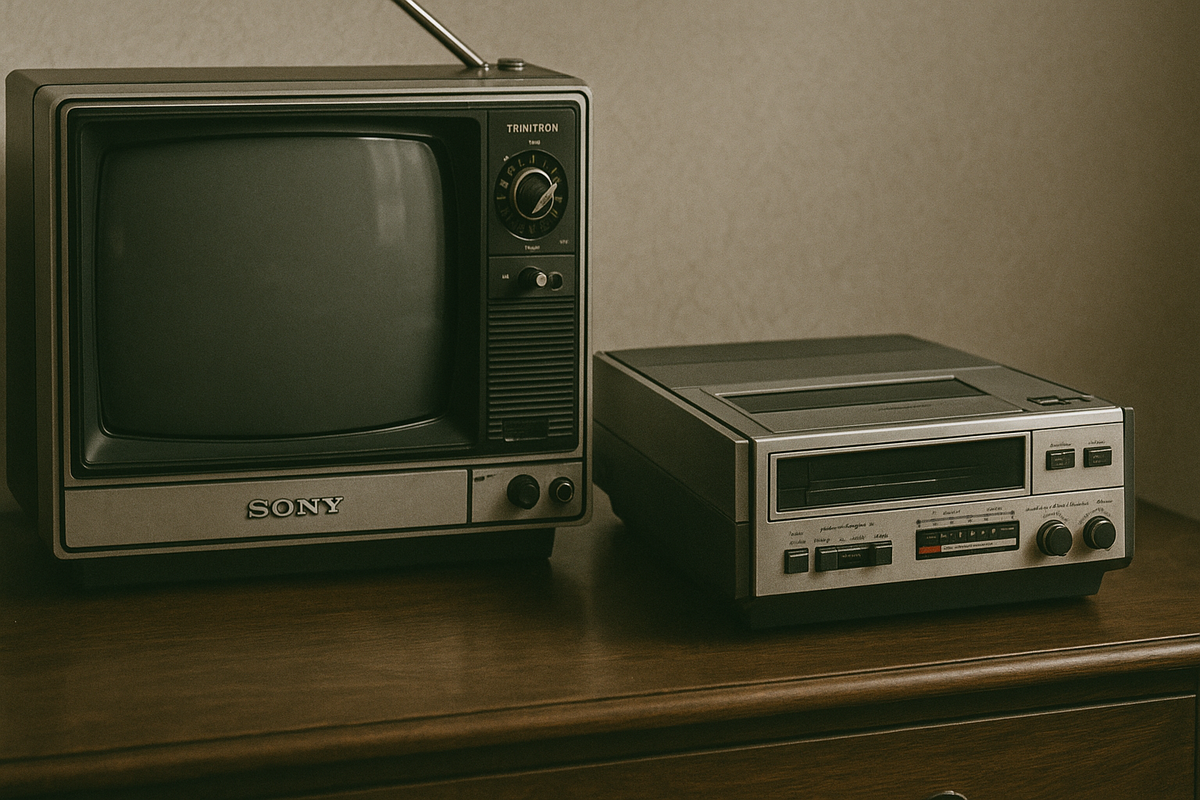
The Day Forbes Watched Sony Stumble
September 4, 1978: When America's favorite Japanese company lost its narrative
Americans owned nearly half of Sony's stock in the early 1970s. By September 1978, they were running for the exits.
When the September 4, 1978 issue of Forbes Magazine hit newsstands, it delivered a verdict Wall Street had been whispering about for months: Sony—the Japanese manufacturing marvel that had colonized American living rooms—was in trouble. Real trouble.
The magazine's feature, "Sony Levels Off" and "Blurred Image," didn't traffic in corporate euphemisms. It laid out the damage in numbers that spoke louder than any press release. Sales up a modest 3.8% to $1.12 billion. Net income down 41.1%. Operating margins collapsing from 14% to 1.9% in just two years. Foreign ownership cut by more than half, with American Depositary Receipts holdings slashed from over 20% to under 12%.
This wasn't a quarterly hiccup. This was a company losing its narrative.
Historical Record
Publication: Forbes Magazine
Issue Date: September 4, 1978
Feature Articles: "Sony Levels Off" and "Blurred Image"
Key Figures: Akio Morita (Chairman), Kenji Tamiya (Sony U.S. President), Morton I. Fink (U.S. Executive), Kazuo Iwama (deceased predecessor)
Archive Significance: Primary source documentation of Sony's pre-Walkman crisis and the Betamax format war
When the Future Stopped Working
Sony had sold America a story: Japanese precision married to innovative design, delivered at a premium price consumers gladly paid. By 1978, that story was falling apart.
The culprit everyone pointed to was Betamax—Sony's revolutionary home video recorder that was supposed to transform television viewing forever. Instead, it transformed into a cautionary tale. U.S. sales crawled ahead by just 1.9% in mid-1978. Consumer Reports tested Sony's machines against cheaper Zenith and RCA sets and found little justification for the price gap. Consumers noticed.
Chairman Akio Morita told Forbes the video recorder boom might not materialize until the mid-1980s—a frank admission that clashed with the company's public optimism. Meanwhile, Morton I. Fink, leading Sony's U.S. operations, insisted the market remained solid. The internal discord was obvious, the strategic direction unclear.
Forbes didn't need to editorialize. The comparison charts did the work: Matsushita posted double-digit gains. Hitachi and Toshiba weathered the surging yen without crisis. Sony stood alone in its struggles.
The Magazine That Refused to Blink
Forbes in 1978 operated with a clarity that separated it from the corporate PR machinery. While other business publications might have framed Sony's troubles as temporary turbulence, Forbes diagnosed something more fundamental: a crisis of identity.
The magazine delivered its verdict through meticulous financial reporting—stock ownership charts tracking the American exodus, margin analyses exposing the erosion of Sony's premium pricing power, executive quotes revealing leadership fractures. This was forensic journalism applied to corporate performance.
The data told competing stories. Sony was expanding—building a new San Diego color-TV plant designed to produce 60,000 sets per month. Yet it was also contracting—losing the foreign investor confidence that had marked its transformation into a true multinational. After the death of Kazuo Iwama, Kenji Tamiya assumed control of Sony U.S., completing the shift to full Japanese management of American operations just as the U.S. market was proving most challenging.
Oppenheimer & Co. analysts warned that Sony's "premium price" advantage was disappearing. The brand that consumers had once trusted enough to pay extra for was becoming just another name on the showroom floor.
The Irony Time Couldn't See
What makes the September 4, 1978 issue extraordinary isn't just what it captured—it's what it couldn't see coming.
One year later, Sony would launch the Walkman, redefining personal electronics and reclaiming its innovative edge. By the mid-1980s, it would help pioneer the compact disc, reshaping the entire music industry. The company Forbes watched stumbling in 1978 would become the multinational powerhouse of the 1980s and 1990s.
But Betamax would remain dead. Sony's format war with VHS became business school gospel—a lesson in how technical superiority means nothing without market adoption. This Forbes issue captured that failure in real-time, before anyone knew how the story would end.
For collectors, that's the value of primary sources: they preserve the uncertainty. In 1978, no one knew if Sony would recover. The anxiety was genuine. The stakes were real.
Economic Shift
Documents the U.S.–Japan trade anxieties that would define the next decade as Asian manufacturing power visibly challenged American dominance.
Format War Origins
Captures the Betamax story in its infancy, before it became one of technology's most famous cautionary tales about market adoption versus technical superiority.
Leadership Crisis
Reveals internal fractures between Tokyo executives and U.S. leadership during Sony's transition to full Japanese control of American operations.
Brand Erosion
Chronicles how Sony's premium pricing advantage collapsed as competitors proved consumers wouldn't pay extra without clear differentiation.
Why This Issue Commands Attention
Historic Timing
Captured Sony at its lowest point, just one year before the Walkman would revolutionize personal electronics and restore the company's innovative reputation.
Primary Source Value
Preserves contemporary perspectives unfiltered by hindsight—the genuine uncertainty about whether Sony would recover from this crisis.
Cultural Artifact
Documents the moment when American confidence in Japanese manufacturing invincibility first showed cracks, foreshadowing decades of economic competition.
Investment Research
Original Forbes analysis showing how Wall Street and institutional investors evaluated multinational corporations during the late 1970s economic turbulence.
Format War Archive
Real-time documentation of the Betamax launch struggles that would become mandatory case study material in business schools worldwide.
Increasing Scarcity
Original issues in good condition become rarer each year as private collections disperse and institutional archives restrict access.
The Archive Speaks
Forbes in the late 1970s served as real-time analysis of an economic order in flux. Where Life Magazine had documented World War II through photographs, Forbes documented the rise of Asian manufacturing power through balance sheets and executive interviews.
The Sony feature exemplifies this role. It captured currency shocks, product failures, and leadership disputes unraveling a company Americans had assumed was unstoppable. Nearly fifty years later, those lessons remain instructive.
For anyone studying corporate strategy, technology adoption, or international business competition, this issue offers something academic papers cannot: the contemporary perspective, unfiltered by hindsight.
Explore the Complete Archive
From the energy crises of the 1970s to the tech booms of the 1990s, Forbes documented every inflection point in the global economy—not as history, but as it happened.
Browse Forbes Magazine CollectionFinal Assessment
The September 4, 1978 issue of Forbes Magazine stands as one of the most revealing business publications of its decade. Its examination of Sony captured more than one company's quarterly troubles. It captured the moment when American confidence in Japanese invincibility first cracked, when premium branding first showed its limits, when technological innovation proved insufficient without strategic execution.
Holding this issue means holding the anxiety of 1978—when Sony's future remained genuinely uncertain, when Forbes refused to look away, and when the next chapter of global technology hung in the balance.
The image had blurred. Forbes made certain everyone noticed.