
Storms, Salvage, and the Struggle for the Sea
When Reap the Wild Wind Crashed Into American Living Rooms
On April 27, 1940, American readers opened their mailboxes to find hurricanes waiting inside.
Not the kind brewing in the Atlantic—though those would come soon enough—but the fictional tempests of Thelma Strabel's Reap the Wild Wind, serialized across the pages of The Saturday Evening Post. This was no ordinary sea yarn. It was a storm-lashed drama of Key West wreckers, moral ambiguity, and survival that would soon become a John Wayne vehicle for Paramount Pictures. But in the spring of 1940, before Hollywood got its hands on it, Reap the Wild Wind belonged to the Post—and to millions of readers seeking adventure at a moment when real storms were gathering on the horizon.
For a nation standing at the edge of war, uncertain whether to wade into Europe's catastrophe or stay anchored in neutrality, Strabel's tale of salvagers battling reefs and rivals offered something more than escapism. It was a meditation on risk, greed, and courage—the very qualities Americans would soon need in abundance.
Historical Context
Publication: The Saturday Evening Post
Issue Date: April 27, 1940
Featured Serial: Reap the Wild Wind by Thelma Strabel
Illustrator: Harold Von Schmidt
Cultural Moment: Published months before Pearl Harbor, during America's anxious neutrality
April 1940: The Calm Before
The world was already burning. Nazi Germany had swept through Scandinavia and was preparing to unleash the Blitzkrieg on France. America remained officially neutral, but the question was no longer if war would reach American shores—it was when. Newspapers carried grim dispatches from Europe. Radio broadcasts crackled with Churchill's warnings and Roosevelt's careful reassurances.
Into this charged atmosphere came The Saturday Evening Post, America's most trusted cultural compass. By 1940, the Post had achieved something rare: it was both mass-market and prestigious, a magazine that reached farmers in Iowa and intellectuals in Manhattan. Norman Rockwell's covers captured the soul of small-town America, while inside, the magazine published Fitzgerald, Faulkner, and Steinbeck alongside political commentary and cultural essays.
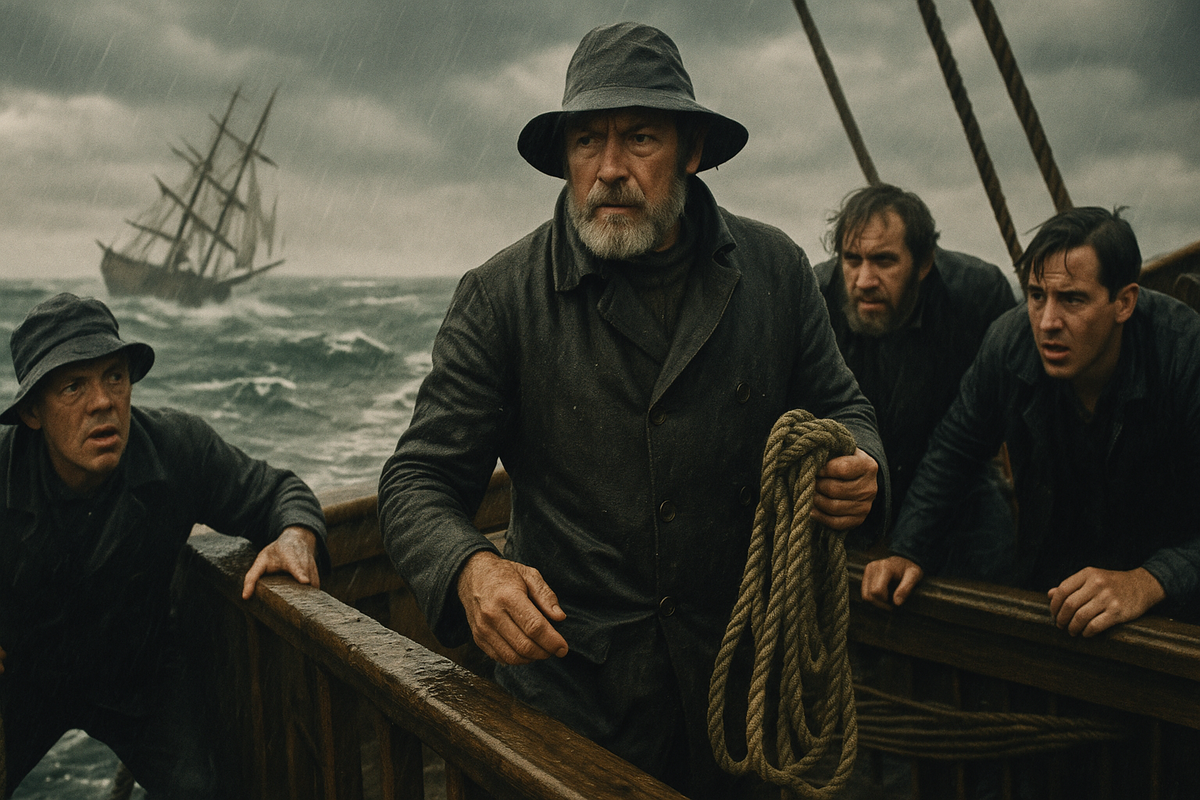
The April 27 issue was no exception. But this time, instead of Rockwell's gentle domesticity, the cover depicted something far more violent: storm-tossed ships, wreckers battling nature's fury, and the raw power of the sea. This was Reap the Wild Wind—and it arrived at exactly the right moment.
Key West, Hurricanes, and the Wrecking Life
Strabel's novel plunged readers into the Florida Straits, where the wrecking industry thrived on disaster. When ships ran aground on reefs or were torn apart by hurricanes, salvagers—known as wreckers—raced to claim the cargo. The line between rescue and piracy was thin, and fortunes turned on the speed of a schooner and the audacity of its captain.
This was not romanticized piracy. Strabel's wreckers inhabited a morally complex world where survival often meant exploiting tragedy. Families competed for salvage rights. Storms were both catastrophe and opportunity. And beneath the adventure, darker questions simmered: When does rescue become theft? When does ambition become greed?
For 1940 readers, these were not abstract dilemmas. The Great Depression had taught Americans about scarcity and moral compromise. The approaching war would test them again. Reap the Wild Wind gave them a space to explore those tensions through fiction—a safe distance from which to wrestle with hard questions.
Harold Von Schmidt: Illustrating the Storm
The story lived not just in Strabel's prose but in Harold Von Schmidt's illustrations. Von Schmidt was one of the Post's premier visual storytellers, a painter who could render both the violence of a hurricane and the emotional weight of a dinner table argument. His work for Reap the Wild Wind captured the cinematic scope of the narrative years before Cecil B. DeMille turned it into a Technicolor spectacle.
In an era before television, this fusion of illustration and serialized fiction was how Americans experienced visual drama. Families gathered around the magazine, following the story installment by installment, studying Von Schmidt's paintings of storm-wracked decks, candlelit cabins, and the faces of men and women locked in moral combat. The Post wasn't just selling a story—it was selling an experience.
What Made Reap the Wild Wind Resonate
Strabel understood what her readers needed. The novel delivered:
Why the Post Endures
The Saturday Evening Post wasn't just read—it was saved. Unlike newspapers, which were discarded after a day, or radio broadcasts, which vanished into the air, the Post was kept, reread, and passed along. It was a cultural time capsule by design.
Each issue blended fiction and fact, humor and analysis, art and advertising. Together, these elements created a portrait of American life more complete than any single medium could offer. Today, vintage Post issues are windows into how Americans thought, dreamed, and argued during the most consequential decades of the 20th century.
The April 27, 1940 issue, with its storms and salvagers, its hurricanes and moral dilemmas, captures a moment when America was still deciding what kind of nation it would become. The storms were coming. The wreckers were waiting. And readers, page by page, were learning what it meant to face them.
Why This Issue Matters to Collectors
The April 27, 1940 Saturday Evening Post is more than a magazine. It is a cultural artifact from a hinge moment in American history.
Explore the Archive
Thousands of original Saturday Evening Post magazines, spanning the early 1900s through the 1960s, are available in our collection. From the Great Depression to World War II, from postwar optimism to the Civil Rights era, these issues chronicle the sweep of American history through fiction, illustration, and cultural commentary.
Whether you're a serious collector, a maritime history enthusiast, or someone seeking to preserve the reading habits of earlier generations, these magazines are more than publications. They are anchors of cultural memory, preserved in print for future generations.
Browse The Saturday Evening Post Magazine Collection