
The Prophet at Seventeen
When Jet Magazine Crowned Stevie Wonder Soul's New Messenger
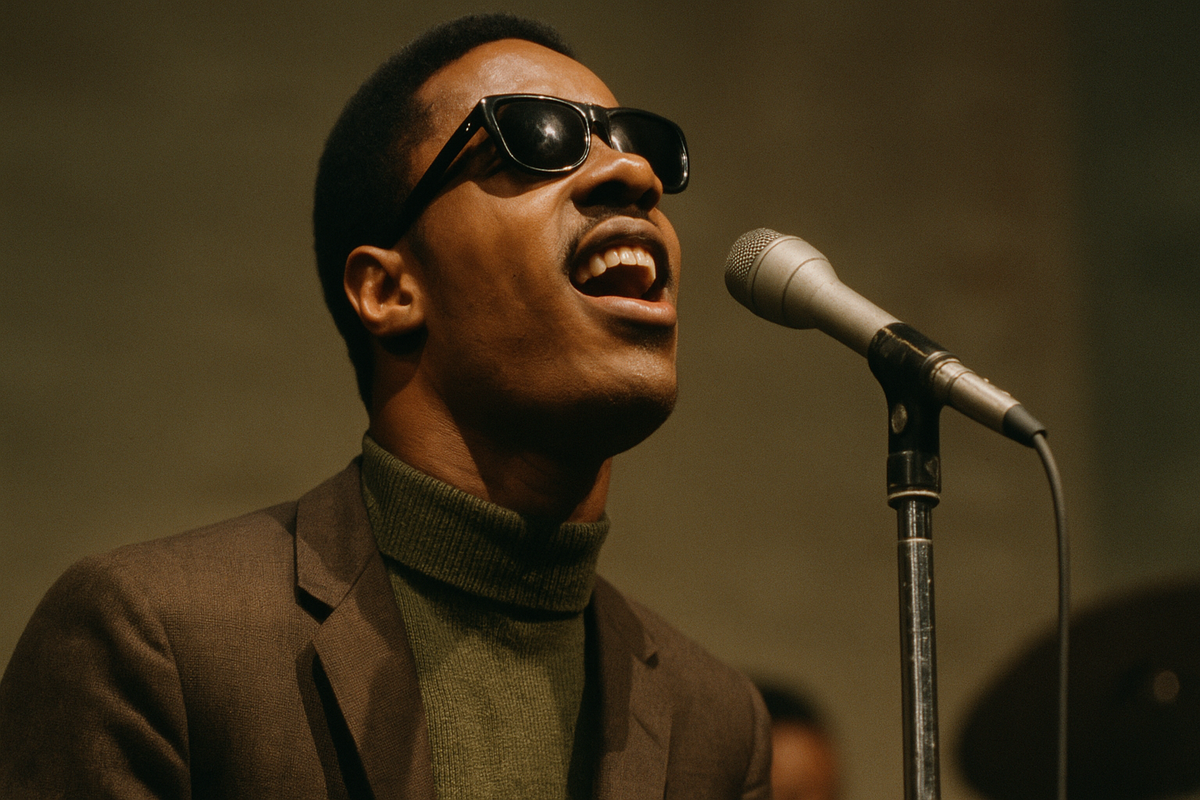
December 21, 1967. A blind Black teenager stares skyward from the cover of Jet Magazine, sunglasses catching the light, mouth open mid-song. He looks like he's receiving a transmission from somewhere beyond the frame—some future only he can hear.
Inside, the headline delivers its verdict: "Wonderful World of Wonder."
Stevie Wonder was seventeen years old. He'd already topped the Billboard charts at twelve. He was enrolled at Wayne State University while touring Europe to standing ovations. And now, Vice President Hubert Humphrey and Dr. Martin Luther King Jr. were publicly praising him—not just for his voice, but for his willingness to bring that voice into America's ghettos.
Jet didn't call him a prodigy. They called him a "Prophet of Soul."
This wasn't hyperbole. This was Black media recognizing what was happening in real time: a blind kid from Saginaw, Michigan, born into poverty, was becoming something larger than a pop star. He was becoming proof.
Archive Details
Historical Figure: Stevie Wonder (Stevland Hardaway Judkins)
Issue Date: December 21, 1967
Archive Source: Jet Magazine
Feature Title: "Wonderful World of Wonder"
Cultural Context: Civil Rights Era, Motown's Golden Age
The Moment Behind the Cover
Context matters. The December 21, 1967 issue hit newsstands in a country still reeling from Watts, still absorbing the Civil Rights Act of 1964 and the Voting Rights Act of 1965, still bracing for what would come next. African Americans weren't just demanding legal equality—they were demanding recognition. Cultural acknowledgment. The right to see themselves reflected as more than struggle.
Stevie Wonder's rise answered that demand.
Born Stevland Hardaway Judkins in 1950, blind since birth, he'd been spotted by Berry Gordy Jr. as a child and signed to Motown. His 1963 single "Fingertips (Part 2)" made him the youngest artist ever to hit number one. But by 1967, he'd outgrown the novelty tag. The "Little Stevie Wonder" era was over. He was composing, arranging, studying at university with the help of tutors like Rita Ross, and fielding praise from civil rights leaders.
Jet understood what that trajectory meant. This wasn't just entertainment news. This was a Black teenager proving that poverty, disability, and systemic racism were not limits—they were starting points.
Why Jet Was the Only Magazine That Could Tell This Story
By the 1960s, Jet Magazine had become the indispensable chronicle of African American life. Mainstream publications ran occasional features on Black celebrities. Jet ran the real story—every week, pocket-sized, deliverable to every Black home, barbershop, church, and school in America.
The December 21 issue was classic Jet: compact, urgent, unapologetic. Readers saw Stevie performing at Georgetown's Cellar Door, laughing in the Wayne State cafeteria, embraced by Martha and the Vandellas, Marvin Gaye, and fans who looked like them. The photographs weren't decoration. They were evidence.
And Jet didn't just cover Stevie's hits. They covered his commitments. His return from a European tour—where critics in England, France, and Italy had hailed him—was framed not as a victory lap, but as a homecoming. He was back to study. Back to perform in communities that mainstream acts ignored. Back to live the message that talent without responsibility was incomplete.
That editorial choice—centering education, service, and dignity alongside success—was what separated Jet from every other publication in America.
What the Feature Actually Said
The "Wonderful World of Wonder" story delivered specifics that mainstream outlets would have missed or deemed unimportant:
"Prophet of Soul"
At seventeen, Wonder wasn't just celebrated for his voice. He was recognized as a generational voice, bridging teenage fans who screamed at his concerts and adults who respected his musicianship.
Academic Ambition
Enrolled at Wayne State with plans to continue at the University of Southern California, Stevie was studying while recording. Jet made clear this wasn't a publicity move. It was a priority.
Endorsed by Leaders
Humphrey and King didn't just meet Stevie Wonder. They praised him publicly for performing in ghettos and using music to uplift communities that had been left behind.
International Credibility
Fresh off a European tour, Wonder returned with critical acclaim from London, Paris, and Rome—proof that his reach extended far beyond Motown's Detroit headquarters.
The Poverty-to-Podium Arc
Jet reminded readers that Stevie was the third of six children, raised in poverty, blind from birth. They didn't soften that reality. They honored it as the foundation of his triumph.
Cross-Generational Appeal
Each detail reinforced the same message: Stevie Wonder's story belonged to every Black family who believed excellence was possible despite the odds.
The Enduring Power of Black Media Documentation
What separates Jet's coverage from retrospective journalism is immediacy. This wasn't written with hindsight. It was written in real time, by journalists who understood what Stevie Wonder represented to their readers: possibility made tangible.
Mainstream outlets might have mentioned his chart positions. Only Jet told the whole story—his education, his humility, his commitment to performing in communities that Billboard would never track. Only Jet understood that for its readership, Stevie Wonder wasn't just a star. He was a signal that the future could look different.
That's why vintage Jet magazines remain essential primary sources. They captured what mattered when it mattered, preserving not just events, but the emotional and cultural weight those events carried.
Why Collectors Covet This Issue
Historical Timing
Published at the apex of the civil rights movement, this issue captured Stevie Wonder in transition—from Motown's child star to soul's emerging statesman.
Visual Impact
That cover—Wonder's face tilted skyward, radiating passion and conviction—remains one of Jet's most striking images of the 1960s.
Cultural Intersection
This issue sits at the crossroads of Black music, education, civil rights leadership, and media representation. It's not just about entertainment. It's about identity.
Motown Premium
Issues featuring Stevie Wonder, Diana Ross, Marvin Gaye, and other Motown legends consistently command attention from serious collectors. They're not abundant. They're not replaceable.
To own this issue is to own December 1967—the moment when a seventeen-year-old blind musician was publicly recognized not just as talented, but as necessary.
Final Word
The December 21, 1967 issue of Jet Magazine isn't just a profile of a teenage musician. It's a document of a cultural moment when a blind Black kid from Michigan was recognized as a prophet—not in the distant future, but right then, at seventeen, while still studying for exams.
Holding this issue today is holding that recognition. It's holding the belief that talent, education, and service could shatter every barrier. It's holding proof that Black media didn't wait for history to decide who mattered.
They knew. And they said so. Loud, clear, and in pocket-sized print that fit in every purse, every jacket, every hand that reached for it.
How to Acquire This Piece of History
If you're building a collection centered on music history, civil rights documentation, or 20th-century Black media, the December 21, 1967 Jet Magazine is foundational. It offers a window into Stevie Wonder not as legend, but as he was in that exact moment: seventeen, brilliant, already called a prophet.
Browse Jet Magazine CollectionPreserving these issues means preserving the record—the unfiltered, contemporary account of how Black excellence was recognized, celebrated, and defended in real time.