
The Magazine That Made Sex Sacred
Inside High Times' Radical First Issue and the Tantric Rebellion of 1974
Summer 1974. Nixon's presidency was collapsing. The Vietnam War was ending in disgrace. And on newsstands across America, a glossy new magazine appeared with a promise no mainstream publication would dare make: that getting high, making love, and seeking enlightenment weren't three separate acts—they were one cosmic rebellion.
The premiere issue of High Times didn't just arrive. It detonated.
Buried among its cannabis cultivation guides and marijuana smuggling exposés was something unprecedented: "Tantric Yoga: The Art of Sexual Union," a feature that treated sex not as scandal or smut, but as spiritual technology. With black-and-white photographs of naked couples embracing in forests and explicit instructions for achieving "cosmic ecstasy," the article declared what the counterculture had been whispering for years: the body was a temple, pleasure was prayer, and the government's War on Drugs was a war on consciousness itself.
Fifty years later, that first issue stands as one of the most significant cultural artifacts of the 1970s underground—a document of what happened when Eastern mysticism, sexual liberation, and cannabis culture collided in 32 pages of unapologetic defiance.
The Context: America at the Breaking Point
By 1974, the establishment had lost its grip. Watergate hearings dominated television. The Nixon administration had weaponized drug policy, launching a crackdown that treated marijuana users as enemies of the state. Meanwhile, the sexual revolution—propelled by the Pill, women's liberation, and the collapse of traditional authority—was rewriting the rules of intimacy.
Into this volatile moment walked High Times, a magazine that refused to choose between pleasure and politics, between getting high and getting free. Its editors understood something the mainstream media missed: for millions of young Americans, cannabis, Eastern spirituality, and sexual experimentation weren't separate interests. They were pieces of a unified vision—a way of living that rejected both Puritan repression and corporate conformity.
The inclusion of "Tantric Yoga" in the debut issue wasn't provocation for its own sake. It was a declaration of purpose.
Issue Details
Publication: High Times Magazine
Issue: Summer 1974 (Premiere Issue)
Featured Article: "Tantric Yoga: The Art of Sexual Union"
Historical Context: Published during the Nixon administration's War on Drugs, months before Nixon's resignation
Archive Source: Original Magazines Collection
Tantra as Manifesto
What made the Tantric Yoga feature so radical wasn't just its frank eroticism—though the outdoor nude photography alone would have scandalized mainstream editors. It was the magazine's insistence that sex could be sacred, that prolonged intimacy was a spiritual discipline, that the body's pleasure and the soul's awakening were inseparable.
The article laid out a complete ritual practice:
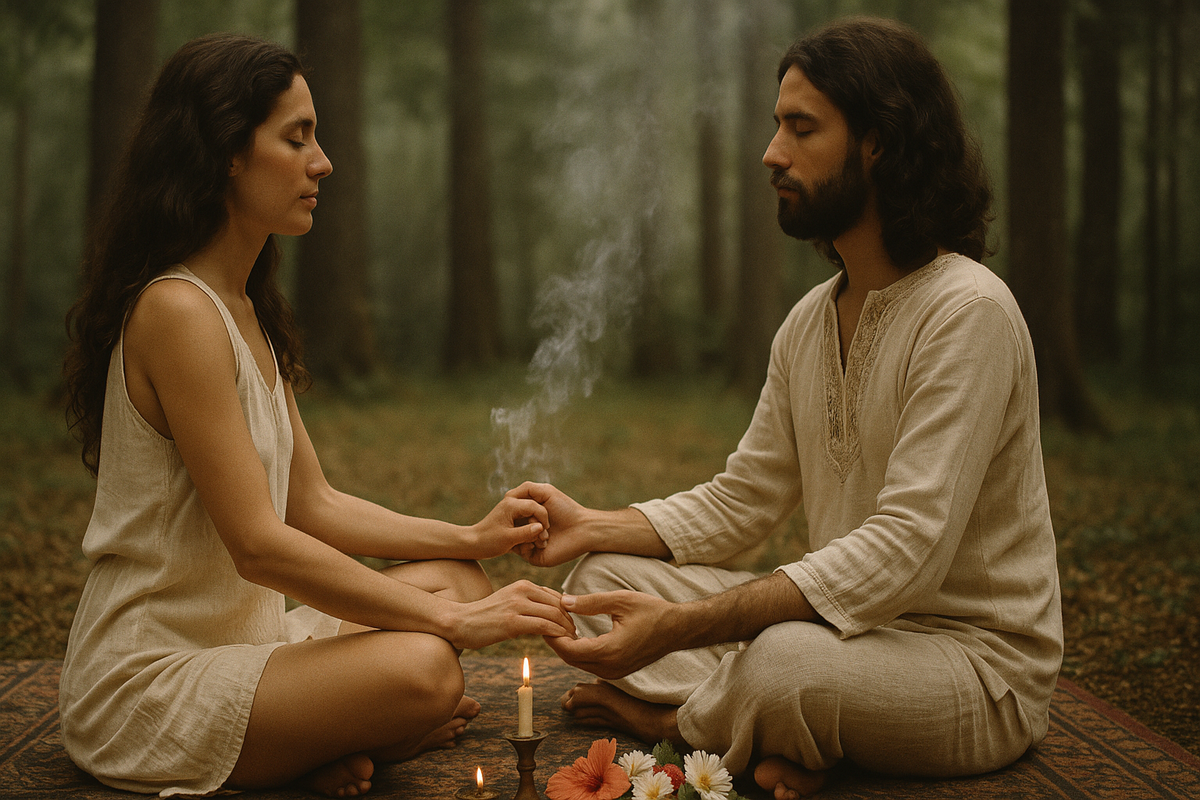
Sacred preparation. Incense, hibiscus flowers, fruit, wine—each element chosen to sanctify the space.
Energetic union. The man described as electric, the woman as magnetic, their coupling a fusion of cosmic polarities.
Breath and control. Partners instructed to synchronize breathing, contract muscles in rhythm, and resist the modern compulsion to rush toward climax.
The subtle embrace. Perhaps most provocatively, the piece suggested that orgasmic union could be achieved through meditation alone—no penetration required, only focused consciousness on the partner's essence.
Precise timing. The claim that peak Tantric pleasure occurs between the 28th and 32nd minutes of intercourse—a specific enough instruction to sound like technical manual, spiritual enough to feel like secret knowledge.
This wasn't Playboy's glossy fantasy or Cosmopolitan's tips for better orgasms. High Times was offering sex as sacrament, bodies as instruments of transcendence. The photographs reinforced the message: couples entwined in natural landscapes, their nudity presented not as titillation but as innocence reclaimed—a visual echo of the back-to-the-land movement's conviction that modern civilization had corrupted something pure.
Why This Mattered (and Still Does)
While mainstream magazines either sensationalized sex or avoided it entirely, High Times created a third option: sexuality as consciousness expansion, no different in kind from psychedelics or meditation. The magazine condemned what it called the "competitive one-shots" and "cheap thrills" of conventional encounters—a critique that would feel at home in contemporary discussions of hookup culture.
Each partner, the article insisted, should be seen as a divine incarnation worthy of reverence. This wasn't metaphor. It was instruction.
The broader vision was unmistakable. Cannabis wasn't just recreation—it was a tool for altering perception. Sex wasn't just physical release—it was communion. Yoga and meditation weren't exotic imports—they were technologies for liberation. And publishing all three in a single magazine wasn't eclectic curation. It was a worldview.
The Design Revolution
The visual language of that first High Times matched its editorial audacity. Unlike the clean, corporate layouts of Life or Time, the magazine embraced psychedelic design, underground comix aesthetics, and a confidence that came from knowing exactly who it served. The editors didn't report on cannabis culture from a safe distance—they lived it, celebrated it, defended it.
The Tantric Yoga spread was particularly striking in its composition. The photography avoided the leering gaze of conventional erotica. These were images of ritual, not performance—bodies presented as landscapes, desire as natural as weather. For readers who had grown up with Puritanism and police raids, with sexual shame and drug criminalization, these pages offered something dangerous: permission.
The Historical Stakes
It's difficult now, in an era of legal dispensaries and Tantric workshops advertised on Instagram, to grasp how transgressive this magazine was. In 1974, marijuana possession could destroy a life. Open discussions of non-marital sexuality remained controversial. And treating Eastern spiritual practices as anything other than exotic curiosities was rare outside the counterculture.
High Times fused all three—not carefully, not apologetically, but with the swagger of a movement that believed it was winning.
The magazine didn't just chronicle the counterculture. It armed it. Each issue was evidence that alternative communities existed, that their values cohered, that they had their own institutions and their own vision of the good life. For readers scattered across suburban America and rural towns, High Times proved they weren't alone.
Cosmic Union
The Tantric act described as a merging of male and female energies—electric and magnetic forces creating universal ecstasy through synchronized breath and disciplined prolongation.
Sacred Ritual
Preparation included incense, wine, fruits, hibiscus flowers, and sacred oils—each element transforming the sexual act into ceremony and worship.
The Subtle Embrace
Tantra's most radical claim: orgasmic union could be achieved without penetration, through meditation on the partner's essence alone.
Natural Photography
Outdoor nudes emphasized sexuality's connection to earth and nature—not urban fantasy but ritual in forest landscapes, bodies as innocent terrain.
Technical Precision
The 28th–32nd minute marked as peak Tantric experience—instructions specific enough to sound technical, spiritual enough to feel sacred.
Cultural Critique
The magazine condemned "competitive one-shots" and "cheap thrills" of modern society—a rejection of both Puritanism and shallow hedonism.
The Artifact as Argument
Great magazines don't just record history—they make it. The wartime photojournalism in Life didn't just document World War II; it shaped how Americans understood the conflict. Similarly, the first High Times didn't just report on the counterculture. It gave that culture form, confidence, and a glossy presence that said: We are not underground anymore. We are inevitable.
Today, when cannabis legalization advances state by state and yoga studios occupy suburban strip malls, it's easy to forget these ideas were once dangerous. The pages of early High Times preserve that danger—and the exhilaration of people who believed they were building a freer world, one article at a time.
Why Collectors Prize This Issue
Historical Timing
Published at the peak of the War on Drugs, the issue represents resistance printed as artifact—proof that despite government crackdowns, the counterculture had infrastructure, capital, and reach.
Groundbreaking Content
The blend of cannabis journalism, sexual philosophy, and spiritual instruction was unprecedented. No other publication occupied this space.
Visual Documentation
From psychedelic graphics to provocative photography, the issue captures the aesthetic of 1970s underground culture with unusual clarity.
Cultural Influence
High Times would go on to define cannabis journalism for decades, but this first issue carries the energy of origin—the moment before success, when everything was still risk and vision.
Scarcity
As a premiere issue from 50 years ago, surviving copies in good condition are increasingly rare. Those that remain are prized by cannabis advocates, cultural historians, and collectors of 1970s counterculture.
Cultural Victory
To hold this magazine today is to hold a weapon from a culture war—one that its original readers, impossibly, seem to have won.
Whether you're a serious collector of vintage cannabis culture, a scholar of 1970s social movements, or simply someone drawn to the radical creativity of that era, original issues of High Times offer something rare: primary sources from a revolution that succeeded.
Each magazine is a window into a moment when sex, drugs, and spiritual rebellion weren't separate pursuits but facets of a single vision—when getting high, making love, and seeking enlightenment were understood as different paths up the same mountain.
Explore the Archive
These aren't reprints or digital scans. They're the actual artifacts—newsprint and ink, glossy pages and provocative images, exactly as they appeared when Nixon was president and the future felt both terrifying and wide open.
Browse High Times Magazine Collection
For anyone who values cultural history, these magazines aren't just reading material. They're evidence: proof that freedom was something a generation lit, inhaled, embraced, and lived without apology.