
When Rolling Stone Dissected America's Teenage Nightmare
How a 1969 feature on exploitation films predicted the collapse of generational authority
December 27, 1969. The decade was dying. And Rolling Stone wanted to know: why had Hollywood spent twenty years terrifying adults with visions of their own children?
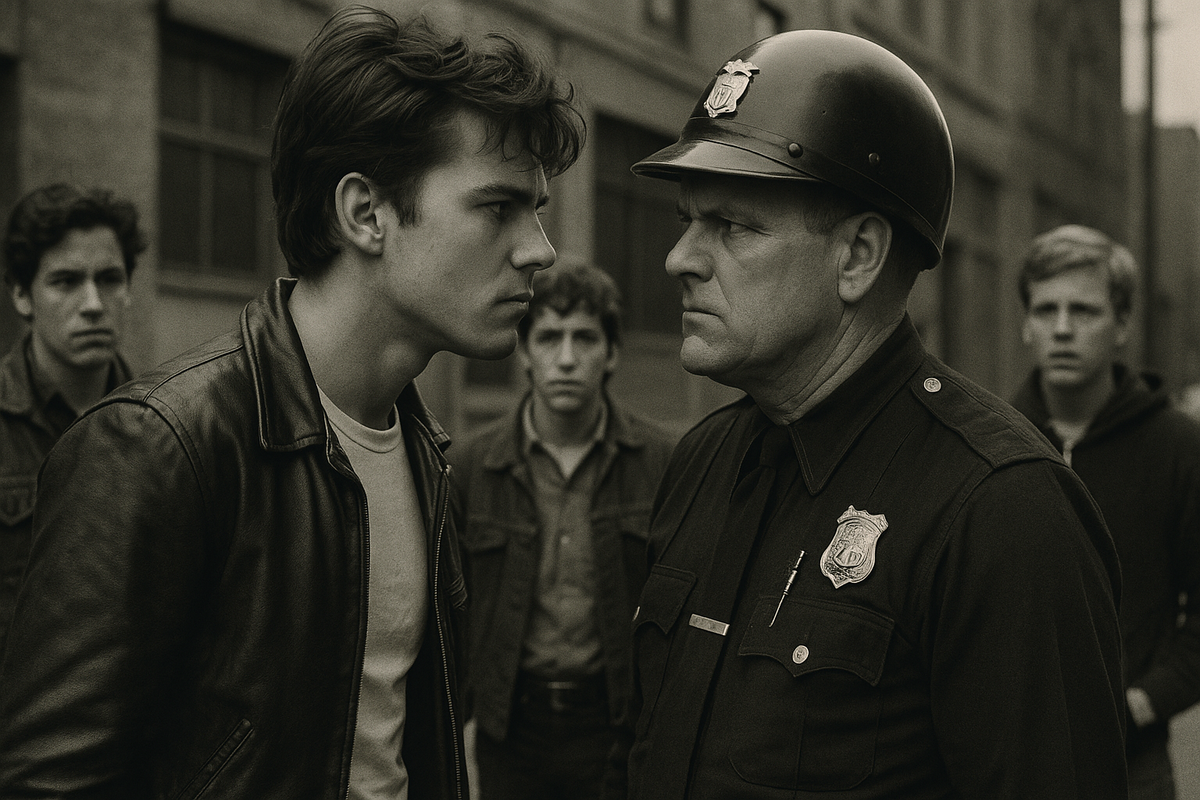
The answer arrived in Richard Staehling's "The Truth About Teen Movies"—a feature that treated drive-in exploitation films not as trash, but as ethnography. Spread across multiple pages of lurid film posters and street photography, the essay argued that movies like Untamed Youth and The Young Savages revealed more about adult paranoia than teenage reality. Leather jackets, switchblades, and reefer madness weren't just B-movie props—they were the vocabulary of a generation gap that had, by 1969, widened into a chasm.
This wasn't film criticism. It was archaeology.
Archive Details
Publication: Rolling Stone Magazine
Issue Date: December 27, 1969
Feature: "The Truth About Teen Movies" by Richard Staehling
Cultural Context: Published months after Woodstock, at the end of the 1960s
The Context That Made the Feature Urgent
By the time readers opened this issue, the 1960s had already delivered Woodstock, the draft lottery, and the Altamont killing spree. Youth culture had escalated from sock hops to sedition. The teenagers who once scared their parents with Elvis records were now shutting down universities and burning draft cards.
Staehling understood that the teen exploitation cycle—those garish 1950s melodramas about delinquents and hot rods—had been a dress rehearsal for the real thing. Films that once seemed hysterical now looked prophetic. The rebellion Hollywood had invented to sell tickets had become the rebellion tearing the country apart.
Rolling Stone recognized this. And in its characteristically audacious style, it gave those disposable teen flicks the same cultural weight it gave the Stones or Dylan.
What the Feature Delivered
The layout itself was an artifact of Rolling Stone's editorial genius—equal parts journalism, graphic design, and cultural curation:
Each image functioned as evidence. Staehling moved chronologically through the teen film canon, identifying recurring obsessions: juvenile delinquency, sexual awakening, drug use, and the collapse of parental authority. His thesis was simple but devastating—these films told you nothing about teenagers and everything about what adults feared losing control of: sex, rebellion, independence, the future itself.
Why Teen Movies Mattered (And Still Do)
The feature identified the formulas that defined an entire subgenre:
What made Staehling's essay prescient was his recognition that these sensationalized narratives weren't fiction—they were predictions. The panic that Hollywood manufactured in 1957 had, by 1969, become the daily news.
Rolling Stone's Genius Move
This feature exemplified why Rolling Stone became the defining publication of its era. It refused the artificial boundary between high and low culture. It treated a schlocky drive-in poster with the same intellectual rigor it applied to a Bob Dylan lyric.
By placing teen exploitation films in conversation with Vietnam, civil rights, and Woodstock, the magazine showed that culture wasn't separate from politics—it was the medium through which political transformation happened. The rebellion on screen had always been inseparable from the rebellion in the streets.
That editorial instinct—the willingness to take pop culture seriously before academia did—is what made Rolling Stone indispensable. And it's why this particular issue, published at the exact hinge between decades, captures something unrepeatable.
The Legacy
Rolling Stone understood what museums and universities would take decades to recognize: that the most disposable culture often carries the most urgent truths. Teen exploitation films weren't important because they were good. They were important because they were symptomatic.
Staehling's essay proved that every cheap poster, every exaggerated tagline, every moral panic movie was a data point in a larger story about how a society processed change. And in 1969, America was processing change at revolutionary speed.
Collector Significance
Published mere months after Woodstock and weeks before the new decade, it documents the exact moment one era ended and another began.
The full-page poster reproductions of Untamed Youth and Mary Jane make this issue a design artifact as much as a journalistic one.
The feature represents Rolling Stone at peak ambition, treating exploitation cinema as worthy of serious analysis before film studies programs existed.
Intact copies of 1960s Rolling Stone issues are increasingly rare. Those with significant cultural features command premium value.
Owning this issue means possessing a primary source—a document that treated youth rebellion not as nostalgia, but as breaking news.
Explore the Archive
Thousands of original Rolling Stone magazines spanning the 1960s through the 1990s are available in our collection. Each issue is a time capsule—capturing music, politics, film, and cultural upheaval as it unfolded.
Browse Rolling Stone Magazine CollectionFor collectors, historians, and anyone fascinated by the moment when youth culture became American culture, these magazines offer irreplaceable access to history as it was first written.
The December 27, 1969 issue of Rolling Stone didn't just review teen movies. It decoded them. And in doing so, it showed why a generation of drive-in trash deserved to be taken as seriously as the revolution it predicted.