
When a Corset Ad Ignited a Revolution
Dorothy Thompson's 1955 Challenge to American Womanhood
The advertisement seemed innocent enough: a foundation garment promising to deliver "the only fashionable look… the ladylike look." But when Dorothy Thompson—the most formidable female journalist in America—opened her June 1955 issue of Ladies' Home Journal, she saw something else entirely. She saw a lie being sold to millions of women, packaged in elastic and marketing copy.
Her response would become one of the most searing cultural critiques ever published in a mainstream women's magazine.
The Powder Keg of 1955
Mid-century America was a nation of gorgeous contradictions. Suburban homes sprouted across the landscape like mushrooms after rain. Consumer goods flooded into living rooms. Ladies' Home Journal, with its millions-strong readership, reigned as both homemaker's bible and cultural arbiter—teaching women how to arrange furniture and, occasionally, how to think.
Yet beneath the surface of Jell-O molds and station wagons, something was shifting. The women who had welded bomber fuselages during World War II were being told their highest calling was now the perfect pot roast. Many weren't buying it. And Dorothy Thompson—foreign correspondent, syndicated columnist, the woman Edward R. Murrow once called "the most influential woman in America"—was about to hand them intellectual ammunition.
Her essay, "Can Women Be Ladies?", appeared in the June 1955 issue like a hand grenade wrapped in subscription-renewal cards.
Historical Archive
Historical Figure: Dorothy Thompson, Foreign Correspondent & Cultural Critic
Issue Date: June 1955
Archive Source: Ladies' Home Journal Magazine
Cultural Context: Pre-Second Wave Feminism, Post-WWII Domestic Era
The Essay That Refused to Play Nice
Thompson opened with that corset advertisement and systematically dismantled it. The notion that dignity could be purchased in a department store struck her as obscene—the final degradation in a centuries-long campaign to reduce women to ornamental objects.
Fashion as Imprisonment
She traced the brutal lineage of women's fashion: Victorian corsets that crushed ribs, Grecian draping that turned bodies into sculptures, elaborate gowns designed not for comfort but for the male gaze. Each era, she argued, had found new ways to physically constrain women while calling it beauty.
The Theological Weight
Thompson then did something unusual for a magazine article sandwiched between cake recipes: she invoked theology and literature. From Eve to Milton to Goethe, she showed how Western culture had trapped women in an impossible binary—virgin or whore, saint or seductress. Never just human. Never complex. Always symbolic.
A Global Indictment
Her comparative lens cut deepest. She noted that Russian women commanded respect as intellectual equals. Scandinavian queens wielded authority without performing sexuality. Ancient Egyptian art depicted women with dignity rather than seduction. Against this backdrop, American consumer culture looked barbaric—turning women into products in their own right, objects to be packaged and sold.
The Real Definition
Thompson's conclusion was radical in its simplicity: A lady cannot be bought, worn, or performed. True ladyhood exists in dignity, intelligence, moral authority, and self-possession. By this measure, she concluded with devastating precision, America had no real ladies—only women drowning in advertisements that demanded they sell themselves visually.
Core Themes of the Essay
The Question That Won't Die
Dorothy Thompson asked in 1955: Can women be ladies?
The question reverberates today. Swap "foundation garments" for Instagram filters, exchange "department store advertising" for influencer culture, replace "ladylike look" with "personal brand"—the machinery of selling femininity has simply upgraded its technology.
Thompson's answer remains radical: Dignity cannot be purchased. Identity cannot be performed. Womanhood exists independent of the market's demands.
That a mainstream women's magazine published this argument—surrounded by the very advertisements Thompson was eviscerating—makes this issue both ironic and precious. It's proof that even within commercial media, space existed for genuine intellectual rebellion.
Why This Issue Matters Now
Thompson's essay stands as a bridge document—published before Betty Friedan's The Feminine Mystique (1963), before second-wave feminism organized itself, yet articulating the frustrations that would soon explode into national consciousness.
Few magazines captured the tension between postwar domesticity and emerging feminist consciousness so vividly. This issue doesn't just report on the era—it embodies its contradictions.
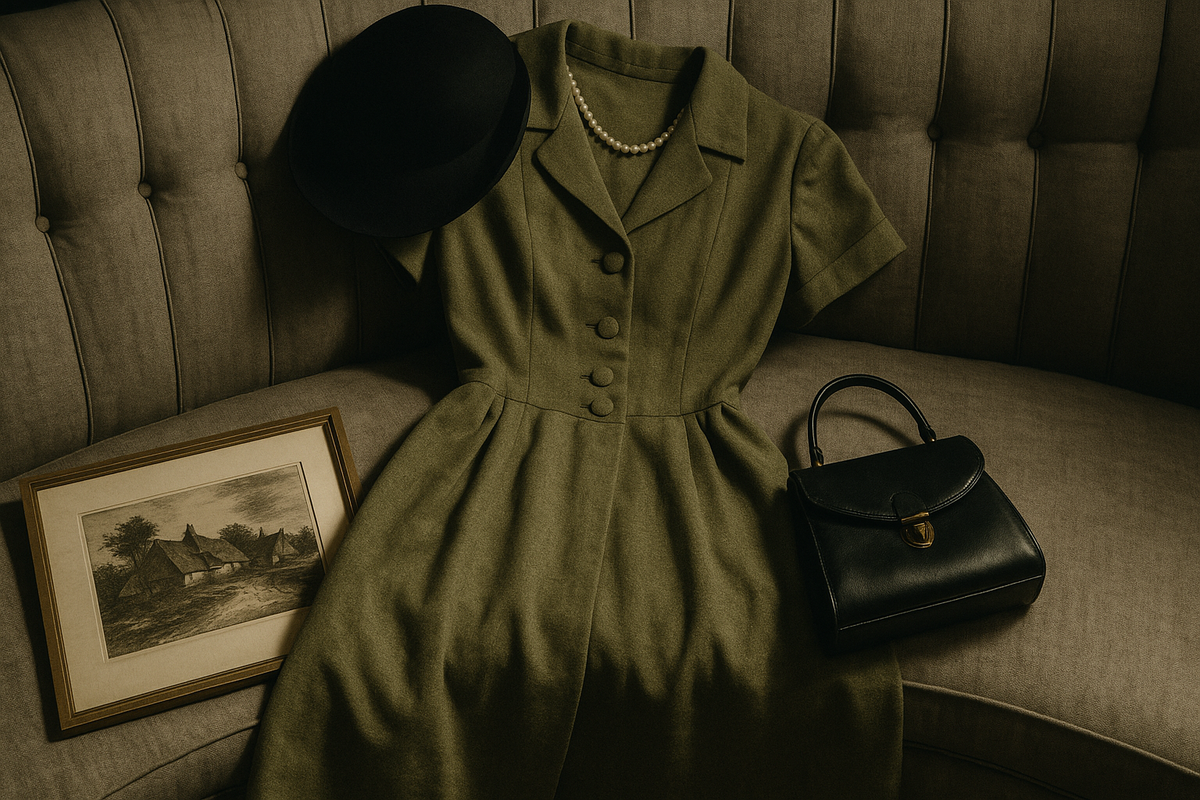
The Rembrandt illustration accompanying the article ("Landscape With Three Gabled Cottages Beside a Road") adds visual distinction, making this issue immediately identifiable to collectors.
Published at the precise moment when suburban prosperity was reaching its zenith and women's discontent was reaching critical mass, this issue documents the fault line before the earthquake.
Own a Piece of the Rebellion
The June 1955 issue of Ladies' Home Journal isn't just collectible—it's essential. It captures American women at an inflection point, beginning to articulate the questions that would reshape their lives and their daughters' lives.
These aren't reproductions or digital scans. These are the original artifacts, printed on period stock, carrying the scent of basement libraries and grandmother's attics. They are time machines.
Browse Ladies' Home Journal Magazine CollectionEvery issue in our archive tells a different story of women's lives—from fashion and homemaking to literature, health, and the great debates about womanhood itself. But this one? This one drew a line in the sand.