
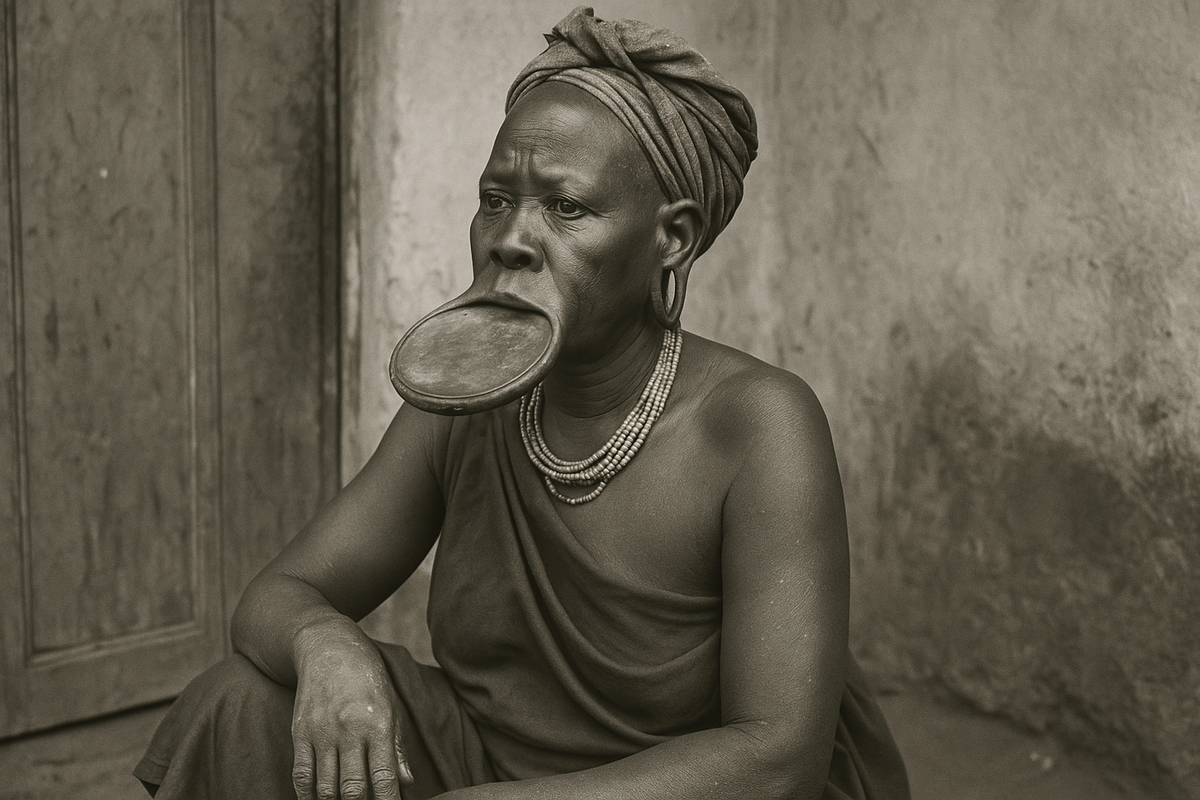
The Curse of the Ubangis: When Jet Magazine Turned Exploitation Into Indictment
How the November 15, 1951 issue transformed circus gossip into a devastating case study on dignity, cultural theft, and the price of spectacle
In November 1951, a rumor was making its way through circus camps and sideshow tents across America: those who had profited from displaying African women were being struck down by misfortune. Accidents. Illnesses. Financial ruin. The whispers called it "The Curse of the Ubangis."
When Jet Magazine decided to investigate, they weren't chasing tabloid gossip. They were doing something far more radical: they were reclaiming a story that white America had turned into spectacle and transforming it into a meditation on dignity, exploitation, and the price of cultural theft.
The November 15, 1951 issue didn't just report on a curse. It indicted an entire system of entertainment that had built empires on the backs of African bodies and traditions.
The Women Behind the Sideshow
The story begins in the 1930s, when American circus promoters brought African women with traditional lip plates to the United States. What was sacred body modification—a mark of beauty, status, and cultural identity—became a sideshow attraction. White audiences paid to gawk. Barkers shouted exaggerated claims. The women were billed as primitives, oddities, living proof of Africa's "savagery."
For two decades, these women traveled the circuit. Their images appeared on posters, in newspapers, in the casual racism of everyday American entertainment. They were everywhere and nowhere—visible as spectacles, invisible as human beings.
By 1951, most had returned to their homelands or faded from public view. But their legacy lingered in an unexpected form: a growing belief that those who had exploited them were paying a supernatural price.
Jet's Intervention
This is where Jet Magazine entered the story—and where the narrative shifted entirely.
While white-owned publications might have played the curse angle for cheap thrills, Jet's editors understood they were sitting on something more consequential. They were holding a mirror up to American entertainment, showing their readers exactly how African culture had been commodified, distorted, and sold back as freak show fodder.
The article asked uncomfortable questions: What happens when you strip people of their context and parade them for profit? What debt is owed when an entire culture becomes a punchline? And if misfortune did follow the exploiters—whether through curse or karma or simple coincidence—wasn't that its own form of justice?
Jet refused to reduce the women to their lip plates. The magazine explored their humanity, their cultural traditions, the violence of being displayed. Where circus posters had screamed "SAVAGE UBANGIS," Jet offered analysis, context, and respect.
This wasn't journalism as usual. This was cultural reclamation.
Archive Details
Publication: Jet Magazine
Issue Date: November 15, 1951
Feature: "The Curse of the Ubangis"
Historical Context: Published in Jet's inaugural months, establishing the magazine's editorial courage and cultural sophistication
Archive Significance: One of the earliest examples of Black media transforming exploitation narratives into cultural criticism
Reading Between the Headlines
The brilliance of Jet's coverage lay in its layered approach. On the surface, "The Curse of the Ubangis" delivered intrigue—supernatural retribution makes for compelling reading. But beneath that hook, the article constructed a devastating case study in American racism.
Consider what Jet's readers would have recognized immediately: the parallels between these African women and their own experiences. The way their bodies were scrutinized, judged, and found exotic or threatening. The way their culture was mocked or stolen. The way they existed in American consciousness as everything except fully human.
When Jet documented the "curse," they were really documenting something else: the moral rot at the heart of exploitation. Whether the misfortunes were real or imagined mattered less than what they represented—a cultural accounting, a story about consequences.
This is what separated Jet from mainstream media. White publications traded in sensation. Jet traded in truth.
The Legacy of Exploitation
Jet reminded readers that the Ubangi women had been treated as oddities in American circuses, symbols of how African traditions were misunderstood and commodified for profit.
The Rumor of a Curse
The article documented claims that misfortunes had befallen those who profited from the women's exhibition, adding layers of intrigue and supernatural justice.
Cultural Clash
At its heart, the piece showed the stark divide between African customs and American perceptions, raising questions about respect and ridicule.
A Mirror for Black America
For Jet's audience, this wasn't just about faraway women—it was about how Black people everywhere were judged, displayed, and dehumanized.
November 1951: A Moment of Reckoning
The timing of this article matters profoundly. In November 1951, segregation was still the law of the land. The Montgomery Bus Boycott was four years away. Brown v. Board of Education wouldn't reach the Supreme Court for another three years. The civil rights movement existed mostly in organizational meetings, legal briefs, and the pages of Black newspapers.
Jet had launched just two months earlier, in November 1951, with a mandate to document Black life without apology or compromise. The Ubangi article arrived in those crucial early weeks, establishing the magazine's editorial voice: sharp, culturally astute, willing to tackle stories that mainstream media either sensationalized or ignored.
For Black readers navigating a country that refused to see them as equals, this article offered something vital—a publication that understood the stakes of representation. Jet knew that how stories were told mattered as much as what stories were told.
The Legacy of Looking Back
What makes "The Curse of the Ubangis" endure isn't the curse itself—it's what the article revealed about power, representation, and resistance.
Jet showed its readers that they didn't have to accept the stories others told about Africa, about Blackness, about exploitation dressed up as entertainment. The magazine modeled a different approach: interrogate the narrative, restore the context, honor the humanity.
Seventy years later, we're still wrestling with these questions. How do we represent cultures not our own? Who profits from spectacle? What do we owe to those whose stories have been stolen?
The November 15, 1951 issue of Jet doesn't just belong in an archive. It belongs in any serious examination of how America has told stories about race—and how Black media fought back.
Why Collectors Covet This Issue
Historical Singularity
This issue captures Jet in its infancy, before it became the chronicler of the civil rights movement. It shows the magazine finding its voice, taking risks, establishing the editorial courage that would later give America the Emmett Till photographs.
Cultural Forensics
The Ubangi article remains one of Jet's strangest and most provocative features—a piece that blends folklore, cultural criticism, and journalism in ways that magazines rarely attempted in 1951.
Tangible History
In an era when digital archives flatten everything into pixels, holding an original issue means touching the actual artifact. The paper, the advertisements, the layout—all preserve the tactile reality of 1951.
Investment Value
As interest in African American history grows and original materials become scarcer, early Jet issues have appreciated significantly. These magazines represent primary source documents of Black American life, unfiltered and unedited.
Explore the Full Archive
The Ubangi article represents just one moment in Jet's extraordinary history.
Inside these pages, you'll find:
- Civil Rights Milestones: First-hand coverage of the Montgomery Bus Boycott, the March on Washington, and Freedom Summer
- Cultural Icons: Profiles of Martin Luther King Jr., Jackie Robinson, Nina Simone, and Muhammad Ali at the height of their influence
- Unflinching Journalism: The Emmett Till photographs that forced America to confront its violence
- Everyday Resilience: Church gatherings, college graduations, family celebrations—the texture of Black life beyond the headlines
Each issue functions as a time capsule. Together, they form an archive of resistance, documentation, and pride.
Browse Jet Magazine CollectionThe Story Behind the Curse
The November 15, 1951 issue of Jet Magazine matters because it refused to play by the rules. Instead of treating "The Curse of the Ubangis" as carnival gossip, Jet transformed it into cultural criticism. Instead of reducing African women to their lip plates, the magazine restored their humanity.
This is what vintage Jet issues offer: not just historical curiosities, but evidence of a publication that consistently chose dignity over sensation, truth over spectacle.
For collectors, historians, and anyone who understands that how we remember the past shapes how we build the future, this issue remains essential. It's a reminder that Black media didn't just report history—it made history, one article at a time.
The curse, if it existed, wasn't supernatural. It was moral. And Jet made sure readers understood the difference.