
The Betrayal Issue: When WWF Magazine Turned Wrestling Into Mythology
How the February–March 1987 issue transformed Hulk Hogan's feud with Paul Orndorff into an epic of loyalty, vengeance, and impossible alliances
February 1987. A glossy magazine hits newsstands across America, its cover dominated by a bronzed titan clutching a championship belt. Inside, readers discovered something unprecedented: professional wrestling had found its Iliad.
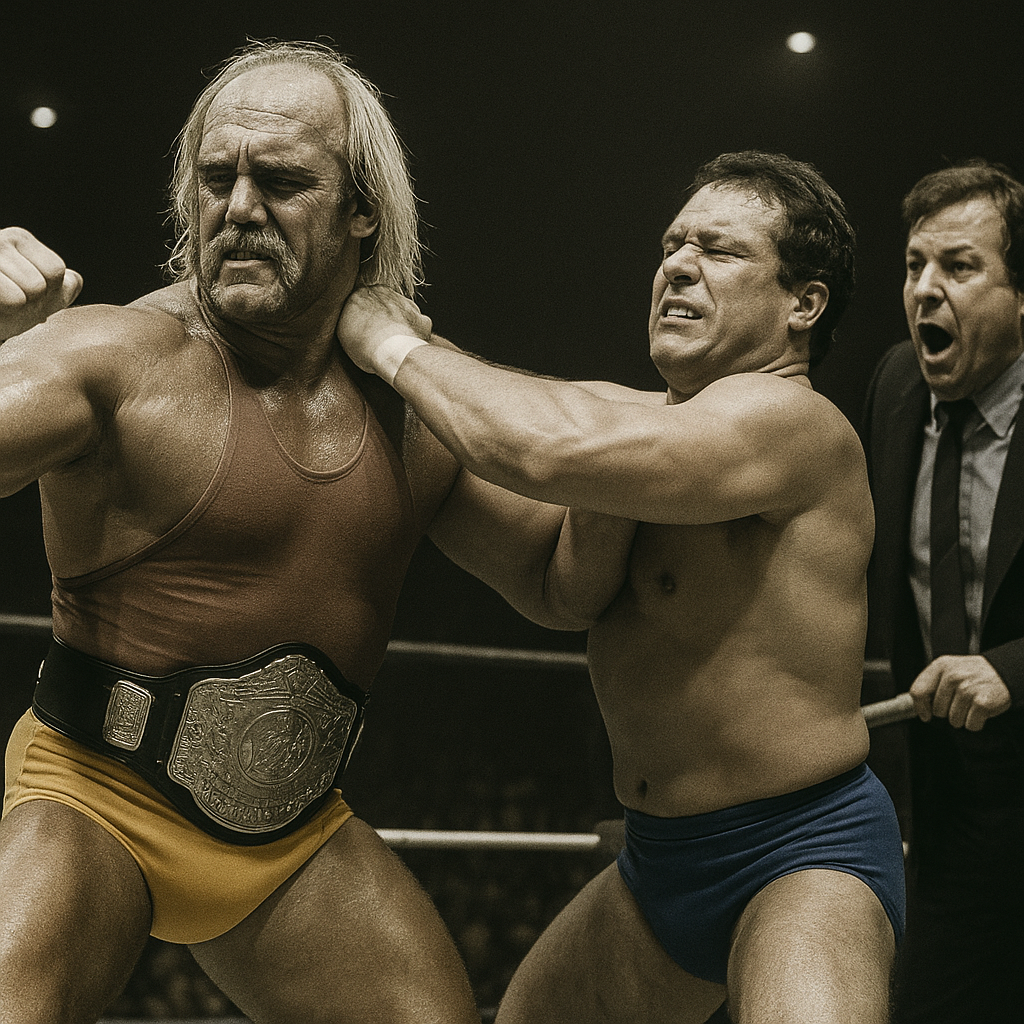
The February–March 1987 issue of WWF Magazine didn't just cover matches—it chronicled the implosion of trust between Hulk Hogan and Paul "Mr. Wonderful" Orndorff with the gravity of Shakespearean tragedy. The feature "Battle of the Titans: Hogan vs. Orndorff" transformed body slams and turnbuckle collisions into an epic of loyalty shattered, alliances twisted, and a hero fighting to preserve his throne against forces both brutal and cunning.
This wasn't journalism. It was myth-making in real time.
Archive Details
Publication: WWF Magazine
Issue: February–March 1987
Feature Story: "Battle of the Titans: Hogan vs. Orndorff"
Key Figures: Hulk Hogan, Paul "Mr. Wonderful" Orndorff, Bobby "The Brain" Heenan, Rowdy Roddy Piper
Historical Context: Peak Hulkamania Era, Rock 'n' Wrestling mainstream breakthrough
The Hero, The Traitor, and the Architect of Chaos
By 1987, Hulk Hogan had transcended wrestling. Three years into his WWF Championship reign, he embodied everything the Rock 'n' Wrestling Era promised: mainstream crossover, corporate endorsements, and the belief that good guys with 24-inch pythons always won. Hulkamania wasn't just a catchphrase—it was a cultural movement.
Paul Orndorff's betrayal cut deeper precisely because it violated that mythology.
Once Hogan's trusted ally, Orndorff shocked fans in 1986 by turning on the champion with a viciousness that felt personal. WWF Magazine branded him "the Benedict Arnold of Wrestling"—a label that perfectly captured the narrative stakes. This wasn't heel heat; it was genuine villainy. Aligned with Bobby "The Brain" Heenan, the sport's premier manipulator, Orndorff became the embodiment of corrupted ambition.
But the real genius of the feud emerged in its complications. When Rowdy Roddy Piper—Hogan's longtime nemesis—limped into the ring with a crutch to save the champion from Orndorff's assault, the storyline achieved something rare: genuine unpredictability. Enemies became allies. The moral universe wobbled. Fans didn't know who to trust.
WWF Magazine understood that this complexity was the story.
When Sports Reporting Became High Drama
The "Battle of the Titans" feature reads like war correspondence from an alternate dimension where violence is choreographed but emotions run genuine. Consider the magazine's description of their encounters:
"Mighty fists slammed into slabs of muscle. Sweat flew. Heads snapped back on column-like necks."
This wasn't Purple Prose Gone Wrong—it was wrestling's theatrical soul committed to paper. The article reconstructed their battles with cinematic precision:
Orndorff's relentless assault: fists, knees, elbows, each impact described with visceral specificity.
Hogan bloodied, reeling, then summoning that ineffable Hulkamania comeback energy.
Bobby Heenan at ringside, a constant presence, his taunts fueling chaos like a Greek chorus of malice.
Piper's shocking intervention, crutch brandished, years of rivalry suspended for one impossible moment.
WWF Magazine excelled at something traditional sports media couldn't touch: it treated wrestling as both athletic contest and narrative art. The writing acknowledged the performance while honoring the emotional investment fans brought to every match. It never winked at the audience. It never broke kayfabe. It simply told the story with the seriousness it deserved.
For fans in 1987, this magazine was the only way to relive these moments after the television broadcast faded. It was wrestling's mythology preserved, studied, and celebrated.
Visual Storytelling: Photography as Drama
The issue's photography matched the ambition of its prose. Full-page spreads captured:
- • Hogan clutching the WWF Championship, defiant and exhausted.
- • Orndorff mid-attack, face contorted with rage that read as genuine even frozen in print.
- • Piper's reappearance, crutch raised, the improbability of the moment visible in every pixel.
WWF Magazine understood that wrestling was a visual medium. Unlike newspapers that relegated wrestling to small match results or TV broadcasts that vanished into the ether, the magazine transformed these moments into permanent icons. The bold layouts, the theatrical lighting, the careful framing—all of it elevated wrestling from spectacle to legitimate cultural document.
The design choices weren't accidental. This was the golden age of magazine design, when publications like Rolling Stone and Sports Illustrated proved that photography could tell stories as powerfully as words. WWF Magazine borrowed that sophistication and applied it to body slams and figure-four leglocks.
The result: images that became as iconic as the matches themselves.
The Anatomy of a Rivalry
What made this issue significant wasn't just that it covered a popular feud. It was how the coverage framed the narrative stakes:
Orndorff's turn wasn't presented as simple heel tactics but as a moral collapse, complete with historical comparisons that gave wrestling feuds the weight of actual treachery.
The article recognized that Heenan wasn't just a manager but a narrative engine, his presence transforming matches into psychological warfare.
By questioning whether Hogan and Piper could ever truly trust each other, the magazine acknowledged that professional wrestling's most compelling stories live in moral ambiguity.
The prose didn't shy from describing violence—suplexes, body slams, the refusal of either man to submit—but it framed brutality through the lens of heroic endurance.
Above all, the article understood this wasn't about who won. It was about betrayal, vengeance, and whether redemption was possible when trust had been destroyed.
This approach transformed match coverage into something closer to literary criticism. WWF Magazine wasn't just reporting what happened—it was analyzing why it mattered.
The Magazine That Understood the Assignment
Wrestling magazines endure because they recognized something traditional sports media missed: professional wrestling is storytelling first, athletic display second. WWF Magazine didn't apologize for kayfabe—it weaponized it. Every article, every photo layout, every dramatic headline reinforced the mythology.
The February–March 1987 issue stands as perhaps the purest expression of that philosophy. It took a friendship destroyed, a champion threatened, and an impossible alliance forged, then told that story with the seriousness of Greek tragedy and the breathless excitement of pulp fiction.
When modern wrestling fans romanticize the "golden age," they're often romanticizing moments like these—when the story mattered more than the star ratings, when betrayal felt genuinely shocking, when you needed a magazine to help you make sense of what you'd just witnessed.
That magazine still exists. You can still hold that moment.
Why Collectors Hunt This Issue
This issue captured Hogan at his most vulnerable yet most resilient, the moment when his hero narrative faced its most credible threat.
By early 1987, WWF had fully penetrated mainstream culture. This magazine is a snapshot of that cultural moment, when professional wrestling was appointment television and its stars were legitimate celebrities.
The photography captures mid-1980s aesthetics perfectly: the bold colors, the theatrical presentation, the unapologetic excess that defined the era.
For students of wrestling storytelling, this issue represents a masterclass in long-form feud development. It's a blueprint for how to build drama across multiple matches and months.
Hogan, Orndorff, Piper, Heenan—this issue brings together four of wrestling's most significant figures at a critical moment in each of their careers.
For serious collectors, owning this issue means possessing a primary source document from wrestling's most mythologized era. It's not just memorabilia—it's evidence that professional wrestling achieved genuine artistic sophistication, even if that sophistication was in service of body slams and folding chairs.
Own a Piece of Wrestling's Mythology
Original WWF magazines from the 1980s and 1990s offer more than nostalgia—they provide direct access to how wrestling told its stories during its most culturally influential decades. From the Rock 'n' Wrestling Era through the Attitude Era, these publications documented the rivalries, champions, and narrative innovations that built modern sports entertainment.
Browse WWF Magazine CollectionWhether you're a historian of popular culture, a serious collector, or someone who remembers watching these storylines unfold in real time, these magazines represent wrestling's most ambitious attempt to turn spectacle into literature.