
The Night Andre the Giant Became the Villain
Inside Wrestling's Shocking December 1981 Betrayal
Madison Square Garden, sold out again. Andre the Giant, the sport's most beloved colossus, stepping through the ropes to face Killer Khan. The crowd expected dominance. What they witnessed instead was something no wrestling magazine had dared to print before: their hero, unmasked as a monster.
When fans opened the December 1981 issue of Inside Wrestling, they didn't find the usual celebration of Andre's invincibility. Instead, they found a photo-essay that read like an indictment: "The Night Andre Shamed Wrestling." For a generation raised on the myth of Andre as gentle giant, this wasn't just controversial—it was heresy.
This is the story of how one magazine issue captured the moment professional wrestling's greatest star crossed a line he wasn't supposed to cross.
Archive Details
Historical Figure: Andre the Giant
Issue Date: December 1981
Archive Source: Inside Wrestling Magazine
Photographers: Bill Apter, Stu Saks
Event Location: Madison Square Garden, New York
The Match That Broke Kayfabe's Promise
The early 1980s were wrestling's last innocent years. The territorial system still held. Madison Square Garden remained the Vatican of the squared circle. And Andre the Giant filled arenas simply by existing—a walking myth who transcended the need for storylines.
But on this particular night at MSG, something went wrong.
"Apparently, Andre just went berserk," recalled Gary Queen of Garden City, New York, quoted in the article. "I was paying close attention to him all through the match, and he seemed all right for a while. Then something snapped."
What followed wasn't wrestling. It was punishment. Andre dragged Khan back into the ring repeatedly, stomping him when he was already beaten. He delivered what the magazine described as a "thundering shot with his foot to Khan's head"—not a worked boot, but something that looked dangerously real. Even after Khan collapsed, Andre returned to inflict more damage.
The timekeeper couldn't restore order. The match had begun before the bell, with Andre already on the attack.
And then Inside Wrestling did something almost unheard of: it condemned him.
"Andre embarrassed not only himself, but anyone and everyone associated with the honor of the squared circle."
Read that line again. A wrestling magazine—built to preserve kayfabe, to sell tickets, to glorify its stars—had just called Andre dishonorable.
The Architecture of Wrestling Mythology
Inside Wrestling belonged to a lineage of publications that understood a simple truth: wrestling wasn't just about what happened in the ring. It was about how the story lived afterward.
These magazines didn't report wrestling. They mythologized it. Through a fusion of photography, dramatic prose, and manufactured fan testimony, they transformed matches into morality plays that fans could hold in their hands.
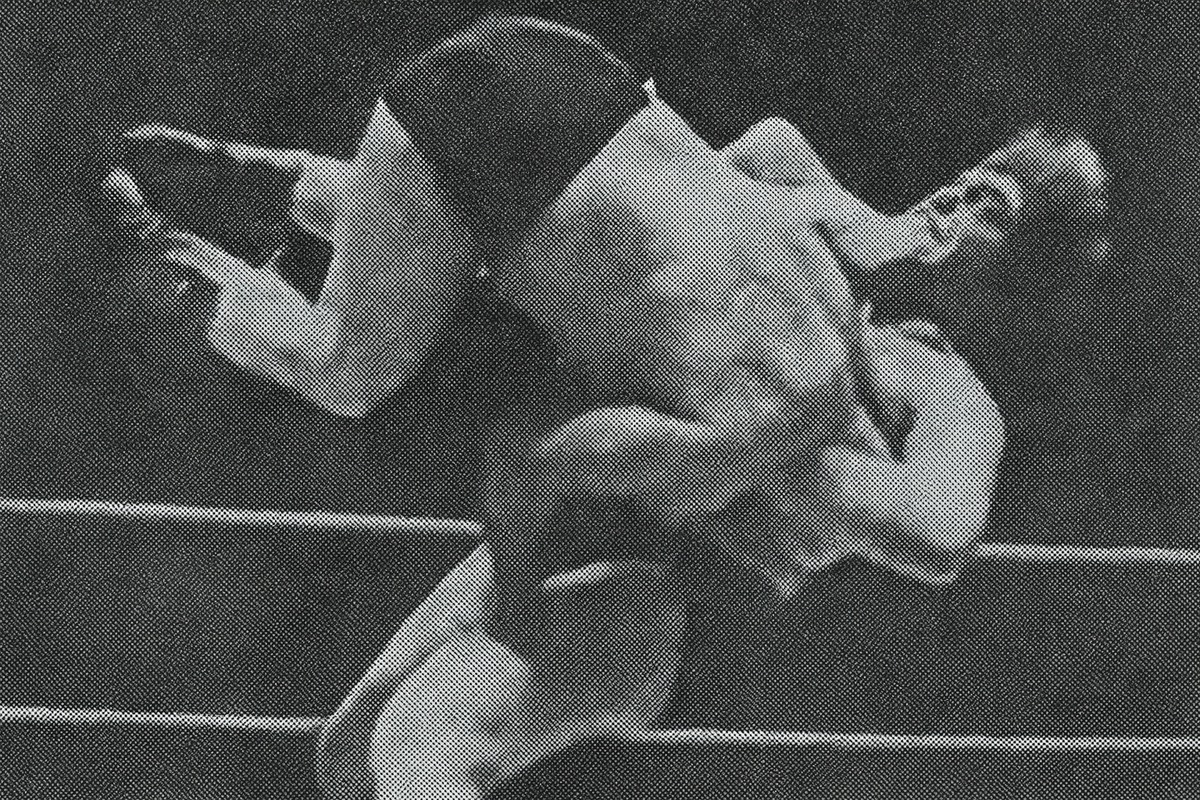
The December 1981 feature is a master class in this alchemy. Photographers Bill Apter and Stu Saks captured the brutality in stark black-and-white: Andre mid-stomp, his face twisted in rage. Khan suspended in air during a suplex, captioned with the ominous note that he "has a long way to fall." A close-up of Andre's expression—not heroic, not noble, but ferocious.
The prose matched the imagery. Phrases like "night of terror and pain," "insane horror," and "Andre snapped" read like pulp fiction, not sports journalism. This was intentional. These magazines weren't Sports Illustrated. They were dime-store novels disguised as periodicals.
Even the fan quotes—"I can't believe he did that!" and "Did you see that? Khan was down… but Andre slammed him anyway!"—served a purpose. They placed readers ringside, made them witnesses to something they weren't supposed to see.
For fans in 1981 without cable television or the means to travel to New York, this magazine was the event. The combination of visceral photography and theatrical narration delivered wrestling's spectacle to kitchen tables across America.
Anatomy of a Heel Turn in Print
What makes this issue historically significant isn't just that it criticized Andre—it's how it constructed that criticism through specific, repeatable details:
The Cultural Function of Wrestling Magazines
What gives this issue its enduring significance isn't just Andre's name on the cover. It's what the issue reveals about how wrestling stories were constructed and consumed before the internet collapsed the distance between event and audience.
These magazines were the mechanism through which wrestling became myth. They turned three-minute matches into epic narratives. They made villains into legends and heroes into cautionary tales. The December 1981 feature on Andre demonstrates the power of that machinery—showing that even the sport's biggest star could be reshaped through words and images.
Wrestling magazines didn't just document history. They were history, the medium through which fans experienced and remembered the sport.
Why Collectors Hunt This Issue
Original wrestling magazines from the territorial era have become artifacts of a vanished media ecosystem. But even within that category, the December 1981 Inside Wrestling occupies unusual territory.
A Star Against Type
Most Andre features celebrated his size, his dominance, his gentle-giant persona. This issue did the opposite. It's the rare document that shows how even wrestling's most protected star could be reframed through narrative and imagery.
Preservation of Pre-Internet Culture
Before instant replay, before social media, before WWE Network archives, this magazine was how stories lived on. The black-and-white photography, the bold captions, the theatrical language—this is wrestling culture in its original form.
Generational Memory
For fans who grew up reading these magazines or attending matches in the early 1980s, holding this issue is direct contact with their past. Many collectors seek them to honor relatives who lived through the era, to preserve family history bound in newsprint.
Market Scarcity
Issues in strong condition—particularly those without mailing labels—command premium prices. But even well-read copies retain value because they're original primary sources, the first draft of wrestling's history.
When you hold Inside Wrestling, December 1981, you're not handling a collectible. You're holding the exact pages that shaped how fans understood Andre the Giant in real time.
Epilogue: When Giants Fall
The December 1981 issue of Inside Wrestling remains one of the most unusual portrayals of Andre the Giant ever committed to print. Its feature, "The Night Andre Shamed Wrestling," combined pulp prose, striking photography, and manufactured testimony to paint a picture most magazines refused to show: the giant as villain, the hero as disgrace.
For collectors today, it stands as proof that even the most carefully managed myths could crack—and that the magazines brave enough to show those cracks became the most valuable documents of all.
This is wrestling history as it was written in real time. This is the story fans held in their hands and argued over in 1981.
This is what makes original magazines irreplaceable.
Acquire a Piece of Wrestling's Print Era
For serious collectors, issues like Inside Wrestling, December 1981 represent more than nostalgia. They're primary historical documents that combined star power with narrative risk—wrestling journalism at its most theatrical and most revealing.
These aren't simply magazines. They're original artifacts of wrestling culture, the physical evidence of how stories were told before video killed the kayfabe star.
Browse Inside Wrestling Magazine Collection