
The Magazine That Wouldn't Look Away
How Jet Magazine's May 2, 1963 issue documented Martin Luther King Jr.'s arrest and brought the truth of Birmingham to Black America
On May 2, 1963, millions of African Americans opened their mailboxes to find something more dangerous than dynamite: the truth.
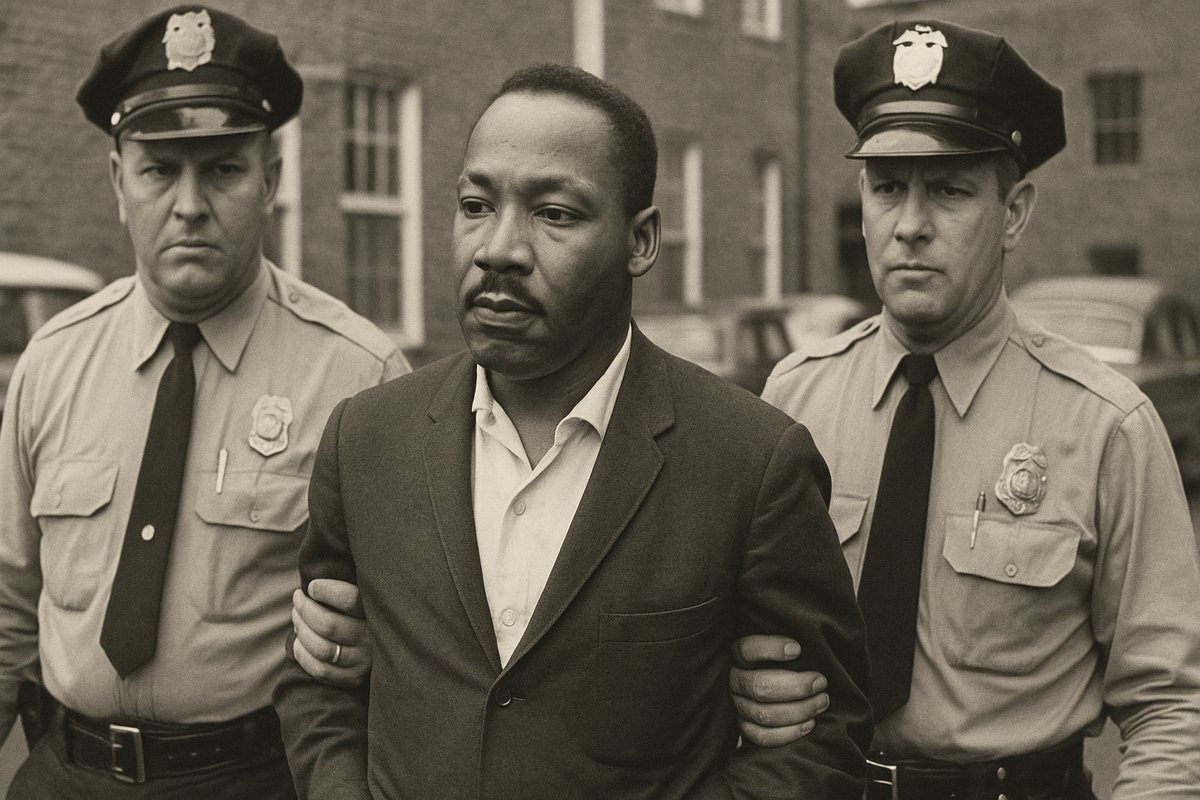
For twenty cents, Jet Magazine had done what the New York Times wouldn't and what Life Magazine couldn't—put Martin Luther King Jr. in handcuffs on the cover with a headline that didn't flinch: "The Price Negroes Pay for Freedom." While white America's press was still deciding whether Birmingham's brutality was "newsworthy," Jet had already delivered the story to every barbershop, beauty salon, and kitchen table in Black America.
This wasn't journalism. This was a battle dispatch from the front lines of a war most of the country pretended wasn't happening.
Archive Details
Historical Figure: Rev. Dr. Martin Luther King Jr.
Issue Date: May 2, 1963
Archive Source: Jet Magazine, Johnson Publishing Company
Historical Context: Birmingham Campaign, Project C, Children's Crusade
Key Document: "Letter from Birmingham Jail" (written April 16, 1963)
Birmingham: The City That Proved Segregation Could Bleed
By the spring of 1963, Birmingham, Alabama had earned its nickname: "Bombingham." It was the most segregated city in America, and Eugene "Bull" Connor—the city's police commissioner—intended to keep it that way. Connor's weapons were German shepherds and fire hoses. His targets were children.
Martin Luther King Jr. and the Southern Christian Leadership Conference knew Birmingham would either break the movement or prove it unbreakable. They launched Project C—"C" for Confrontation—a calculated campaign of sit-ins, marches, and economic boycotts designed to force the city's hand.
On Good Friday, April 12, 1963, King was arrested for marching without a permit. Inside a Birmingham jail cell, he wrote what would become "Letter from Birmingham Jail"—a document that dismantled every comfortable excuse white moderates had used to justify delay. By early May, the nation watched in horror as Connor turned dogs and fire hoses on teenagers in what became known as the Children's Crusade.
Jet didn't wait for the smoke to clear. It went to press with King still behind bars.
What Twenty Cents Bought You in 1963
Jet Magazine was small enough to fit in a jacket pocket and explosive enough to get you fired if your white employer found it. Founded in 1951 by John H. Johnson, Jet had become the pulse of Black America—a weekly digest that covered everything mainstream publications ignored: police brutality, economic discrimination, cultural achievement, and the ordinary heroism of Black life under Jim Crow.
The May 2, 1963 issue was Jet at its most essential. While other outlets were sanitizing Birmingham or waiting for "both sides," Jet put readers inside King's cell.
The coverage was surgical:
The Brutality
Guards who hurled racial slurs and subjected King to calculated humiliation. "Jailers Quite Hostile and Downright Mean," the article reported—a stark understatement that let readers imagine the rest.
The Resolve
King sustained himself by reading W.E.B. Du Bois's The Souls of Black Folk and the Bible, drawing strength from the same texts that had fortified generations of freedom fighters.
The Global Context
Jet connected King's imprisonment to Mohandas Gandhi's time in British jails, Kwame Nkrumah's detention in Ghana, Jomo Kenyatta's internment in Kenya, and Hastings Banda's imprisonment in Nyasaland.
The Women
Coretta Scott King's visit to her jailed husband wasn't sentimentalized—Jet documented her dignity as its own form of resistance, a reminder that the movement's strength ran through entire families.
King's own words, delivered to Jet from his cell, framed the stakes: "Birmingham is now the focus of the Negro struggle. If we crack segregation here, it will impact the entire South."
He was right. Within a year, the Civil Rights Act of 1964 became law.
The Power of the Pocket-Sized Witness
The cover image remains devastating: King in handcuffs, flanked by officers, his expression calm and immovable. The composition was perfect—not staged, not softened. Just a man walking into history with his eyes open.
Jet's bold orange-and-black design made the issue impossible to miss on newsstands. But its real power was portability. This wasn't a coffee table magazine meant for display. It was meant to be folded, passed, argued over, and read until the pages wore thin. It moved through communities like contraband—which, in parts of the South, it essentially was.
For African Americans in 1963, seeing King's arrest on the cover wasn't just information. It was solidarity made visible. It said: This is happening. We are watching. We will remember.
The Difference Between Reading History and Holding It
Digital archives are useful. Microfilm is searchable. But neither will ever replace the experience of holding a 1963 Jet Magazine and feeling the paper quality that African American families could afford, seeing the advertisements that targeted Black consumers, noticing the slight yellowing where someone's thumb rested while reading on a bus sixty years ago.
These magazines are witnesses. They carry not just information but weight—the weight of the moment they documented, the hands that held them, the conversations they sparked.
Why Collectors Hunt for This Issue
The May 2, 1963 Jet Magazine is among the most historically significant publications of the Civil Rights era, and its value to collectors reflects that weight.
Historical Pivot Point
This issue documented King's arrest during the Birmingham campaign—the confrontation that directly pressured the Kennedy administration and Congress to act. Owning it means holding a primary source from the moment the Civil Rights Movement forced America to choose sides.
Iconic Visual Record
The cover photograph is one of the defining images of the era. You've seen it reproduced in textbooks and documentaries, but the original Jet cover carries a rawness that reproductions flatten.
Cultural Artifact
This magazine sat on kitchen tables in 1963. It was read by people who were living the history it documented—people who had to decide whether to march, to boycott, to risk their jobs or their lives. Holding an original copy is holding that lived reality.
Scarcity
Unlike mass-market publications, Jet was printed on cheap newsprint and meant for immediate consumption. Many copies were read to pieces or thrown away. Surviving issues—especially in good condition—are increasingly rare.
The market for Civil Rights-era Jet magazines has grown as institutions and private collectors recognize these publications as irreplaceable historical documents. Issues featuring King, Birmingham, the Freedom Rides, or the March on Washington command particular attention.
Own a Piece of the Struggle
If the courage documented in this issue matters to you—if you're a collector, historian, educator, or simply someone who believes that history should be preserved in its original form—Jet Magazine offers a direct line to the Civil Rights Movement as it unfolded.
From the 1950s through the 1970s, Jet recorded the battles, setbacks, victories, and everyday dignity of Black America. These aren't reprints or facsimiles. They're the real thing.
Browse Jet Magazine CollectionThe Final Frame
The May 2, 1963 issue of Jet Magazine captured Martin Luther King Jr. at a moment when his freedom was measured in steel and his resolve was measured in scripture. It documented a city that tried to break a movement and instead broke itself. And it gave millions of African Americans something the mainstream press refused to provide: the unvarnished truth about what freedom was going to cost.
Holding this issue today is holding 1963—not the sanitized version taught in schools, but the raw, urgent, dangerous version that people lived through and fought for.
Some history you read about. Some history you hold in your hands.