
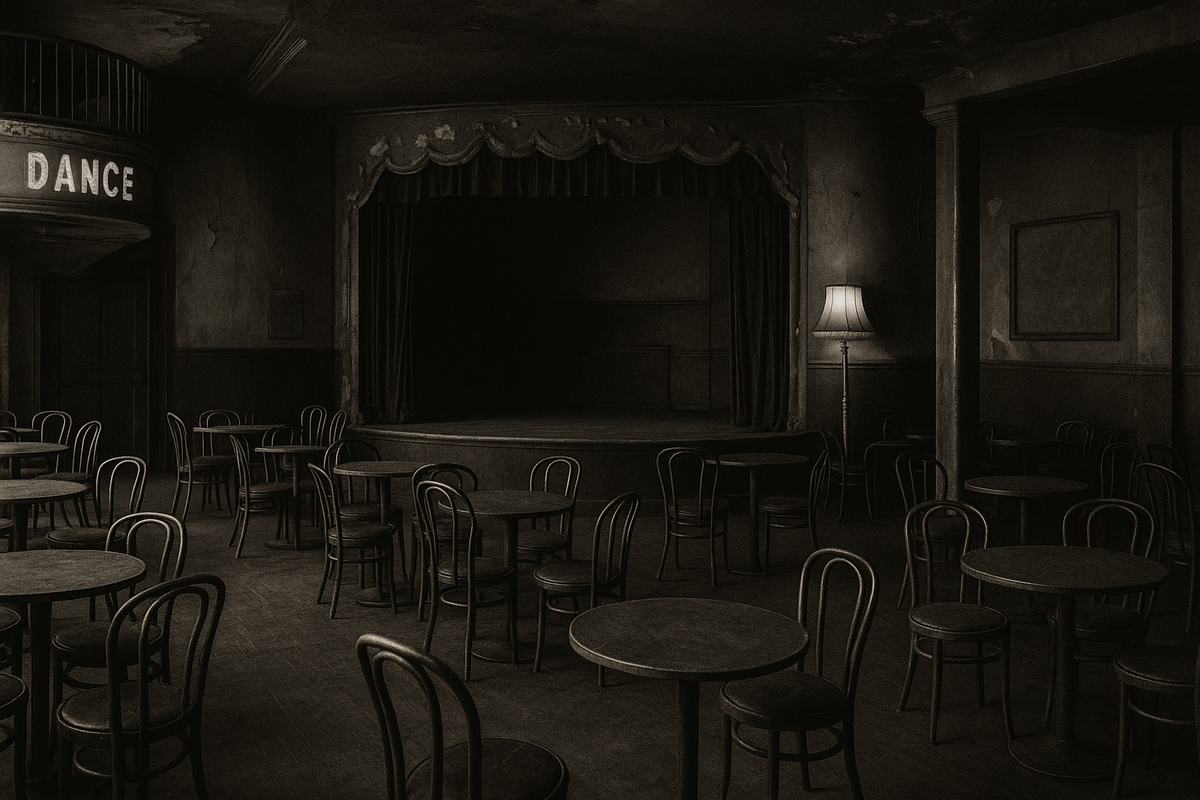
The Last Dance: When Harlem's Nightclubs Went Dark
How Jet Magazine documented the death of an era and preserved the legacy of African American entertainment palaces
On November 22, 1951, Jet Magazine published an obituary for an era that hadn't quite finished dying.
The cover story—"Why Night Clubs Are Dying"—wasn't simply entertainment reporting. It was a eulogy for the legendary African American nightclubs that had once pulsed at the center of American culture. The Cotton Club. The Savoy Ballroom. Chicago's Grand Terrace. These weren't just venues; they were the stages where Duke Ellington, Count Basie, and Billie Holiday had transformed American music. And now, Jet's reporters were documenting their slow fade into silence.
For Black America, this wasn't mere nostalgia. It was a reckoning with profound cultural loss—and the unsettling question of what would replace it.
Archive Details
Publication: Jet Magazine
Issue Date: November 22, 1951
Feature Story: "Why Night Clubs Are Dying"
Historical Context: Documentation of the decline of legendary African American nightclubs including the Cotton Club, Grand Terrace, Savoy Ballroom, and Rhumboogie
Cultural Significance: Primary source material capturing the transition from the swing era to rhythm and blues
The Golden Age, Before the Lights Went Out
Throughout the 1930s and 1940s, African American nightclubs had reigned as the undisputed capitals of American nightlife. Harlem's Cotton Club, Connie's Inn, and the Savoy Ballroom drew crowds hungry for big band swing, high-kicking chorus lines, and the electric spectacle of cabaret. In Chicago, the Grand Terrace and the Rhumboogie commanded the same devotion. These weren't simply entertainment venues—they were cultural institutions where Black performers shaped the sound of a generation.
Duke Ellington's orchestra made the Cotton Club synonymous with sophistication. Cab Calloway's pyrotechnic performances at the Zanzibar became legend. Count Basie and Billie Holiday turned Kansas City-style jazz into a national phenomenon. The clubs were where African American artistry collided with mainstream America, creating the soundtrack of the swing era.
But by 1951, the music had stopped.
Anatomy of a Collapse
Jet's reporting identified a perfect storm of forces dismantling the nightclub empire:
Economic strangulation. Skyrocketing operating costs and punitive tax structures made the elaborate floor shows financially unsustainable. The ninety-minute productions featuring full orchestras, chorus lines, and rotating headliners—the very signature of the nightclub experience—had become cost-prohibitive.
Shifting tastes. Post-war audiences were abandoning the formal grandeur of big band spectacles for smaller, more intimate musical experiences. The massive orchestras that once defined sophistication now felt overwrought. Younger patrons wanted rhythm and blues combos, not twenty-piece ensembles. They sought casual gathering spaces, not venues that demanded evening wear.
Integration's double edge. As racial barriers began to crack, Black patrons gained access to previously whites-only establishments that now featured the very performers who had built their reputations in Harlem and Chicago. The traditional Black nightclubs lost their monopoly on top-tier talent—and their audiences followed the stars to new venues.
For Black entertainers, the collapse presented a paradox: greater access to mainstream audiences coincided with the destruction of the very institutions that had nurtured their careers.
Jet's Visual Testimony
The November 22, 1951 issue didn't just report the decline—it documented it with devastating visual evidence. Photographs showed Chicago's Grand Terrace converted into a movie house, its dance floor silent. The Club Sudan in Harlem, which had closed after only a few years of operation, stood shuttered. The Rhumboogie—once owned by heavyweight champion Joe Louis—had been reduced to hosting weekend rentals, a humiliating fate for a venue that had once embodied Black entrepreneurial success.
Jet's editorial approach was unflinching. Empty dance floors and darkened stages weren't presented as isolated business failures but as symbols of a cultural transformation too large to ignore. Headlines like "Broadway Hard Hit Too" extended the analysis beyond Black venues, suggesting the nightclub's decline reflected broader shifts in American entertainment.
This reporting exemplified Jet's mission. While mainstream publications ignored African American cultural life unless it crossed into white popular consciousness, Jet chronicled Black America in real time—its triumphs, struggles, and transformations. The magazine's pocket-sized format and bold covers made it ubiquitous on newsstands, a portable archive of Black experience that spoke directly to its community without apology or translation.
The Cultural Ledger
Economics of Cultural Production
High overhead costs and evolving public preferences made the nightclub business model obsolete, forcing a wholesale reorganization of Black entertainment.
Generational Rupture
Younger African Americans rejected the high-glamour formality their parents had embraced, seeking authenticity and accessibility over spectacle.
Integration's Hidden Costs
Expanded access to mainstream venues came at the price of the autonomous Black cultural spaces that had fostered community and artistic innovation.
Institutional Memory
Jet memorialized venues like the Cotton Club, Connie's Inn, and the Zanzibar as irreplaceable cultural landmarks, recognizing that their closure meant the loss of spaces where African American identity had been publicly performed and celebrated.
The article didn't merely document an ending. It captured a hinge moment—the final chapter of the swing era and the unwritten prologue to rhythm and blues, rock and roll, and the cultural upheavals of the 1960s.
The Archival Imperative
Jet Magazine's genius lay in recognizing that entertainment coverage was historical documentation. By chronicling nightclubs, the magazine preserved the spaces where African American identity, artistry, and community crystallized into public performance.
Today, with most of these venues long demolished, Jet's photographs and reporting often constitute the only surviving evidence of their existence. The magazine didn't just report cultural history—it became that history's custodian.
Why This Issue Matters to Collectors
Historical Positioning
Published at the precise moment when one era ended and another began, the issue offers firsthand documentation of a transformation that scholars would analyze for decades.
Entertainment Archaeology
"Why Night Clubs Are Dying" provides contemporaneous reporting on legendary venues—many of which left no other photographic or written record. Without Jet's documentation, significant portions of this history would have vanished entirely.
Cultural Breadth
Beyond nightlife, the issue covered politics, community affairs, and celebrity culture, offering a comprehensive snapshot of African American concerns at mid-century.
Collector Demand
Vintage Jet issues documenting entertainment history, civil rights developments, and cultural milestones command serious interest from historians, archivists, and families preserving Black heritage.
To hold this issue is to possess an eyewitness account of cultural transformation—a moment when the jazz-era glamour of Harlem and Chicago gave way to forces that would reshape American music and Black cultural expression for generations.
Explore the Archive
This issue and other vintage Jet magazines from the 1950s through the 2000s are available in our collection. From the civil rights movement to pivotal moments in music, politics, and entertainment, Jet chronicled Black history as it unfolded—unfiltered, unapologetic, essential.
Browse Jet Magazine CollectionWhether you're a cultural historian, a serious collector, or someone preserving family heritage, these issues transcend memorabilia. They are primary documents that speak directly across decades.
The November 22, 1951 issue of Jet Magazine captured African American culture at an inflection point. As the great nightclubs of Harlem, Chicago, and Los Angeles closed their doors, Jet preserved their legacy while analyzing the economic, social, and cultural forces reshaping Black life.
For readers in 1951, the article marked the end of an era. For us, it demonstrates the resilience of Black culture—constantly reinventing itself under pressure, transforming loss into new forms of expression.
To own this issue is to hold that transformation in your hands.