
The Moment Soul Music Got Its Name
Inside Ebony's September 1960 Ray Charles Feature
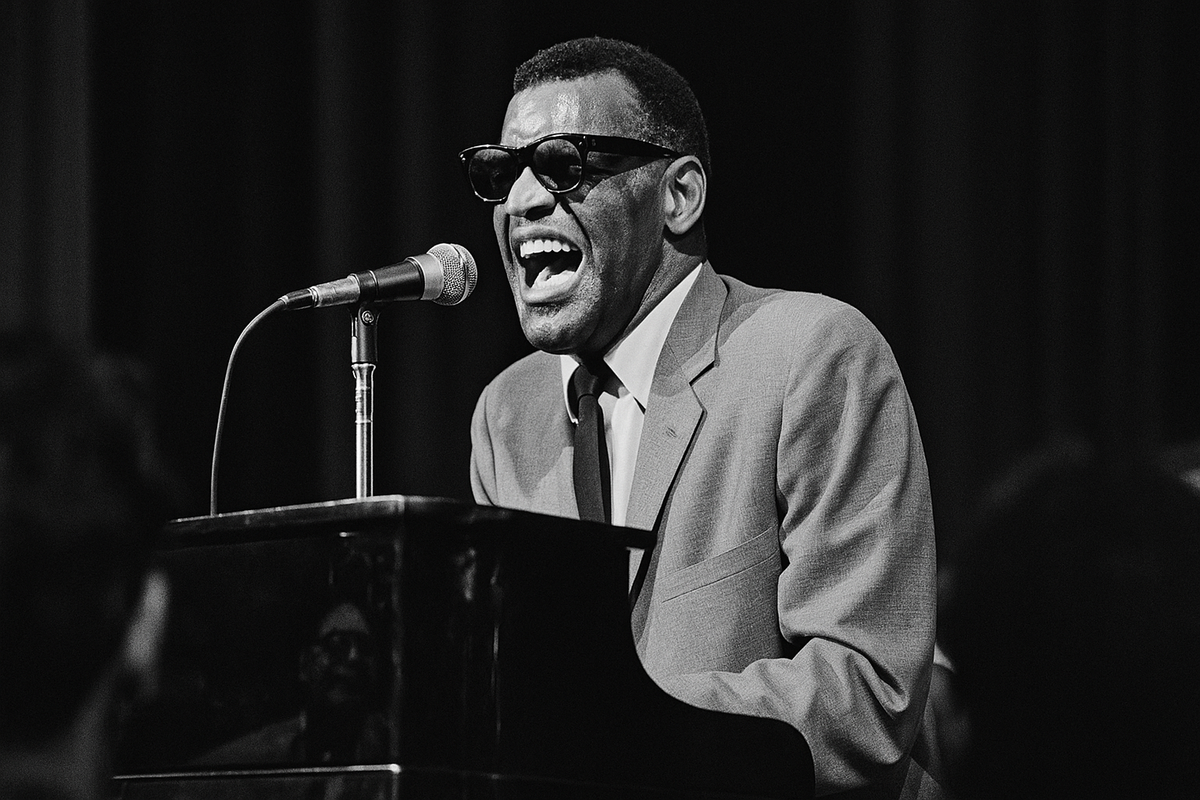
Flip to page 58 of the September 1960 Ebony Magazine, and you'll find something that didn't yet have a proper name. Ray Charles, photographed mid-performance, sweat streaming beneath his signature sunglasses, hands attacking the piano keys with gospel fury—while fans pressed against the stage looked transported, caught between ecstasy and something close to prayer. The caption called it "shouting blues." Critics were calling it "funk." But by the time readers finished the spread, they'd witnessed the birth certificate of soul music itself.
This wasn't entertainment journalism. It was cultural prophecy.
Archive Details
Historical Figure: Ray Charles
Issue Date: September 1960
Archive Source: Ebony Magazine
Cultural Context: Dawn of soul music, early Civil Rights Movement
Why This Issue Matters Now
The September 1960 Ebony arrived at the exact intersection of two revolutions. Four months earlier, Black college students had launched the sit-in movement in Greensboro, reshaping the Civil Rights Movement's tactics and visibility. Ray Charles, meanwhile, was completing his own revolution—weaponizing the ecstatic sound of Black church music and aiming it straight at secular America. His 1958 hit "What'd I Say" had moved 2.5 million singles by building a song around call-and-response patterns lifted directly from Sunday services, complete with moaning backup singers that made radio programmers nervous and audiences delirious.
Ebony understood what mainstream publications missed: Charles wasn't crossing over. He was carrying Black musical tradition into spaces that had never made room for it, and doing so on his own terms.
The Magazine That Spoke When Others Were Silent
Founded by John H. Johnson in 1945, Ebony had spent fifteen years building something unprecedented—a national publication that treated African American achievement as newsworthy, Black culture as sophisticated, and Black readers as worthy of glossy, high-production journalism. While Life and Look occasionally featured Black subjects as curiosities or social problems, Ebony photographed Ray Charles the same way it photographed surgeons, politicians, and entrepreneurs: as a serious professional commanding serious attention.
The September 1960 cover featured Hazel Scott, the jazz virtuoso and civil rights activist, signaling Ebony's consistent practice of elevating Black musicians to cover-worthy status when no other mainstream outlet would. Inside, the Ray Charles feature sprawled across multiple pages, mixing performance shots with backstage intimacy—a visual language that said this matters without needing to explain why.
What the Feature Revealed
Ebony's photographers and reporters captured Charles at full power. The images alone document a phenomenon:
The reporting itself refused to sanitize. Ebony acknowledged his arrests in Philadelphia (later dismissed) and a paternity case—not to scandalize, but to document the scrutiny Black entertainers faced while navigating fame in a hostile culture. The article presented Charles as neither saint nor sinner, but as a working artist managing extraordinary talent and extraordinary pressure.
The Man Behind the Sunglasses
The profile excavated details that explained how Charles became Charles:
He'd lost his sight at seven and learned music at a Florida state school for the blind, reading Braille notation one bar at a time—a discipline he credited with shaping his meticulous arrangements.
He'd started by imitating Louis Jordan and Nat King Cole before gospel and blues collided in his hands, creating what Ebony called "funk"—the jazzman's term for emotional authenticity taken to extremes.
He'd built himself into a businessman who arranged his own tours, earning up to $100,000 weekly while maintaining creative control over his band—remarkable financial independence for any musician in 1960, let alone a Black artist.
Blues legend Big Bill Broonzy had told the magazine, "He should be singing in a church." Charles acknowledged gospel's influence but refused the limitation. He'd taken the sacred and made it speak to everyone, defending himself against critics who called his music corrupting: "Music is wholesome… it's like saying that opera causes crime."
At home, he listened to Miles Davis and classical music. He'd just bought a house in Los Angeles and was considering purchasing a private plane to ease the grind of touring. The portrait Ebony assembled was of an artist operating at full complexity—rooted in tradition, commercially savvy, personally grounded, and musically fearless.
The Era Preserved in Ink
The September 1960 Ebony captured its moment with unusual precision. Published as the Civil Rights Movement gained momentum and soul music gained vocabulary, the issue balanced Ray Charles features with political coverage, family stories, and fashion spreads—showing how Ebony understood culture as inseparable from struggle, achievement from daily life.
For its millions of African American readers, Ebony provided something unavailable elsewhere: validation. It documented Black excellence when mainstream media either ignored it or reduced it to caricature. The magazine's visual grammar—beautiful photography, sophisticated layouts, serious reporting—insisted that Black life deserved the same editorial treatment given to white subjects in prestige publications.
This wasn't aspiration. It was documentation of what already existed.
Why Collectors Pursue This Issue
For collectors, these aren't magazines. They're primary sources. They're evidence of how African American culture reshaped the American mainstream while that mainstream still refused to acknowledge the reshaping.
Owning History
Reading vintage Ebony feels different from reading about the era. The advertisements, the editorial voice, the photographic style—everything places you inside 1960, seeing what readers saw, understanding what mattered and why.
Browse Ebony Magazine CollectionWhether you're preserving family heritage, researching music history, or building a collection of African American cultural documents, issues like September 1960 represent something irreplaceable.
The Issue That Named a Genre
The September 1960 Ebony remains essential for one reason: it documented the emergence of soul music before the term fully existed, using a subject who embodied the form before anyone could define it. The magazine's willingness to treat Ray Charles with intellectual seriousness, visual beauty, and unflinching honesty created a portrait that still holds authority sixty-five years later.
This is what makes vintage Ebony magazines invaluable. They captured African American life with dignity and depth when almost no other publication bothered. They preserved moments that mainstream media ignored. They created an archive of Black achievement, struggle, and creativity that remains vital for understanding how America became what it is.
Hold the September 1960 issue, and you're holding the moment soul music got its name—documented by the only magazine brave enough to call it what it was.