
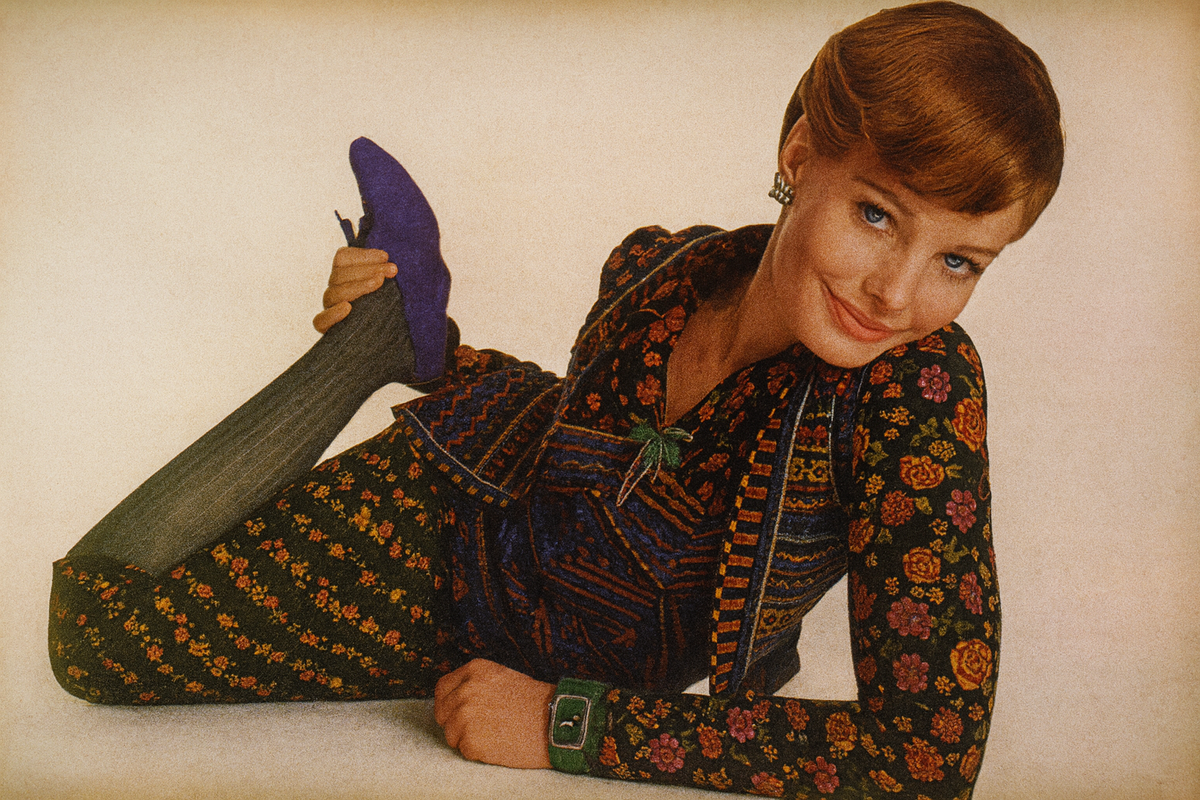
When Vogue Declared the Revolution Over: August 1, 1971
How one editorial transformed classics into weapons of modern femininity
On newsstands in the summer of 1971, Vogue made a quiet but seismic announcement: the party was over.
After a decade of psychedelic prints, unisex experimentation, and hemlines that climbed to the thigh, the magazine that had chronicled the Youthquake now pivoted hard. The August 1, 1971 issue introduced "The Vogue Look: In the Swing to Classics"—an editorial manifesto that traded Carnaby Street chaos for tailored precision. The message to its readers was unambiguous: sophistication would be the uniform of the new decade.
This wasn't nostalgia. It was recalibration. And the issue that captured this shift has become one of the most sought-after editions in Vogue's archive.
The Summer That Fashion Changed Direction
By mid-1971, American culture was fracturing under pressure. The Vietnam War ground on. Campus protests had turned violent. Second-wave feminism was dismantling assumptions about women's place in the workforce, the home, and public life. Into this turbulence, Vogue offered not escape, but armor.
The magazine had spent the 1960s celebrating disruption—mini-skirts, op-art prints, mod rebellion. But the early 1970s demanded something different. Women entering law firms, newsrooms, and corporate boardrooms needed clothes that signaled competence without sacrificing style. The August 1, 1971 issue answered that need with a wardrobe built for motion, ambition, and endurance.
What makes this issue remarkable is how Vogue repositioned conservatism as radicalism. The polo coat, the separates suit, the ribbed sweater—these weren't your mother's clothes. They were tools.
Issue Details
Publication: Vogue Magazine
Issue Date: August 1, 1971
Featured Editorial: "The Vogue Look: In the Swing to Classics"
Historical Context: Vietnam War era, second-wave feminism, post-Youthquake fashion pivot
Archive Significance: Documents the transition from 1960s rebellion to 1970s refinement
Inside "The Swing to Classics": What Made This Editorial Iconic
The Polo Coat as Statement Piece
Vogue called it "the must-have coat of the year." Rendered in bottle-green mohair, the polo coat was described as soft as a dressing gown yet structured enough for city streets. This wasn't about comfort alone—it was about projecting authority while refusing to sacrifice ease. The coat embodied the contradiction women were navigating: powerful but not rigid, polished but not precious.
Separates as Strategy
Grey flannel blazers paired with patterned shirts became the uniform of adaptability. Vogue promised these pieces would "improve each shining hour"—a phrase that now reads as quietly feminist. Clothes weren't decoration. They were confidence architects.
The Sweater Set, Weaponized
Once the domain of country club conservatism, the sweater set was reimagined through ribbed knits, long cardigans, and pullovers styled with skirts and tights. The effect was youthful without being juvenile, versatile without being dull. Vogue understood that professional women couldn't afford single-use garments. Everything had to multitask.
Safari Suiting and the Global Turn
The safari jacket suit—belted, unbuttoned, layered—signaled something beyond practicality. It reflected the jet-set aspirations and cultural curiosity defining early-seventies style. International travel was no longer reserved for the wealthy elite. Vogue was dressing women who moved through the world.
The Tyranny of Polish
"We're in an era of clean living and high polish," the editorial declared. Ribbed stockings. Sharp leather gloves. Brass belts. Vogue insisted that authority lived in the details. This was precision as power—a concept that would define professional dress codes for decades.
The Missoni Moment
Buried within this editorial is a fashion history inflection point: the prominent feature of Missoni knits. In 1971, Ottavio and Rosita Missoni's zigzag-patterned sweaters were just beginning their ascent from Italian knitwear to global phenomenon. Vogue's spotlight accelerated that trajectory.
For collectors of fashion history, this issue documents the exact moment Missoni entered the American style consciousness. It's the equivalent of finding early Beatles press coverage—evidence of a cultural force just before ignition.
What the Price Tags Reveal
Vogue listed retail prices with unusual transparency:
- Wool shirts: $35
- Skirts: $45
- Shetland tanks: $40
In 1971, these figures positioned classics as investments, not impulse buys. Adjusted for inflation, that $35 shirt would cost approximately $270 today. Vogue wasn't selling fast fashion. It was selling wardrobe permanence—a philosophy that has roared back into relevance with contemporary sustainability movements.
The pricing strategy also reveals class assumptions. Vogue was speaking to women with disposable income, women who could afford to build rather than chase trends. This was aspiration documented in real numbers.
Why This Issue Still Matters
Cyclical Fashion Wisdom
Fashion moves in cycles, but some cycles echo louder than others. The August 1, 1971 issue speaks directly to contemporary conversations about sustainability, capsule wardrobes, and the rejection of disposable fashion.
Visual Feminism
The issue documents a specific flavor of feminism—one that embraced polish and power simultaneously, that refused to choose between competence and style. For historians tracking how second-wave feminism manifested in visual culture, this is primary source material.
Photography as Narrative
The models aren't static mannequins. They stride, leap, gesture. The photography conveys energy while maintaining polish—a visual metaphor for the woman Vogue was addressing.
Investment Dressing's Origin
The concept of "investment pieces"—now central to fashion marketing—has roots in this exact editorial approach. Vogue was training readers to think in decades, not seasons.
Why Collectors Prize This Issue
Cultural Precision
The August 1, 1971 Vogue captures fashion at a pivot point. It's the visible seam between decades—before disco, before punk, before the excesses that would define the mid-to-late seventies. It documents the moment tailoring became cool again.
Editorial Influence
"The Swing to Classics" is now studied in fashion journalism courses as an example of how magazines shape consumer behavior. Vogue didn't just report trends—it manufactured them. This editorial rewired the relationship between women and their wardrobes for years to come.
The Missoni Breakthrough
This issue documents the exact moment Missoni entered the American style consciousness—evidence of a cultural force just before ignition. For fashion historians, it's an irreplaceable artifact.
Investment Philosophy
The pricing transparency and emphasis on wardrobe permanence predicted our current moment. When Vogue told readers to buy classics that would endure, it was forecasting the sustainability movement decades in advance.
For Collectors and Historians
The August 1, 1971 Vogue is more than a fashion magazine. It's a cultural artifact from a moment when American women were rewriting the rules of professional life, and fashion was documenting every step.
This issue offers the Missoni breakthrough in American media, documentation of the classics-as-investment philosophy, visual evidence of how motion and polish merged in early-seventies style, a snapshot of pricing that reveals class and aspiration, and editorial work that influenced decades of fashion journalism.
To own this issue is to hold a turning point. It's the moment Vogue looked at the chaos of the sixties and said: we're building something that lasts.
Explore the Archive
Discover the complete collection of original Vogue magazines—from the 1930s through the 1970s—each one a window into the style and cultural debates of its era.
Browse Vogue Magazine CollectionEvery issue is more than clothes. It's evidence of how we decided who we wanted to be.