
The Deadman in Print
Why PWI's December 1998 Undertaker Profile Remains the Definitive Attitude Era Artifact
In December 1998, as the Monday Night Wars reached their fever pitch, Pro Wrestling Illustrated published something that would outlast the ratings battle itself: a career-defining profile of The Undertaker titled "Disciple of Darkness." While Vince McMahon and Eric Bischoff waged war for television supremacy, PWI did what it had done best since 1979—it created a historical record that would matter long after the final bell rang.
This wasn't puff journalism. It was preservation.
Archive Details
Subject: The Undertaker
Publication: Pro Wrestling Illustrated, December 1998
Feature Title: "The Undertaker: Disciple of Darkness"
Historical Context: Published during WWF's Attitude Era ascendancy over WCW
Cover Stars: Goldberg and Ken Shamrock
The Moment Captured
By late 1998, wrestling had become America's unlikely cultural juggernaut. WCW was hemorrhaging momentum despite the NWO's early dominance. WWF's Attitude Era—raw, violent, unapologetically adult—was ascending. Stone Cold Steve Austin was the industry's biggest draw, but The Undertaker represented something more primal: continuity in an industry built on chaos.
He had survived nearly a decade without breaking character. From his 1990 Survivor Series debut as the stoic mortician managed by Paul Bearer, through wars with Hulk Hogan and Bret Hart, to his transformation into the Ministry of Darkness leader—The Undertaker never blinked. While other stars cycled through gimmicks and promotions, he remained wrestling's immortal constant.
PWI's December 1998 Close-Up arrived at the apex of his mystique. The feature balanced kayfabe reverence with journalistic precision, documenting his championship reigns, his Hell in a Cell wars with Shawn Michaels and Mankind, and his complex storyline with Kane. It treated him as both supernatural entity and legitimate locker room leader—a duality no other wrestler commanded.
Why PWI Mattered
Pro Wrestling Illustrated occupied rare territory in the wrestling ecosystem. Unlike WWF and WCW magazines that served as promotional vehicles, PWI maintained editorial independence. Its rankings weren't storyline-driven. Its match reports covered all territories. Its features had weight because they weren't selling you a company narrative—they were building an archive.
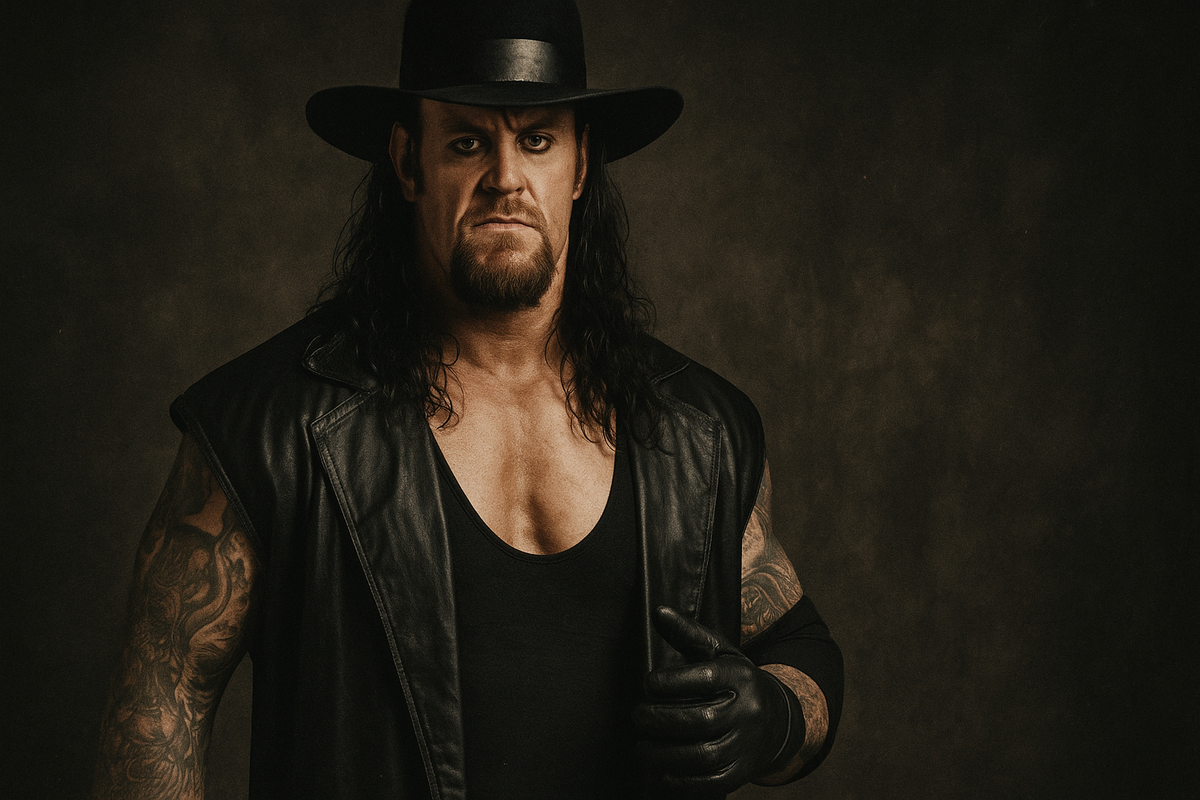
The Undertaker profile exemplified this approach. While honoring his "Disciple of Darkness" persona, the piece catalogued career milestones with archival rigor: his first WWF Championship victory, his WrestleMania streak in its early stages, the evolution from Old West mortician to gothic lord. The photography—stark close-ups of his tattooed arms, gloves gripping opponents' throats, eyes burning through the camera—wasn't just atmospheric. It was iconographic.
Greatest Match
WrestleMania 13 vs. Psycho Sid (March 23, 1997)—his second WWF Championship win in front of a hostile Chicago crowd that wanted Bret Hart.
Toughest Opponent
Shawn Michaels—the size differential made their matches, particularly Hell in a Cell 1997, studies in contrasts. Speed versus power. Showman versus specter.
Most Hated Opponent
Mankind—their Hell in a Cell rivalry defined Attitude Era brutality and pushed both men into legend.
Signature Weapon
The Tombstone Piledriver—not just a finishing move, but a death sentence that closed matches and careers.
These weren't arbitrary choices. They reflected The Undertaker's position in late 1998: a wrestler who had transcended gimmickry to become mythology.
The December 1998 Context
The issue's cover featured Goldberg and Ken Shamrock—two men representing wrestling's mainstream crossover appeal at the peak of its cultural penetration. Goldberg was WCW's undefeated monster. Shamrock was the UFC export legitimizing "real" combat. Inside, The Undertaker feature reminded readers that wrestling's power wasn't just in realism or spectacle—it was in character work sustained across years, not months.
While the industry chased shock value and ratings spikes, The Undertaker proved that depth mattered. He was wrestling's answer to horror cinema's great monsters: recognizable, evolving, but never diluted. PWI understood this. The profile wasn't about hyping next month's match—it was about cementing a legacy already eight years deep.
The Enduring Archive
Vintage Pro Wrestling Illustrated issues function as wrestling's unintentional Library of Congress. While promotions rewrite history through documentaries and network specials, PWI's monthly snapshots remain fixed. The December 1998 Undertaker profile will always show what mattered in December 1998—not through the lens of 2025 revisionism, but through the eyes of journalists watching it unfold.
That's why serious collectors pursue these issues. They're buying uneditable history.
Why Collectors Hunt This Issue
Historical Positioning
Published during WWF's critical 1998 surge past WCW, this issue captures the exact moment when the Attitude Era stopped being an experiment and became the industry standard.
Subject Longevity
The Undertaker's 30-year career—including his WrestleMania streak, retirement matches, and WWE Hall of Fame induction—makes early archival coverage invaluable. This isn't a flash-in-the-pan profile. It's primary source material on wrestling's most durable character.
Print Scarcity
Monthly magazines were disposable media. Most copies were read, damaged, discarded. Clean copies of late-90s PWI issues are increasingly rare, especially those featuring marquee names.
Cultural Timepiece
This issue exists at the intersection of wrestling's peak mainstream relevance and print journalism's dominance. It predates the internet's destruction of kayfabe, the collapse of WCW, and the corporate sanitization of WWE. It's a window into wrestling's last great analog era.
Preserve Wrestling History
Whether you're assembling a complete Attitude Era archive, building an Undertaker collection, or preserving wrestling's editorial history, original PWI issues offer something digital media never will: permanence.
Browse PWI Magazine Collection