
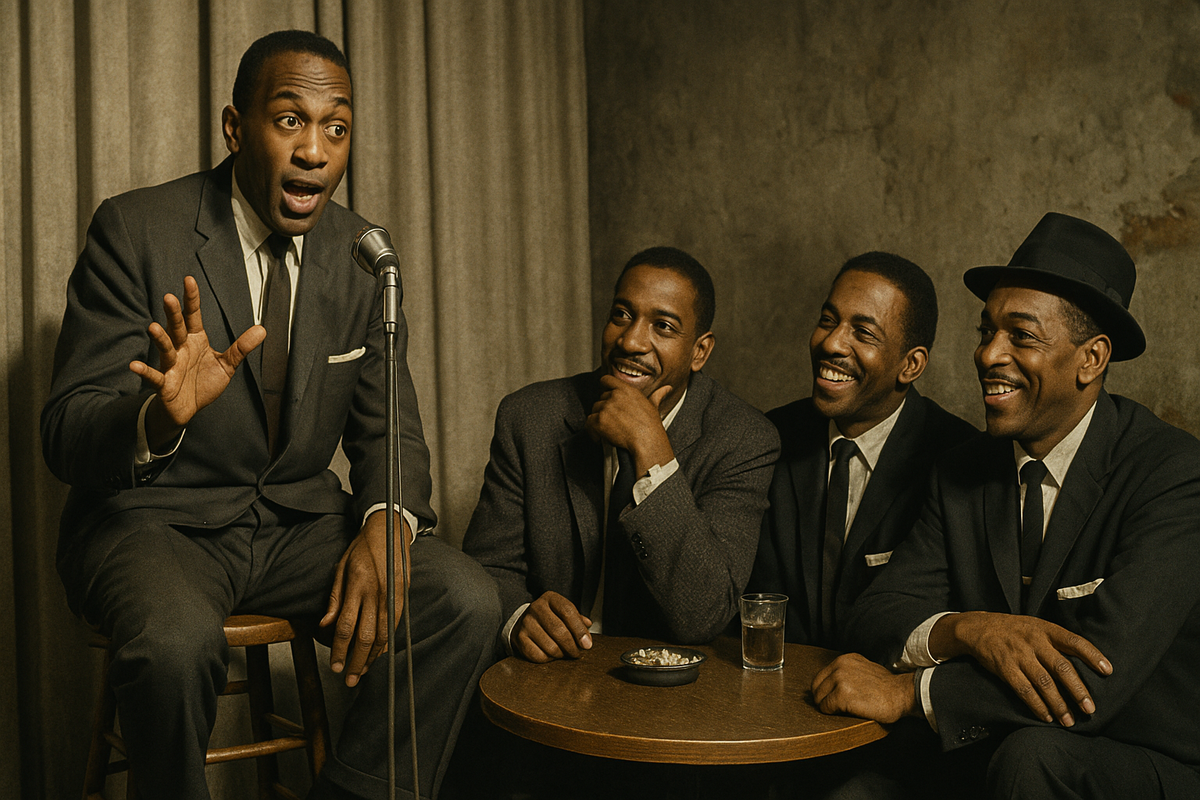
The $290,000 Gap: When Ebony Exposed Comedy's Color Line in 1960
How one fearless magazine article documented the pay gap, double standards, and systemic barriers keeping Black comedians from mainstream success
October 1960. While sit-in protesters filled Southern lunch counters and Kennedy debated Nixon on national television, Ebony magazine published something no mainstream outlet would touch: a forensic examination of why America's funniest Black comedians couldn't crack $20,000 a year while their white counterparts banked $300,000.
The feature—"Why Negro Comics Don't Make It Big"—wasn't entertainment fluff. It was investigative journalism dressed in photographs of Nipsey Russell's sharp suits and Dick Gregory's defiant grin. Ebony didn't ask if racism shaped American comedy. It showed readers exactly how, with club owners quoted on record and pay stubs laid bare.
This wasn't a story about laughter. It was about money, access, and the architecture of exclusion.
Archive Details
Publication: Ebony Magazine
Issue Date: October 1960
Feature Article: "Why Negro Comics Don't Make It Big"
Historical Context: Published during the height of Civil Rights activism, same year as Greensboro sit-ins
Featured Performers: Nipsey Russell, Dick Gregory, Pearl Bailey, Red Foxx, Slappy White, Timmie Rogers
The Minstrel Trap That Wouldn't Die
Bert Williams haunts this article like a ghost in burnt cork. Hailed as one of the greatest comedians of his generation, Williams had no choice: wear blackface, perform the shuffling fool, or don't work at all. Even genius bowed to the market.
By 1960, minstrelsy had supposedly died. But its shadow lingered in every club booker who worried that a Black comic might "make white audiences uncomfortable." The burnt cork was gone. The economics remained.
Here's what Ebony documented: white comedians like Red Skelton built careers on self-deprecating humor—clumsy, foolish, endearing. When Black comics tried the same, they risked something deadlier than bombing on stage. They risked confirming every racist caricature America already believed.
The double standard wasn't subtle. It was structural.
When the Training Ground Collapsed
Vaudeville had been America's comedy laboratory—a circuit where performers could fail fifty times in fifty towns, refining their material before anyone important watched. When vaudeville died in the 1940s, white comics still had radio, then television, then the Catskills circuit. They had rungs on a ladder.
Black comedians got dumped straight into nightclubs with zero margin for error. One bad set in front of a white club owner, and the door closed—not just at that venue, but across a network of establishments that shared notes on who was "safe" to book.
Ebony interviewed the gatekeepers directly. Club owners admitted their reluctance on the record. They cited "audience expectations." They worried about "the wrong kind of act." Translation: they feared booking anyone who might remind white patrons that segregation existed.
The Numbers Ebony Published
Top Black comedians in 1960: $10,000–$20,000 annually.
Top white comedians doing similar work: up to $300,000.
That's not a gap. That's a chasm with a color line running through it.
Pearl Bailey, profiled as an "artist at comedy," represented the rare crossover success—but even she navigated a minefield of respectability politics that white performers never touched. Dick Gregory was beginning to weaponize his humor against segregation itself, turning comedy into commentary. Nipsey Russell brought intellectual sharpness to stages that expected shuffling. Red Foxx worked Black working-class clubs where the pay was low but the freedom was absolute.
These weren't comedians waiting for a break. They were professionals locked out of the system that rewarded their white peers for lesser work.
What Ebony's Cameras Captured
The magazine didn't just report this story—it showed it. Page after page, the photographs built a case:
Bert Williams in top hat and minstrel makeup: proof that talent alone never guaranteed dignity.
Dick Gregory mid-performance: the new face of political comedy, sharp and uncompromising.
Club shots of Foxx and Slappy White: raw energy in venues that would never make it onto network television.
Juxtapositions with white comics: visual evidence of who got celebrated and who got sidelined.
Ebony's editorial team understood something crucial: this wasn't just about individual careers. It was about systemic exclusion playing out in real time, and they had the photographs to prove it.
Steve Allen Knew the Truth
Even sympathetic white figures admitted the fix was in. Steve Allen, the Tonight Show host who actually booked Black comedians, acknowledged on record that his peers faced barriers white comics never encountered. His openness was rare. Most gatekeepers simply stayed silent while the pay gap widened.
Ebony didn't let them hide.
Key Themes in Ebony's Investigation
Economic Inequality
Negro comedians earned a fraction of what white comics made—$10,000-$20,000 versus up to $300,000 annually for similar work.
The Minstrel Legacy
Bert Williams' story reminded readers of painful compromises Black performers made in early 20th-century entertainment.
Training Barriers
Loss of vaudeville left Black comics without safe spaces to develop material, while white comics had multiple pathways.
Double Standards
Comics risked reinforcing damaging stereotypes if they used self-deprecating humor that worked for white performers.
White Gatekeepers
Club owners openly admitted reluctance to book Negro comics, citing audience discomfort and business risk.
Political Comedy
Performers like Nipsey Russell and Dick Gregory represented a bold new form of comedy that challenged segregation directly.
Women in Comedy
Pearl Bailey highlighted as an "artist at comedy," showing how women shaped the field beyond stand-up.
Comedy as Civil Rights
The article reframed comedy as another arena where African Americans fought for equality and recognition.
Why This Issue Matters Now
The October 1960 Ebony sits at a cultural intersection that historians still study. Published the same year as the Greensboro sit-ins, it captures the Civil Rights Movement spilling into every corner of American life—including the comedy stage.
Within five years of this article, Dick Gregory would become a national figure. Nipsey Russell would break into television. Red Foxx would eventually star in Sanford and Son. But in 1960, their futures were far from guaranteed. Ebony gave them something most media denied: documentation, dignity, and a platform that treated their exclusion as the scandal it was.
For collectors, this issue represents more than vintage entertainment journalism. It's primary source material on how systemic racism operated in spaces historians often overlook. The article doesn't just describe barriers—it names names, cites figures, and provides visual evidence of who controlled access and who got locked out.
The cover featured three young Black women in elegant portraiture—LaJeune Hundley, Corrine Huff, and Elizabeth Campbell—representing aspiration and grace. Inside, Ebony delivered something harder: a reckoning with the economics of American comedy.
The Artifact in Your Hands
Owning this issue means holding a piece of a largely untold story. It's not about nostalgia. It's about the moment when a magazine refused to let structural racism hide behind "industry standards" and "audience preferences."
Ebony didn't wait for history to vindicate these comedians. It vindicated them in real time.
Collector Significance
Civil Rights Context
Published the same year as the Greensboro sit-ins, capturing a key cultural battleground of the Civil Rights era.
Milestone Feature
One of the earliest mainstream examinations of systemic racism in the entertainment industry.
Cultural Icons
Profiles figures like Nipsey Russell, Dick Gregory, and Pearl Bailey at pivotal moments in their careers.
Visual Documentation
Photographs serve as primary documents of how comedy, race, and representation intersected in 1960.
Economic Evidence
Rare documentation of actual pay disparities in entertainment—$10,000-$20,000 versus $300,000.
Historical Witness
A printed record of struggles and triumphs that most mainstream media ignored or minimized.
Explore Original Ebony Issues
From the 1940s through the 1970s, Ebony chronicled the full spectrum of African American achievement, struggle, and culture. Each issue is a printed witness to battles fought in courtrooms, on stages, and in the pages of a magazine bold enough to publish the truth.
Browse Ebony Magazine Collection