
The Magazine That Captured Wrestling's Finest Hour
Inside WWF's June 1987 WrestleMania III Issue—The Official Record of the Night Professional Wrestling Became American Mythology
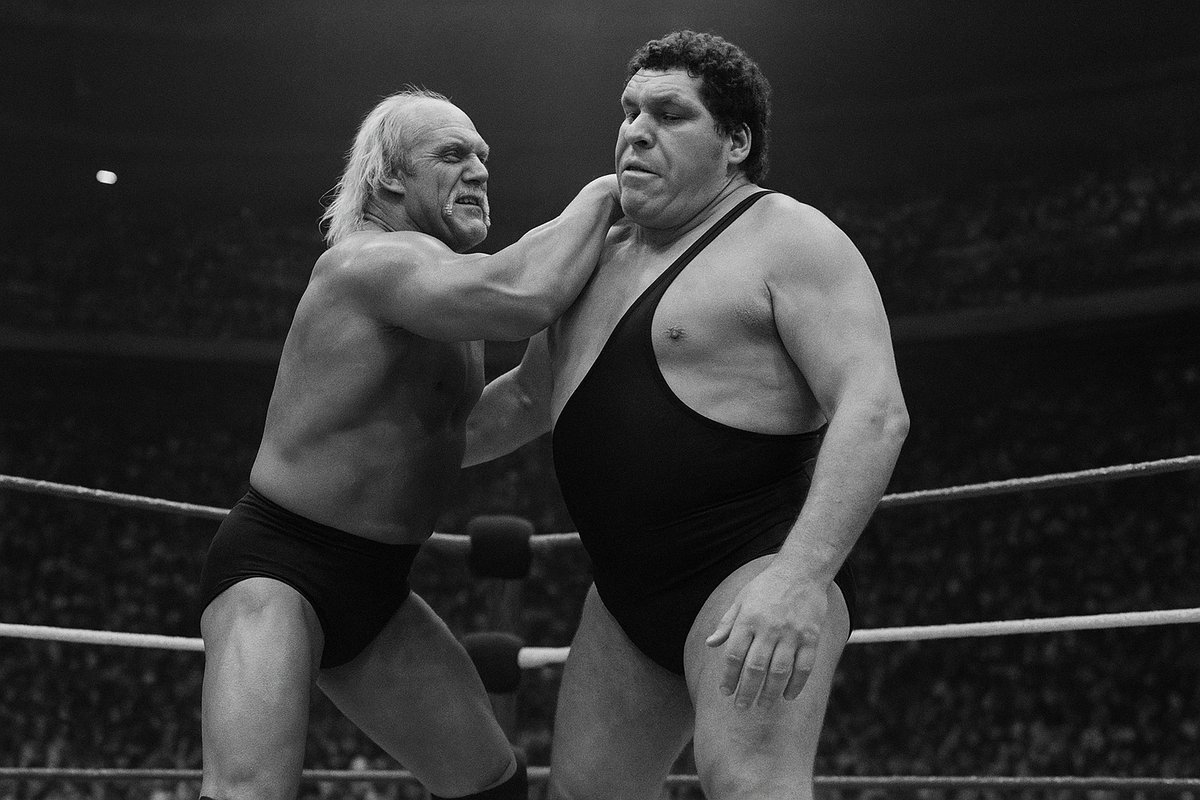
June 1987. A teenager in Des Moines tears open his mailbox, pulls out the latest WWF Magazine, and sees it: Hulk Hogan, veins bulging, hoisting Andre the Giant skyward in front of 93,173 screaming witnesses. Two months after the fact, and the image still hits like a bodyslam. This wasn't just another monthly drop from Titan Sports' publicity machine. This was the official record of the night professional wrestling became American mythology.
The June 1987 issue of WWF Magazine stands as the definitive artifact of WrestleMania III—the March 29th extravaganza at the Pontiac Silverdome that shattered indoor attendance records and elevated sports entertainment from regional curiosity to global spectacle. While millions watched via closed-circuit television and early pay-per-view, this magazine offered something the broadcast couldn't: freezeframe immortality.
Archive Details
Featured Event: WrestleMania III, March 29, 1987
Publication: WWF Magazine, June 1987 Issue
Venue: Pontiac Silverdome, Pontiac, Michigan
Attendance: 93,173 (indoor record)
Key Photographers: Steve Taylor, Tom Buchanan
Historical Significance: Official documentation of wrestling's mainstream breakthrough and the Rock 'n' Wrestling Era's apex
The Perfect Storm of 1987
By early 1987, Vince McMahon had already rewritten the rules. WrestleMania I's Madison Square Garden experiment in 1985 proved wrestling could play in New York's media capital. The MTV integration with Cyndi Lauper dragged the sport into music video rotation. National expansion turned regional heroes into household names. But the Silverdome gamble? That was audacity on a different scale—stadium-sized crowds for a sport NBC had mocked and territories had dismissed as carnival noise.
Hulkamania provided the messianic hero. Andre the Giant, undefeated for fifteen years, embodied the immovable force. The matchup wrote itself: superhero versus myth, youth versus legend, the irresistible meeting the immovable. Marketing gold that delivered on every promise.
But WrestleMania III's genius wasn't just the main event. Randy "Macho Man" Savage and Ricky "The Dragon" Steamboat delivered an Intercontinental Championship match so technically flawless, so perfectly paced, it would become the textbook future generations studied. Savage's throat-clutching agony after a Steamboat counterattack. Steamboat's aerial precision. This was wrestling as ballet, as chess, as something approaching art.
The business model mattered as much as the matches. Pay-per-view distribution and closed-circuit broadcasts meant the Silverdome crowd was just the beginning. Theaters across North America sold out. Living rooms became arenas. McMahon wasn't just selling tickets—he was selling access to history as it happened.
What the Magazine Preserved
WWF Magazine wasn't Wrestling Observer. It wasn't a dirt sheet trading in backstage gossip or kayfabe-breaking analysis. It was the official record, the authorized narrative, the gorgeous lie told so well it became truth. And for WrestleMania III, that approach created something genuinely valuable: a time capsule sealed at the moment of maximum cultural impact.
The Photography
Photographers Steve Taylor and Tom Buchanan captured what television's live broadcast couldn't—the composed, theatrical brutality of still images. Wide shots proved the Silverdome's impossible scale. Close-ups froze Hogan's face mid-strain as he lifted Andre, Savage's theatrical anguish, the sweat-soaked exhaustion of Steamboat post-victory.
The Narrative Architecture
WWF Magazine treated wrestlers as characters in an ongoing epic. Hogan became the gladiator defying impossible odds. Andre transformed into the tragic monster, betrayed by ego and Bobby Heenan's manipulation. The magazine understood its job: make readers who'd already seen the matches want to relive every second.
The Design Language
Bold WrestleMania III logos. Electric blues and reds. Full-page spreads that made a wrestler's bicep look like a marble column. This was 1980s maximalism at its zenith—every layout screaming importance, every color choice demanding attention. The design matched the spectacle it documented.
The Insider Access
For fans in 1987, WWF Magazine was the only authorized backstage pass. Exclusive interviews. Storyline recaps that bridged television broadcasts. Candid photos that suggested the human beings beneath the gimmicks. It gave readers the illusion of proximity to greatness.
The Moments That Defined an Era
The June 1987 issue immortalized the beats that still echo:
Hogan vs. Andre: The bodyslam heard 'round the world. Hogan lifting the 520-pound giant became wrestling's moonwalk—a single image that defined an entire cultural moment.
Savage vs. Steamboat: Nineteen minutes of near-falls, reversals, and aerial attacks that reset expectations for what WWE's Intercontinental Championship could mean. Future champions would chase this template for decades.
The Undercard's Muscle: Billy Jack Haynes vs. Hercules Hernandez in a Full Nelson Challenge. Junkyard Dog vs. "King" Harley Race. Matches designed to showcase character and power over technical finesse—the WWF's populist appeal in action.
The Atmosphere Itself: Over 93,000 fans created a noise level that made the Silverdome shake. Signs everywhere. Coordinated chants. Wrestling had filled a football stadium, and the magazine's wide-angle shots proved it wasn't hype—it was real.
The Broadcast Revolution: The magazine explicitly celebrated the closed-circuit and pay-per-view expansion, framing WrestleMania III as a worldwide phenomenon. Wrestling had gone global, and WWF Magazine positioned itself as the authorized history of that transformation.
The Enduring Power of March 29, 1987
WrestleMania III succeeded because it offered something television rarely delivered in 1987: genuine spectacle. The Silverdome wasn't just big—it was Roman Colosseum big, Super Bowl big, the kind of big that made wrestling feel legitimate. And when Hogan slammed Andre, when Steamboat pinned Savage, when 93,000 fans roared as one, professional wrestling stopped being a guilty pleasure. For one night, it was American theater on the grandest possible stage.
The June 1987 WWF Magazine didn't just cover that night—it enshrined it. The magazine became the authorized version, the story McMahon wanted told, the myth that eclipsed the reality. And because the magazine's photographers and writers did their jobs brilliantly, the myth was gorgeous enough to believe.
Forty years later, that magazine still delivers. Flip through those pages and you're not just reading about Hogan and Andre—you're holding the moment wrestling conquered mainstream culture. You're touching history.
Why Collectors Still Hunt This Issue
Historical Singularity
WrestleMania III remains the most mythologized event in professional wrestling history. This magazine is the official record of that mythology's birth.
The Talent Roster
Hogan, Andre, Savage, Steamboat—four names that transcend wrestling fandom. Owning their prime-era documentation means owning a piece of broader American pop culture.
Photographic Exclusivity
These images belong to WWF's archive. They don't circulate online in high resolution. The magazine is the only way to see them as intended—full-page, vivid, tactile.
Peak Rock 'n' Wrestling
This issue captures the exact moment when wrestling's mainstream experiment succeeded beyond anyone's predictions. Before the steroid scandals. Before Hogan's Hollywood pivot. This is wrestling at maximum cultural velocity.
Tangible Nostalgia
Digital files don't yellow with age. They don't carry the scent of newsprint. They can't be passed from parent to child. Original magazines are artifacts in ways PDFs will never be.
Physical Evidence
This magazine is physical evidence of a moment when wrestling filled stadiums and dominated playgrounds. It's not just memorabilia—it's a primary source.
Discover Wrestling's Golden Age
From Hogan's impossible slam to Savage and Steamboat's technical masterpiece, the June 1987 issue documents the night wrestling filled a stadium and justified every ounce of hype.
Browse WWF Magazines CollectionWhether you're completing a collection, researching the Rock 'n' Wrestling explosion, or introducing a new generation to wrestling's greatest night, these magazines offer something the internet never will: the authorized story, told when it mattered most, preserved exactly as it was meant to be seen.
The Bottom Line
The June 1987 WWF Magazine is more than a publication—it's the Rosetta Stone of wrestling's mainstream breakthrough. It captured Hogan and Andre at their mythological peak. It preserved Savage and Steamboat's masterclass. It documented the exact moment professional wrestling proved it could compete with any sport in America for cultural relevance and sheer spectacle.
For anyone who believes wrestling history deserves the same curatorial respect as baseball cards, concert posters, or vintage film magazines, this issue is essential. It's not just reading material. It's evidence that for one perfect night in March 1987, wrestling was the biggest show on Earth.
And this magazine made sure nobody would ever forget it.