📖 About this Collection
Jim Brown: Iron, Grace & the Weight of a Giant
The Legend & The Legacy
Before the age of the internet, before the 24-hour sports ticker, before athletes could speak directly to the world through a phone screen, the story of Jim Brown was told — and retold, debated, and revered — through the printed page. From the frozen fields of Cleveland Municipal Stadium to the charged political atmosphere of the Civil Rights Movement, Brown's ascent was nothing short of seismic. He did not merely dominate professional football; he redefined what the human body was capable of, retiring in 1965 as the greatest running back the game had ever seen, his records carved in statistical stone. But the full weight of his legacy extends far beyond the gridiron. He was an activist who sat at the table with Muhammad Ali and Bill Russell, a Hollywood leading man who broke racial barriers on screen, and a community organizer who challenged the comfortable silence of an entire nation. For readers of the 1950s, '60s, and '70s, the only way to truly follow this towering figure — to absorb his image, his words, and his meaning — was to hold a magazine in your hands.
Inside the Archive
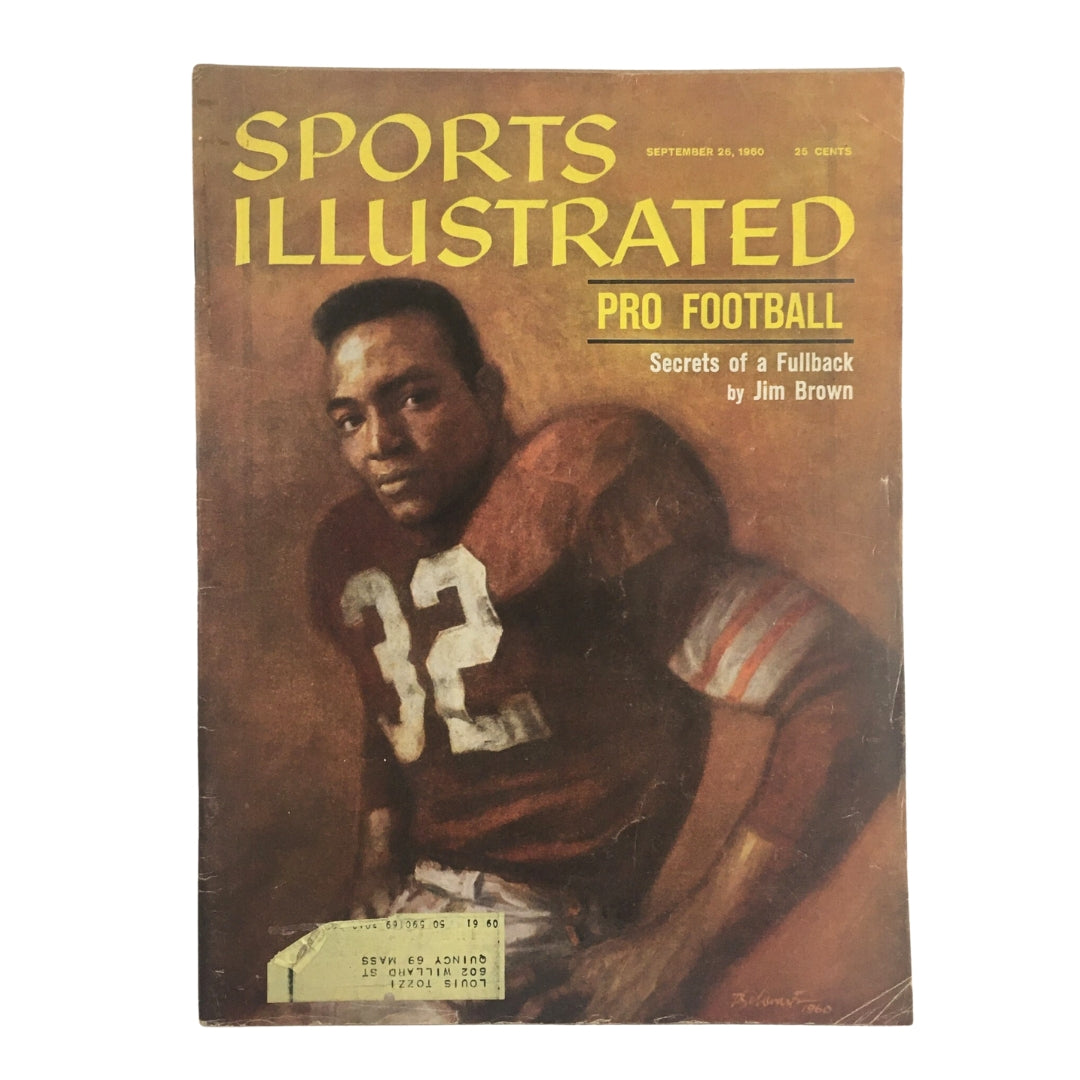
Vintage publications approached Jim Brown with a mixture of awe, reverence, and, at times, the complicated lens of the era's racial politics — making these documents as historically rich as they are visually compelling. Sports Illustrated, which helped canonize Brown as the definitive athlete of his generation, frequently ran full-page action photography that captured the sheer physical authority of the man mid-stride, shoulder pads gleaming under stadium lights, defenders simply falling away. Ebony magazine — the essential chronicle of Black American life and achievement — gave him a platform that transcended sports entirely, profiling him as a cultural force, an emblem of unapologetic Black excellence at a time when such images were radical acts of publishing. Life magazine, with its sweeping photojournalistic tradition, captured him in broader cultural moments: on film sets, in meeting rooms alongside civil rights leaders, in candid portraits that revealed the gravity behind the athlete's exterior. The editorial tone across these publications shifted with the times — celebratory in the championship years, probing during his activism, reflective as his Hollywood career unfolded — creating a layered, decade-spanning portrait that no single biography could replicate.
Curator's Checklist: Highlights Often Include
- Championship-era sports coverage (1957–1965): Issues documenting his record-breaking NFL seasons with the Cleveland Browns, including game photography, statistical milestones, and All-Pro recognition features from the golden age of professional football print journalism
- The Cleveland Summit & Civil Rights activism (1967): Coverage of his landmark meeting with Muhammad Ali, Bill Russell, Kareem Abdul-Jabbar, and other Black athletes in support of Ali's draft resistance — one of the most photographed moments of athlete activism in the 20th century
- Hollywood crossover features (late 1960s–1970s): Entertainment and general interest magazines covering his transition to film, including his roles in The Dirty Dozen and 100 Rifles, often featuring studio portraiture and on-set photography
- Retrospective "greatest ever" tributes: Sports publications from the late 1960s onward frequently revisited his career legacy even after retirement, as writers grappled with the fact that he walked away from the game entirely at its summit
- Community activism and cultural commentary: Features in publications such as Jet and Ebony covering his Amer-I-Can program and his ongoing role as a voice for social change well into the 1980s and beyond
The Collector's Value
There is something irreplaceable about holding a magazine that was printed while Jim Brown was still actively shaping history — when the outcome was unknown, when the ink dried on words written by journalists who did not yet know how the story would end. The paper stock of a 1960s Sports Illustrated carries a particular weight, its pages slightly brittle at the edges, the halftone photography granular and raw in a way that digital reproduction simply cannot mimic. The vintage advertisements surrounding his image — for American automobiles, cigarette brands, and mid-century consumer goods — place him unmistakably inside a specific, unrepeatable moment in time, offering a full-spectrum window into the cultural world he inhabited. These are primary source documents: artifacts of journalism, design, and history pressed together beneath a single cover. For collectors of vintage sports memorabilia, Civil Rights-era African American history, or mid-century Hollywood and entertainment culture, these publications offer an intimate, tactile connection to one of the most consequential figures of the 20th century that no poster, trading card, or digital archive can equal. Explore our current rotating inventory below, and discover which pieces of this extraordinary legacy are available today.