📖 About this Collection
Warren Buffett: The Oracle Speaks in Print
The Legend & The Legacy
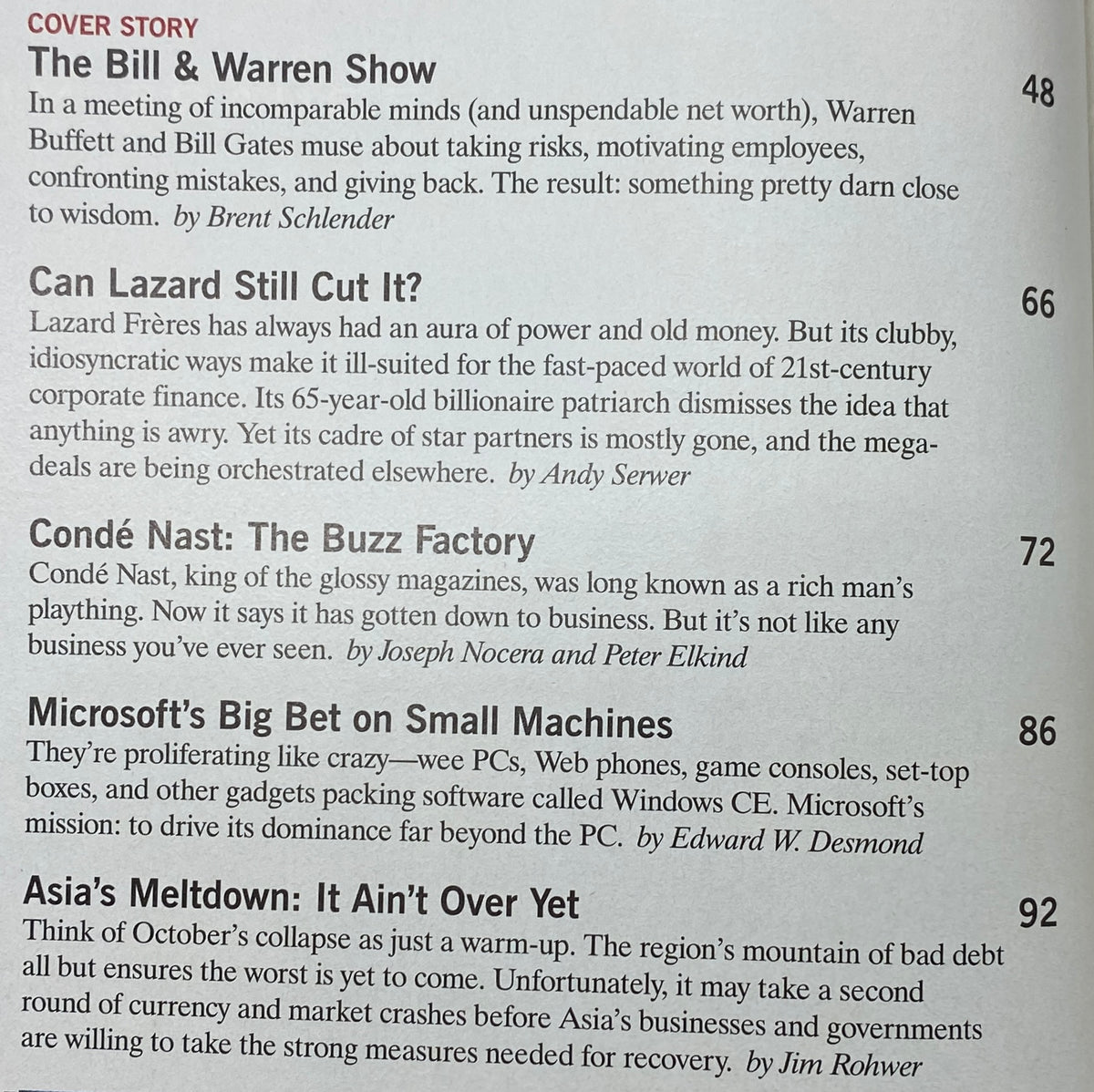
Long before algorithmic trading, financial Twitter, or real-time market feeds, America learned about money from the printed page — and no figure commanded that page quite like Warren Buffett. Rising from the son of an Omaha congressman to the most celebrated investor in modern history, the Oracle of Omaha became a phenomenon that transcended Wall Street entirely. In an era when the average household understood the stock market primarily through their morning newspaper and their monthly business magazine, his annual letters to Berkshire Hathaway shareholders were treated as scripture, and the rare profile piece in a major publication was a genuine cultural event. His plain-spoken Nebraska wisdom — deployed against a backdrop of gilded excess, leveraged buyout mania, and dot-com hysteria — made him the most compelling financial protagonist of the late 20th century. The public didn't stream his interviews or follow his feed; they waited for the next issue, turned to the dog-eared page, and read every word.
Inside the Archive
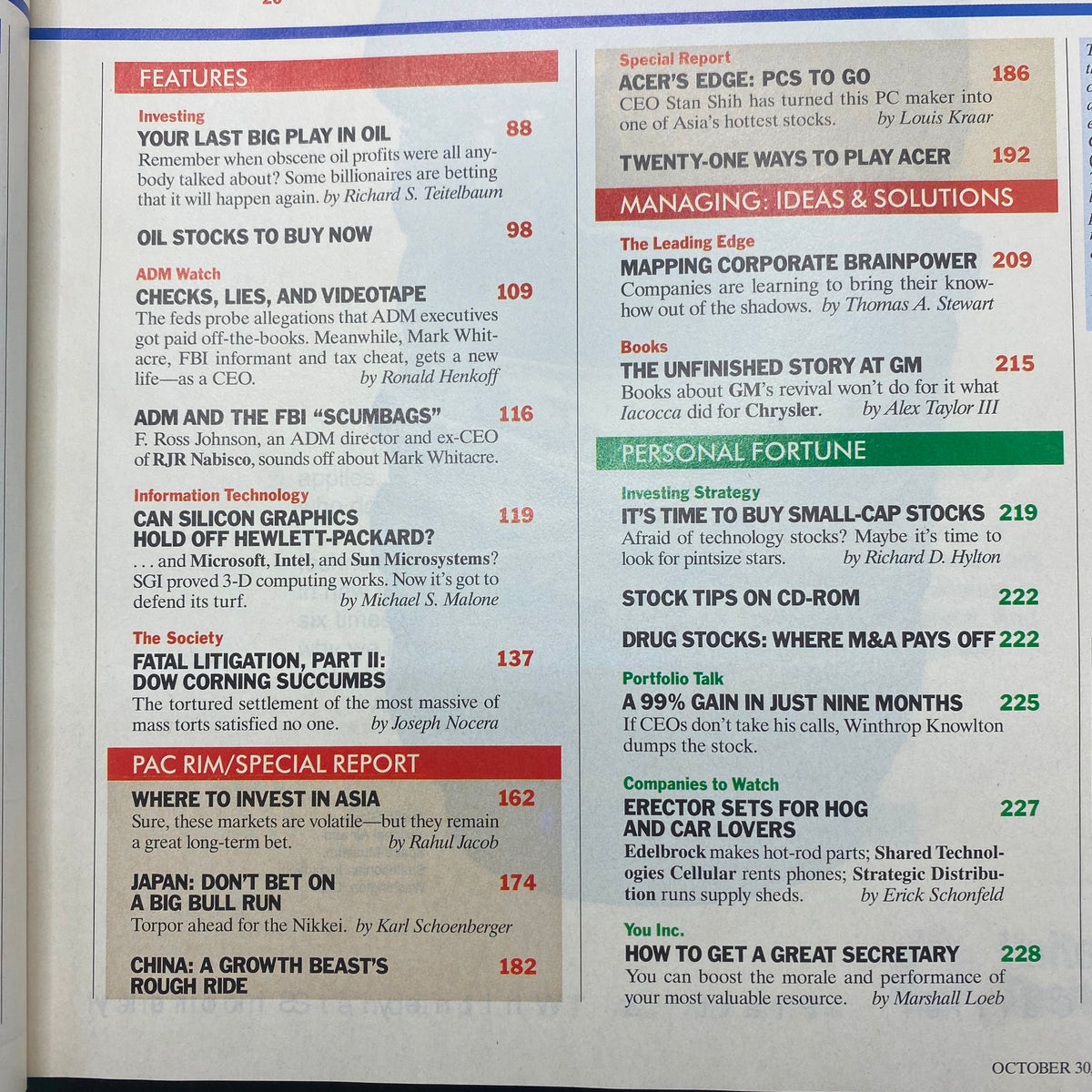
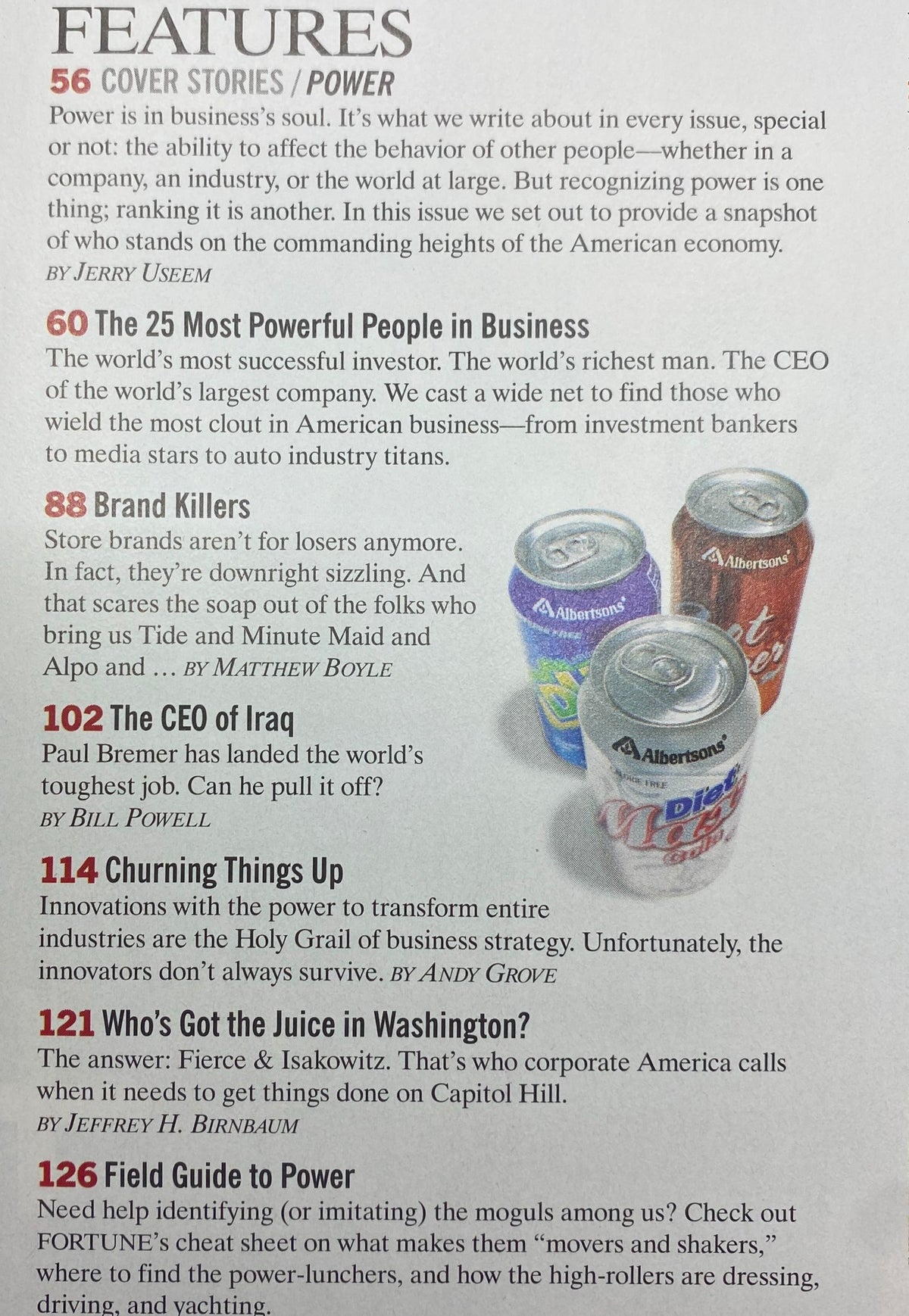
Vintage business and general interest publications treated the Sage of Omaha with a reverence more commonly reserved for statesmen and generals. Fortune magazine, perhaps more than any other single outlet, built an enduring editorial relationship with him — its long-form profiles capturing both the statistical rigor of his method and the disarming folksiness of his character, often accompanied by photography that deliberately avoided Wall Street glamour in favor of Midwestern authenticity: a modest office, a can of Coca-Cola, a reassuring smile that seemed to say the world made sense if you were patient enough. Forbes tracked his ascent through the annual billionaire rankings with almost mythological anticipation, each edition marking another chapter in one of capitalism's great sagas. Time broadened the lens further still, contextualizing his philosophy within the sweeping economic anxieties of the Reagan era, the savings-and-loan crisis, and the roaring bull markets of the 1990s — framing him not merely as a rich man, but as a moral compass for an age that sorely needed one.
Curator's Checklist: Highlights Often Include
- Milestone profile features from the 1980s and 1990s documenting his early ascent at Berkshire Hathaway, often coinciding with landmark acquisitions such as GEICO, See's Candies, and Coca-Cola stock positions
- Forbes "400 Richest Americans" editions from pivotal years in which he climbed, claimed, or contested the top position — issues that doubled as time capsules of an era's entire economic mood
- Crisis-era coverage from publications reporting on his contrarian calm during the 1987 Black Monday crash, the early-1990s recession, and the dot-com collapse — moments when his voice carried extraordinary cultural weight
- Personality-driven features from general interest and lifestyle publications exploring the paradox of his billionaire asceticism — the McDonald's breakfasts, the decades-old house, the bridge games — which fascinated editors and readers alike
- International business press coverage, particularly from UK and European financial publications that documented his influence on global investment culture and his growing stature as an American economic institution
The Collector's Value
There is something irreplaceable about holding a decades-old issue of Fortune or Forbes in your hands — the slightly yellowed weight of the paper stock, the faintly metallic perfume of aged ink, the full-page advertisements for companies and products that are themselves now history. A vintage magazine profile of the world's most famous investor arrives not as a curated digital excerpt, but as a complete artifact: surrounded by the era's automobile advertisements, airline promotions, and fashion spreads, each issue is a full-immersion portal to the precise cultural moment in which his legend was still being written in real time. These are primary sources, not retrospectives — documents produced by journalists who did not yet know how the story would end, writing for readers who were living it alongside them. For collectors of American financial history, mid-to-late 20th-century business culture, or the biographies of self-made icons, these publications offer something no reprint or digital archive can replicate: the authentic weight of the moment itself, held in your hands. Explore the current available inventory below and discover which piece of history is waiting for you today.