
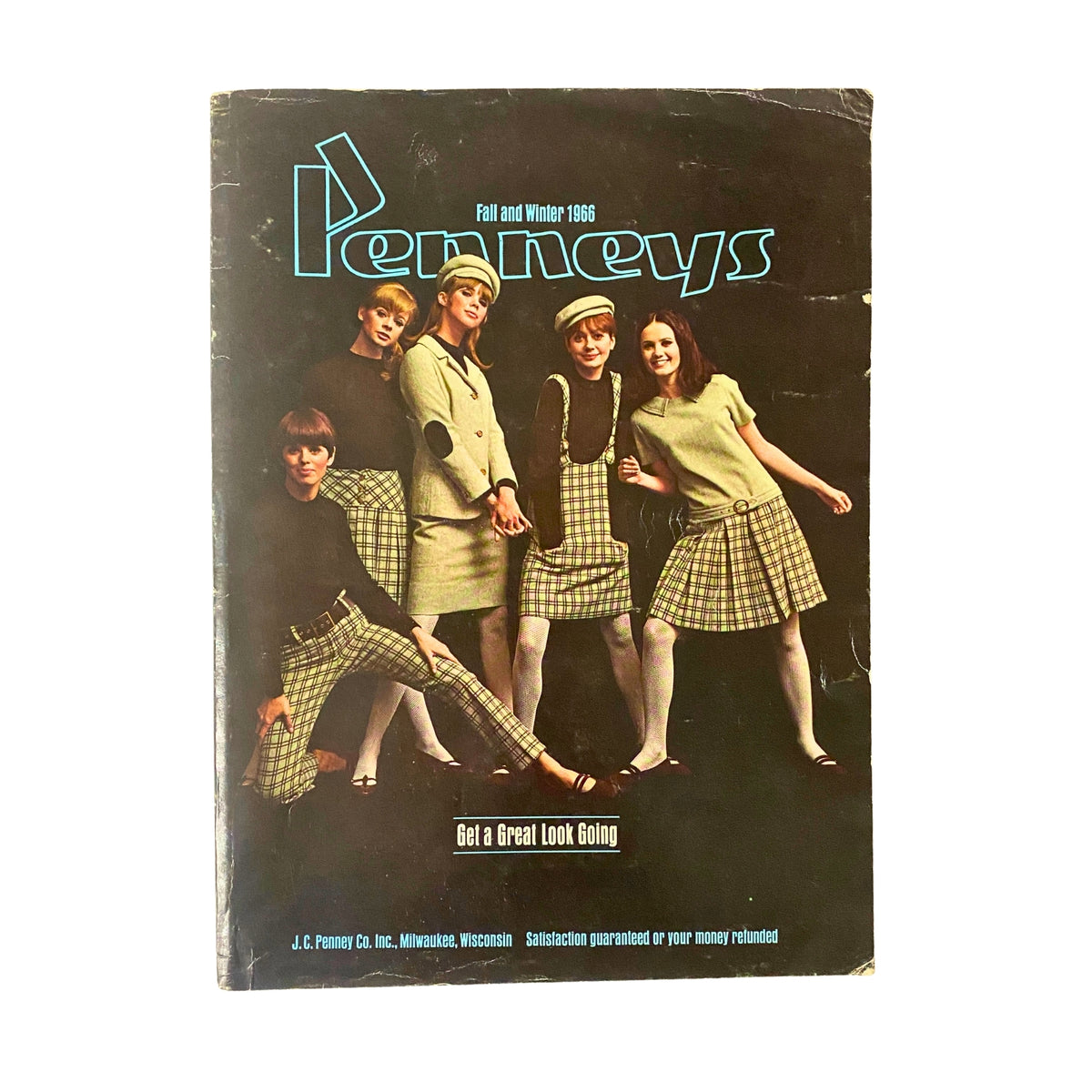
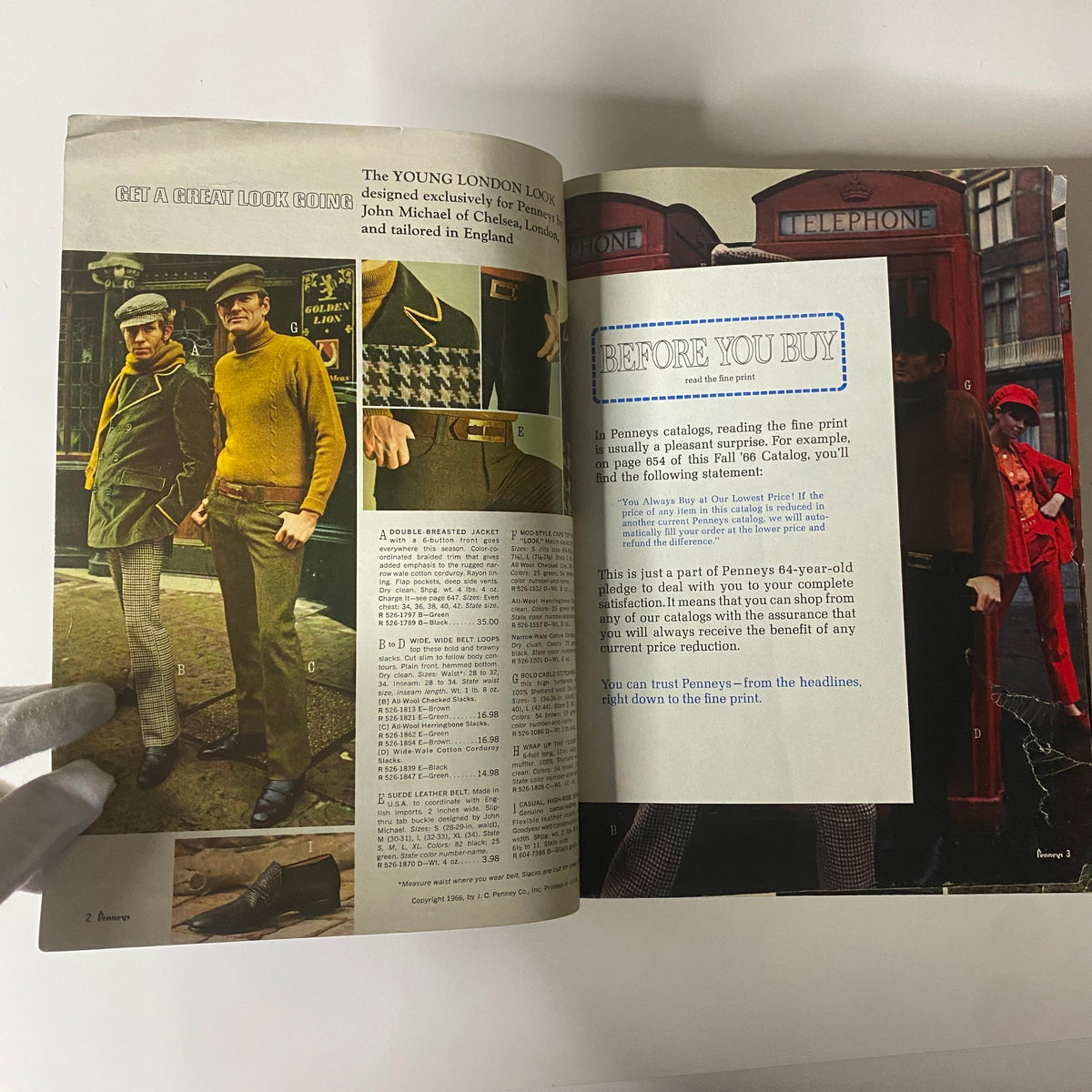
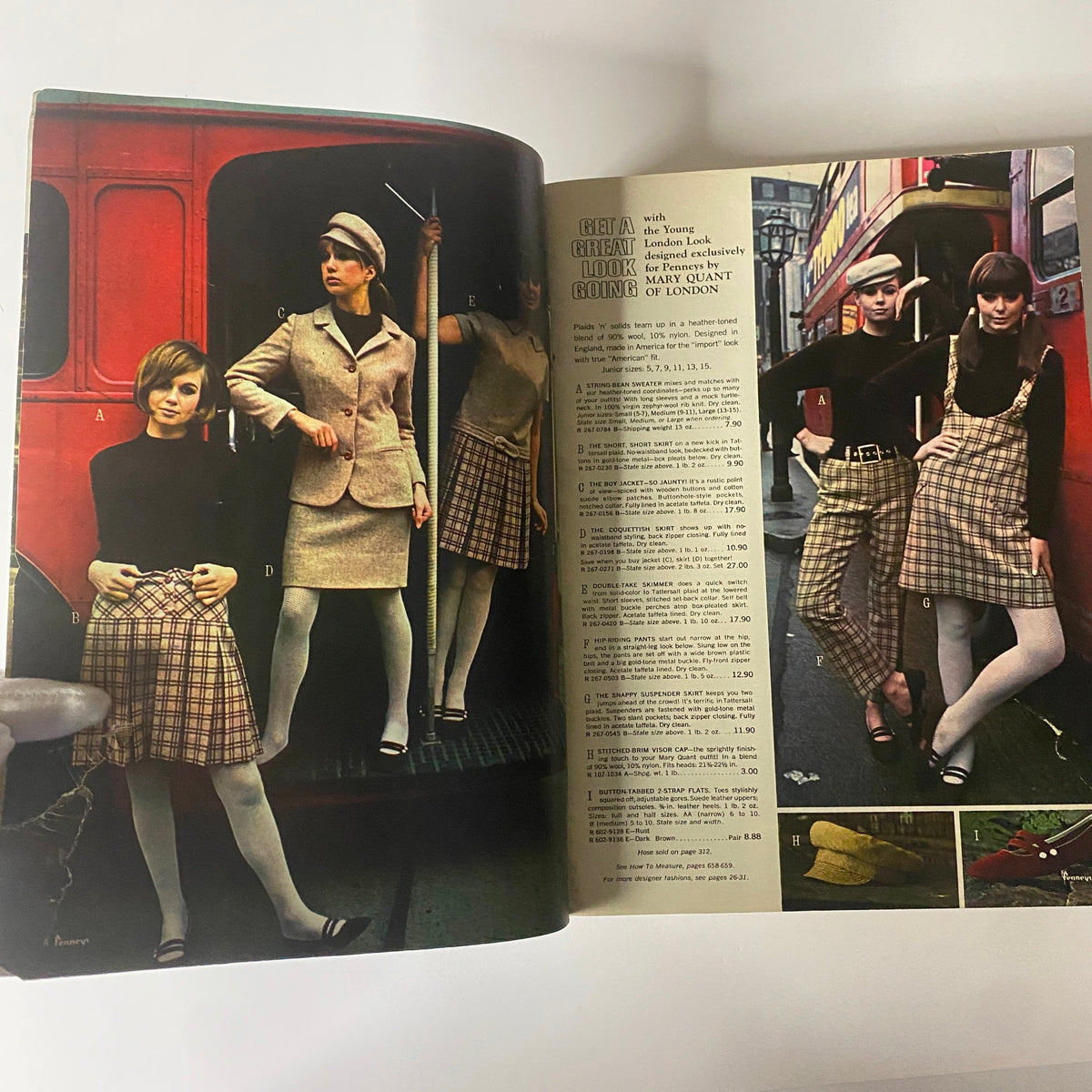
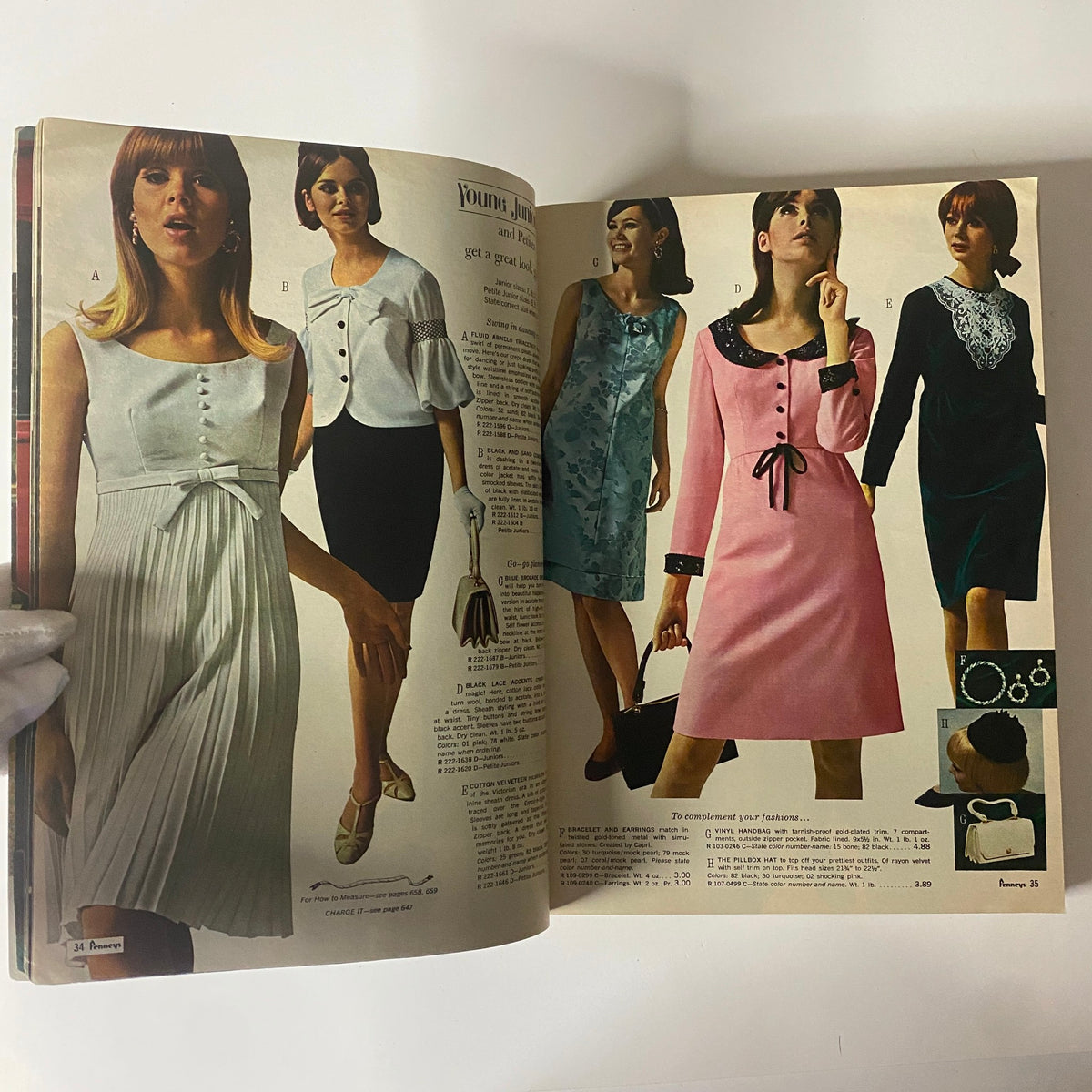
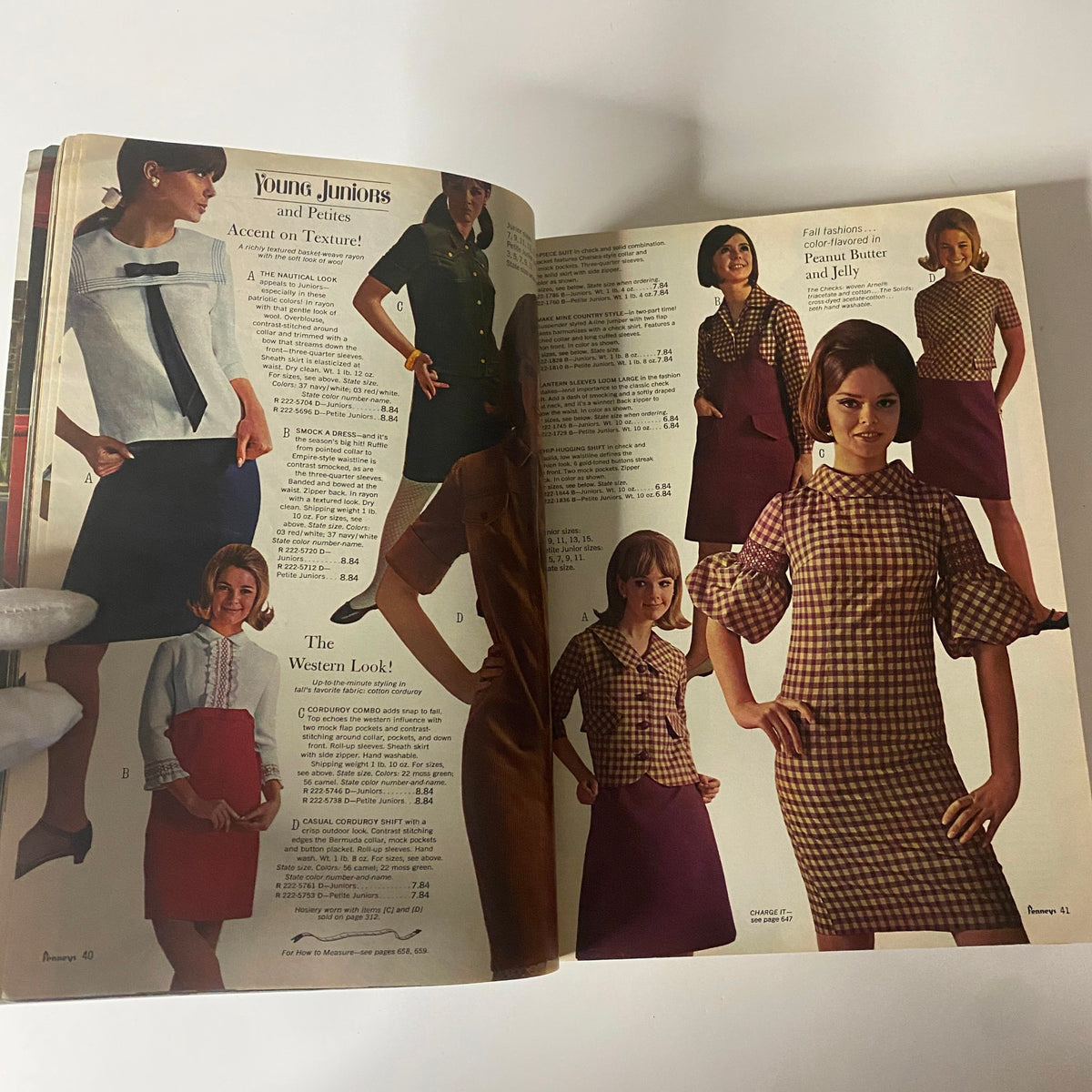
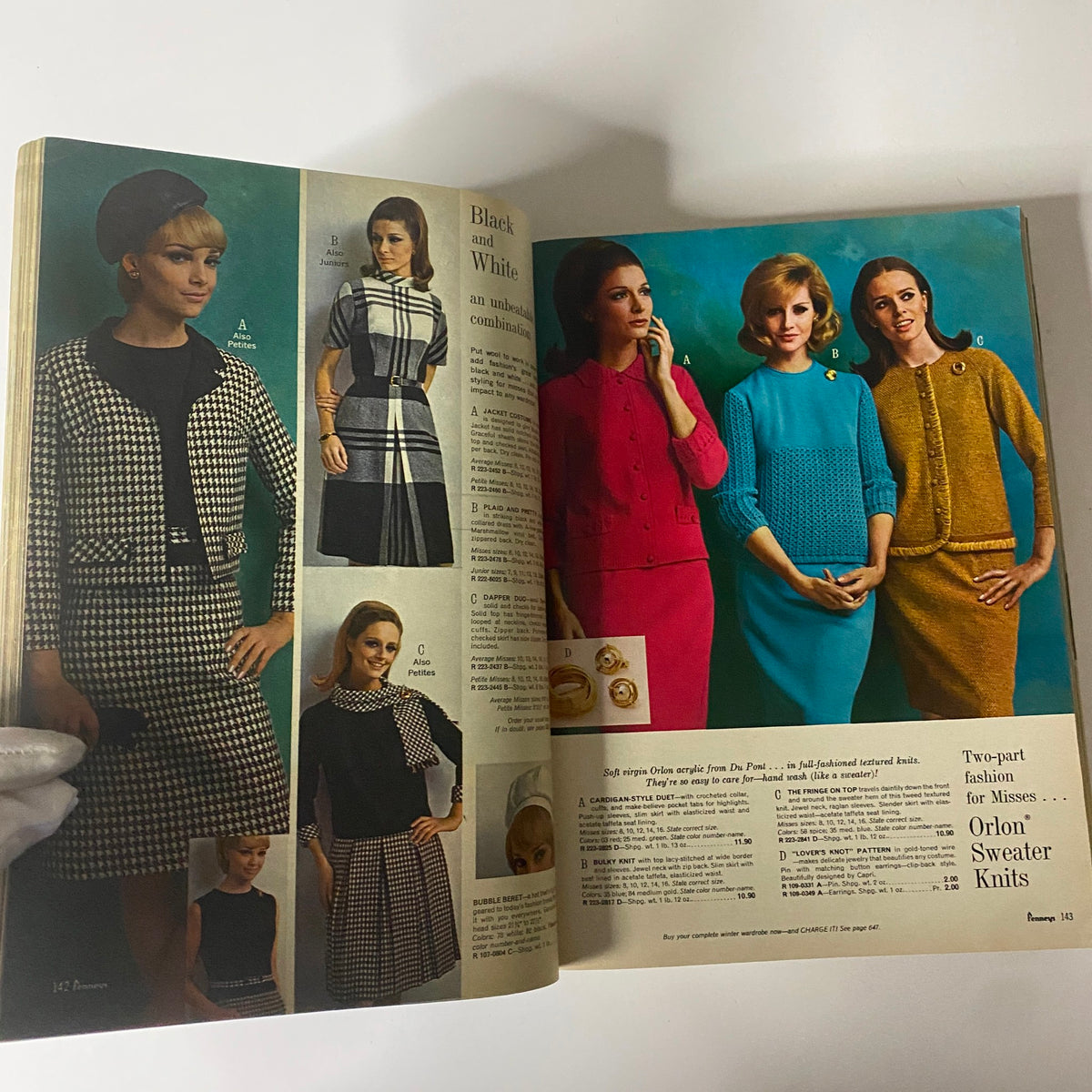
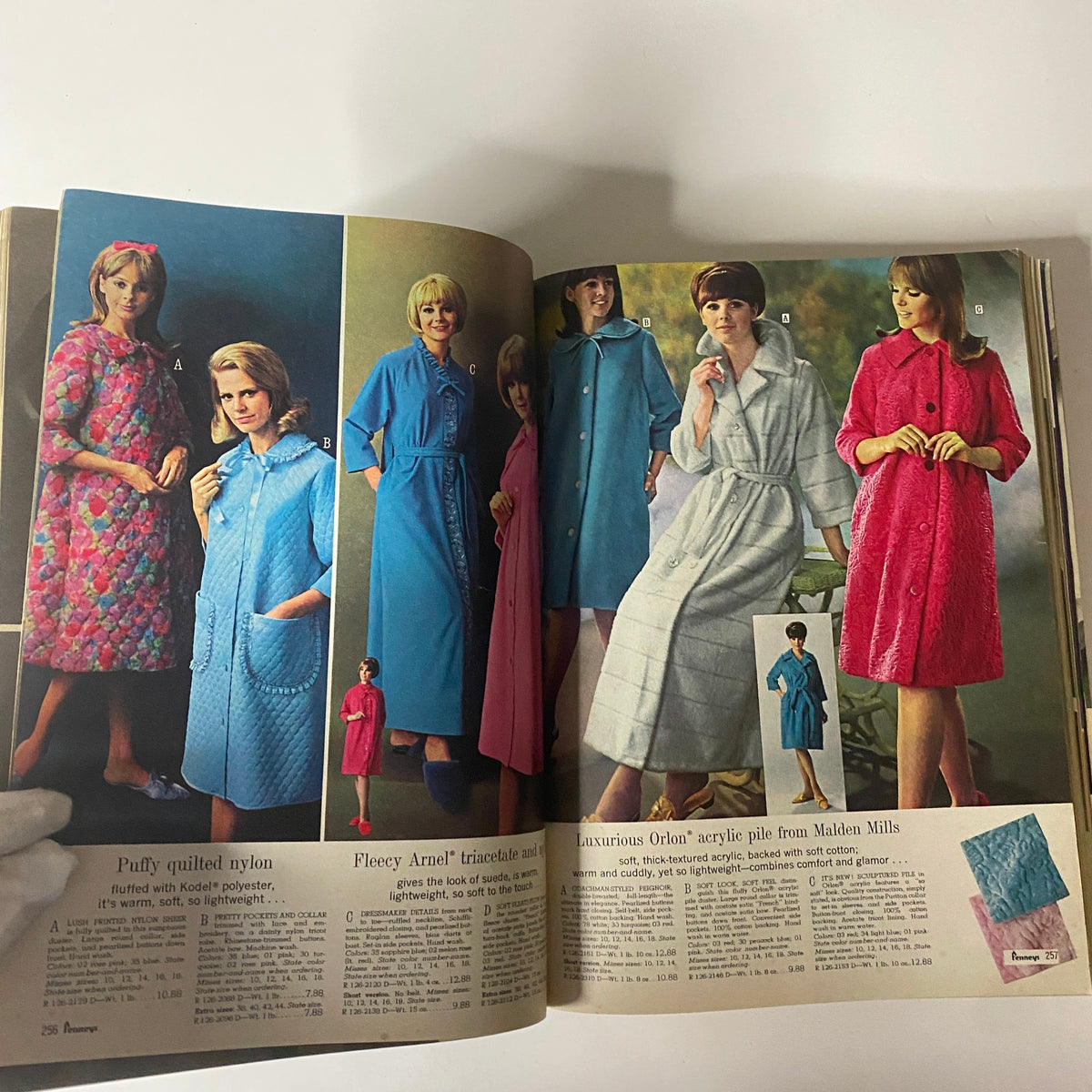
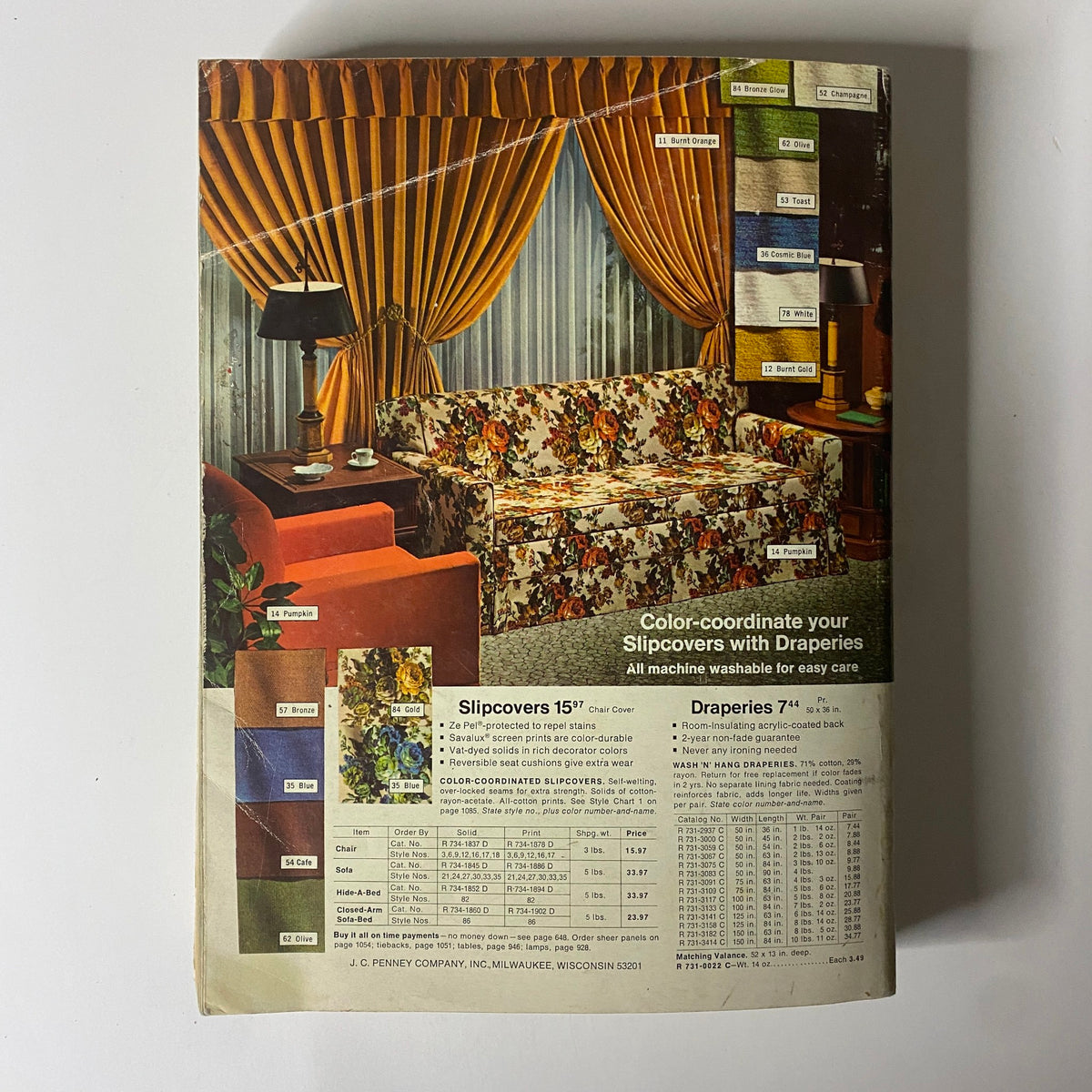


Description
Collector's Note – Why This Issue Matters
The 1966 J.C. Penney Fall and Winter Catalog arrives at a fascinating inflection point in American retail and fashion history. By the mid-1960s, the postwar suburban expansion that had built J.C. Penney into a national institution was in full swing, but the cultural ground beneath American consumer life was shifting rapidly. The youth culture revolution was filtering down from high fashion and counterculture into mainstream ready-to-wear, and a Fall and Winter catalog published in 1966 captures that transition in real time — the moment when mod silhouettes, bold color, and youth-oriented design began appearing alongside the practical, conservative staples that had defined mid-century American family clothing for decades. A 1966 Penney's catalog is not a fashion magazine in the editorial sense, but it is arguably a more reliable record of what most American families actually wore and bought that season than any glossy publication of the period. Collectors researching mid-century American retail and domestic culture will find the J.C. Penney catalog archive an essential reference for tracing how mainstream consumer taste evolved across the postwar decades.
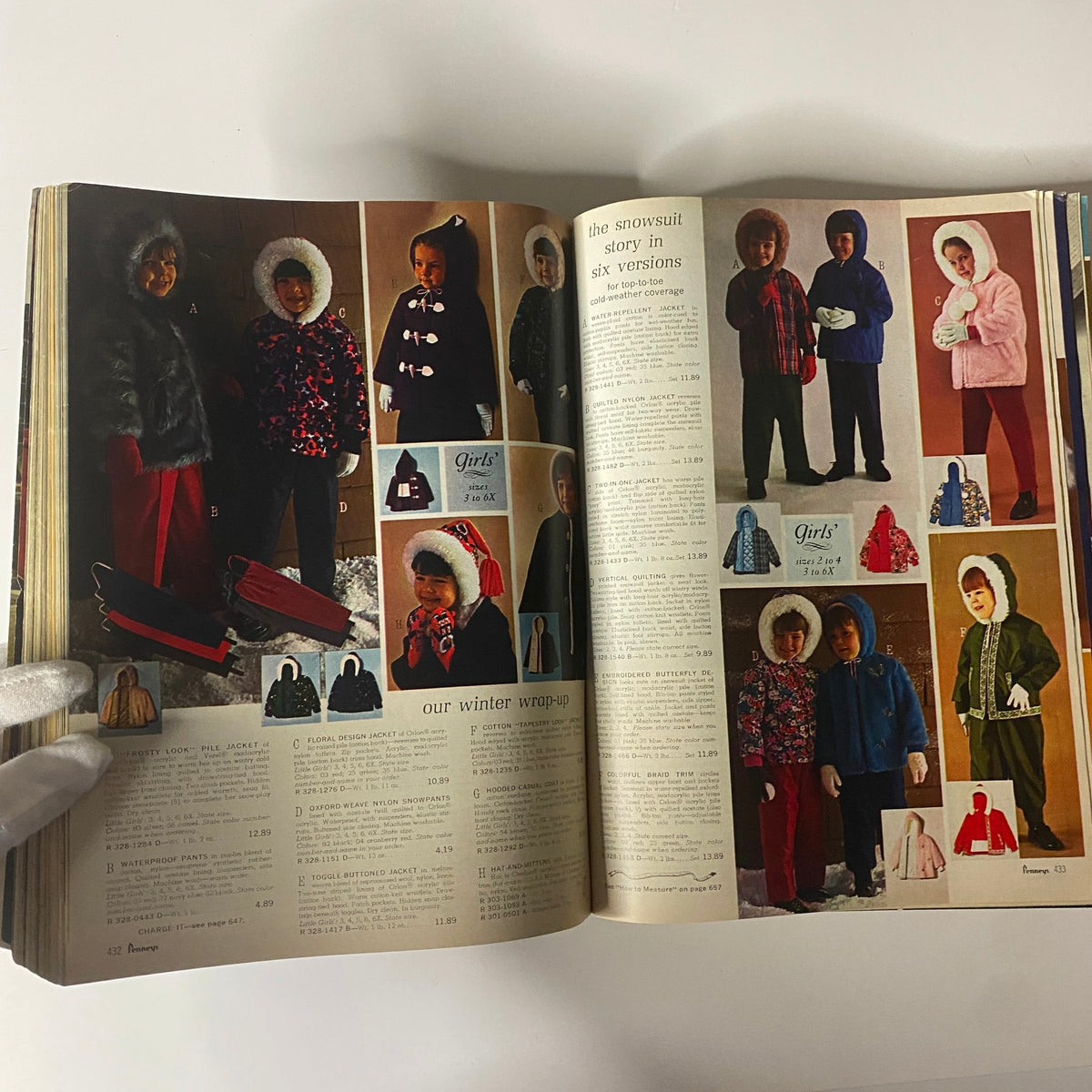
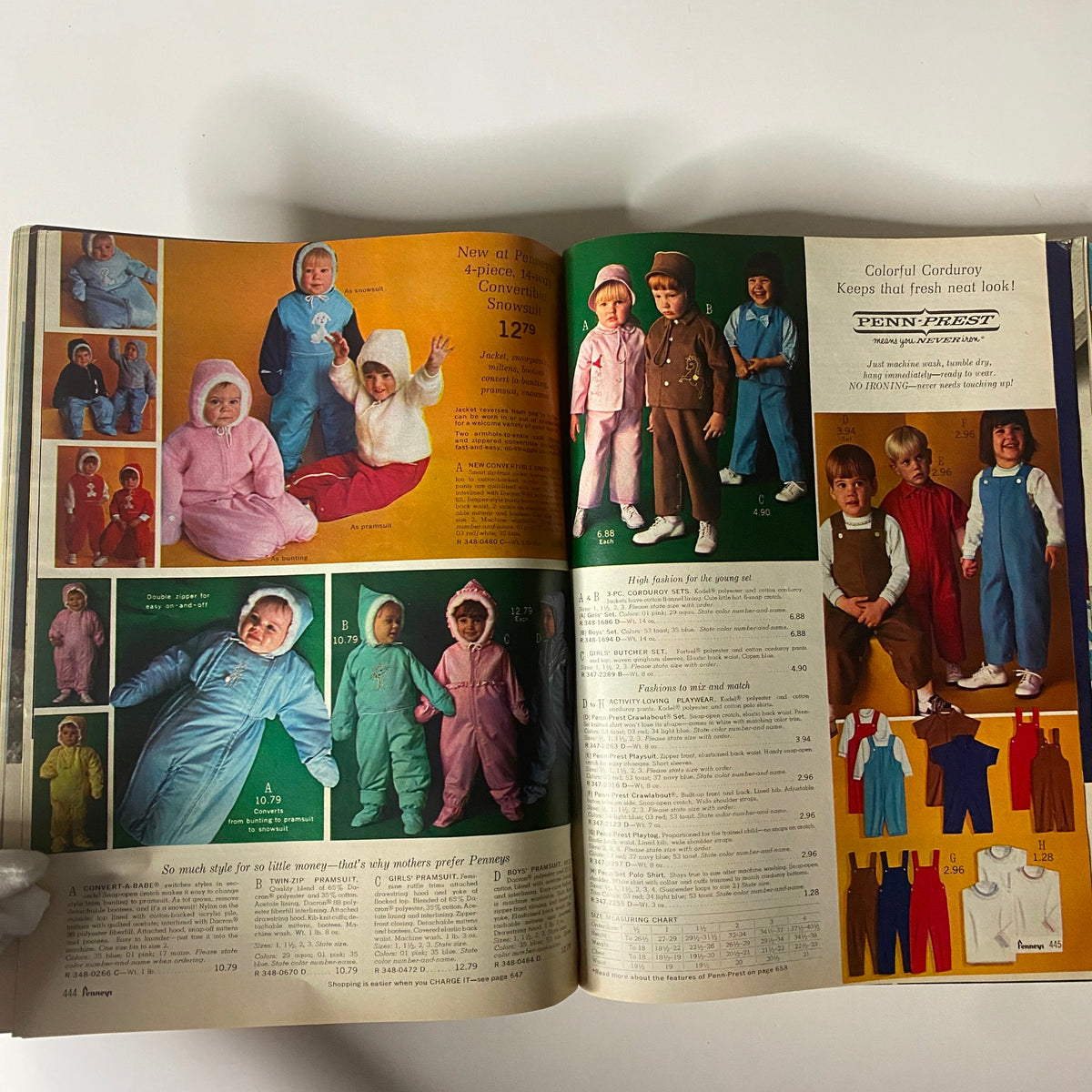
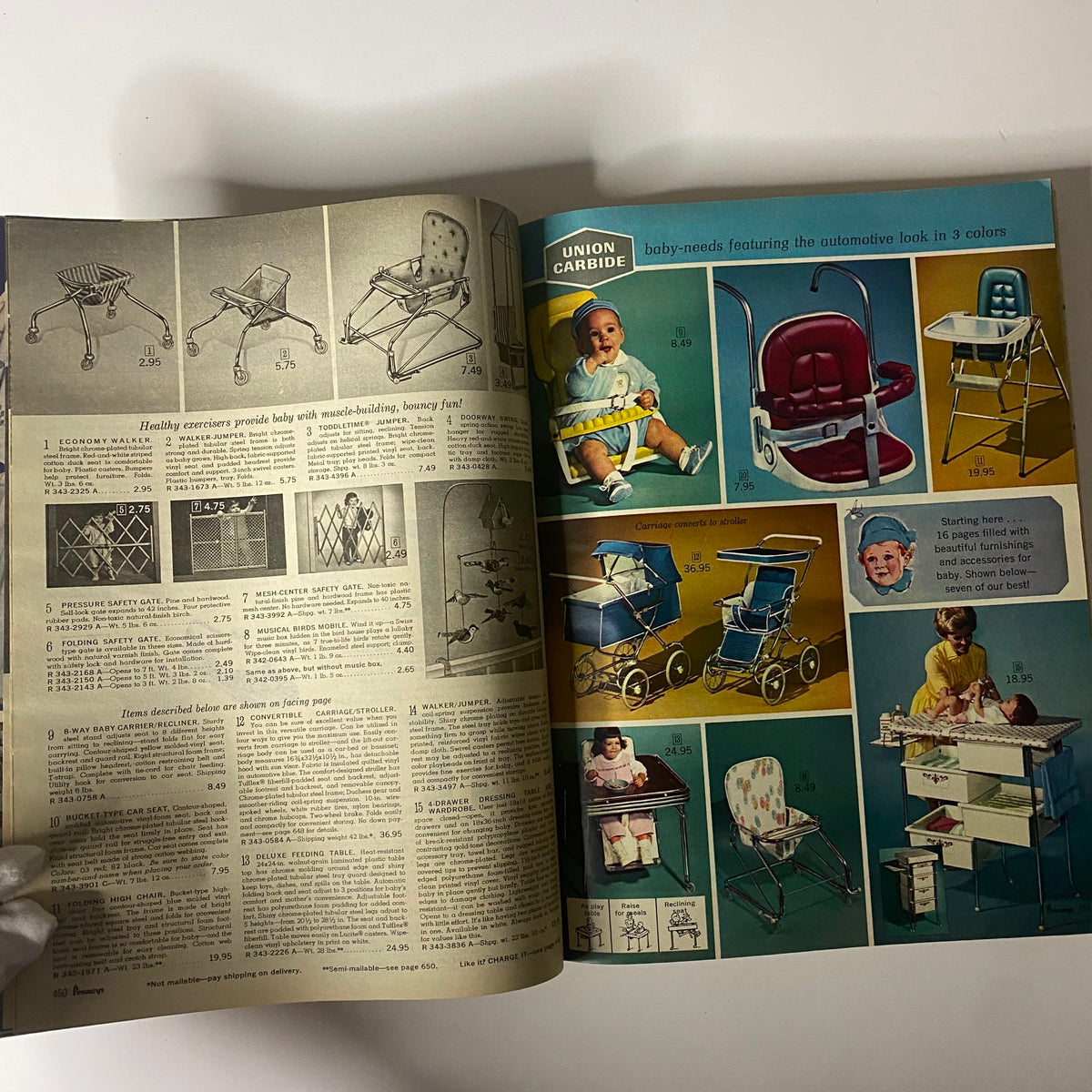
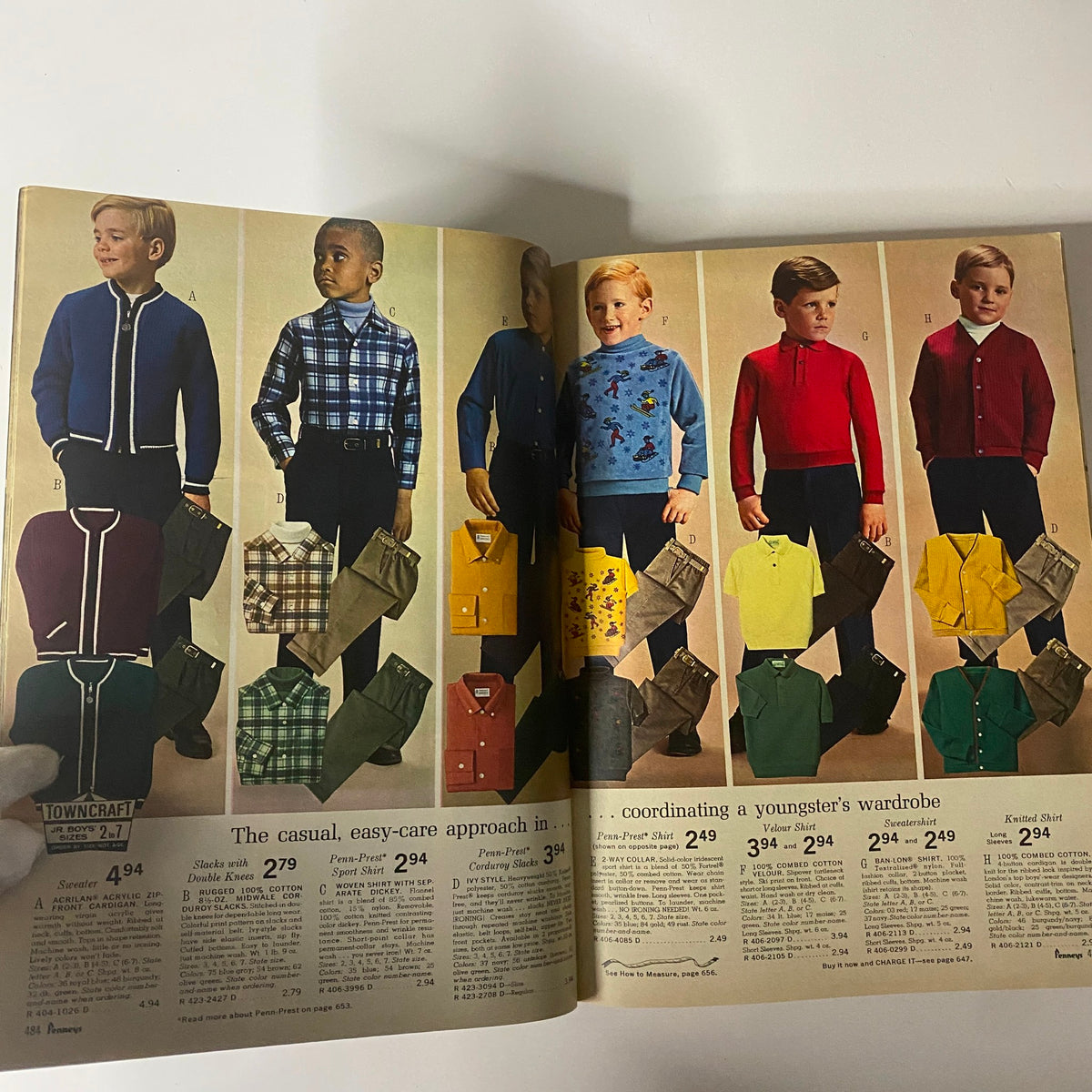
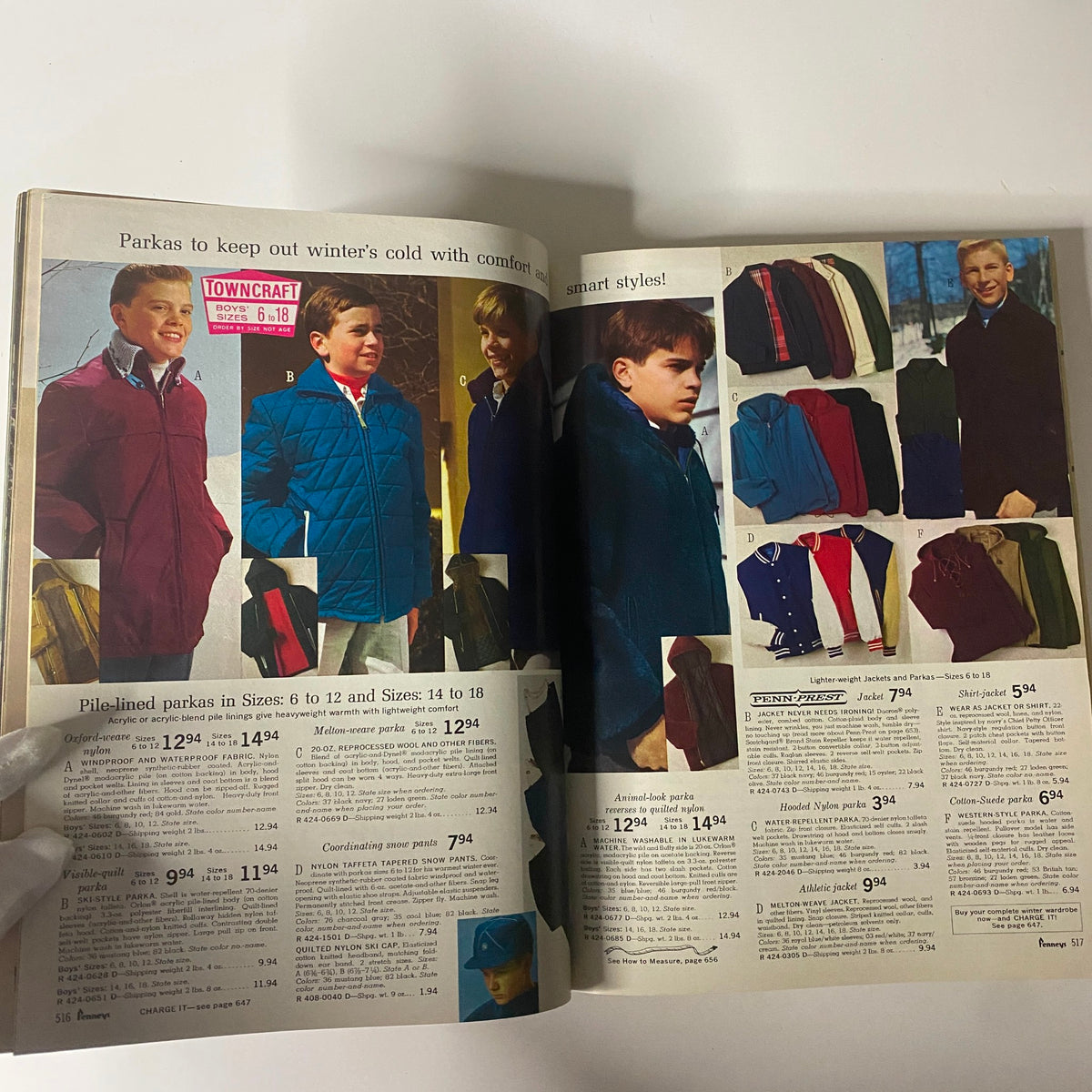
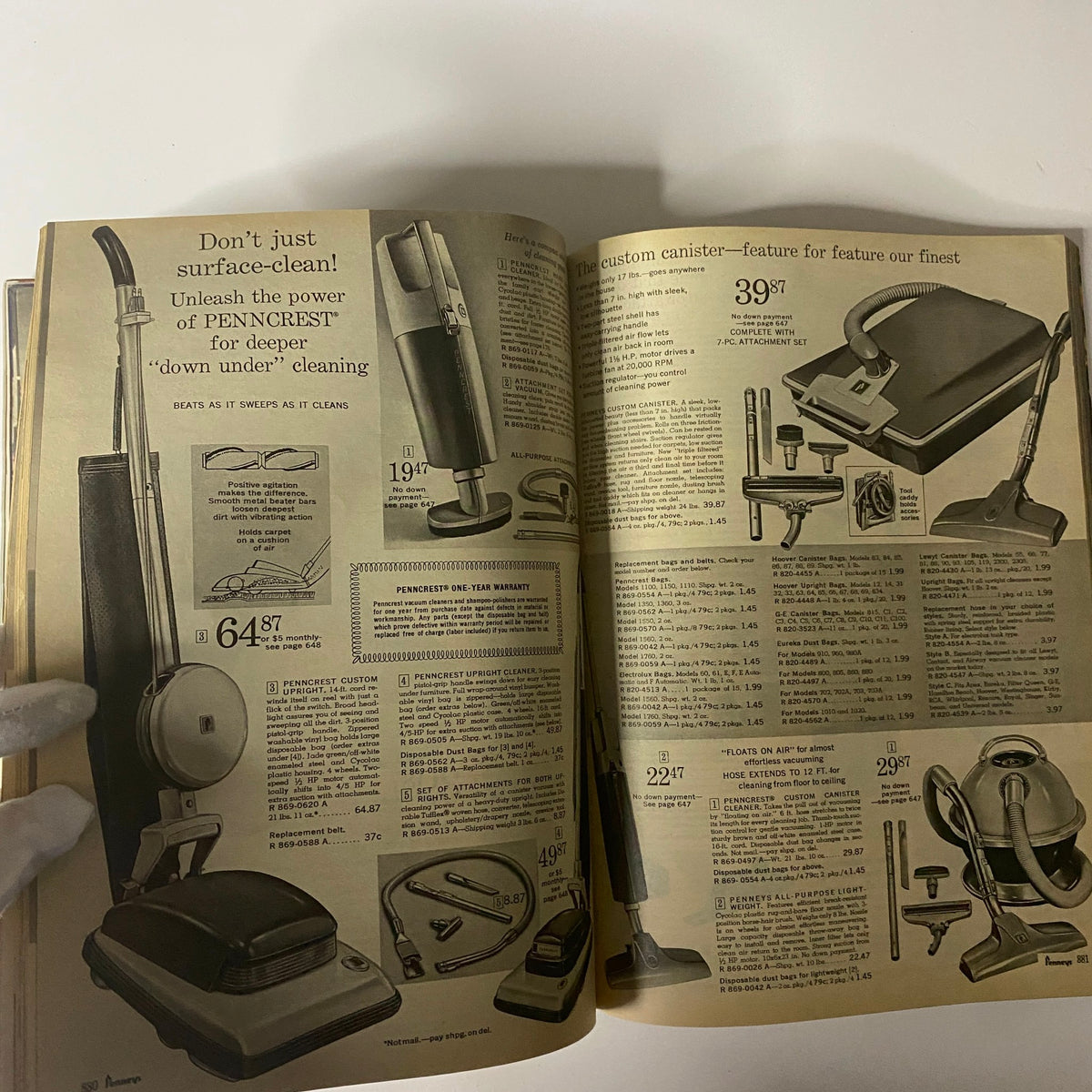
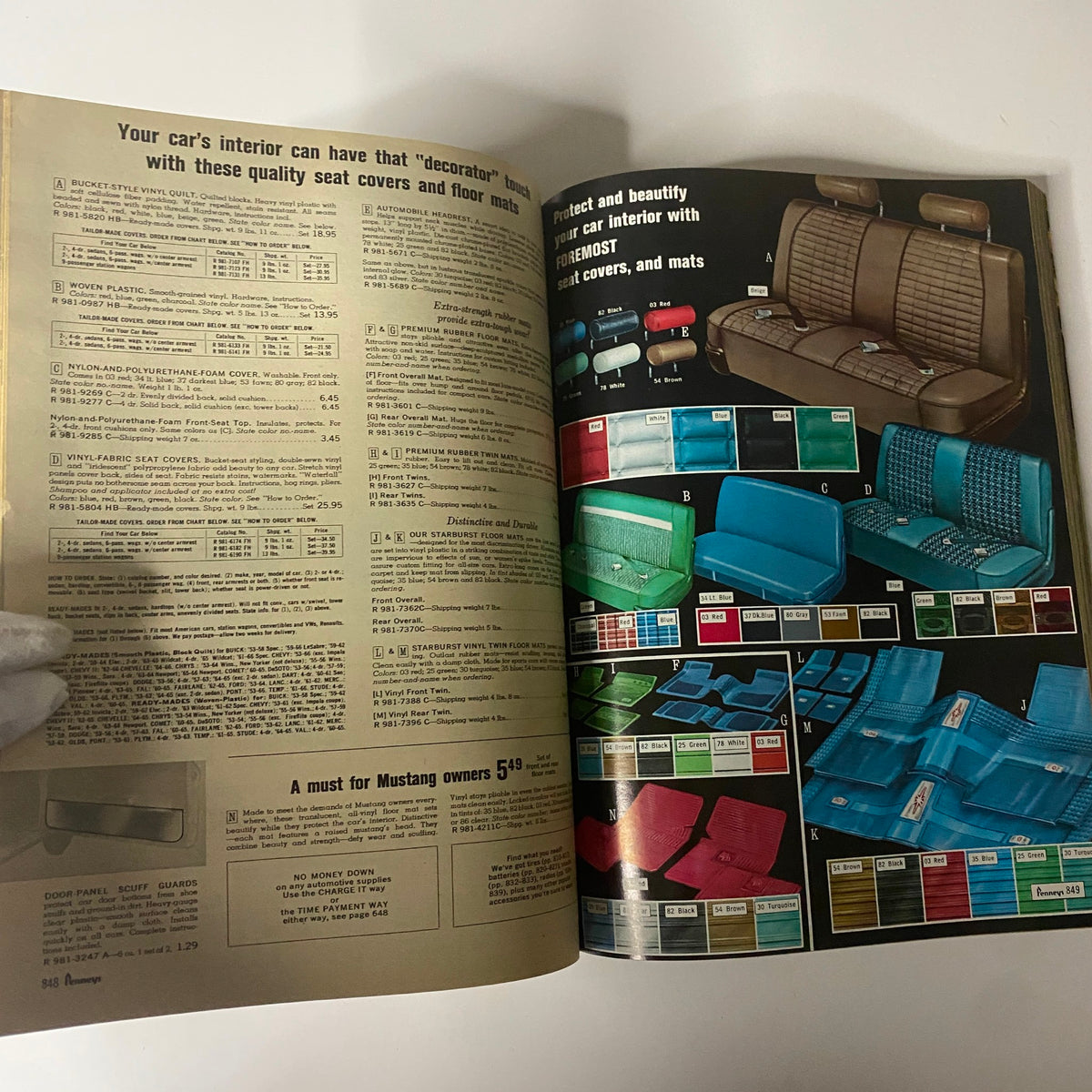
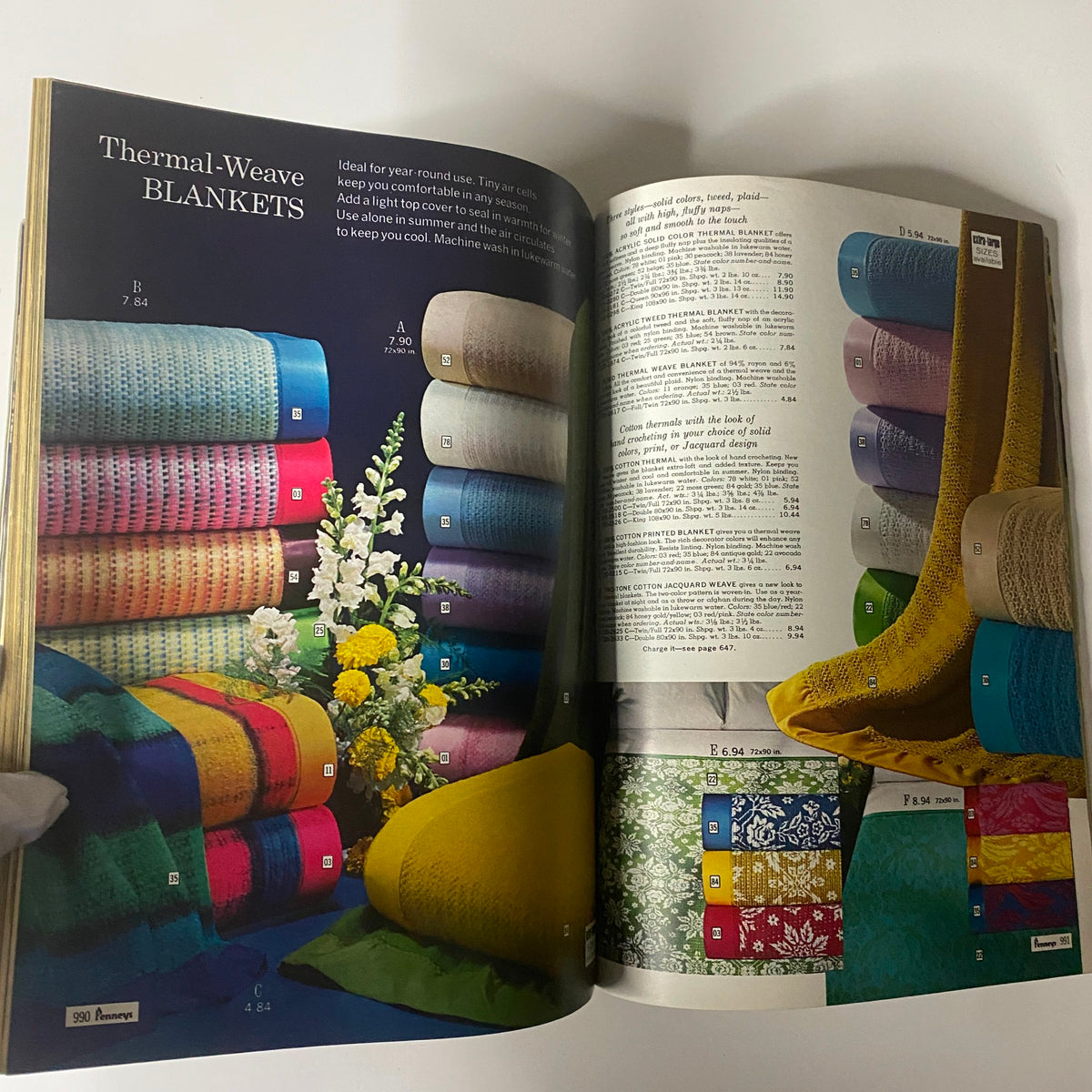
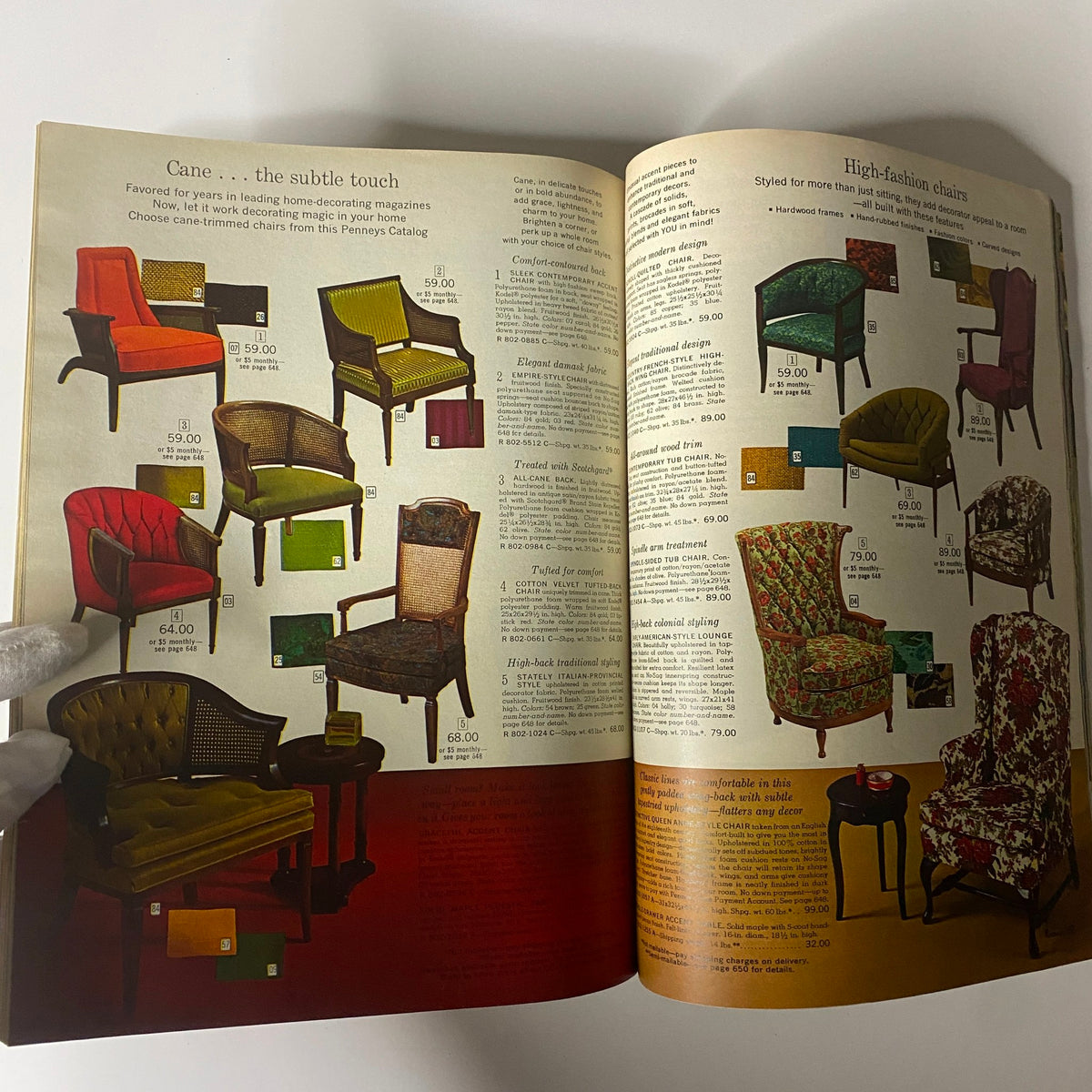
The breadth of a Fall and Winter catalog from this era reflects the full scope of J.C. Penney's retail ambitions in 1966. Fall and winter apparel for men, women, and children documented the seasonal wardrobe expectations of American families at a moment when ready-to-wear manufacturing had achieved a sophistication and affordability that made stylish clothing genuinely accessible across income levels. Home furnishings and holiday décor pages capture the domestic aesthetic of mid-1960s American interiors — a world of harvest gold, avocado green, and the clean-lined furniture forms that characterized the era's mainstream design sensibility. Cold-weather essentials and outerwear sections document practical American dressing in the years before the down jacket and synthetic insulation technologies of the 1970s transformed the category. For collectors assembling a documentary record of 1960s American life beyond the counterculture headlines, the full range of 1966 publications provides essential context for understanding the year this catalog represented.
J.C. Penney's catalog operation in the 1960s occupied a distinct position in the American retail landscape — different from Sears in its stronger emphasis on apparel and soft goods, and different from Montgomery Ward in its particular appeal to the growing suburban middle class. The 1966 Fall and Winter edition's colorful photography is itself a period artifact: the shift from illustrated to predominantly photographic catalog presentation had accelerated through the early 1960s, and by 1966 the full-color product photograph had become the standard visual language of American mail-order retail, giving these pages a visual immediacy that earlier illustrated catalogs do not possess.
About the Publication
J.C. Penney Company issued seasonal general merchandise catalogs as part of its broader retail operation, competing in the mail-order and store-catalog space alongside Sears and Montgomery Ward. By the 1960s Penney's had established itself as a strong national presence particularly in apparel and home goods, with a customer base centered on the American suburban middle class. Its Fall and Winter catalog was the primary seasonal reference for customers shopping the full range of cold-weather merchandise, distributed through stores and by mail to registered customers across the country. Like all major American retail catalogs of the era, the Penney's Fall and Winter edition functions today as a primary source document for researchers of mid-century fashion, domestic culture, and American consumer history.
Key Highlights Inside
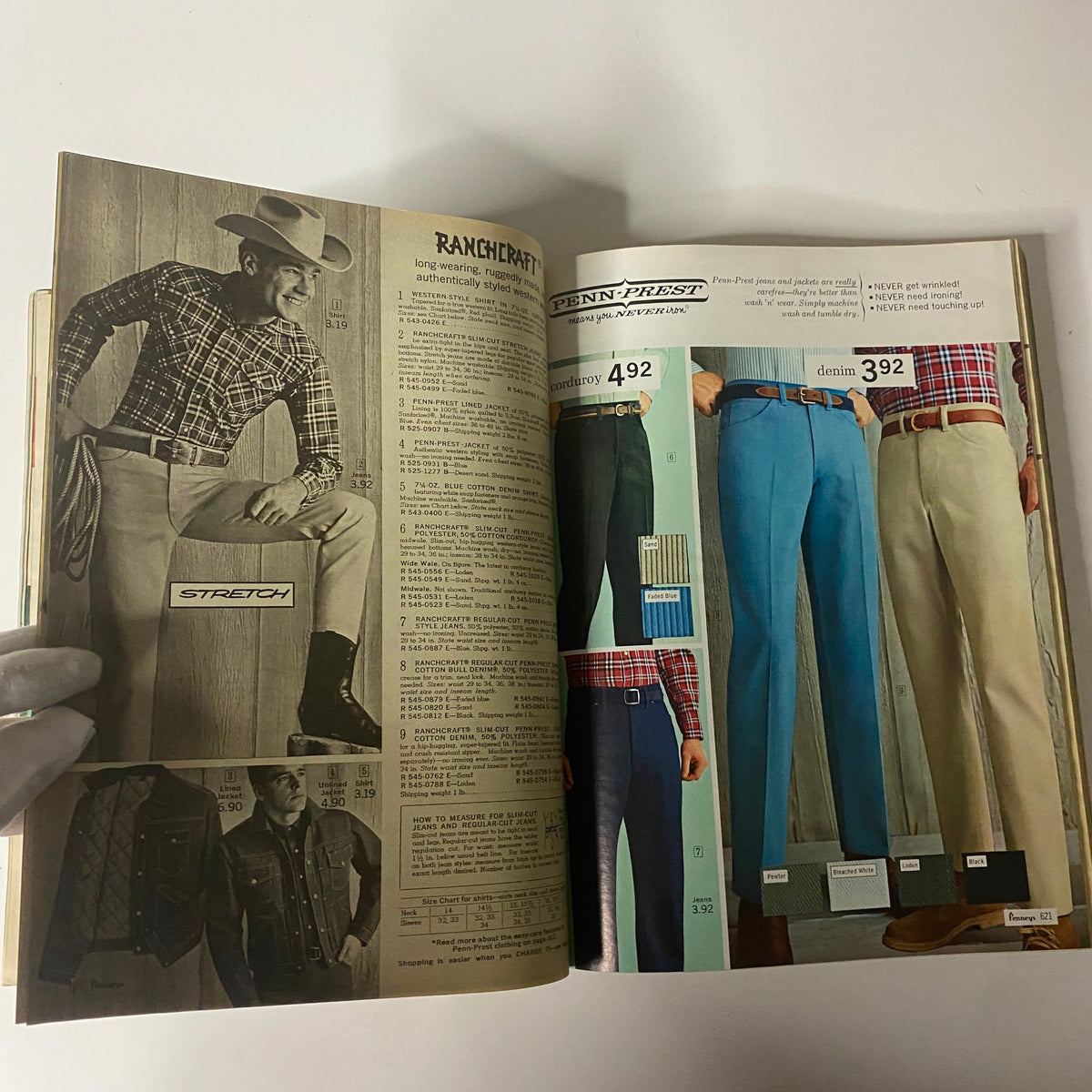
- Fall and winter apparel for men, women, and children reflecting the fashion silhouettes and color sensibilities of 1966 — a transitional moment when mid-century conservative styling was beginning to absorb the influence of the decade's youth-driven design revolution.
- Home furnishings and interior goods documenting the domestic aesthetic of mid-1960s American households, including the furniture forms and decorative styles that characterized mainstream suburban interiors of the period.
- Holiday décor and seasonal merchandise capturing the commercial Christmas culture of mid-1960s America — product categories that are among the most evocative and collectible in any Fall and Winter catalog of this era.
- Cold-weather essentials and outerwear reflecting the practical dressing standards of American families in the pre-synthetic-insulation era of the mid-1960s.
- Full-color photography throughout, consistent with the visual production standards that J.C. Penney had adopted by the mid-1960s and a defining characteristic that distinguishes this generation of catalogs from their illustrated predecessors.
- Note: Specific page numbers, additional category details, and confirmed interior content beyond what is documented in the listing have not been independently verified. The above reflects what is verifiable from the listing description and well-documented knowledge of this catalog format and era.
Condition & Rarity
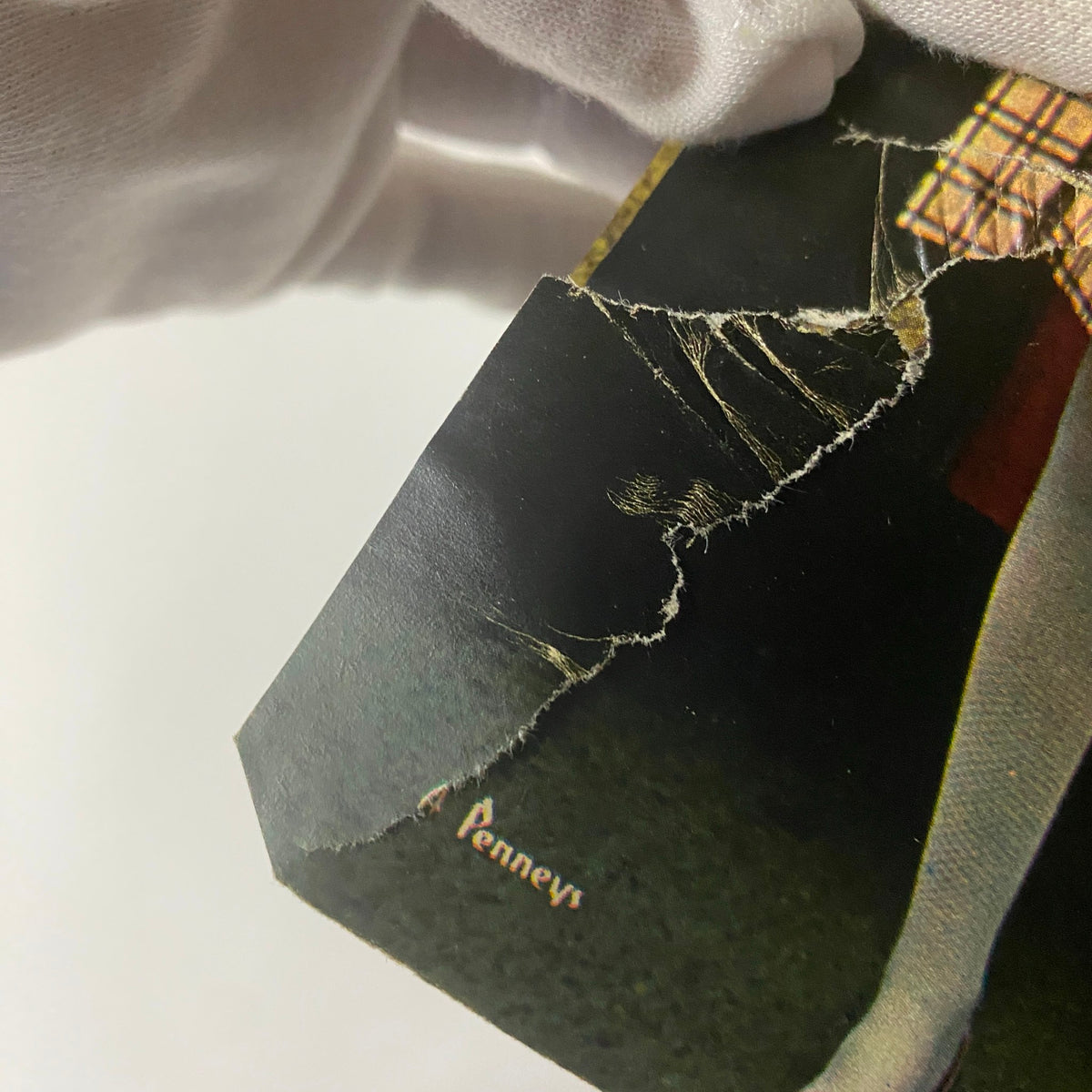
J.C. Penney Fall and Winter catalogs from the mid-1960s are less commonly encountered in the collector market than Sears editions from the same period, reflecting both a smaller original distribution and a lower rate of long-term preservation. These were working retail documents — consulted over an entire fall and winter season, used to fill out mail orders, and stored without any expectation of permanence. A surviving example from 1966 rated in good condition, with a plastic protective sleeve applied, represents a well-preserved artifact by realistic standards for a sixty-year-old retail catalog. When evaluating any surviving copy, the primary condition factors are cover brightness and the integrity of the colorful photographic printing — 1960s catalog color photography is susceptible to fading and color shift with age and light exposure — as well as binding cohesion, page completeness, and the absence of significant moisture damage or retail markings. Good condition on a catalog of this age implies structural integrity and overall readability, which are the baseline requirements for both display and research use.
Looking for More Issues Like This?
Mid-1960s J.C. Penney Fall and Winter catalogs are a genuinely selective find — they surface less frequently than Sears editions from the same era, and copies in good condition with full photographic integrity draw consistent interest from collectors of 1960s Americana, fashion historians, and mid-century design researchers. The J.C. Penney catalog collection at OriginalMagazines.com is the best place to search for other editions spanning the full run of Penney's catalog publishing history. For collectors focused on the broader cultural and consumer landscape of the mid-1960s, the 1966 magazine collection brings together a wide range of period publications that document one of the most dynamic and transitional years of the decade.