




Description
Collector's Note – Why This Issue Matters
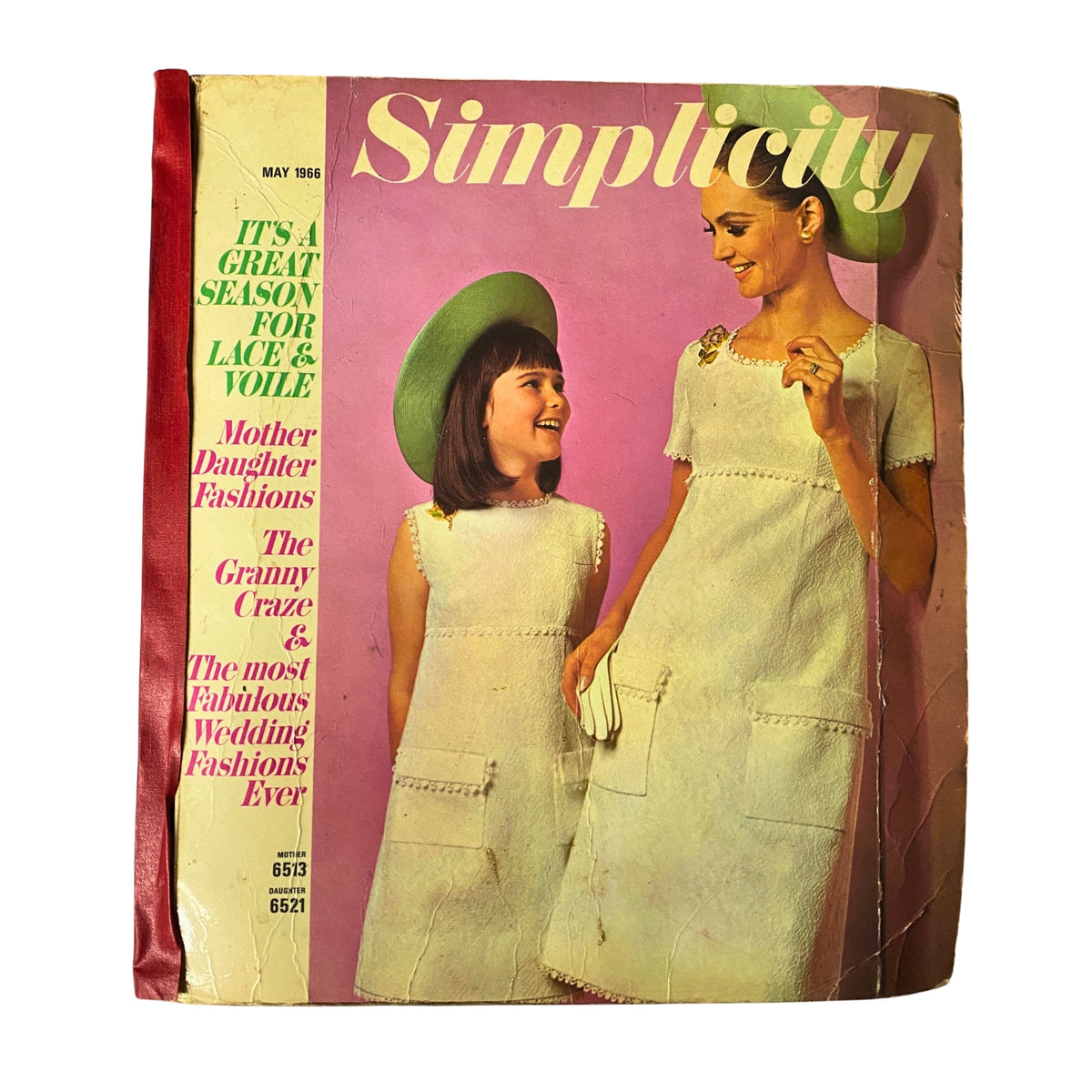
The May 1966 Simplicity catalog is not a standard seasonal issue. The deliberate "Mother and Daughter Fashion" framing makes it a specialized edition — one built around a specific domestic ideal that was, by 1966, simultaneously at its cultural peak and quietly approaching its expiration date. Coordinated mother-daughter dressing had been a fixture of American family life throughout the postwar period, expressing values of domestic harmony, feminine continuity, and a shared aesthetic that crossed generational lines within the home. By the spring of 1966, however, youth culture was pulling hard in the opposite direction. Teenagers were actively differentiating their wardrobes from their parents', not coordinating them. That this catalog existed and was distributed to fabric store counters in May of that year makes it a precise document of the tension between a fading domestic ideal and the generational rupture that was already underway. For collectors tracking how mainstream American culture processed the social changes of the 1960s, the Simplicity pattern catalog archive offers ground-level evidence that fashion histories built around runway moments often miss entirely.
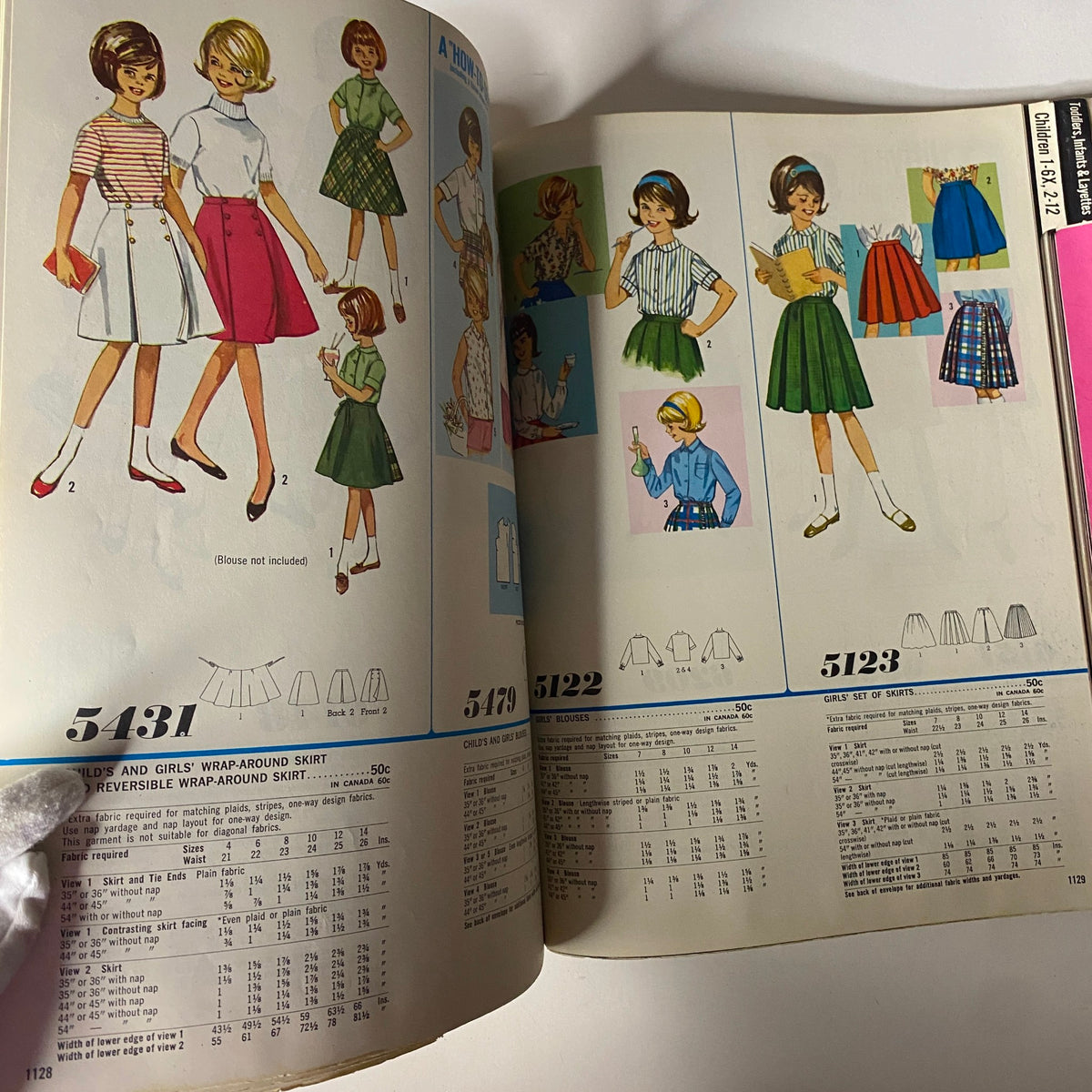
The catalog's emphasis on coordinated rather than identical outfits — dresses, skirts, blouses, and jackets designed to work across the Misses, Half-Sizes, Girls, and Children size ranges simultaneously — also reflects a sophisticated understanding of how real families actually dressed. This was not about making mothers and daughters look like twins. It was about shared fabric choices, complementary silhouettes, and a coherent visual language that could be achieved through home sewing at a fraction of ready-to-wear cost. The inclusion of playwear, school outfits, and casual coordinates alongside more formal occasion wear confirms that the catalog was designed for daily practical use, not just special events. That breadth of application, documented in a single spring 1966 edition, makes it an unusually rich artifact. Collectors building a comprehensive picture of mid-decade American domestic life will find it pairs naturally with other magazines from 1966 that capture the same cultural moment from different vantage points.
It is also worth noting what the catalog's aesthetic language — "modesty, refinement, and practical sewing design," as the listing characterizes it — says about the specific position Simplicity occupied in 1966. This was not a publication chasing the mod revolution or the youth market's appetite for geometric minimalism and above-the-knee hemlines. It was serving the broad middle of the American sewing market: women who wanted fashionable but wearable clothes for themselves and their children, made at home with accessible skills and affordable materials. That positioning, preserved in a mother-daughter catalog from May 1966, captures a demographic and a value system that the decade's fashion history tends to overlook in favor of its more dramatic edges.
About the Publication
Simplicity Pattern Co. was established in 1927 with a founding commitment to making home dressmaking accessible to consumers of average means and skill. By the mid-1960s, the company had become one of the dominant forces in the American home sewing industry, distributing large-format seasonal and themed counter catalogs to fabric retailers and department store notions departments nationwide. These catalogs served as the primary browsing tool for customers selecting patterns, functioning as the de facto catalog interface before individual pattern envelopes were retrieved from storage drawers. Themed specialty editions — of which the Mother and Daughter catalog was a recurring type — supplemented the standard seasonal issues and addressed specific consumer occasions and gift-giving moments. The spring timing of this May 1966 edition placed it squarely in the peak home sewing season, when warm-weather wardrobe planning was underway across the country.
Key Highlights Inside
- Coordinated Mother-Daughter Outfits: The catalog's central editorial concept, presenting dresses, skirts, blouses, and jackets designed to work as complementary sets across adult and children's size ranges rather than as identical duplicates.
- Playwear and School Outfits: Practical everyday coordinates for girls, reflecting the catalog's functional orientation toward real family dressing rather than purely aspirational or occasion-specific fashion.
- Casual Coordinates: Relaxed seasonal styles suited to the spring and early summer wardrobe, consistent with Simplicity's core mission of providing fashionable but achievable patterns for daily wear.
- Sizing Across Misses, Half-Sizes, Girls, and Children: The multi-range sizing structure confirms the catalog was engineered to allow a single fabric purchase to yield coordinated garments for adult women and children of varying ages simultaneously — a practical and economical proposition central to its appeal.
- Special Occasion Ensembles: Alongside everyday wear, the catalog addresses more formal dressing occasions, extending the mother-daughter coordination concept into the full range of mid-1960s family social life.
Condition & Rarity
Themed specialty editions of Simplicity counter catalogs — as distinct from the standard seasonal issues — present an additional layer of rarity beyond the already significant attrition that affects all surviving examples of this format. Produced for specific retail occasions rather than as the primary seasonal reference, they were distributed in smaller quantities and replaced on an irregular schedule, meaning fewer copies entered circulation to begin with. A surviving example of the May 1966 Mother and Daughter edition described as being in good condition represents a meaningful find. In assessing any copy of this issue, the key condition attributes to evaluate are binding integrity across the full page count, clarity and completeness of the interior pattern illustrations, and the condition of the cover and opening pages, which absorbed the most handling in a retail counter environment. Interior pages free from significant annotation, cutting, tracing marks, or moisture damage define the collectible grade for this material. The presence of a plastic protective covering in preserved examples indicates deliberate storage care at some point in the object's history, which generally correlates with better overall page integrity.
Looking for More Issues Like This?
A themed specialty edition like the 1966 Mother and Daughter catalog surfaces far less often than standard seasonal issues, so patience is required when tracking one down. The broader Simplicity catalog collection at OriginalMagazines.com is the best starting point for exploring other editions across the decades, from standard spring and fall issues to other themed specialties. For collectors focused on the mid-1960s specifically, the full 1966 magazine archive offers a wide range of publications that document the same cultural moment from fashion, lifestyle, and current events perspectives.