
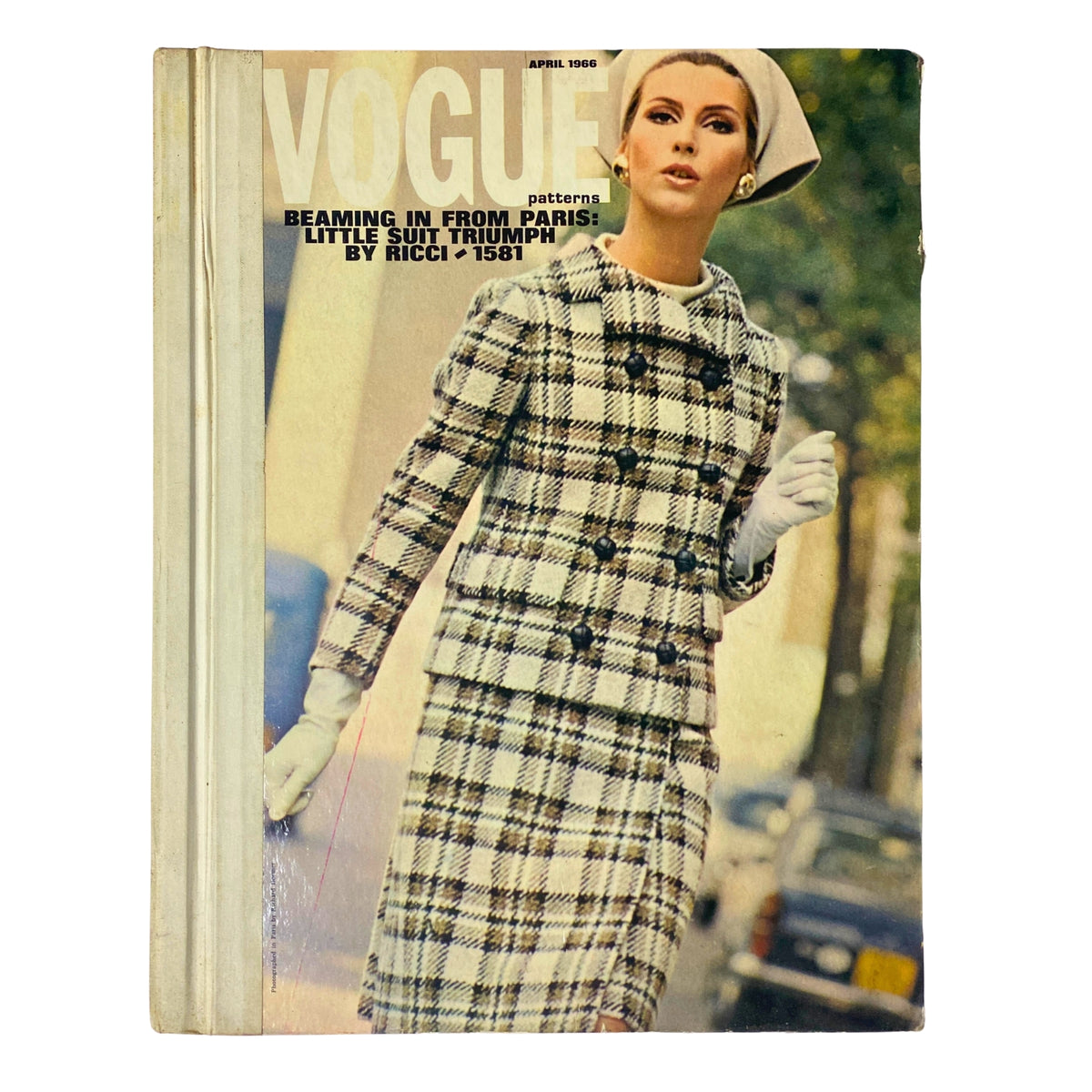
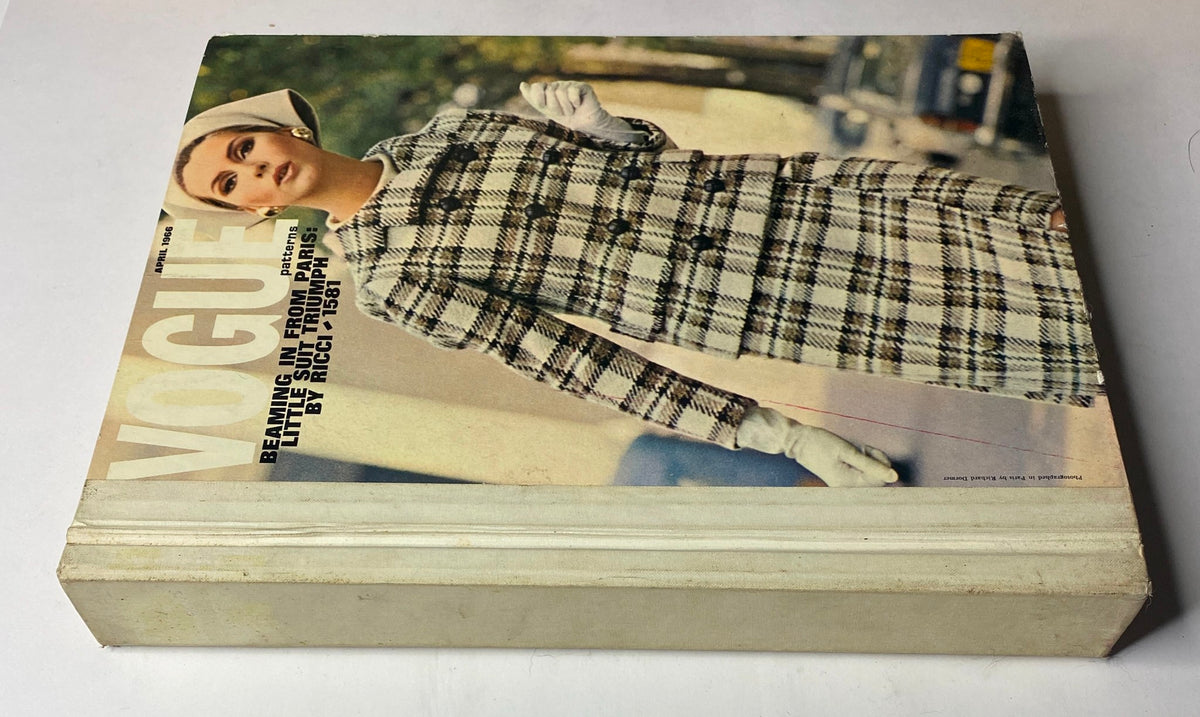
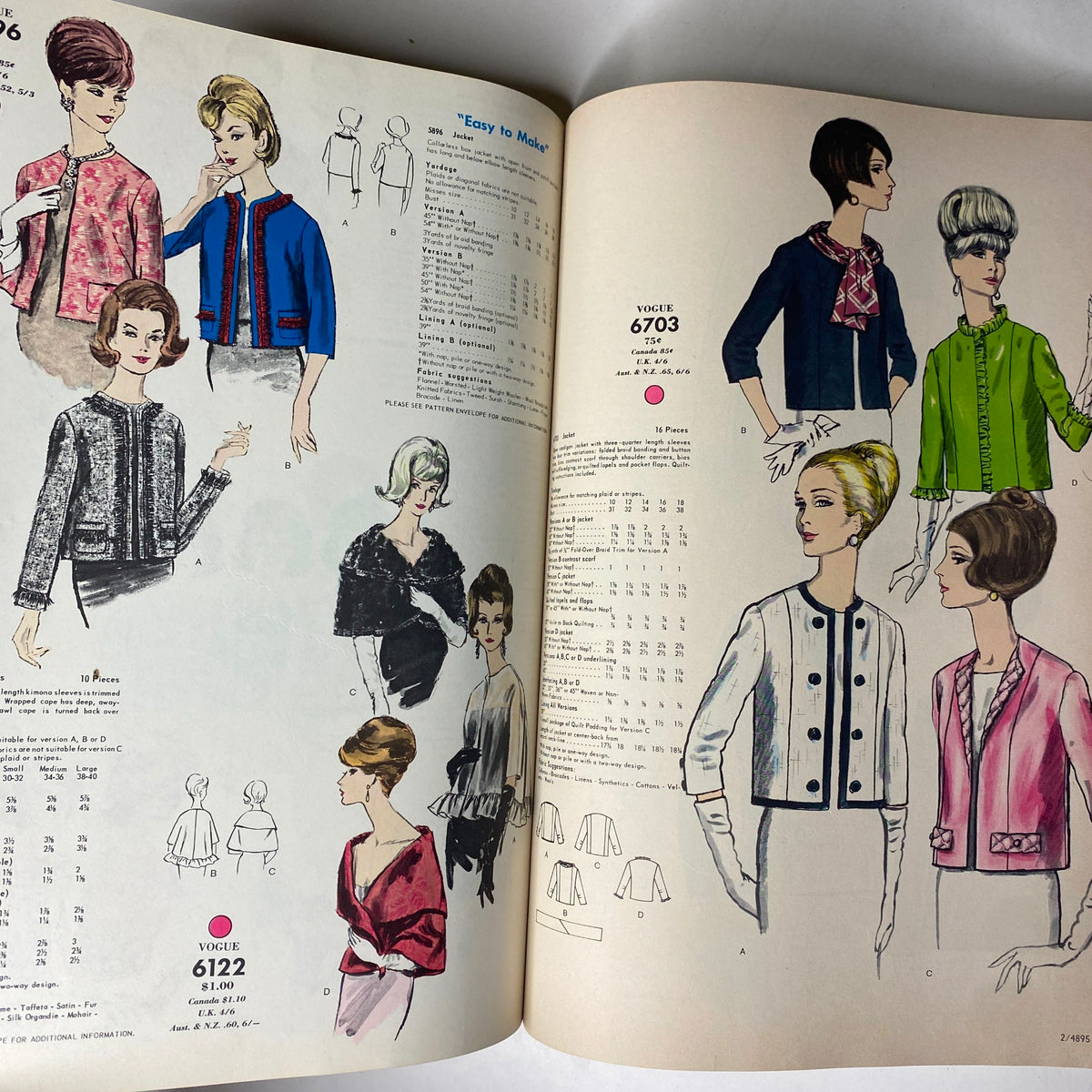
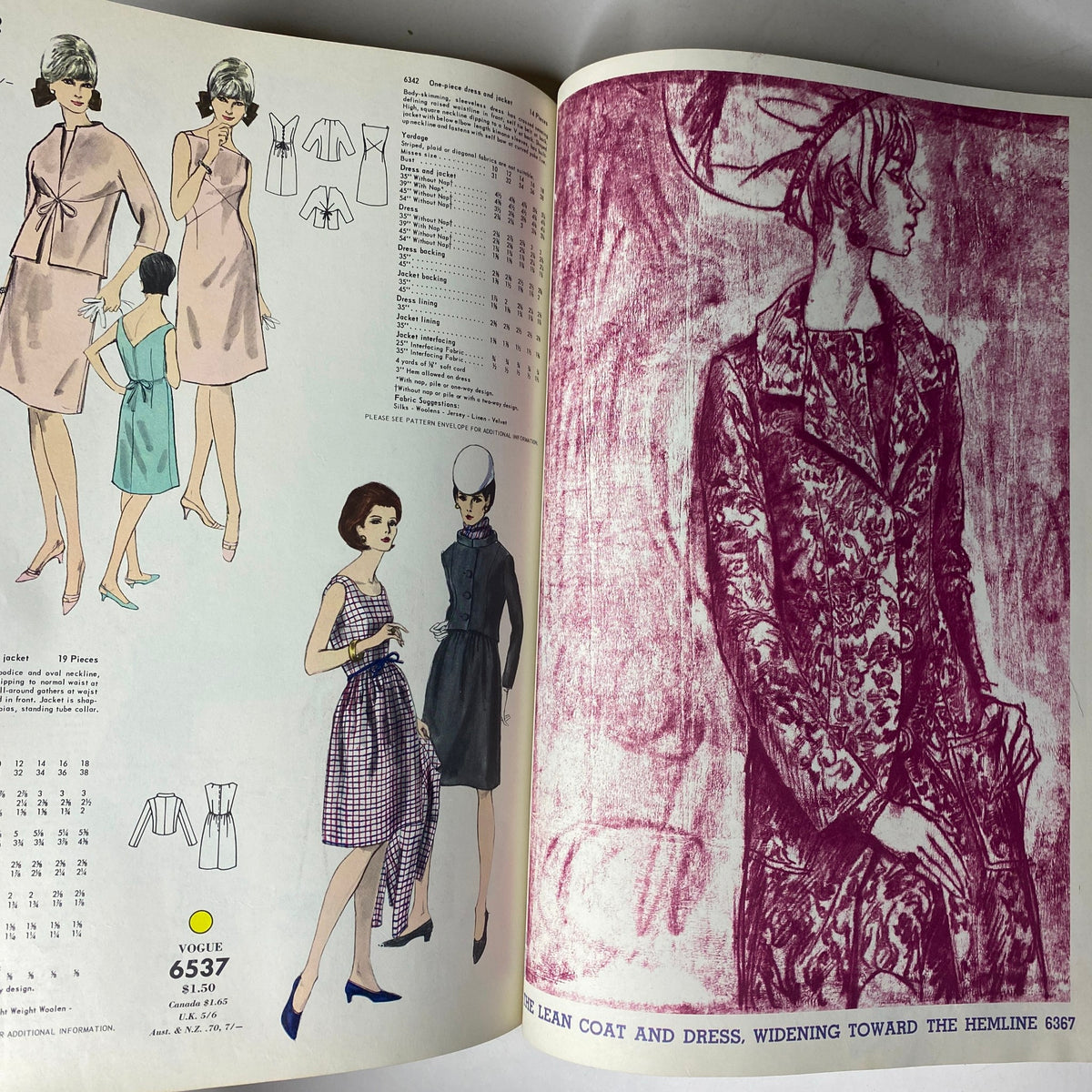
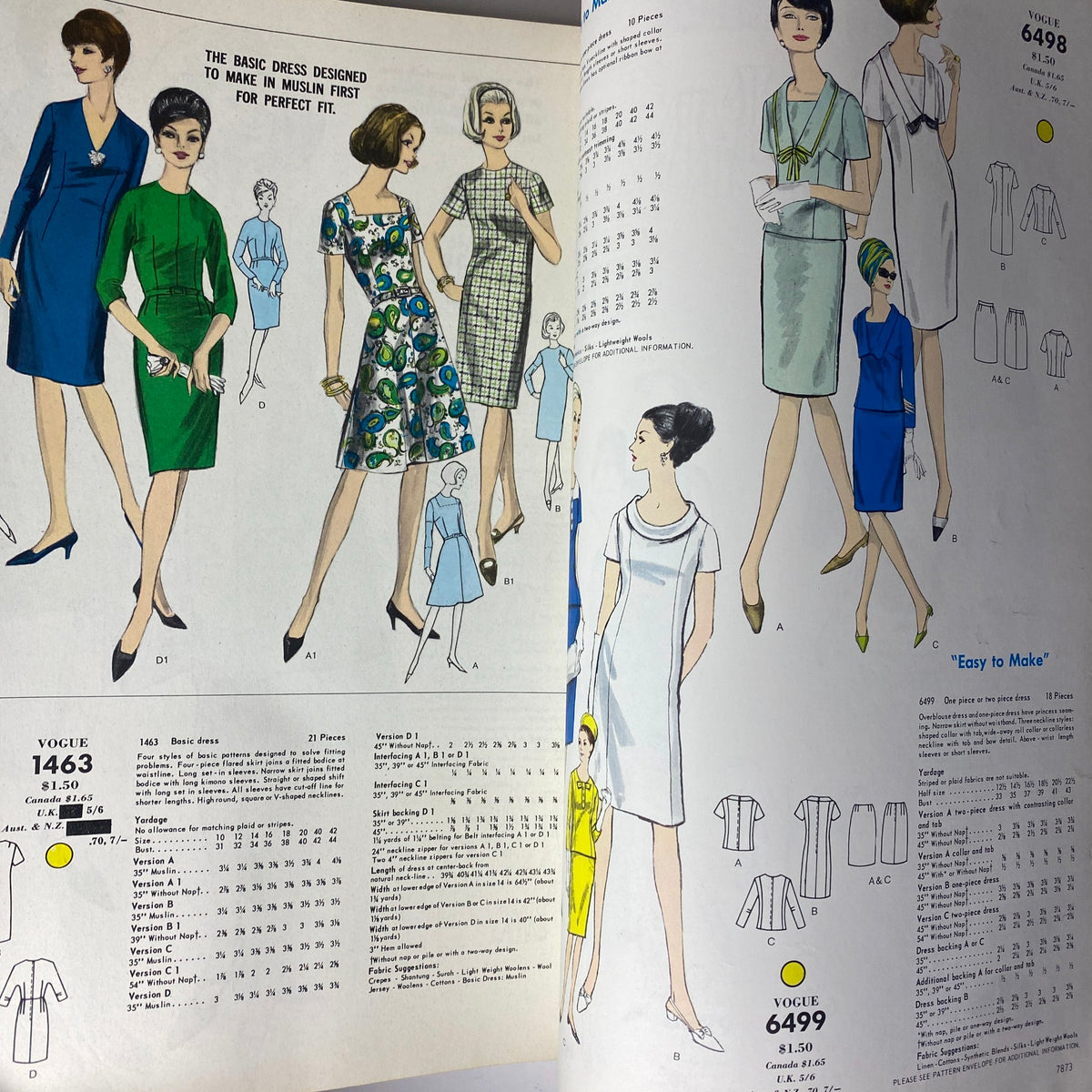
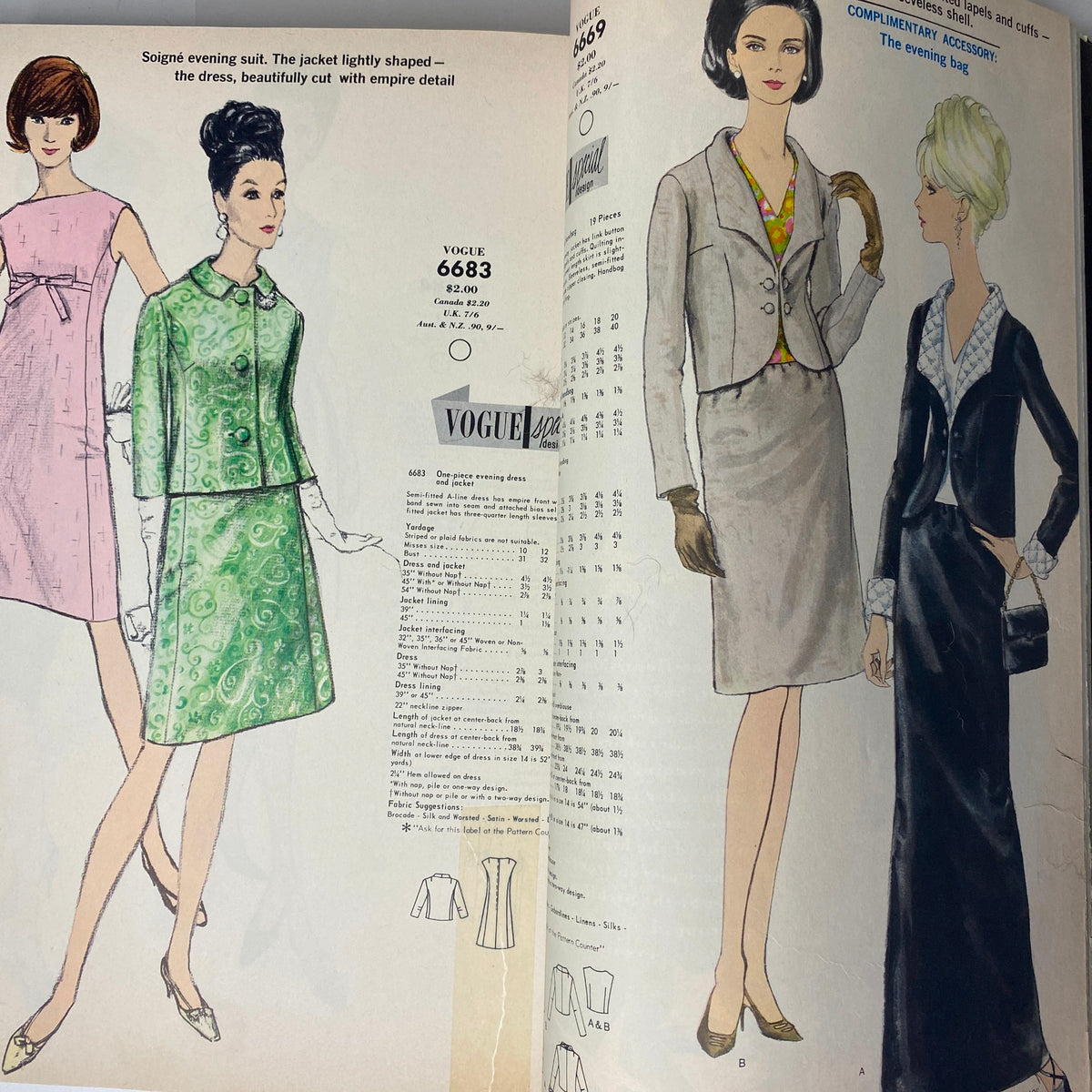


Description
Collector's Note – Why This Issue Matters
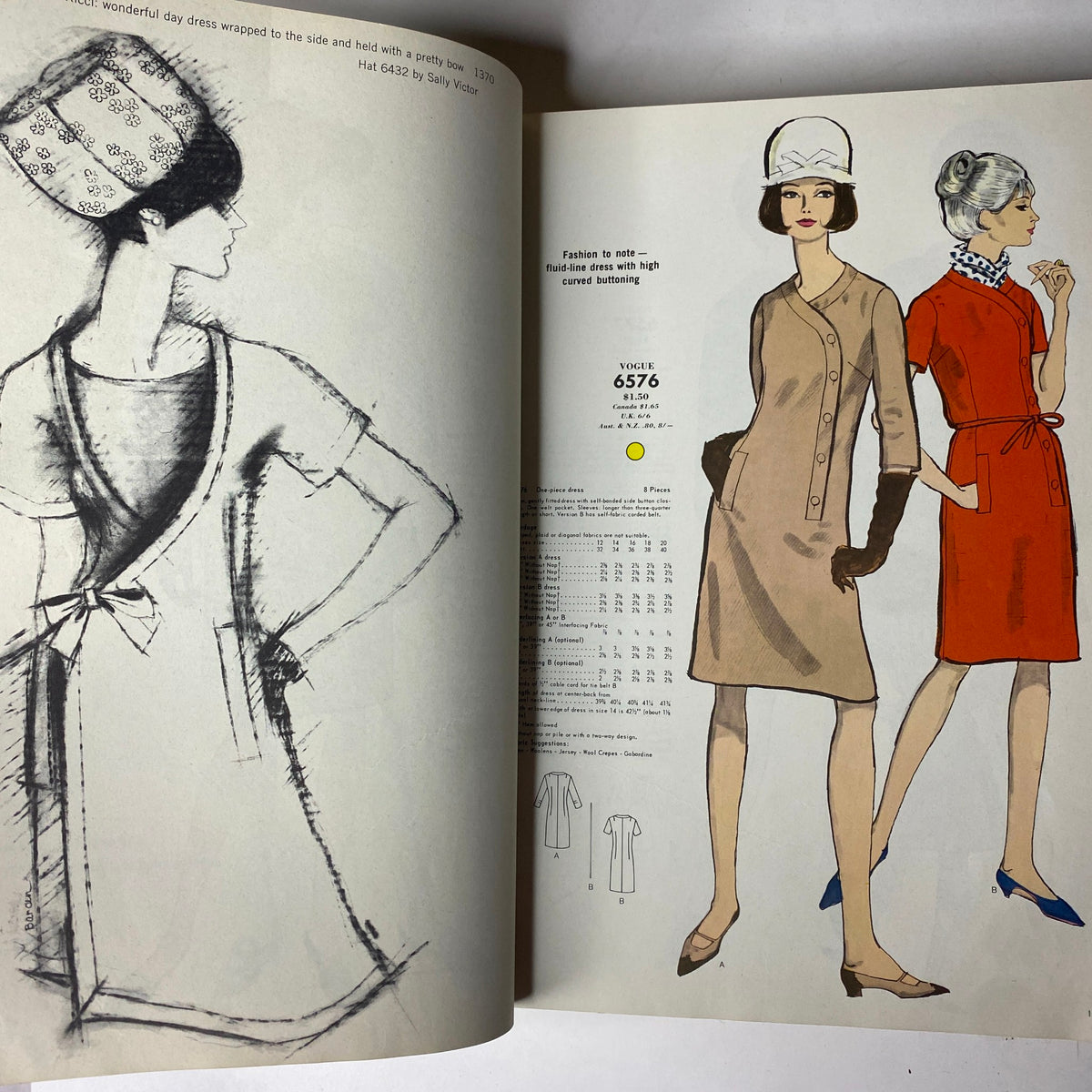
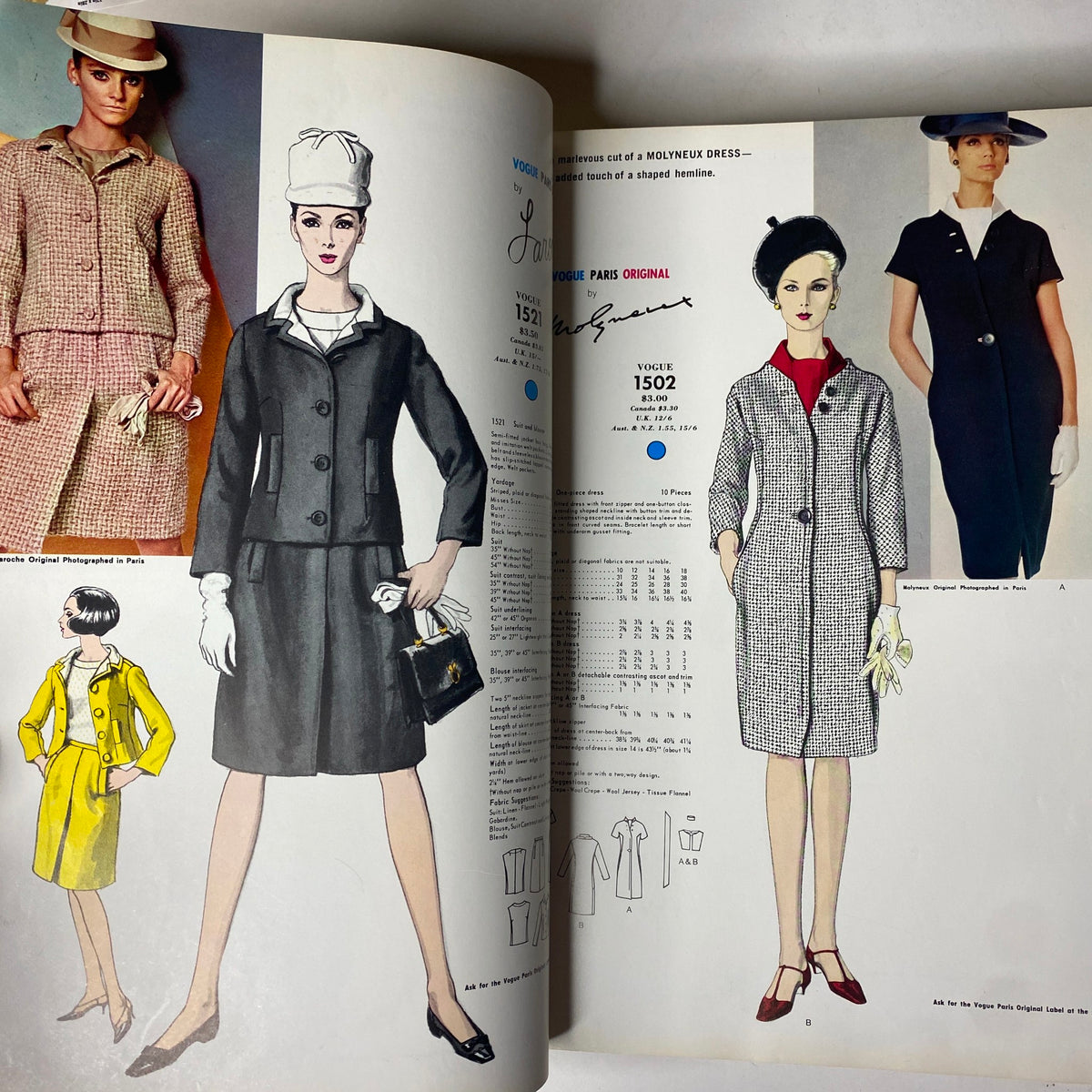
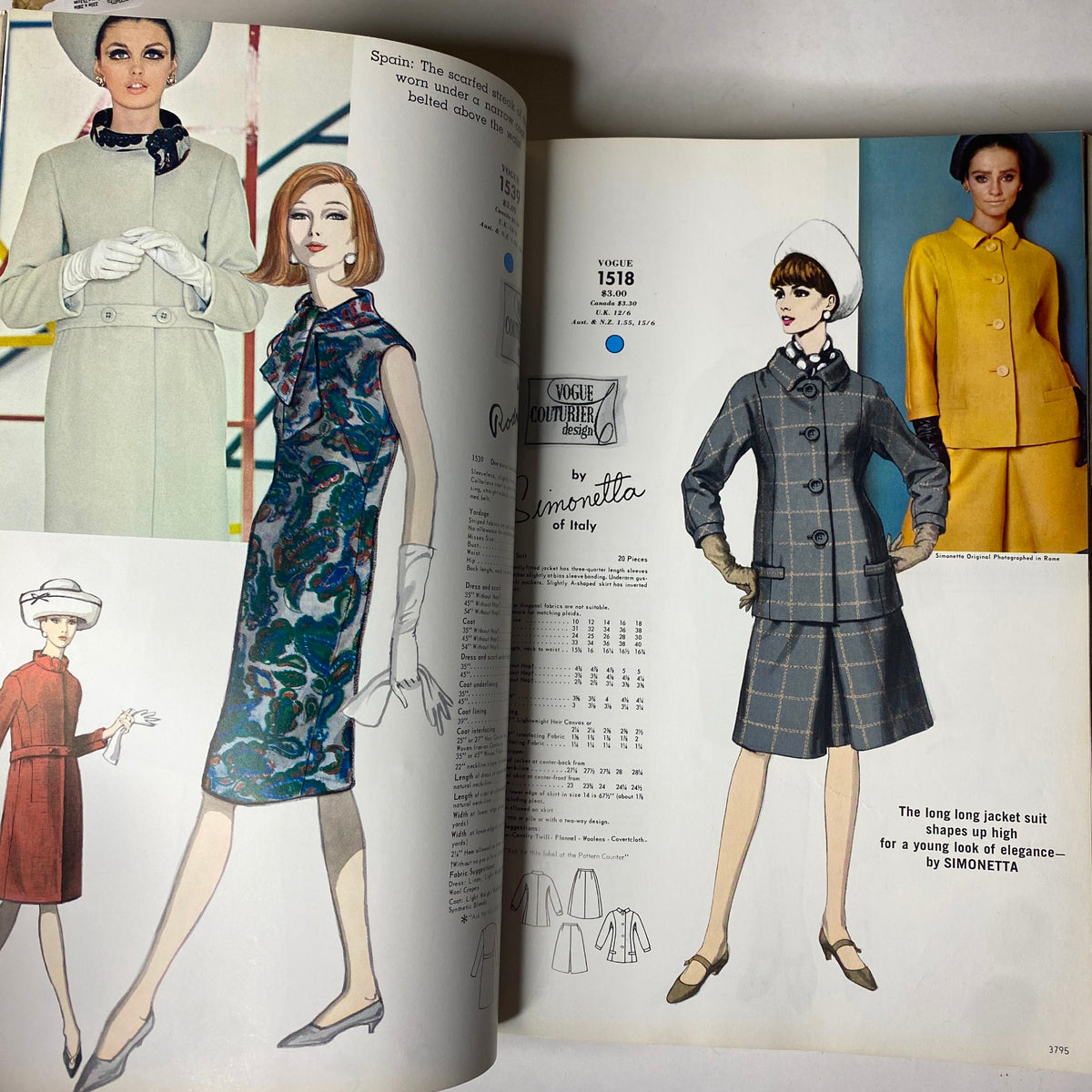
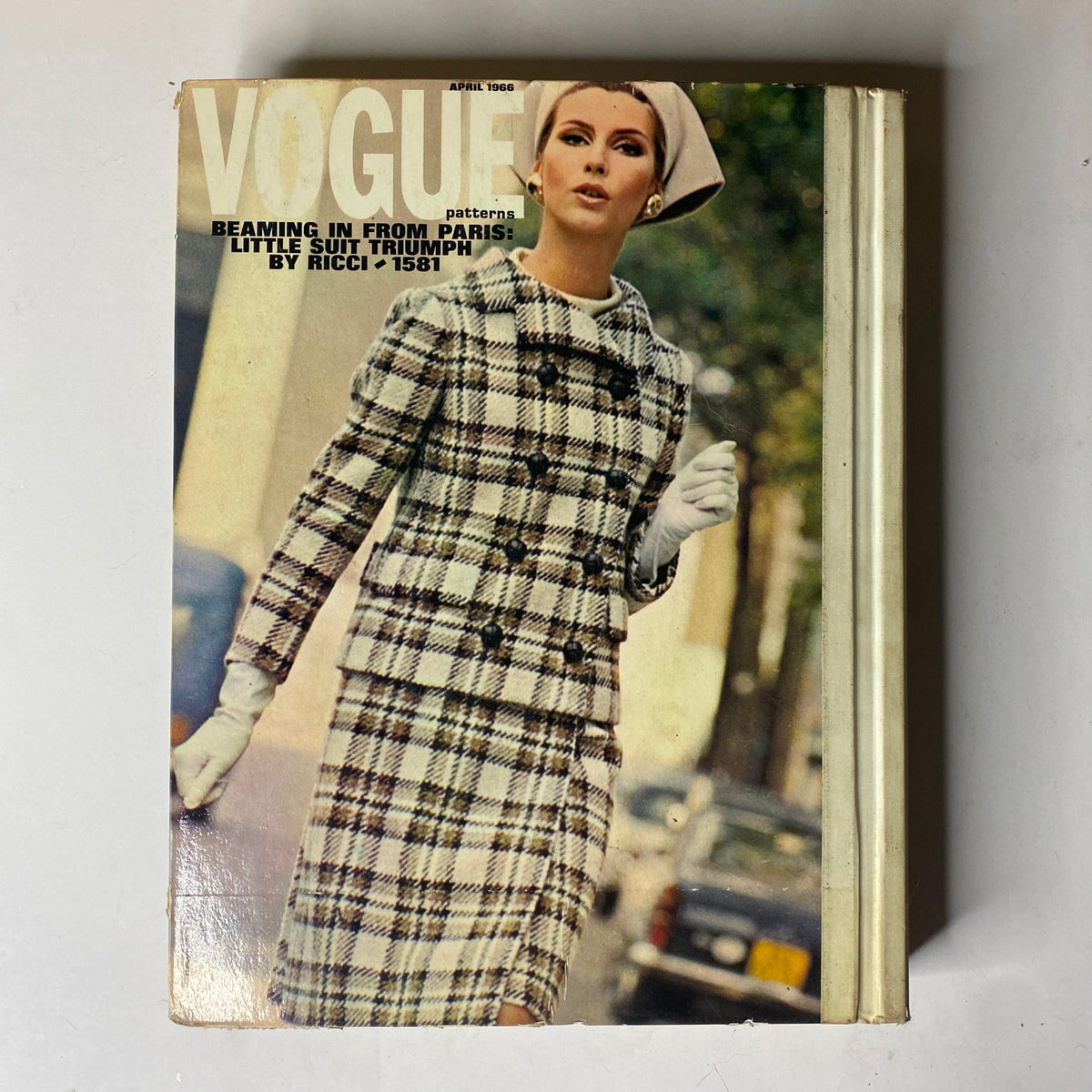
The April 1966 Vogue Patterns catalog lands at one of the most genuinely exciting inflection points in twentieth-century fashion history. Spring 1966 was the season when the mod revolution — which had been building in London since the early part of the decade — fully arrived as a mainstream force in American fashion. The shift dress, the A-line silhouette, the geometric cut: these were no longer avant-garde provocations but the dominant vocabulary of what a fashionable woman wore. At the same time, the classical couture tradition that had defined Vogue Patterns' most prestigious offerings through the early 1960s had not yet fully retreated. The result was a catalog that held both worlds simultaneously — the refined tailoring and elegant draping of the earlier decade alongside the clean, youth-oriented lines that were remaking fashion in real time. For collectors of vintage Vogue Patterns catalogs, the 1966 spring edition is among the most historically charged of the decade precisely because that tension is legible on every page.
The April timing is significant within the pattern publishing calendar. A spring catalog arriving in April would have presented the full range of warm-weather offerings at the moment when home sewers were planning and beginning their seasonal wardrobes — shift dresses and A-line coats for immediate construction, cocktail and evening looks for the social season ahead, workwear and casual separates for the practical daily wardrobe. The fabric recommendations embedded in the pattern descriptions — cottons, silks, and the emerging synthetics that were transforming home sewing practice in the mid-1960s — document a specific material moment in textile history, when man-made fabrics were moving from novelty to mainstream and pattern companies were adjusting their designs and instructions accordingly. Among collectors focused on publications from 1966, the Vogue Patterns counter catalog offers a dimension of fashion history that editorial magazines cannot: not how fashion was photographed and sold, but how it was actually constructed and worn by the women who made their own clothes.
The year 1966 holds a particular resonance in fashion history beyond the mod moment. It was the year Yves Saint Laurent introduced the Le Smoking tuxedo suit for women, the year André Courrèges' space-age aesthetic was fully absorbed into mainstream fashion consciousness, and the year that hemlines reached heights that would have been unthinkable a decade earlier. That Vogue Patterns was translating these shifts into home-sewable form — making the silhouettes of a revolutionary fashion moment accessible to women with a sewing machine and a few yards of fabric — is a cultural story worth telling. This catalog is a primary document of that democratization of fashion in one of its most dynamic years.
About the Publication
Vogue Patterns was the pattern publishing division of Condé Nast, operating under the fashion authority of the Vogue name to position its home sewing patterns at the prestige end of the American market. Founded in 1899, the brand distinguished itself from competitors such as McCall's, Simplicity, and Butterick through its associations with European couture houses and its consistent commitment to sophisticated, fashion-forward design. The seasonal counter catalogs were distributed to fabric stores and department store sewing departments as large-format illustrated reference volumes designed for counter display and customer browsing — the primary commercial interface between the pattern company and the millions of American women who sewed their own clothes throughout the mid-twentieth century. By 1966, Vogue Patterns was navigating the same stylistic transition as the broader fashion world, balancing its couture heritage against the demand for the younger, simpler silhouettes that the decade was producing.
Key Highlights Inside
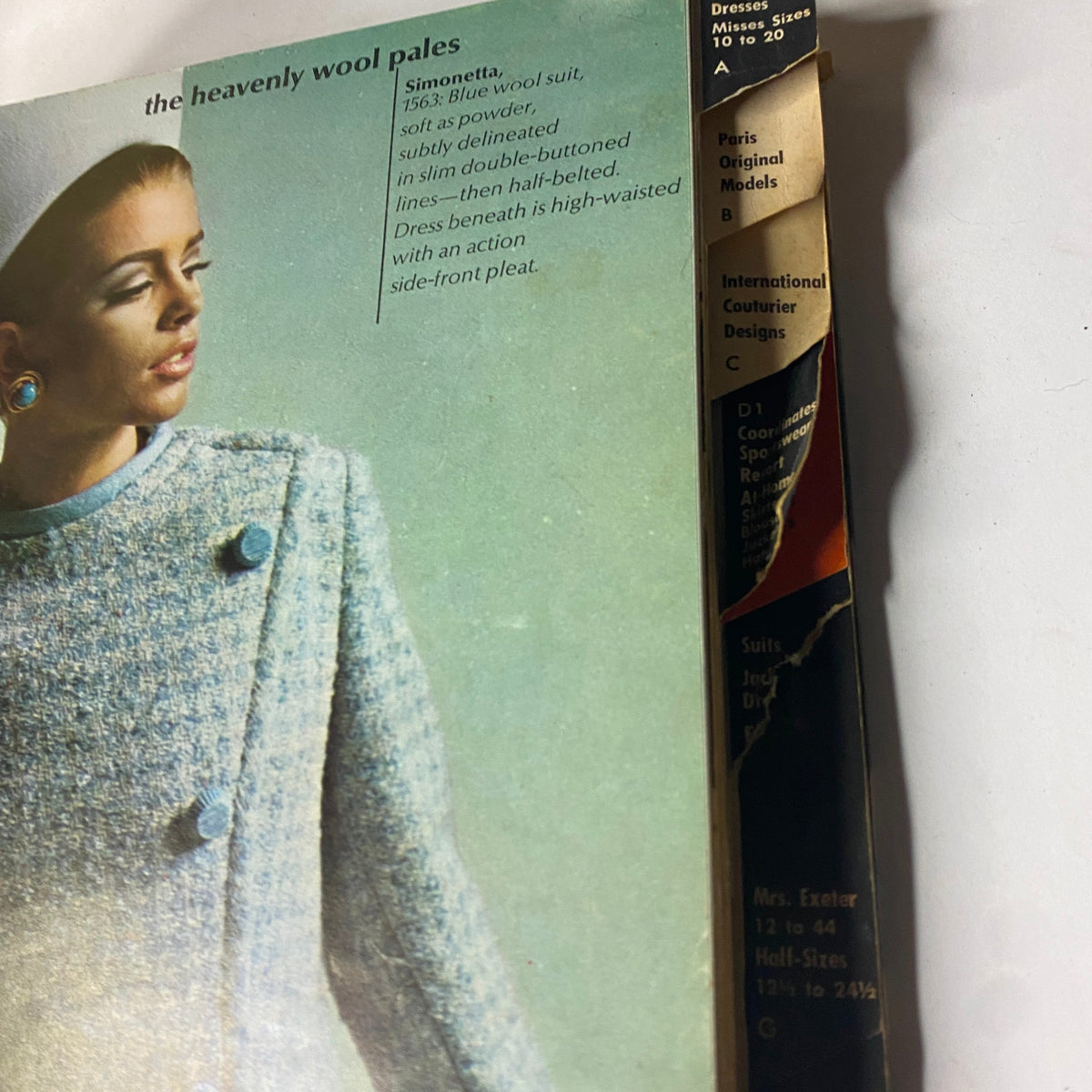
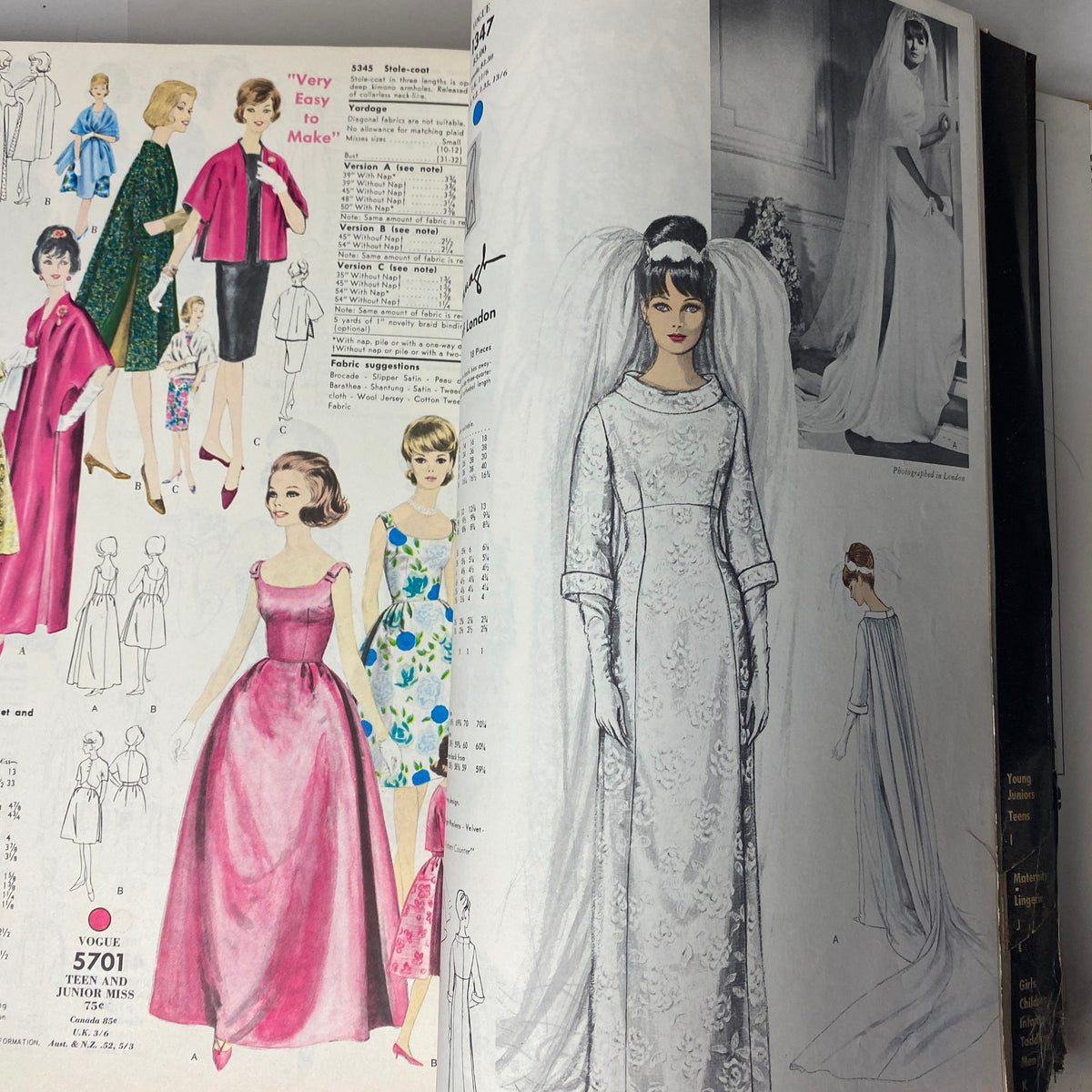
- Misses' and junior patterns featuring shift dresses and A-line coats — the defining silhouettes of the mod revolution as they appeared in Vogue Patterns' spring 1966 range, documenting the mainstream arrival of shapes that had originated in London's youth fashion scene.
- Evening and cocktail looks with elegant draping, empire waists, and refined details — representing the classical couture-influenced tradition that Vogue Patterns maintained alongside its more contemporary offerings throughout the mid-1960s.
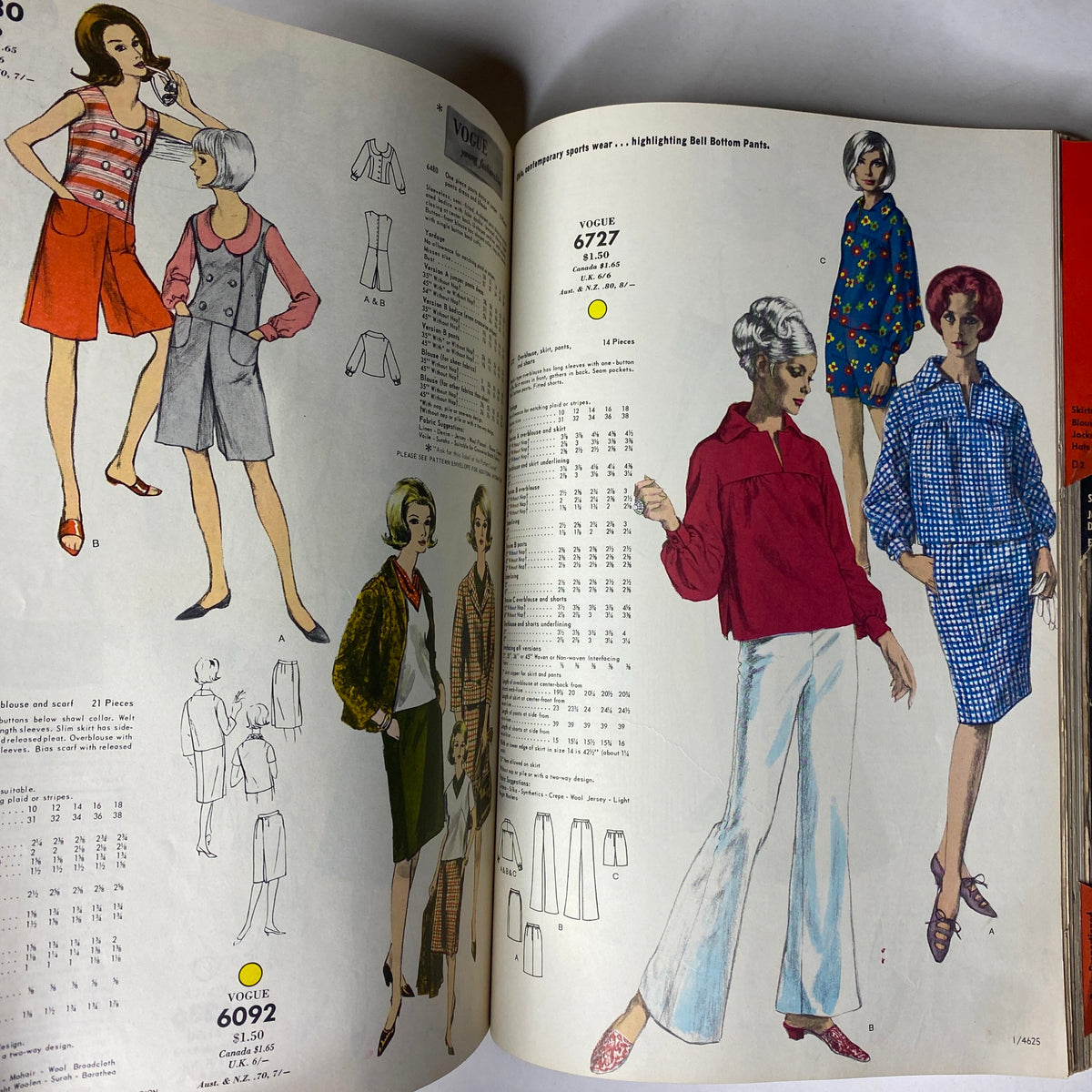
- Workwear and casual separates updated for the mid-1960s woman, reflecting the shifting expectations around how women dressed for professional and everyday contexts during this period.
- Fabric guidance referencing cottons, silks, and emerging synthetic fabrics — a specific material record of the textile transition underway in home sewing practice during 1966.
- Pattern pricing, sizing guidance, and detailed construction illustrations consistent with Vogue Patterns' format as a practical retail reference tool as well as a fashion document.
Condition & Rarity
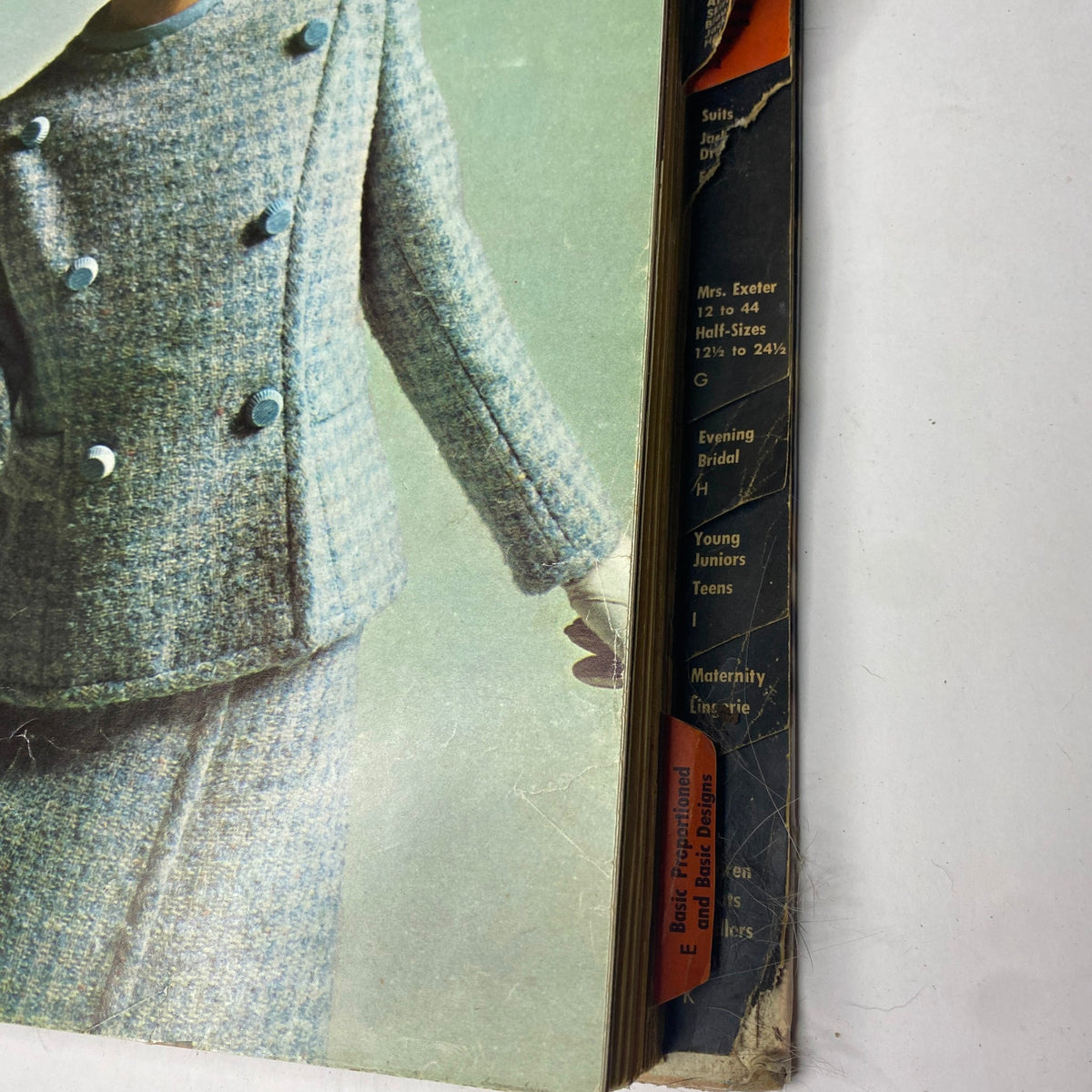
Store counter catalogs were among the most heavily handled publications in the retail fabric environment — consulted daily, leafed through by customers, and treated as working tools with an expected commercial lifespan rather than objects worth preserving. Survival rates for large-format counter catalogs from 1966 are correspondingly lower than for standard newsstand magazines from the same year, and finding an April 1966 Vogue Patterns counter catalog in good condition represents a meaningful preservation outcome. Good condition on a publication of this type and age implies intact binding, complete page content, and legible illustrations throughout — the functional integrity that defines value for a reference object of this kind. The plastic protective covering indicates collector-conscious storage. Minor distributed wear including cover softening, edge wear, and light marks is expected and consistent with a working retail publication that has survived six decades. The coated stock used for the catalog's illustration pages offers better long-term resistance to tanning and brittleness than newsprint-grade paper, which is a modest advantage for image quality preservation over time. Collectors evaluating surviving examples should prioritize binding integrity and page completeness as the primary condition variables.
Looking for More Issues Like This?
Spring 1966 sits at such a specific and charged moment in fashion history that surviving counter catalogs from this season are among the more meaningful finds in the vintage sewing and pattern collecting market. The full archive of vintage Vogue Patterns catalogs at OriginalMagazines.com is the best place to explore what is currently available across different seasons and years. For collectors and researchers drawn to the wider cultural landscape of this pivotal year — the mod revolution, the space age aesthetic, the beginning of the end of classical couture dominance — the 1966 magazine collection spans multiple titles from one of the most visually and culturally dynamic years of the entire twentieth century.