
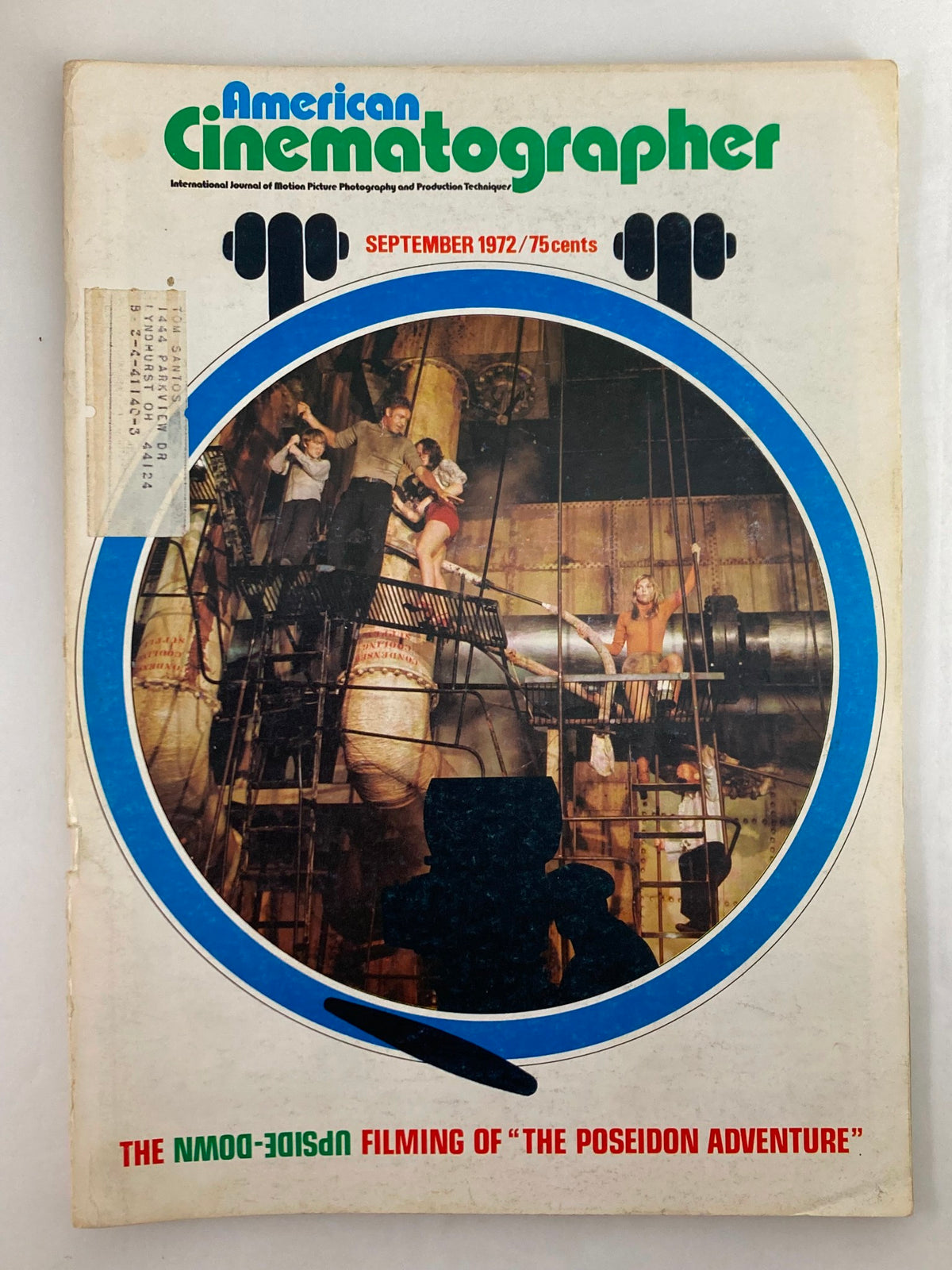


Description
Collector's Note – Why This Issue Matters
The September 1972 issue of American Cinematographer Magazine featuring Shelley Winters and Gene Hackman arrives at one of the most creatively rich and historically significant moments in the history of American cinema. The New Hollywood era was in full creative ferment — 1972 was the year of The Godfather, Deliverance, Cabaret, and Slaughterhouse-Five, a year when American film was producing work of extraordinary ambition and commercial vitality simultaneously. Gene Hackman was at the absolute peak of his early-seventies career momentum: The French Connection had been released in October 1971 and had won him the Academy Award for Best Actor in March 1972, making him in September 1972 an Oscar winner at the height of his powers and one of the most discussed actors in American film. Hackman's presence in a technical film publication reflects the particular quality of the New Hollywood era — these were actors and directors who took the craft seriously, who were interested in the filmmaking process as a whole rather than simply their own performances, and whose engagement with the technical and artistic dimensions of cinema made them genuinely interesting subjects for a publication like American Cinematographer. Collectors building a focused archive of Gene Hackman's documented presence across film publications will find the Gene Hackman magazine collection a valuable resource for tracking his coverage across different publication types throughout his career.
Shelley Winters' presence alongside Hackman in a September 1972 issue of American Cinematographer is specifically interesting in the context of her career at that moment. Winters was one of the most distinguished character actresses in Hollywood — a two-time Academy Award winner whose career had begun in the late 1940s and had evolved through decades into a body of work defined by fearless commitment and complete technical precision. By 1972 she was at the threshold of what would become another significant career moment: The Poseidon Adventure would be released in December 1972, and her memorable performance as Bella Rosen would introduce her to a new generation of filmgoers. A September 1972 appearance in American Cinematographer suggests a film connection that was current and professionally relevant rather than retrospective, and places her within the technical filmmaking conversation that the publication was facilitating between industry professionals and serious film students. The American Cinematographer magazine archive is the most comprehensive resource for the publication's coverage of the film industry's technical and artistic dimensions across the decades of its most influential run, including the crucial New Hollywood period that this issue documents.
American Cinematographer's September 1972 issue sits at the exact center of the New Hollywood's most creative and commercially successful period, when the industry was simultaneously producing its most artistically ambitious work and developing the technical innovations — in camera technology, lighting techniques, and production methods — that would define Hollywood filmmaking for the subsequent decade. Issues from this specific period are primary sources for understanding how the industry's technical culture engaged with the creative revolution that was transforming American cinema, and the presence of major acting figures like Hackman and Winters in a technical publication suggests an issue that bridges the gap between the talent and craft dimensions of the era's filmmaking in a way that is specific to this period's collaborative creative culture. Collectors focused on the early 1970s in American film will find that 1972 magazine issues across film publications document one of the most historically significant years in Hollywood history with a primary source directness that no retrospective account can replicate.
About the Publication
American Cinematographer Magazine was founded in 1920 and established itself across the following decades as the primary technical and professional publication of the American film industry, serving as the official journal of the American Society of Cinematographers and the essential reference publication for directors of photography, camera operators, gaffers, and the broader community of technical filmmaking professionals. Its editorial format combined in-depth technical articles about camera technology, lighting techniques, and production methods with interviews with working cinematographers and directors, production reports on major current films, and the kind of craft-focused journalism that gave its readership both practical guidance and historical documentation of the industry's evolving technical culture. By 1972, the publication was covering the New Hollywood era with the technical authority of a professional journal that had relationships with every major cinematographer working in American film, and its issues from this period are primary documents not only of filmmaking technology but of the creative conversations that were shaping the most artistically significant decade in Hollywood history.
Key Highlights Inside
- Gene Hackman featured — appearing in a technical film publication in September 1972, just six months after winning the Academy Award for Best Actor for The French Connection, at the peak of his early-seventies career momentum and during the New Hollywood period that made him one of the defining actors of a transformative era in American cinema.
- Shelley Winters featured — a two-time Academy Award-winning character actress appearing in American Cinematographer in September 1972, three months before the release of The Poseidon Adventure would introduce her to a new generation of audiences and extend her extraordinary career into the 1970s blockbuster era.
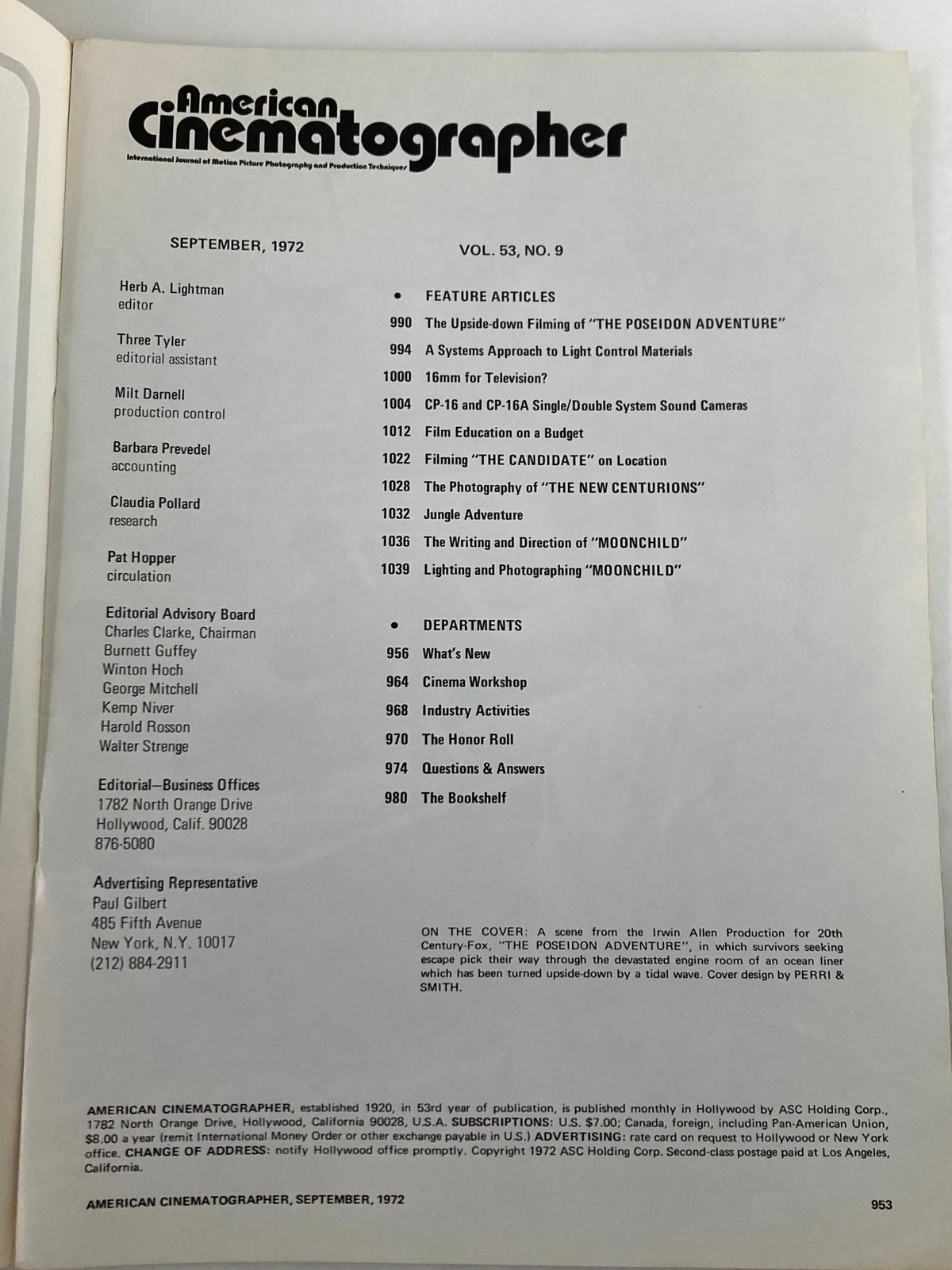
- September 1972 technical and artistic content consistent with American Cinematographer's format — in-depth articles about cinematography craft, production reports on current films, and the professional-level technical journalism that made the publication the essential reference for the film industry's creative and technical community during the New Hollywood era.
- Subscription label present on the front cover — a standard condition attribute for American Cinematographer issues from this era, when the publication's predominantly professional and institutional readership received it primarily through subscription delivery rather than newsstand purchase.
- Note: Specific interior article titles, production reports, interview content, and additional editorial details beyond what is indicated by the featured subjects and listing description are unconfirmed for this issue. The above reflects what is verifiable from the cover subjects, date, and the thoroughly documented history of the New Hollywood era and the careers of Gene Hackman and Shelley Winters in September 1972.
Condition & Rarity
Good condition with minor wear, some marks, and a label on the front cover is an honest and appropriate assessment for an American Cinematographer issue from September 1972 now more than fifty years old. The subscription label on the front cover is a standard condition attribute for professional trade publications of this era — American Cinematographer was received primarily through professional and institutional subscriptions rather than newsstand purchase, and the presence of a label on the front cover documents the issue's original circulation history as a subscription-delivered professional journal. Labels on trade publications from this period are typical rather than exceptional and are understood by serious collectors of professional film publications as part of the normal condition profile for surviving issues. Good condition with minor wear and some marks accurately describes a magazine that retains its structural integrity, legible content, and overall documentary value despite the expected physical aging of fifty-plus years. A protective plastic covering applied to a surviving copy indicates deliberate preservation intent appropriate for a publication being maintained as a historical document of the film industry's technical and creative culture during one of its most significant periods.
Looking for More Issues Like This?
American Cinematographer issues from the New Hollywood era of 1972 — particularly those featuring major acting and creative figures from the period's most celebrated films alongside the technical journalism that documented the era's filmmaking innovations — are among the more historically rich finds in the professional film publication collector market. For collectors tracking Gene Hackman's documented presence across film publications throughout his career, the Gene Hackman magazine collection is the most focused starting point for finding other significant issues featuring him across different publication types and career phases. The broader American Cinematographer archive offers the most comprehensive resource for finding other issues from across the publication's history, and collectors building a complete picture of 1972 as a pivotal year in Hollywood film will find the complete 1972 magazine collection a valuable resource for contextualizing this issue within the larger cultural and cinematic landscape of the year.