

Description
Collector's Note – Why This Issue Matters
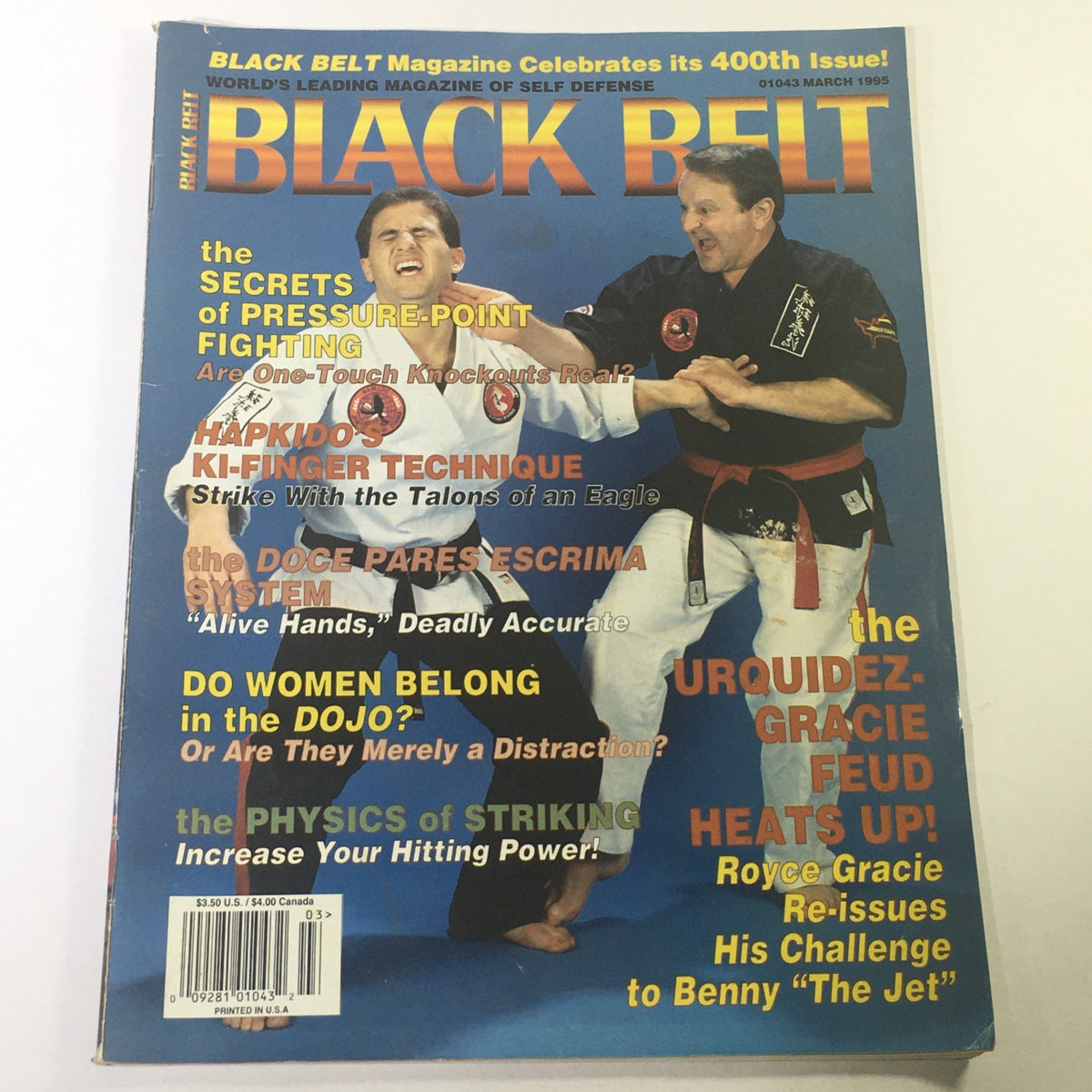
Black Belt Magazine’s March 1995 issue sits at a fascinating crossroads in martial arts history. The listing identifies its central hook as “The Benny Urquidez & Royce Gracie Feud Heats Up,” placing the issue directly in the mid-1990s debate over striking, grappling, traditional martial arts, and the rapidly changing public understanding of real-world fighting effectiveness. For collectors of vintage Black Belt Magazine issues, that date matters: 1995 was a period when mixed martial arts was still controversial, still young as a televised spectacle, and still forcing long-established martial arts communities to reassess old assumptions. A magazine issue from this moment preserves that debate as it was being argued in real time, before later MMA history made some of its outcomes seem inevitable.
Benny “The Jet” Urquidez was already a legendary figure in kickboxing and full-contact martial arts, known for his striking background, competitive reputation, and influence across martial arts and film culture. Royce Gracie, by contrast, had become one of the defining names of the early Ultimate Fighting Championship era, bringing Brazilian jiu-jitsu into American popular awareness through a series of high-profile victories in the early 1990s. A March 1995 issue framing tension between Urquidez and Gracie therefore captures more than a personality clash; it documents a moment when different martial arts systems, reputations, and philosophies were being tested in public conversation. For historians of combat sports, that kind of coverage is especially useful because it shows how martial artists themselves were reacting to the shock of grappling’s sudden visibility.
As part of the broader archive of 1995 magazines, this issue reflects a year when martial arts media was no longer writing only for traditional dojo culture, tournament followers, or action-film fans. The rise of no-holds-barred and early mixed martial arts competition had changed the questions readers were asking. Which techniques worked under pressure? How should striking and grappling be compared? What did mastery mean when different fighting systems met outside their usual rules? This issue belongs to that unsettled and historically important conversation, making it relevant not only to Black Belt readers but also to collectors tracing the early print record of modern combat-sports culture.
About the Publication
Black Belt Magazine has long been one of the major English-language periodicals devoted to martial arts, covering traditional systems, competitive fighting, self-defense, weapons, training methods, notable instructors, and martial arts culture. By the 1990s, its readership included karate, taekwondo, judo, kung fu, kickboxing, jiu-jitsu, and mixed-style practitioners, along with fans following the sport’s transition into mainstream visibility. The magazine’s editorial format typically blended profiles, technical discussion, interviews, opinion, photography, and coverage of major figures in the martial arts world, making it a useful record of how practitioners and enthusiasts understood the discipline in real time. Before online forums, streaming fight libraries, and social media debate became central to martial arts culture, magazines like Black Belt were one of the main places where reputations, methods, and controversies were explained to a broad readership. That makes individual issues valuable as primary-source artifacts of how martial arts knowledge circulated before the digital era.
Key Highlights Inside
- March 1995 issue of Black Belt Magazine, identified in the listing as focusing on the Benny Urquidez and Royce Gracie feud.
- Documents a mid-1990s martial arts moment shaped by debate over striking, grappling, and the rise of early mixed martial arts competition.
- Features two major names from different combat traditions: Benny Urquidez, associated with elite kickboxing and full-contact martial arts, and Royce Gracie, central to the early American rise of Brazilian jiu-jitsu.
- The listing notes analysis, visuals, and discussion connected to the martial arts community, though specific article titles beyond the Urquidez-Gracie feud are not confirmed.
- Relevant to collectors interested in the pre-modern-MMA period, when martial arts magazines were actively interpreting the sport’s changing landscape.
- Newsstand copy noted in the listing, with no mailing label, an attribute often valued by collectors who prioritize clean cover presentation.
Condition & Rarity
The listing describes the March 1995 issue as having minor edge wear, with possible rips or marks, which is consistent with a handled magazine of this age. It is also described as a newsstand copy with no mailing label, a collector-relevant detail because label-free covers are often preferred for display and visual completeness. The noted plastic protective covering is useful for storage, though condition assessment should still focus on the magazine itself: cover gloss, spine stress, edge wear, page completeness, tears, markings, staining, and any brittleness or handling damage. For 1990s martial arts magazines, collector interest often increases when condition, cover presentation, and historically significant subjects align, especially when the issue documents figures tied to the early evolution of mixed martial arts. Copies from this period were commonly read, handled, stacked in gyms, or kept by practitioners rather than preserved as archival objects, so wear patterns often reflect actual use within the martial arts community. A no-label newsstand example with strong visual appeal can be especially desirable for display, provided the internal pages remain complete and stable.
Looking for More Issues Like This?
Issues tied to the early debates around mixed martial arts, Brazilian jiu-jitsu, kickboxing, and cross-style competition can be tough to track down because they appeal to both magazine collectors and combat-sports historians. Readers researching similar material may want to browse the broader Black Belt Magazine collection for related martial arts coverage, especially from the years surrounding the early UFC era.
For historical comparison across the same publishing year, the 1995 magazines collection can also help place this issue alongside other periodicals from the moment when popular culture, sports media, and martial arts were rapidly changing together. That wider context is often helpful for collectors who want to understand not just a single issue, but the media environment that made it significant.