
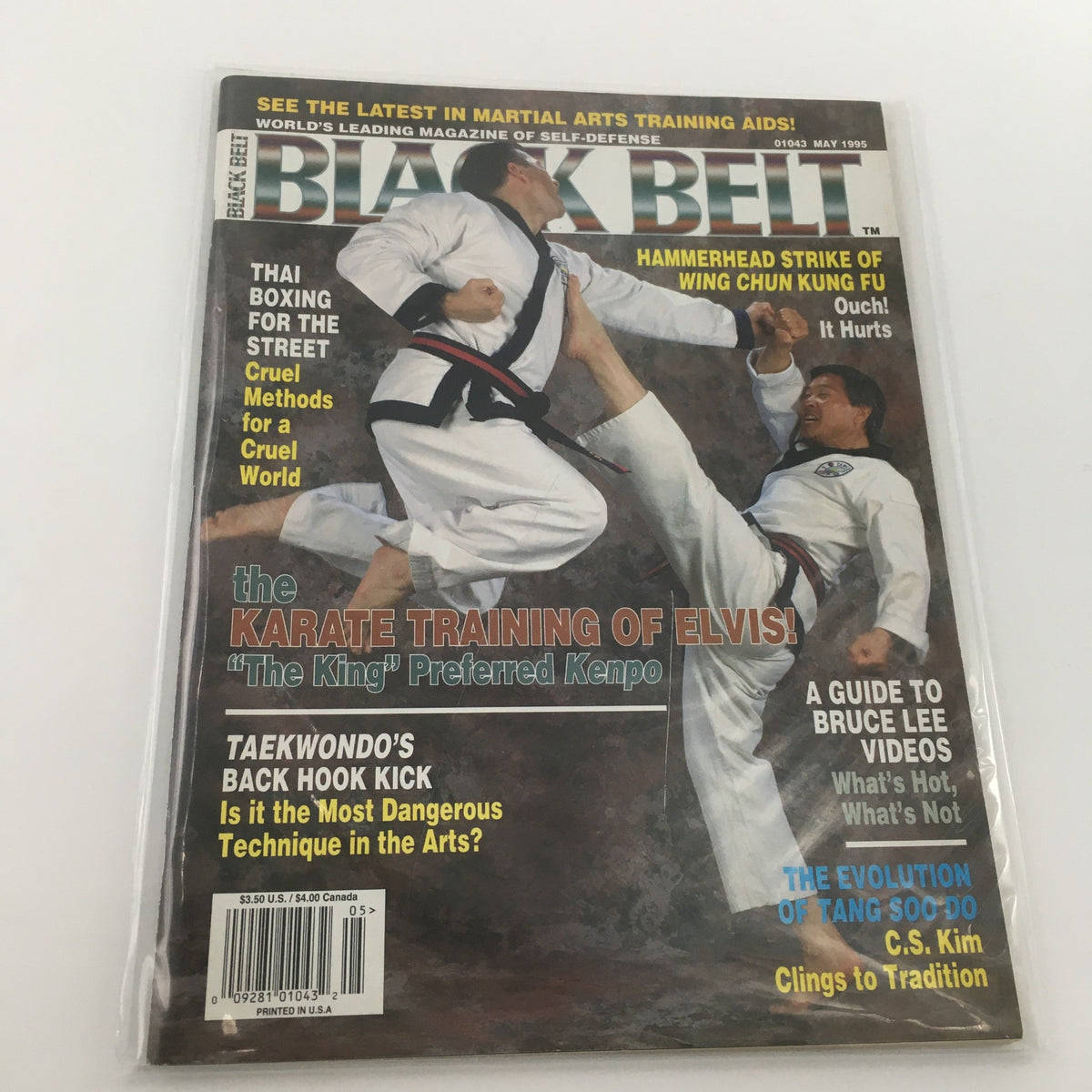


Description
Collector's Note – Why This Issue Matters
The May 1995 issue of Black Belt magazine is notable for its stated focus on the Hammerhead Strike of Wing Chun Kung Fu. Wing Chun is a Southern Chinese martial art widely associated with close-range structure, centerline theory, trapping, direct striking, economy of motion, and practical self-defense application. A feature on a specific Wing Chun method such as the Hammerhead Strike gives the issue clear technical interest for collectors and practitioners, especially because martial-arts magazines of the 1990s often served as one of the main ways readers encountered specialized techniques outside their own schools. The listing does not confirm the full article title, instructor name, page count, or photographs, so the issue should be evaluated through the confirmed date, publication, Wing Chun subject, and condition notes. That specificity gives the issue a strong place in the printed record of Wing Chun instruction as it was presented to English-language martial-arts readers.
For collectors of vintage Black Belt magazine issues, this issue belongs to a period when the magazine was documenting both traditional martial arts and the growing interest in practical fighting applications. By 1995, martial-arts readers were comparing kung fu, karate, kickboxing, Jeet Kune Do, Brazilian Jiu-Jitsu, and self-defense systems with increasing intensity. A Wing Chun-focused issue from this moment reflects that broader conversation: readers wanted tradition, but they also wanted techniques that could be explained in terms of function, timing, and real-world use. That makes the issue useful as a printed record of how Chinese martial arts were being discussed during a changing decade. It also shows how a legacy martial-arts magazine could keep traditional systems relevant by emphasizing specific techniques and their combative logic.
The issue also belongs within the broader archive of magazines published in 1995, a year when martial-arts knowledge still circulated heavily through print, seminars, schools, VHS tapes, and specialist magazines. Online instruction had not yet become a dominant force, so an issue of Black Belt could introduce readers to techniques, instructors, and systems they might not otherwise encounter locally. As a collector artifact, this May 1995 issue preserves a pre-digital view of Wing Chun instruction and martial-arts publishing. It is especially interesting because it focuses on a named technique rather than only a celebrity, tournament, or general style overview. That makes it useful for collectors who value technique-centered issues as practical historical documents, not just as fan memorabilia.
About the Publication
Black Belt is one of the most influential American martial-arts magazines, known for covering karate, kung fu, taekwondo, judo, aikido, weapons, self-defense, tournament competition, instructors, martial philosophy, and later mixed-style training. Its readership has included students, instructors, school owners, competitors, collectors, martial-arts film fans, and readers interested in both practical technique and cultural history. By the mid-1990s, Black Belt occupied an important place in martial-arts print culture because it documented traditional systems while also responding to changing questions about effectiveness, cross-training, and self-defense. Issues from this period are useful because they preserve how techniques were described before online video and social media changed martial-arts learning. A Wing Chun issue is especially relevant because it shows the magazine’s continued engagement with Chinese martial arts during a decade increasingly shaped by style comparison and practical application. Complete issues also preserve advertisements, photographs, terminology, and editorial framing that reveal what martial artists were studying and debating at the time. For researchers and collectors, the surrounding pages can be as revealing as the named feature because they show the wider martial-arts marketplace of the mid-1990s.
Key Highlights Inside
- May 1995 issue of Black Belt magazine, a major martial-arts publication with long-standing collector and reference value.
- Identified in the listing as featuring the Hammerhead Strike of Wing Chun Kung Fu, giving the issue a specific technical martial-arts focus.
- Relevant to collectors interested in Wing Chun, Southern Chinese kung fu, practical striking methods, and mid-1990s martial-arts instruction.
- Newsstand edition according to the listing, a useful circulation and presentation detail for collectors.
- Described as very good condition with no wear, giving the issue strong visual and archival appeal.
- Bagged and boarded in a protective plastic sleeve, a useful preservation detail for a collectible martial-arts magazine.
- The listing mentions in-depth articles and expert insights into Wing Chun, though specific article titles, instructor names, photographs, and complete interior contents are not confirmed.
- Useful as a reference issue for collectors studying Black Belt, Wing Chun Kung Fu, technical striking instruction, and 1990s martial-arts publishing.
- Represents a period when martial-arts magazines helped preserve specialized techniques before digital instructional media became widely available.
- Relevant to collectors who prefer technique-focused issues because the stated subject centers on a named Wing Chun method rather than a general overview.
- Best evaluated through the confirmed publication date, title, Wing Chun technique focus, newsstand status, and stated condition details rather than unverified interior claims.
Condition & Rarity
Collector evaluation for this issue should note the described very good condition with no wear. The listing identifies it as a newsstand edition, which is useful for collectors evaluating original retail circulation and cover presentation. The magazine is also described as bagged and boarded in protective plastic, which supports careful storage and helps reduce handling stress, though grading should still focus on the magazine itself rather than the sleeve or board. Important points to examine include cover surface, spine stability, staple condition, page completeness, corner sharpness, edge wear, paper quality, creases, marks, and whether any photographs, advertisements, or instructional pages have been clipped or removed. For a technique-focused Wing Chun issue, completeness is especially important because the instructional article and any accompanying images may be the central collector and research value. A clean, stable example with all pages intact has stronger archival value because it preserves both the technical feature and the wider mid-1990s martial-arts context. Collectors should also confirm whether the cover is free of labels or other obstructions, since the listing confirms newsstand status but does not separately state “no label.” When a magazine is described as having no wear, careful inspection of the spine, corners, and page block helps verify that the condition matches the stated grade.
Looking for More Issues Like This?
Wing Chun-focused issues of Black Belt are rewarding for collectors because they preserve technical martial-arts discussion from the pre-digital era. Related material can be explored through the broader Black Belt magazine collection or by comparing this issue with other titles from the 1995 magazine collection. Those related archives help place the May 1995 issue within the wider print record of kung fu, self-defense, practical striking, and martial-arts publishing during a period of rapid change. They are also useful for comparing how different martial-arts magazines presented traditional Chinese systems, named techniques, and practical application before online instruction became the dominant reference source.