


Description
Collector's Note – Why This Issue Matters
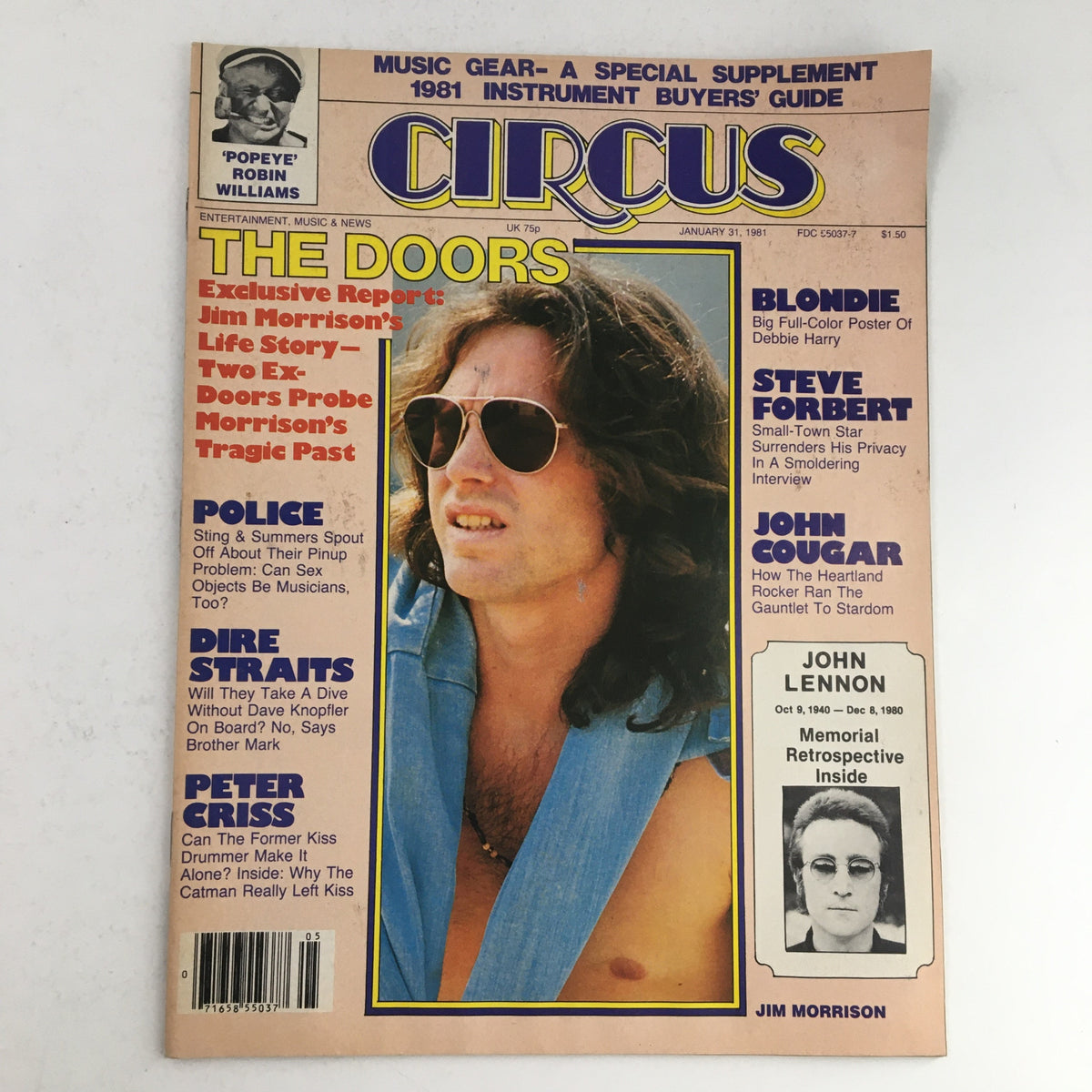
The January 31, 1981 issue of Circus places Jim Morrison and the legacy of the Doors at the center of its cover presentation. Morrison had died in 1971, but his public image, recordings, poetry, and stage persona continued to attract sustained attention throughout the following decade. Revisiting Morrison in early 1981 demonstrates how quickly certain rock performers had moved from contemporary celebrity into the developing historical mythology of the genre. The issue documents a period when younger readers were encountering the Doors through records, reissues, retrospective journalism, and the expanding culture of classic rock. Collectors researching Morrison’s continuing influence can compare this issue with other magazines featuring Jim Morrison and the Doors.
John Lennon gives the issue an even more immediate historical context. The magazine appeared only weeks after Lennon was killed in New York City on December 8, 1980, and surviving catalog records identify its Lennon material as memorial coverage. At that moment, music publications were attempting to assess his work with the Beatles, his solo career, and the profound public reaction to his death. The feature therefore belongs to the first wave of contemporary print journalism through which listeners processed the loss. Unlike later retrospectives written with decades of hindsight, this issue reflects a rock press still responding to the event as recent history.
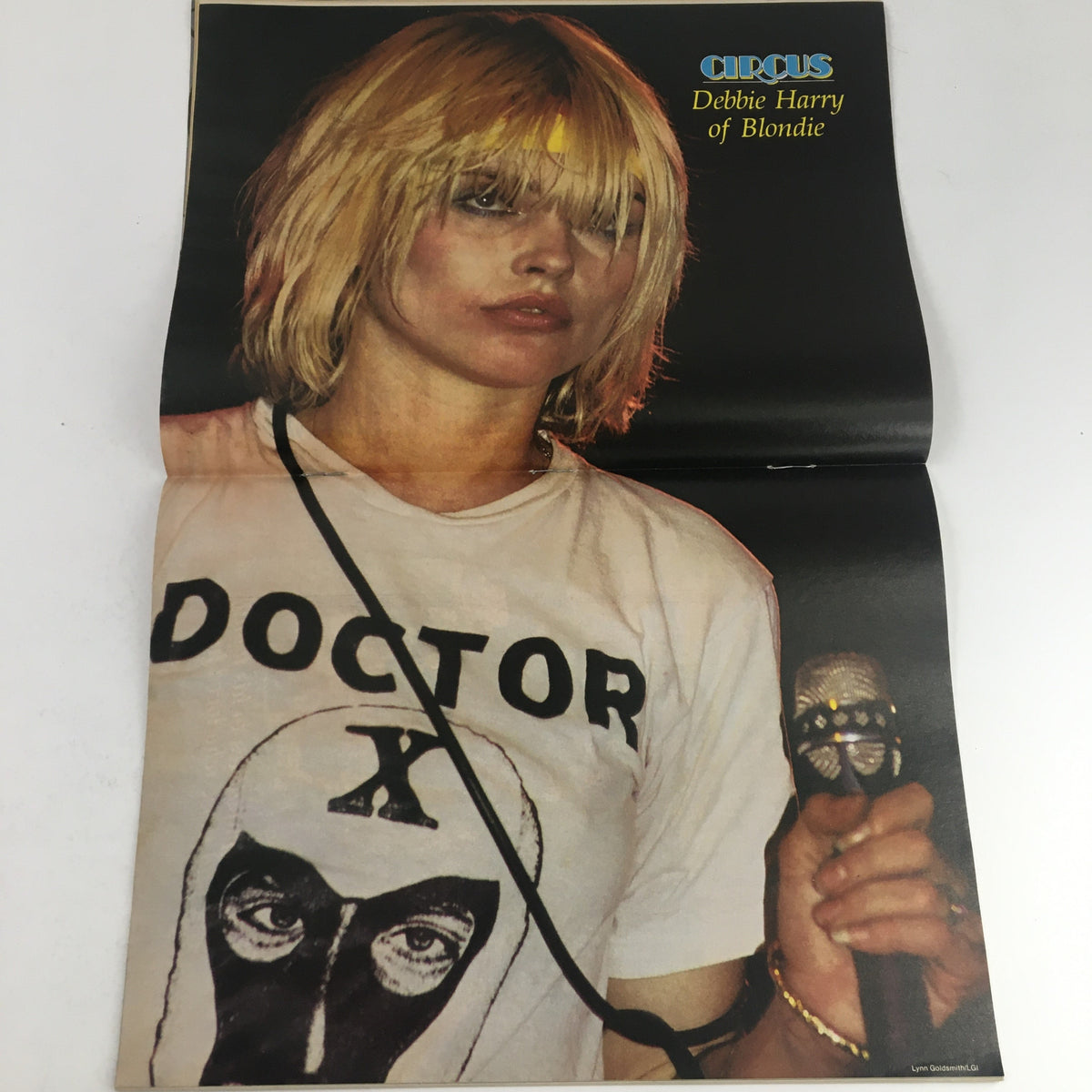
The magazine also bridges different generations of rock music through its combination of Morrison, Lennon, the Police, and Debbie Harry of Blondie. That mixture reflects the editorial environment of 1981, when artists identified with the 1960s and 1970s appeared beside musicians associated with punk, new wave, and the changing sound of the early 1980s. The documented Debbie Harry centerfold adds a strong visual connection to the period’s contemporary music culture. Together, the cover, memorial material, and poster make the issue a useful record of how rock journalism balanced remembrance with coverage of active performers. Additional examples can be studied through the archive of vintage Circus magazines and the broader collection of magazines published in 1981.
About the Publication
Circus was an American rock music magazine founded by publisher and editor Gerald Rothberg in 1966. It was created for readers interested in rock performers, bands, records, concerts, and the personalities surrounding contemporary music. Its editorial format combined artist interviews, profiles, reviews, news reports, photography, and retrospective features about influential musicians. Hard rock became especially important to its identity, although its pages also covered classic rock, pop, progressive music, punk, new wave, and other styles receiving attention from its audience. Bold covers and large photographs helped establish the musicians themselves as central visual subjects. Posters, centerfolds, and pinup-style images were also an important part of the physical magazine experience. Surviving issues now provide a record of how rock history was interpreted while many of its defining artists and movements were still developing.
Key Highlights Inside
- Jim Morrison is the principal cover subject, connecting the issue with the continuing cultural importance of the Doors nearly a decade after his death. The feature belongs to the period when Morrison’s reputation was being preserved and reshaped through retrospective music journalism.
- John Lennon is represented through memorial coverage published shortly after his death on December 8, 1980. The timing gives the material historical importance because it reflects the immediate response of the rock press rather than a later anniversary interpretation.
- The centerfold poster depicts Debbie Harry of Blondie, according to surviving photographs and catalog records for the issue. This corrects the original listing description, which inaccurately identifies Morrison and Lennon as the poster subjects.
- The Police are among the additional artists documented in available descriptions and images of the issue’s contents. Their inclusion places contemporary new wave and post-punk music beside retrospective coverage of performers associated with earlier stages of rock history.
- The combination of Morrison, Lennon, and Harry illustrates the magazine’s ability to move between remembrance and current popular music. It presents established rock mythology alongside an artist who remained an active and highly visible figure in 1981.
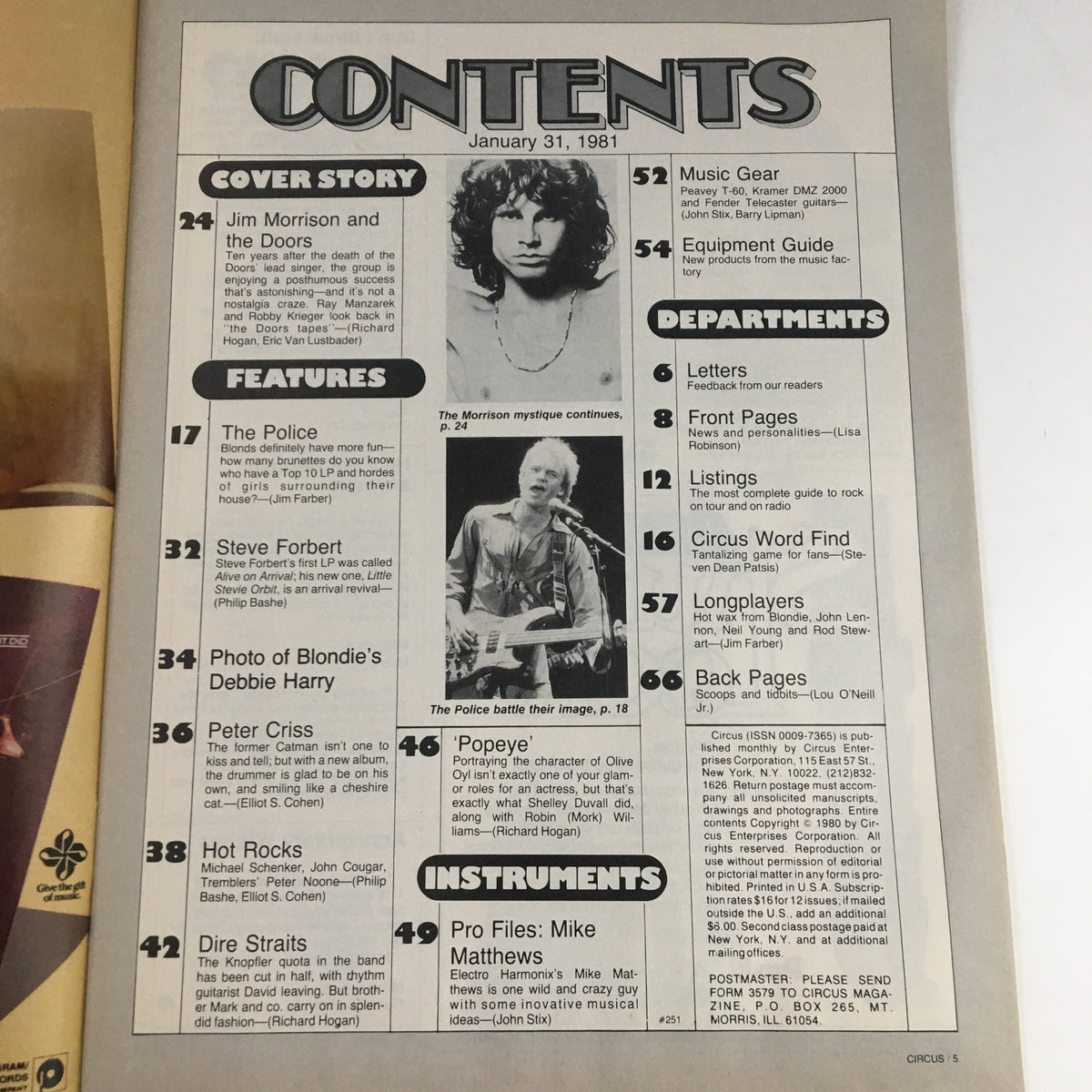
- A complete table of contents has not been supplied with the listing, so every interview, article title, photograph, review, and secondary performer cannot be confirmed here. Interior details beyond the documented Morrison, Lennon, Police, and Debbie Harry material should be verified directly from the magazine.
Condition & Rarity
The magazine is described as being in Good condition, with minor wear and some surface marks consistent with age and handling. Its newsstand origin and absence of a subscriber mailing label leave the cover photography and printed headlines unobstructed. That label-free presentation is particularly relevant for a music magazine whose cover design is central to its visual and historical interest. The continued presence of the Debbie Harry centerfold poster is an important completeness attribute because detachable features were frequently removed by original readers. The poster should be examined for original folds, edge tears, separation from the binding, trimming, writing, or display-related damage. No major water exposure, detached cover, missing pages, or serious binding failure is identified in the supplied condition notes, although these points should be confirmed through the photographs. The plastic protective covering is a later storage accessory rather than part of the original magazine, but it can help reduce dust, rubbing, and additional handling wear.
Looking for More Issues Like This?
Exact dated rock magazines containing their original centerfolds can be challenging to identify because posters were often removed for display. Readers researching Morrison’s continuing cultural legacy can explore other original magazines featuring Jim Morrison. The broader Circus magazine collection documents additional performers, concerts, memorial features, photography, and changes in rock journalism across several decades. Related magazines from 1981 provide a wider view of the year in which classic rock history, new wave music, and the public mourning of John Lennon intersected.