
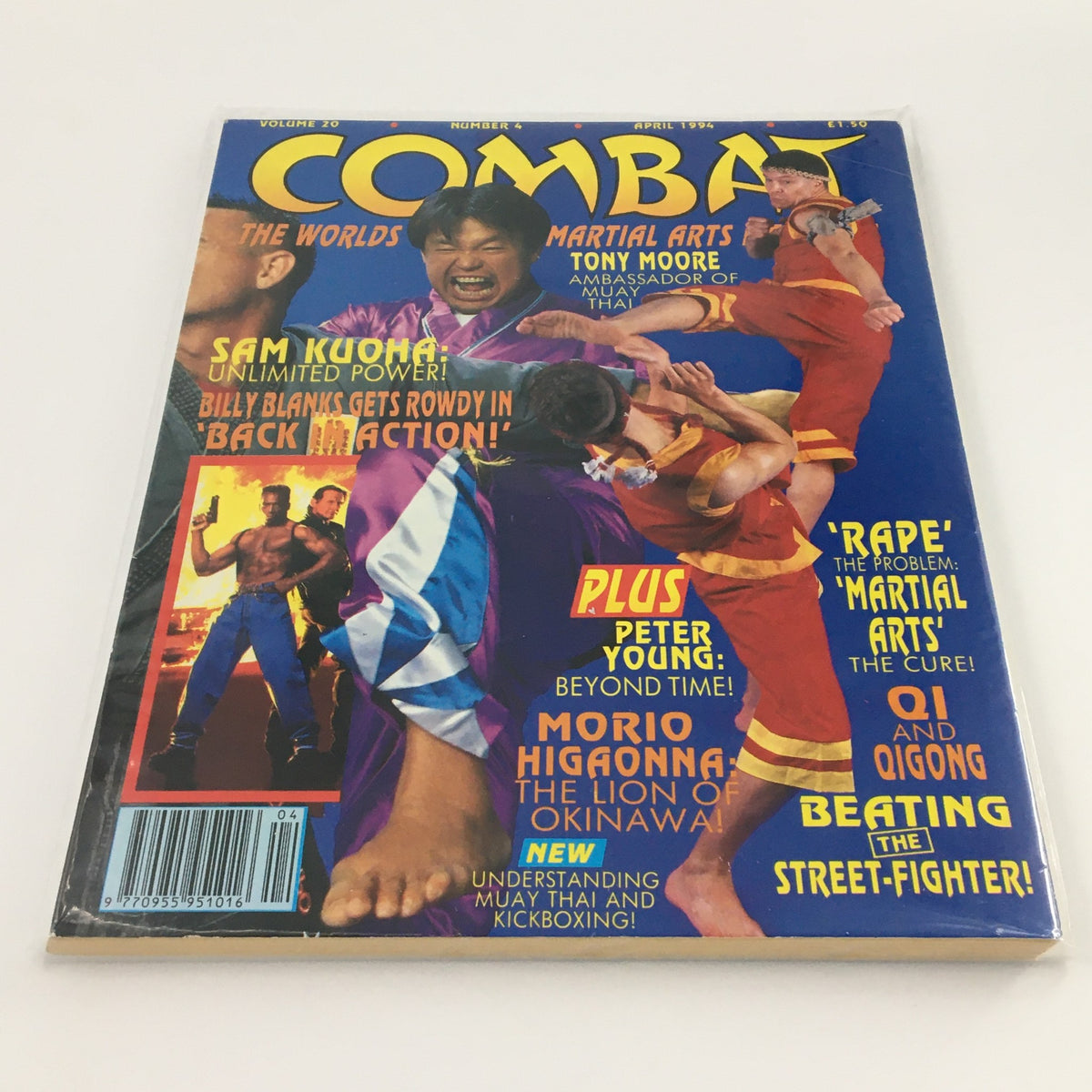


Description
Collector's Note – Why This Issue Matters
Combat Martial Arts Magazine April 1994 reflects a period when martial arts publishing was closely tied to practical training, personality profiles, self-defense culture, and the growing public interest in combat sports. The early 1990s were an important transitional moment for martial arts media, as traditional systems, tournament fighting, full-contact competition, and emerging combat-sport conversations increasingly overlapped. An issue featuring Tony Moore and Sam Kuoha belongs to that environment, where individual practitioners and instructors helped define how readers understood technique, discipline, and martial arts identity. It also reflects the print-based martial arts community of the time, when magazines were one of the main ways readers discovered instructors, methods, and training perspectives outside their own local schools.
The listing identifies Tony Moore and Sam Kuoha as the central featured figures, with articles and insights connected to martial arts techniques, philosophies, and the evolving combat-sports landscape of the early 1990s. Without confirmed article titles beyond those names, the issue is best understood through its stated feature subjects and its place within the broader martial arts magazine culture of the period. For collectors researching vintage martial arts magazines, this April 1994 issue offers a useful example of how specialty publications documented notable martial artists, training ideas, and changing trends before online video and digital archives became the main sources for martial arts information. It also shows how martial arts magazines helped preserve practitioner reputations through profiles, interviews, and technique-oriented coverage.
As part of the broader archive of 1994 magazine issues, this edition preserves a specific moment in the print history of martial arts and combat training. Complete issues from this era are useful because they show how martial arts were presented to readers through photographs, instructional language, interviews, profiles, and editorial framing. The issue also reflects the pre-social-media fan and practitioner experience, when magazines played a major role in connecting readers to martial artists, schools, methods, and philosophies beyond their local training communities. For researchers, it helps document how combat-oriented martial arts were discussed just before digital media began changing access to instruction and martial arts personalities.
About the Publication
Combat Martial Arts Magazine was a martial arts periodical aimed at practitioners, instructors, competitors, enthusiasts, and collectors interested in fighting systems, training culture, self-defense, and combat-oriented martial arts discussion. Its editorial format, as reflected in the listing, centered on featured martial artists, techniques, philosophies, and commentary on the changing martial arts landscape. In the early 1990s, magazines of this kind helped readers follow styles, personalities, and training ideas that were often difficult to access outside specialized schools, seminars, or tournament circles. For collectors, Combat Martial Arts is valuable because it preserves how martial arts knowledge and reputation circulated in print before digital platforms reshaped the way practitioners discovered instruction and community. It also represents the specialized magazine culture that helped serious readers compare systems, instructors, and training approaches in a structured, collectible format.
Key Highlights Inside
- April 1994 issue of Combat Martial Arts Magazine, representing martial arts publishing from the early 1990s.
- Features Tony Moore and Sam Kuoha, as stated in the listing title and description.
- Listing describes articles and insights connected to martial arts techniques, philosophies, and combat-sports trends.
- Reflects the martial arts culture of the early 1990s, when specialty magazines served as important sources of training and community knowledge.
- Documents a period when traditional martial arts, self-defense, full-contact practice, and combat-sport discussions were increasingly overlapping in print.
- Identified as a newsstand edition, an important distribution detail for collectors.
- Condition described as very good, like new, with no visible wear noted in the listing.
- Bagged and boarded in protective plastic, according to the listing description.
- Specific interior article titles beyond the Tony Moore and Sam Kuoha feature are not confirmed from the provided listing.
Condition & Rarity
Surviving examples of this April 1994 issue should be evaluated by cover clarity, edge condition, spine stability, page completeness, surface wear, and whether the newsstand presentation remains clean. The provided listing describes the magazine as very good condition, like new, with no visible wear, and preserved in boarded plastic. Bagging and boarding are meaningful preservation details because they help reduce bending, handling wear, dust exposure, and surface abrasion. For martial arts magazines from the 1990s, clean covers and intact pages are especially important because issues were often read repeatedly for training information, profiles, and technique-based content. A well-preserved newsstand edition can be especially useful for collectors who value strong presentation as well as complete, readable martial arts reference material. Because this issue is described as having no visible wear, details such as page flatness, spine firmness, and cover surface quality become especially important when comparing it to other surviving examples.
Looking for More Issues Like This?
The April 1994 Tony Moore and Sam Kuoha issue is a tough find for collectors interested in early-1990s martial arts publishing, combat-sports culture, and practitioner-focused magazine features. Readers looking for related material can browse more vintage martial arts magazines to compare how different titles covered instructors, fighters, techniques, and philosophies across the decade. That broader view can help show how martial arts print culture documented both practical training and the personalities who shaped specialized communities.
For collectors building by year, the 1994 magazines collection is also useful for placing this issue alongside other publications from the same cultural moment. Viewed in that wider context, this magazine helps show how martial arts print culture documented training communities, combat trends, and specialized knowledge before the digital era changed how practitioners learned and connected. It also provides a useful comparison point for studying how niche sports and discipline-based magazines preserved expertise in the early 1990s.